Local SEO for Dentists: Comprehensive Strategies for Dental Practice Optimization and Geographic Search Results
In today’s digital landscape, establishing a robust online presence has become essential for dental practices seeking to attract new patients within their service area. Local SEO represents a specialized subset of dental marketing that focuses on optimizing a dental practice’s visibility in geographic search results. As patients increasingly rely on nearby dentist searches to find healthcare providers, dental clinics must implement sophisticated local search visibility strategies to remain competitive. This comprehensive guide examines the fundamental components of local SEO tailored specifically for dentists, orthodontists, periodontists, endodontists, oral surgeons, cosmetic dentists, and pediatric dentists seeking to enhance their community dental presence.
TL;DR Summary
Local SEO for dentists involves optimizing Google Business Profile, building NAP citations across dental directories like Yelp and Healthgrades, generating patient reviews, implementing schema markup, and creating location-specific content. These strategies improve map pack rankings, enhance proximity ranking signals, and drive local dental traffic to your practice website, ultimately increasing local patient acquisition and appointment bookings.
Google Business Profile Optimization Drives Local Pack Visibility

The cornerstone of any effective dental practice optimization strategy begins with proper Google Business Profile management. Formerly known as Google My Business, this free platform serves as the primary interface between dental practices and prospective patients conducting searches on Google Maps and traditional Google search results. A fully optimized profile significantly influences whether a dental clinic appears in the coveted local pack—the map-based results prominently displayed at the top of search engine results pages for location-based queries.
How Does Google Business Profile Affect Map Pack Rankings?
Google’s local search algorithm evaluates numerous factors when determining which dental practices deserve placement within the local pack. Profile completeness ranks among the most critical elements. Dental practices must provide comprehensive information including accurate business hours, detailed service descriptions, high-quality photographs of the facility and staff, and regularly updated posts showcasing community involvement or promotional offers. Additionally, selecting the correct primary category (such as dentist, orthodontist, or cosmetic dentist) and relevant secondary categories ensures proper classification within Google’s taxonomy.
What Information Should Dentists Include in Their Profile?
Beyond basic contact information, dental practices should incorporate specific attributes that differentiate their services. These include accessibility features, accepted insurance providers, emergency services availability, and specialized treatments offered. The “Services” section should enumerate individual procedures such as teeth whitening, root canals, dental implants, and orthodontic treatments, each with detailed descriptions incorporating geo-modified keywords. Regular Google Business Profile updates, including photos from community events, seasonal decorations, or new equipment installations, signal active management to both Google’s algorithm and potential patients.
NAP Citations and Local Directories Establish Dental Practice Authority

Consistent citation building across reputable local directories forms the structural foundation of off-page SEO for dental practices. NAP citations—listings containing the practice’s Name, Address, and Phone number—serve as trust signals that validate a dental clinic’s legitimacy and geographic location. These citations function as digital references that Google and other search engines consult when assessing practice location signals and determining appropriate rankings for neighborhood dental clinic searches.
| Directory Type | Primary Platforms | SEO Impact | Patient Influence |
|---|---|---|---|
| Healthcare-Specific | Healthgrades, Zocdoc, Vitals | High domain authority backlinks | Strong patient trust factor |
| General Business | Yelp, Yellow Pages, BBB | Broad citation diversity | Moderate discovery potential |
| Local Directories | Chamber of Commerce, City Sites | Geographic relevance signals | Community credibility building |
| Data Aggregators | Yext, Moz Local, BrightLocal | Widespread distribution efficiency | Consistency enforcement |
Why Is Citation Consistency Critical for Dental Practices?
Inconsistencies in NAP information across digital platforms confuse search engine algorithms and dilute local ranking signals. A dental practice listed as “Dr. Smith’s Dental Clinic” on one directory and “Smith Dental Associates” on another creates ambiguity regarding whether these represent the same entity. Such discrepancies undermine the cumulative authority that consistent citations otherwise provide. Dental practices should conduct regular citation audits using tools like Semrush, Ahrefs, or specialized platforms such as BrightLocal to identify and rectify variations in business name, address formatting, phone numbers, or website URLs.
Online Reviews and Patient Testimonials Influence Proximity Ranking

Patient reviews constitute a powerful dual-purpose asset within local SEO strategies, simultaneously influencing algorithmic rankings and patient decision-making processes. Search engines interpret the quantity, quality, recency, and sentiment of online reviews as indicators of dental practice credibility and patient satisfaction. Research indicates that practices with higher average ratings and greater review volume typically achieve superior positions within map search optimization results.
How Should Dentists Manage Their Online Reputation?
Effective reputation monitoring requires systematic review solicitation protocols coupled with professional response strategies. Dental practices should implement automated feedback requests following appointments, providing patients convenient access to multiple review platforms including Google Business Profile, Yelp, Healthgrades, and Zocdoc. The timing of these requests significantly impacts response rates—sending invitations within 24-48 hours of positive patient experiences maximizes participation likelihood.
Responding to all reviews, both positive and negative, demonstrates engagement and commitment to patient satisfaction. Professional responses to constructive criticism can mitigate negative impressions while showcasing the practice’s dedication to service improvement. Dental practices should avoid generic reply templates, instead crafting personalized responses that address specific patient concerns while maintaining HIPAA compliance by never disclosing protected health information.
- Quantity targets: Aim for minimum 5-10 new reviews monthly across platforms
- Platform diversification: Distribute reviews across Google, healthcare directories, and social platforms
- Response time: Reply to reviews within 24-48 hours to demonstrate active engagement
- Review authenticity: Never incentivize reviews with compensation beyond requesting honest feedback
- Negative review protocol: Address concerns professionally, offer offline resolution opportunities
Schema Markup and Technical SEO Enhance Search Engine Understanding

Structured data implementation through schema markup provides search engines explicit information about dental practices, services, practitioners, and patient reviews. This semantic annotation enables enhanced search result features including review stars, practitioner information panels, and rich snippets that improve click-through rates from organic search results. Dental websites should implement LocalBusiness schema combined with Dentist-specific organizational schema to maximize search engine comprehension.
What Technical Factors Impact Dental Website Rankings?
Beyond semantic markup, comprehensive technical SEO encompasses mobile optimization, page speed performance, secure HTTPS implementation, and proper URL structure. Given that approximately 60% of local searches originate from mobile devices, responsive dental website design represents a fundamental requirement rather than optional enhancement. Google Search Console provides invaluable diagnostic data regarding mobile usability issues, indexing problems, and search performance metrics that inform technical optimization priorities.
Voice search optimization has emerged as an increasingly relevant consideration as patients utilize digital assistants to conduct conversational queries like “find a pediatric dentist near me accepting new patients.” Optimizing for natural language patterns and question-based searches improves visibility for these longer, more specific queries that often signal high conversion intent.
Location Pages and Geo-Targeted Content Build Neighborhood Relevance

Dental practices serving multiple locations or broad service areas benefit substantially from dedicated location pages that target specific neighborhoods, suburbs, or communities. These neighborhood targeting pages should transcend simple template duplications, instead offering genuinely unique content addressing local demographics, community partnerships, directions from notable landmarks, and parking information specific to each location.
How Can Dentists Create Effective Geo-Targeted Content?
Successful local content creation integrates city-specific dental keywords naturally within informative articles addressing community health concerns, local dental health statistics, or participation in area events. A dental practice might publish content about “Managing Dental Emergencies for Boston Residents” or “Choosing Pediatric Dental Care in Austin’s Growing Neighborhoods,” incorporating city dental services terminology while providing genuine value to prospective patients.
| Content Type | SEO Benefits | Patient Value | Implementation Effort |
|---|---|---|---|
| Location Pages | Direct geographic targeting | Specific office information | Medium (initial setup) |
| Local Blog Posts | Long-tail keyword capture | Educational resources | High (ongoing content) |
| Community Event Coverage | Brand mentions and backlinks | Local engagement proof | Low (repurpose existing) |
| Service Area Pages | Extended geographic reach | Service availability clarity | Medium (template-based) |
Dental Link Building and Community Engagement Strengthen Local Authority

Acquiring high-quality backlinks from locally relevant sources signals topical authority and geographic legitimacy to search algorithms. Unlike generic link building approaches, local backlink strategies prioritize connections with community organizations, local news outlets, chambers of commerce, and complementary healthcare providers. A dental practice might sponsor youth sports teams, participate in school health education programs, or contribute expert commentary to local news stories about dental health topics.
Which Local Partnership Opportunities Generate Quality Backlinks?
Strategic community involvement creates natural link acquisition opportunities while simultaneously building genuine community dental presence. Dental practices should explore partnerships with local schools for educational presentations, collaborate with senior centers on dental health awareness programs, or sponsor community charity events. These activities frequently result in mentions on organizational websites, local news coverage, and community calendar listings—all valuable sources of geographically relevant backlinks that enhance local search ranking performance.
- Educational institution partnerships: School health programs, college athletics sponsorships
- Healthcare referral networks: Physician collaborations, specialty dental referrals
- Local business associations: Chamber of Commerce membership, business improvement districts
- Community service organizations: Rotary clubs, charitable foundations, health fairs
- Local media relationships: Expert commentary, health column contributions, press releases
Performance Monitoring Through Google Analytics and Specialized Tools

Systematic tracking of local SEO performance enables data-driven optimization decisions and ROI documentation. Google Analytics provides comprehensive insights into dental website traffic sources, user behavior patterns, and conversion metrics including appointment booking completions and contact form submissions. Configuring geographic reporting segments reveals which neighborhoods and cities generate the most valuable traffic, informing targeted marketing investments.
What Metrics Indicate Local SEO Success for Dental Practices?
Key performance indicators extend beyond vanity metrics like total website visits to encompass actionable measurements directly correlating with business objectives. Local dental traffic quality matters more than quantity—analyzing metrics such as average session duration, pages per session, and bounce rates identifies whether attracted visitors match target patient demographics. Google Business Profile insights reveal search query patterns, customer actions (calls, direction requests, website clicks), and comparative performance against local dental competition.
Specialized platforms including Moz Local, BrightLocal, and comprehensive SEO suites like Semrush offer consolidated dashboards tracking citation consistency, review accumulation, ranking positions for targeted geo-modified keywords, and competitive benchmarking. Regular monitoring of these metrics, ideally monthly or quarterly, identifies emerging opportunities and potential issues requiring immediate attention before they significantly impact dental practice visibility or local patient acquisition rates.
Frequently Asked Questions

How long does local SEO take to show results for a dental practice?
Local SEO typically requires 3-6 months before substantial improvements become evident, though some quick wins like Google Business Profile optimization may generate results within weeks. Factors influencing timeline include current online presence strength, local dental competition intensity, and implementation consistency. Practices starting with minimal digital footprints generally require longer establishment periods compared to those enhancing existing foundations.
Should dental practices invest in paid search alongside local SEO efforts?
Integrating paid search with organic local SEO creates comprehensive visibility across search results. While local SEO builds sustainable long-term presence, geo-targeted dental ads provide immediate visibility for high-intent searches and specific services. This hybrid approach proves particularly valuable for new practices establishing market presence or promoting time-sensitive offers like new patient specials.
How do dental specialists like orthodontists optimize differently than general dentists?
Dental specialists should emphasize their specific expertise through appropriate primary category selection in Google Business Profile, specialized service descriptions, and targeted content addressing specific conditions within their scope. Orthodontists benefit from content about braces and aligners, while endodontists should focus on root canal procedures. Citation building on specialty-specific directories like the American Association of Orthodontists’ member directory enhances specialty authority signals.
What percentage of dental patients find practices through local search?
Research indicates approximately 77% of patients use search engines before booking healthcare appointments, with local searches comprising the majority of these queries. For dental practices specifically, Google reports that “dentist near me” searches have increased over 200% in recent years, underscoring the critical importance of local search visibility for patient acquisition strategies.
Can dental practices serve areas outside their immediate physical location?
Yes, dental practices can optimize for expanded service areas through strategic creation of service area pages targeting surrounding communities and neighborhoods. Google Business Profile allows specification of service areas extending beyond the practice address. However, proximity ranking factors mean practices typically rank strongest for searches originating near their physical location, with ranking strength diminishing as geographic distance increases.
How important are online reviews compared to other local SEO factors?
Online reviews represent approximately 15-20% of local ranking factors according to industry studies, making them among the most influential elements alongside Google Business Profile optimization and NAP citation consistency. Beyond algorithmic impact, reviews significantly influence patient decision-making, with 84% of people trusting online reviews as much as personal recommendations. The combination of ranking influence and conversion impact makes review management essential for comprehensive dental marketing strategies.
Encinitas Google Ads Agency : Professional PPC Management Services for California Businesses
In the competitive digital landscape of San Diego County, businesses require sophisticated paid search management strategies to capture qualified leads and maximize return on investment. An Encinitas Google Ads agency provides specialized expertise in managing pay-per-click advertising campaigns, delivering measurable results for local businesses seeking to expand their online presence. This comprehensive guide explores the essential components of professional PPC management services and how businesses in Encinitas, California can leverage Google’s advertising platform to achieve sustainable growth.
TL;DR Summary
Encinitas Google Ads agencies specialize in managing paid search campaigns for businesses throughout San Diego County, offering services including keyword research, ad copy optimization, conversion tracking, and bid management. Professional PPC agencies deliver superior ROI through data-driven advertising strategies, certified expertise, and continuous campaign optimization tailored to local business objectives.
Google Ads Agency Services Transform Digital Marketing Performance

A professional marketing agency specializing in Google advertising provides comprehensive search engine marketing solutions designed to maximize advertising efficiency. These specialized agencies possess in-depth knowledge of Google Marketing Platform tools, enabling businesses to navigate the complex advertising ecosystem effectively. The certified PPC agency model ensures adherence to industry best practices while maintaining access to advanced features and beta programs unavailable to standard advertisers.
Professional PPC advertising services encompass strategic campaign development, ongoing optimization, and performance analysis. Agencies leverage sophisticated bid management services combined with continuous keyword optimization to ensure optimal ad placement. This comprehensive approach addresses multiple advertising objectives simultaneously, from brand awareness through display advertising services to direct response lead generation advertising campaigns.
What Services Does a Full-Service Google Ads Agency Provide?
A comprehensive Google campaign management service structure includes multiple specialized offerings:
- Keyword Research and Strategy: Identifying high-value search terms aligned with business objectives and customer intent patterns
- Ad Copywriting Services: Developing compelling advertisement text optimized for click-through rate and relevance
- Landing Page Optimization: Designing conversion-focused destination pages that align with ad messaging
- Conversion Tracking Implementation: Establishing comprehensive measurement frameworks using Google Analytics
- Campaign Management: Ongoing monitoring, testing, and refinement of advertising initiatives
- Performance Reporting: Detailed analytics demonstrating ROI and strategic recommendations
Pay-Per-Click Campaign Management Delivers Measurable ROI

The cost-effective advertising model of pay per click marketing ensures businesses only pay when potential customers engage with their advertisements. This fundamental advantage makes PPC management services particularly attractive for small business advertisers operating with limited ad spend budgets. The direct correlation between investment and measurable outcomes enables precise budget management and scalable growth strategies.
Professional search ads management focuses intensively on quality score optimization, a critical metric determining both ad position and cost per click. Higher quality scores result from relevant ad copy, optimized landing pages, and historical campaign performance. Experienced agencies understand the intricate relationship between these factors and implement strategies that simultaneously reduce costs while improving ad placement.
How Does Professional Bid Strategy Management Improve Campaign Performance?
Sophisticated bid strategy implementation requires analyzing multiple data points including historical conversion rate, competitive landscape dynamics, and business profitability metrics. Agencies employ both automated and manual bidding approaches depending on campaign maturity and objectives. Smart campaigns utilize machine learning algorithms to optimize bids in real-time, while manual strategies provide granular control for specialized situations requiring human expertise and market knowledge.
| Bid Strategy Type | Best Application | Control Level | Optimization Goal |
|---|---|---|---|
| Manual CPC | New campaigns, testing phases | High | Cost control |
| Maximize Conversions | Established campaigns with conversion data | Medium | Volume generation |
| Target CPA | Consistent conversion history | Medium | Efficiency optimization |
| Target ROAS | E-commerce with revenue tracking | Medium | Profitability maximization |
Search Network and Display Network Campaigns Target Different Audience Segments
The Google advertising ecosystem comprises multiple channels, each serving distinct marketing objectives. Search network campaigns capture active demand from users explicitly seeking products or services, representing high-intent traffic with elevated conversion potential. This sponsored ads management approach targets specific keywords, displaying text advertisements when users conduct relevant searches.
Conversely, display advertising services leverage visual creative across millions of websites, reaching audiences during their regular browsing activities. This approach excels at brand awareness development and remarketing campaigns, re-engaging users who previously visited a website but did not convert. The complementary nature of these channels enables comprehensive coverage throughout the customer journey, from initial awareness through final conversion.
Why Are Remarketing Campaigns Essential for Conversion Optimization?
Remarketing represents one of the most cost-effective advertising strategies available, targeting users who demonstrated interest through previous website visits. These warm audiences convert at significantly higher rates than cold traffic, often at substantially lower cost per click. Professional agencies segment remarketing audiences based on behavior patterns, creating customized messaging that addresses specific objections or highlights relevant offerings. This personalized approach dramatically improves conversion rates while maximizing advertising efficiency.
Specialized Campaign Types Enable Industry-Specific Advertising Solutions
Modern Google Ads platforms support numerous specialized campaign formats addressing specific business models and objectives. Shopping ads provide essential infrastructure for e-commerce advertising, displaying product images, prices, and merchant information directly within search results. This visual format significantly improves click-through rates for retail advertising applications while pre-qualifying traffic based on displayed pricing.
Video advertising services through YouTube ads offer powerful engagement opportunities, particularly for businesses requiring product demonstrations or brand storytelling. YouTube marketing campaigns access Google’s extensive targeting capabilities while leveraging the persuasive power of video content. Performance Max campaigns represent the latest innovation, utilizing automated optimization across all Google advertising channels simultaneously to maximize conversion volume within specified budgets.
What Makes Performance Max Campaigns Effective for Lead Generation?
Performance Max campaigns leverage artificial intelligence to automatically distribute budget across search, display, YouTube, Gmail, and Discovery networks based on real-time performance data. This machine learning approach identifies the most responsive audience segments and optimal creative combinations without requiring manual intervention. For businesses seeking streamlined lead generation advertising, Performance Max delivers efficient results while reducing management complexity. However, this automation requires comprehensive conversion tracking implementation and clearly defined business objectives to function optimally.
Local Business Marketing Requires Geographic Targeting and Community Understanding

Businesses serving the Encinitas and broader San Diego County markets benefit significantly from geographic targeting capabilities within Google Ads. Local advertising services focus budget exclusively on relevant geographic areas, eliminating waste from impressions in markets where businesses cannot serve customers. This precision proves particularly valuable for service businesses, restaurants, healthcare providers, and retail locations dependent on foot traffic or regional service areas.
An Encinitas marketing agency brings essential local market knowledge, understanding community characteristics, competitive dynamics, and seasonal patterns affecting advertising performance. This regional expertise informs keyword selection, ad scheduling, and messaging strategies that resonate with target audiences. Professional Google Ads management Encinitas providers understand the unique characteristics of North County San Diego demographics and adjust campaigns accordingly.
How Does Ad Extensions Implementation Improve Local Campaign Performance?
Ad extensions enhance advertisement visibility and functionality, providing additional information and engagement opportunities within search results. Location extensions display business addresses and map integration, crucial for local business marketing initiatives. Call extensions enable direct phone contact, particularly valuable for mobile searchers seeking immediate assistance. Sitelink extensions direct users to specific landing pages, improving navigation and highlighting key offerings. Structured snippet extensions showcase product categories or service types, providing additional context that improves click-through rate among qualified prospects.
Data-Driven Advertising Strategy Incorporates Continuous Testing and Refinement
Professional search marketing agencies implement systematic A/B testing protocols, comparing advertisement variations to identify optimal messaging, creative elements, and landing page designs. This empirical approach eliminates guesswork, allowing data to guide strategic decisions. Testing encompasses ad copy variations, headline combinations, display URL options, and call-to-action language, progressively refining campaigns toward maximum effectiveness.
Negative keywords management represents another critical optimization component, preventing advertisements from appearing for irrelevant searches. This refinement process improves campaign efficiency by eliminating wasted spend on non-converting traffic. Experienced agencies continuously expand negative keyword lists based on search term reports, ensuring budget focuses exclusively on qualified prospects aligned with business offerings.
What Key Performance Indicators Should Businesses Monitor?
Comprehensive performance marketing measurement requires tracking multiple interconnected metrics:
- Quality Score: Reflects ad relevance and landing page experience, directly impacting costs and positions
- Click-Through Rate (CTR): Measures ad appeal and relevance to displayed search queries
- Conversion Rate: Indicates landing page effectiveness and traffic quality
- Cost Per Conversion: Demonstrates efficiency and campaign profitability
- Return on Ad Spend (ROAS): Calculates revenue generated per dollar invested
- Impression Share: Shows percentage of available impressions captured, indicating competitive position
Selecting the Best Google Ads Agency in Encinitas Requires Evaluation Criteria
Businesses seeking professional Google Ads management Encinitas services should evaluate agencies based on specific qualification criteria. Google Partner certification demonstrates platform expertise and adherence to best practices, while Premier Partner status indicates exceptional performance and client retention. Review documented case studies showing proven results in similar industries or business models, paying particular attention to reported ROI metrics and growth trajectories.
Transparency regarding pricing structures, reporting practices, and optimization methodologies distinguishes quality agencies from those employing opaque practices. Reputable providers offer clear contracts, regular communication, and detailed performance reports explaining campaign status and strategic recommendations. The ideal agency partnership combines technical expertise with genuine business consultation, treating advertising campaigns as strategic investments rather than isolated tactical executions.
| Evaluation Factor | What to Look For | Why It Matters |
|---|---|---|
| Certification Status | Google Partner or Premier Partner | Validates platform expertise and performance standards |
| Industry Experience | Documented success in your business sector | Ensures understanding of industry-specific challenges |
| Transparency | Clear reporting and communication practices | Enables informed decision-making and trust |
| Strategic Approach | Customized strategies vs. template solutions | Addresses unique business objectives and market conditions |
Why Choose an Experienced Google Ads Consultant in Encinitas?
Local expertise combined with specialized platform knowledge creates competitive advantages unavailable through generalist marketing providers or in-house management by non-specialists. An experienced Google Ads professional Encinitas understands regional market dynamics while maintaining current knowledge of platform updates, policy changes, and emerging features. This combination enables sophisticated campaign strategies that balance automation with human insight, delivering superior performance compared to fully automated solutions or inexperienced management.
Frequently Asked Questions
How much should a small business budget for Google Ads management?
Small business advertising budgets typically range from $1,000 to $10,000 monthly for ad spend, with agency management fees representing 10-20% of spend or a flat monthly rate between $500-$2,500. The optimal budget depends on industry competitiveness, geographic market size, and business objectives. Most agencies recommend minimum three-month commitments to allow sufficient data collection for meaningful optimization.
What is the typical timeframe to see results from Google Ads campaigns?
Initial campaign traffic typically begins within 24-48 hours of launch, though meaningful performance assessment requires 30-90 days of data collection. Conversion optimization processes continue indefinitely, with most campaigns showing progressive improvement over 3-6 months as agencies gather data, refine targeting, and optimize messaging. Patience during initial learning periods enables superior long-term performance compared to premature strategy changes.
Can Google Ads work effectively for service businesses without e-commerce?
Google Ads proves highly effective for service businesses, professional services, healthcare providers, and B2B companies through lead generation campaigns. These campaigns focus on phone calls, form submissions, and appointment bookings rather than direct sales transactions. Proper conversion tracking implementation measures these non-transactional goals, enabling performance optimization identical to e-commerce applications. Many service businesses achieve exceptional ROI through targeted search campaigns reaching high-intent prospects.
What advantages do certified Google Partner agencies provide?
Certified Google Partner agencies maintain current platform certifications, demonstrate consistent client performance standards, and access advanced support resources unavailable to standard advertisers. Partner status requires meeting minimum ad spend thresholds, maintaining certified professionals on staff, and demonstrating client retention and growth metrics. Premier Partners represent top-performing agencies meeting even more stringent requirements, often gaining early access to beta features and enhanced support channels.
How does an Encinitas agency differ from national PPC management services?
Local Encinitas agencies provide direct access to strategists, understanding of regional market dynamics, and personalized service often unavailable from large national firms. Geographic proximity enables in-person meetings, stronger working relationships, and nuanced understanding of local competition and customer behavior patterns. While national agencies may offer scale advantages, local agencies typically provide more responsive communication and customized strategies aligned with community characteristics specific to San Diego County markets.
Should businesses manage Google Ads internally or hire an agency?
The decision depends on internal expertise, available time, and campaign complexity. Simple campaigns with limited budgets may suit internal management by trained staff, while complex multi-channel strategies typically benefit from agency expertise. Agency partnerships provide access to specialized knowledge, advanced tools, continuous education on platform updates, and dedicated management time that internal teams often cannot sustain alongside other responsibilities. Most businesses lacking dedicated, certified PPC specialists achieve superior results through professional agency engagement.
Carlsbad Google Ads Agency : Professional PPC Management Services for California Businesses
In the competitive landscape of San Diego County, businesses seeking to maximize their online visibility and drive qualified leads increasingly turn to specialized digital marketing expertise. A Carlsbad Google Ads agency provides the strategic advantage needed to navigate the complexities of paid search marketing while optimizing advertising budgets for measurable results. As search engine advertising continues to evolve with sophisticated algorithms and targeting capabilities, partnering with experienced professionals has become essential for businesses aiming to achieve superior ROI through pay-per-click campaigns.
TL;DR Summary
Carlsbad Google Ads agencies offer comprehensive PPC management services including campaign strategy, keyword research, ad copy optimization, and conversion tracking. These specialized digital marketing firms leverage Premier Google Partner certifications and advanced tools like Google Analytics and Google Tag Manager to deliver measurable ROI for local businesses, e-commerce companies, and lead generation campaigns throughout California.
Google Ads Management Services Transform Digital Marketing Outcomes

Professional Google Ads management services encompass a comprehensive suite of capabilities designed to maximize advertising performance across multiple platforms and networks. Specialized PPC agencies in Carlsbad understand the nuanced requirements of businesses operating in California’s competitive markets, from local service providers to sophisticated e-commerce operations. These agencies implement data-driven strategies that align advertising expenditures with specific business objectives, whether focused on immediate conversions, brand awareness, or long-term customer acquisition.
The foundation of effective paid search marketing begins with thorough campaign strategy development. Expert PPC management companies conduct extensive market analysis, competitive research, and audience profiling to establish campaign parameters that align with client goals. This strategic framework guides all subsequent optimization decisions, from bid management tactics to ad extension implementation, ensuring coherent execution across Search Network, Display Network, Shopping Ads, and YouTube Ads platforms.
What Services Does a Certified Google Ads Agency Provide?
A professional Google Ads agency in Carlsbad CA delivers integrated services spanning the entire paid advertising lifecycle:
- Keyword Research and Selection: Identification of high-intent search terms aligned with business offerings and budget parameters
- Campaign Structure Development: Organization of account architecture to maximize Quality Score and Ad Rank performance
- Ad Copy Creation and Testing: Development of compelling advertising messages with continuous A/B testing protocols
- Landing Pages Optimization: Design and refinement of conversion-focused destination pages that reduce bounce rates
- Conversion Tracking Implementation: Setup of Google Analytics, Google Tag Manager, and conversion tracking systems
- Bid Management and Budget Allocation: Strategic adjustment of bidding strategies to optimize Cost Per Click and impression share
- Performance Analysis and Reporting: Regular assessment of campaign metrics with actionable insights and recommendations
Premier Google Partner Certification Validates PPC Agency Expertise

The Premier Google Partner designation represents the highest tier of recognition within Google’s partner program, signifying demonstrated expertise in AdWords management and consistent delivery of client results. Agencies holding this certification have met rigorous performance requirements including minimum advertising spend thresholds, client retention metrics, and individual certification of team members across multiple Google Ads specializations. For businesses in Carlsbad and throughout San Diego County, partnering with a Premier Google Partner provides assurance of working with a tested and verified digital advertising agency.
Certified Google Ads agencies maintain access to advanced platform features, beta testing opportunities, and direct support channels unavailable to standard advertisers. This privileged access translates into competitive advantages for clients, enabling implementation of cutting-edge advertising technologies and strategies before widespread availability. Additionally, Premier Partners receive ongoing training on platform updates, algorithm changes, and optimization techniques, ensuring their PPC services reflect current best practices rather than outdated methodologies.
How Does Google Partner Status Benefit Carlsbad Businesses?
Businesses working with a Google Ads partner agency gain multiple advantages beyond basic campaign management. These agencies have demonstrated proficiency across specialized areas including Shopping Ads for e-commerce operations, YouTube advertising for video marketing initiatives, and remarketing campaigns for audience re-engagement. The certification process requires passing comprehensive examinations covering Search Network optimization, Display Network strategies, and conversion optimization services, ensuring well-rounded expertise across all Google advertising platforms.
| Partner Level | Requirements | Client Benefits |
|---|---|---|
| Google Partner | $10,000+ spend in 90 days, 1 certified user | Basic platform support, partner badge |
| Premier Google Partner | $20,000+ spend in 90 days, multiple certifications, performance metrics | Priority support, beta access, advanced training, exclusive events |
Search Engine Marketing Strategy Integrates Multiple Campaign Types

Sophisticated search engine marketing approaches leverage the full spectrum of Google Ads campaign types to create comprehensive digital marketing ecosystems. A results-driven Google Ads agency Carlsbad develops integrated strategies that combine Search Network campaigns for high-intent queries with Display Network placements for awareness building, Shopping Ads for product visibility, and YouTube Ads for video engagement. This multi-channel approach ensures businesses maintain presence across the entire customer journey, from initial awareness through final conversion.
Campaign structure significantly impacts both performance metrics and optimization efficiency. Expert PPC advertising services organize accounts using logical hierarchies that separate brand terms from non-brand keywords, distinguish between product categories, and segment audiences based on intent signals. This architectural approach facilitates precise bid management, enables granular performance analysis, and supports efficient negative keywords implementation to eliminate wasteful spending on irrelevant queries.
Why Is Campaign Structure Important for ROI Performance?
Proper campaign organization directly influences Quality Score, which Google uses to determine Ad Rank and Cost Per Click. Well-structured campaigns achieve higher relevance scores by tightly aligning keyword groups with ad copy messaging and landing pages destinations. This relevance improves click-through rate, reduces advertising costs, and increases impression share within target auctions. Professional advertising campaign management continuously refines structural elements to maintain optimal performance as businesses evolve and market conditions change.
Conversion Rate Optimization Maximizes Advertising Investment Returns

Conversion rate optimization represents the critical link between advertising traffic and business outcomes, transforming clicks into customers through systematic testing and refinement. A data-driven Google Ads agency Carlsbad focuses not merely on traffic generation but on conversion efficiency, recognizing that doubling conversion rates produces equivalent results to doubling advertising budgets. This emphasis on conversion optimization services encompasses landing page design, form optimization, call-to-action testing, and user experience enhancement across desktop and mobile devices.
Professional PPC management company methodologies employ rigorous A/B testing protocols to identify high-performing variations across ad copy, extensions, and destination pages. These controlled experiments isolate individual variables to determine causal relationships between changes and conversion performance, avoiding the unreliable conclusions of simultaneous multi-variable modifications. Statistical significance testing ensures that optimization decisions reflect genuine performance differences rather than random variation, protecting against premature conclusions that could harm campaign effectiveness.
What Metrics Indicate Successful Campaign Performance?
Comprehensive performance evaluation extends beyond vanity metrics to encompass business-relevant indicators that directly correlate with revenue and profitability objectives:
- Return on Advertising Spend (ROAS): Revenue generated per dollar of advertising expenditure
- Cost Per Acquisition (CPA): Total advertising cost divided by number of conversions
- Conversion Rate: Percentage of clicks resulting in desired actions
- Quality Score: Google’s assessment of ad relevance, landing page experience, and expected click-through rate
- Impression Share: Percentage of available impressions captured within target auctions
- Customer Lifetime Value (CLV): Total revenue expected from customer relationships initiated through campaigns
Local Business Marketing Requires Specialized Carlsbad Market Knowledge

Businesses serving Carlsbad and surrounding San Diego County communities benefit from PPC agency expertise grounded in local market dynamics, competitive landscapes, and regional consumer behaviors. A local Google Ads agency in Carlsbad understands geographic targeting nuances, seasonal demand patterns specific to California markets, and competitive bidding dynamics within regional auctions. This localized knowledge informs strategic decisions including bid adjustments for high-value geographic areas, ad scheduling aligned with local customer activity patterns, and messaging that resonates with regional audiences.
Small business operations face unique challenges in paid search marketing, including limited budgets that demand exceptional efficiency and local competition from established enterprises with substantial advertising resources. An experienced Carlsbad Google Ads experts team develops strategies specifically calibrated for small business constraints, focusing on high-intent keywords with manageable competition, leveraging ad extensions to maximize visibility without additional costs, and implementing conversion tracking systems that provide actionable insights despite limited transaction volumes.
How Do E-commerce Businesses Benefit from Specialized PPC Services?
E-commerce operations require distinct approaches centered on Shopping Ads optimization, product feed management, and dynamic remarketing campaigns. Professional e-commerce Google Ads management addresses the complexities of large product inventories through strategic feed optimization, category-specific bidding strategies, and automated rules that maintain efficiency at scale. Integration with analytics platforms enables sophisticated attribution modeling that accurately credits advertising touchpoints within multi-session purchase paths, providing realistic assessment of campaign contribution to overall revenue generation.
| Business Type | Primary Campaign Focus | Key Performance Indicators |
|---|---|---|
| Local Service Business | Search Network, local extensions, call tracking | Cost per lead, conversion rate, call volume |
| E-commerce Store | Shopping Ads, remarketing, Display Network | ROAS, cost per sale, cart abandonment recovery |
| B2B Lead Generation | Search Network, LinkedIn integration, long-tail keywords | Cost per qualified lead, lead-to-customer rate, CLV |
| Multi-location Franchise | Location extensions, geo-targeting, brand protection | Impression share, location-specific conversions, brand CTR |
Transparent Reporting and Performance Communication Build Client Trust
A transparent Google Ads agency in Carlsbad prioritizes clear communication through comprehensive reporting systems that provide clients with complete visibility into campaign performance, expenditure allocation, and optimization activities. Professional agencies eschew obscure metrics in favor of business-relevant indicators that directly connect advertising activities to revenue outcomes. Regular reporting cadences, supported by detailed analytics dashboards, enable clients to understand precisely how their advertising investments generate returns and where opportunities for improvement exist.
Performance marketing success depends on alignment between agency activities and client objectives, requiring ongoing collaboration rather than passive campaign management. Top-rated PPC agencies establish regular consultation schedules to review performance trends, discuss market developments, evaluate competitive dynamics, and adjust strategies based on evolving business priorities. This consultative approach ensures campaigns remain aligned with current objectives rather than operating according to outdated strategic frameworks established during initial setup.
Frequently Asked Questions
What is the typical cost of hiring a Google Ads agency in Carlsbad?
Google Ads agency pricing in Carlsbad typically follows either percentage-of-spend models (generally 10-20% of monthly advertising budget) or flat-fee arrangements ranging from $1,000 to $5,000+ monthly depending on account complexity, campaign scope, and service level. Many agencies require minimum commitments of $2,000-3,000 in monthly advertising spend to ensure sufficient data for effective optimization. Initial setup fees may apply for new account creation, conversion tracking implementation, and strategic planning.
How long does it take to see results from Google Ads campaigns?
Initial campaign results typically appear within the first week of launch, with traffic and conversion data beginning to accumulate immediately. However, meaningful optimization and performance improvement generally require 60-90 days as agencies gather sufficient statistical data to identify patterns, test variations, and refine targeting parameters. Quality Score improvements may take several weeks as Google’s algorithms assess campaign relevance and landing page quality. Businesses should expect continuous improvement over 3-6 months as comprehensive optimization strategies mature.
What makes a Carlsbad Google Ads agency better than self-managing campaigns?
Professional Google Ads agencies provide specialized expertise developed across hundreds of campaigns and diverse industries, enabling them to avoid common pitfalls and implement proven optimization strategies immediately. Agencies maintain current knowledge of platform updates, algorithm changes, and emerging best practices through continuous training and Premier Google Partner programs. Additionally, agencies utilize sophisticated bid management tools, automated optimization technologies, and comprehensive analytics platforms that represent significant investments beyond most individual business capabilities.
Do Google Ads agencies in Carlsbad work with businesses outside San Diego County?
Most Carlsbad Google Ads agencies serve clients throughout California and nationwide, as paid search management operates effectively as a remote service requiring no geographic proximity. While local market knowledge provides advantages for businesses serving Carlsbad and San Diego County specifically, digital marketing agencies regularly manage campaigns for clients across multiple states and countries. Video conferencing, screen sharing, and collaborative project management tools enable seamless communication regardless of physical location.
What information does a business need to provide when starting with a Google Ads agency?
Agencies typically require access to existing Google Ads and Google Analytics accounts (if available), conversion goal definitions, target cost per acquisition or return on ad spend objectives, competitive information, unique selling propositions, and customer demographic data. Historical performance data from previous advertising efforts helps establish baseline metrics. Additionally, agencies need understanding of business seasonality, geographic service areas, budget parameters, and any specific constraints regarding messaging, targeting, or competitive positioning.
How do agencies measure and report on campaign success?
Professional agencies establish customized reporting frameworks aligned with specific business objectives, tracking metrics including conversion volume, cost per conversion, return on ad spend, Quality Score trends, impression share, click-through rates, and competitive performance indicators. Most agencies provide monthly comprehensive reports supplemented by real-time dashboard access through Google Analytics and Data Studio. Advanced reporting includes attribution analysis, customer journey mapping, and cohort performance tracking that connects advertising activities to long-term business outcomes and customer lifetime value.
Local SEO for Dentists: Comprehensive Strategies for Dental Practice Optimization and Geographic Search Results
In today’s digital landscape, establishing a robust online presence has become essential for dental practices seeking to attract new patients within their service area. Local SEO represents a specialized subset of dental marketing that focuses on optimizing a dental practice’s visibility in geographic search results. As patients increasingly rely on nearby dentist searches to find healthcare providers, dental clinics must implement sophisticated local search visibility strategies to remain competitive. This comprehensive guide examines the fundamental components of local SEO tailored specifically for dentists, orthodontists, periodontists, endodontists, oral surgeons, cosmetic dentists, and pediatric dentists seeking to enhance their community dental presence.
TL;DR Summary
Local SEO for dentists involves optimizing Google Business Profile, building NAP citations across dental directories like Yelp and Healthgrades, generating patient reviews, implementing schema markup, and creating location-specific content. These strategies improve map pack rankings, enhance proximity ranking signals, and drive local dental traffic to your practice website, ultimately increasing local patient acquisition and appointment bookings.
Google Business Profile Optimization Drives Local Pack Visibility
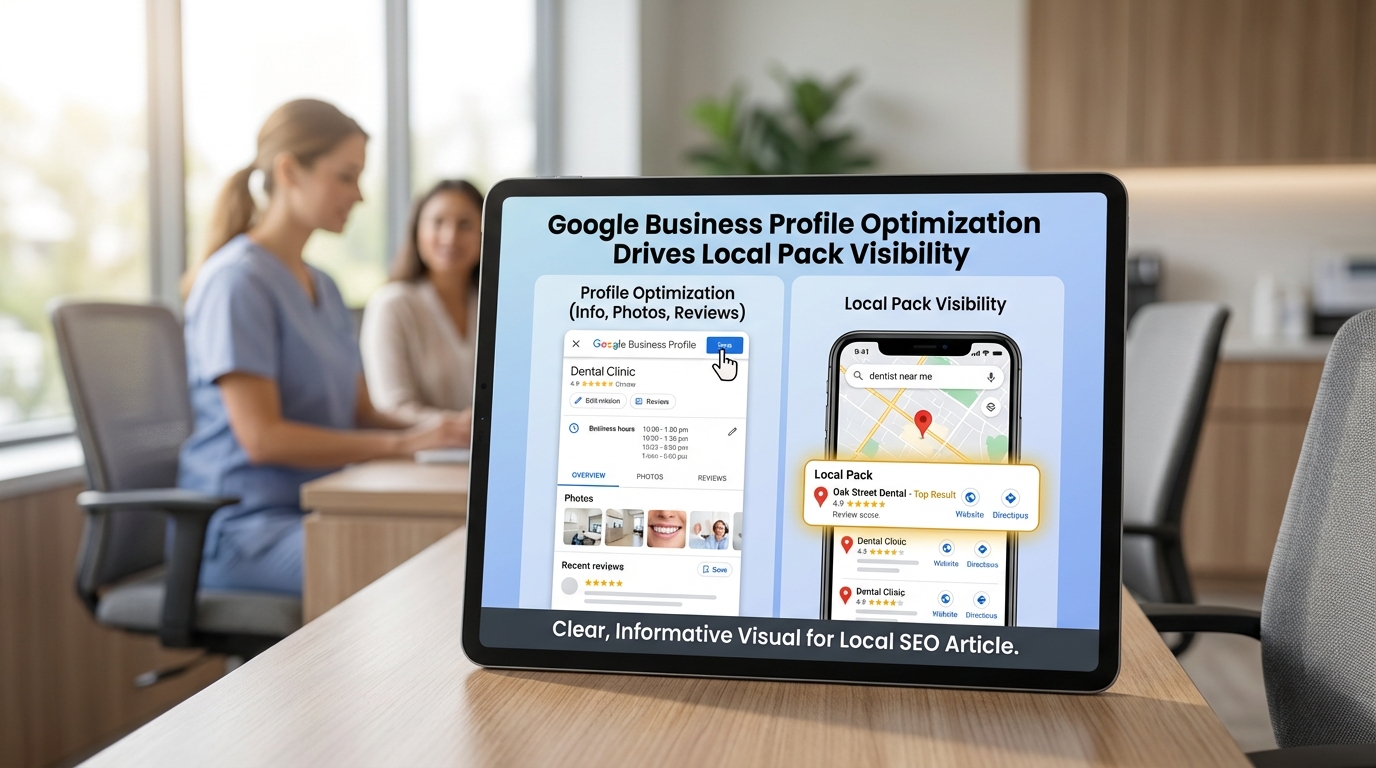
The cornerstone of any effective dental practice optimization strategy begins with proper Google Business Profile management. Formerly known as Google My Business, this free platform serves as the primary interface between dental practices and prospective patients conducting searches on Google Maps and traditional Google search results. A fully optimized profile significantly influences whether a dental clinic appears in the coveted local pack—the map-based results prominently displayed at the top of search engine results pages for location-based queries.
How Does Google Business Profile Affect Map Pack Rankings?
Google’s local search algorithm evaluates numerous factors when determining which dental practices deserve placement within the local pack. Profile completeness ranks among the most critical elements. Dental practices must provide comprehensive information including accurate business hours, detailed service descriptions, high-quality photographs of the facility and staff, and regularly updated posts showcasing community involvement or promotional offers. Additionally, selecting the correct primary category (such as dentist, orthodontist, or cosmetic dentist) and relevant secondary categories ensures proper classification within Google’s taxonomy.
What Information Should Dentists Include in Their Profile?
Beyond basic contact information, dental practices should incorporate specific attributes that differentiate their services. These include accessibility features, accepted insurance providers, emergency services availability, and specialized treatments offered. The “Services” section should enumerate individual procedures such as teeth whitening, root canals, dental implants, and orthodontic treatments, each with detailed descriptions incorporating geo-modified keywords. Regular Google Business Profile updates, including photos from community events, seasonal decorations, or new equipment installations, signal active management to both Google’s algorithm and potential patients.
NAP Citations and Local Directories Establish Dental Practice Authority
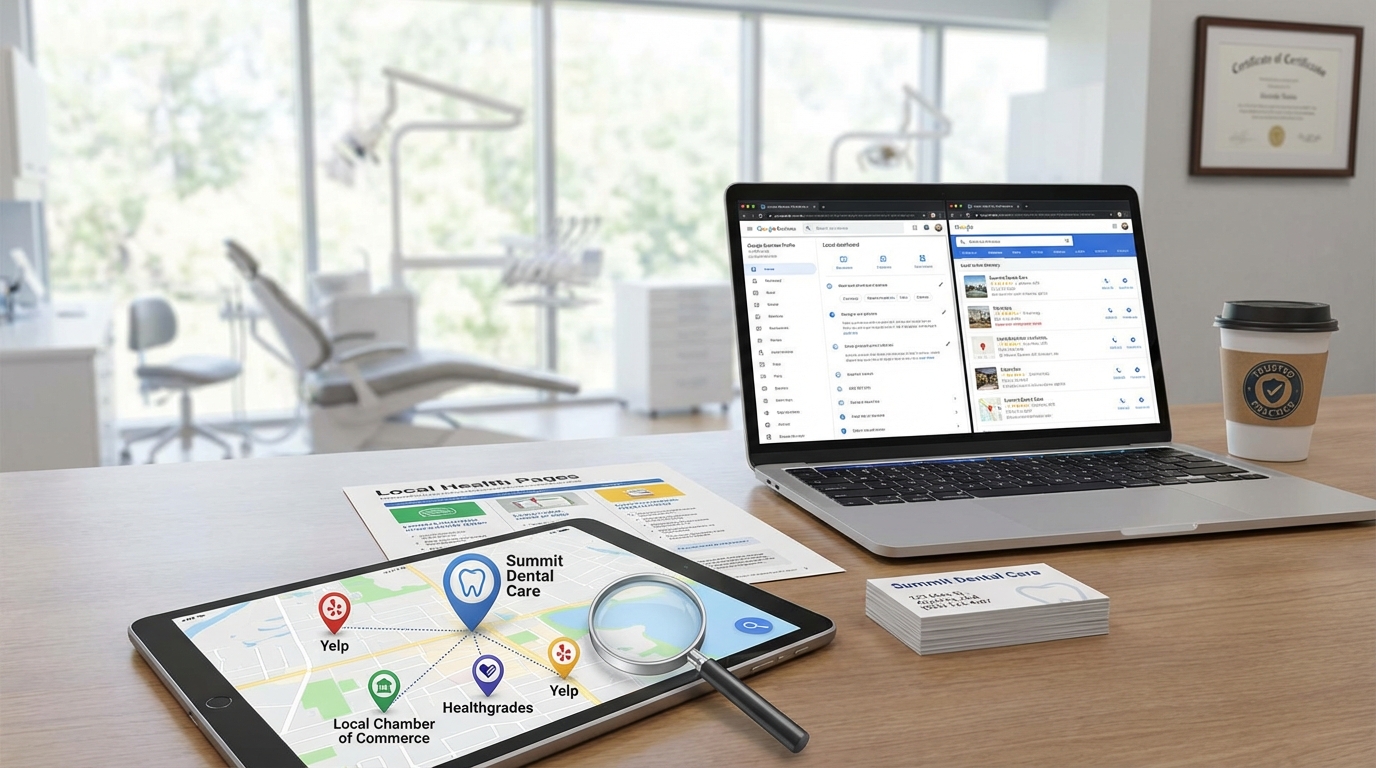
Consistent citation building across reputable local directories forms the structural foundation of off-page SEO for dental practices. NAP citations—listings containing the practice’s Name, Address, and Phone number—serve as trust signals that validate a dental clinic’s legitimacy and geographic location. These citations function as digital references that Google and other search engines consult when assessing practice location signals and determining appropriate rankings for neighborhood dental clinic searches.
| Directory Type | Primary Platforms | SEO Impact | Patient Influence |
|---|---|---|---|
| Healthcare-Specific | Healthgrades, Zocdoc, Vitals | High domain authority backlinks | Strong patient trust factor |
| General Business | Yelp, Yellow Pages, BBB | Broad citation diversity | Moderate discovery potential |
| Local Directories | Chamber of Commerce, City Sites | Geographic relevance signals | Community credibility building |
| Data Aggregators | Yext, Moz Local, BrightLocal | Widespread distribution efficiency | Consistency enforcement |
Why Is Citation Consistency Critical for Dental Practices?
Inconsistencies in NAP information across digital platforms confuse search engine algorithms and dilute local ranking signals. A dental practice listed as “Dr. Smith’s Dental Clinic” on one directory and “Smith Dental Associates” on another creates ambiguity regarding whether these represent the same entity. Such discrepancies undermine the cumulative authority that consistent citations otherwise provide. Dental practices should conduct regular citation audits using tools like Semrush, Ahrefs, or specialized platforms such as BrightLocal to identify and rectify variations in business name, address formatting, phone numbers, or website URLs.
Online Reviews and Patient Testimonials Influence Proximity Ranking
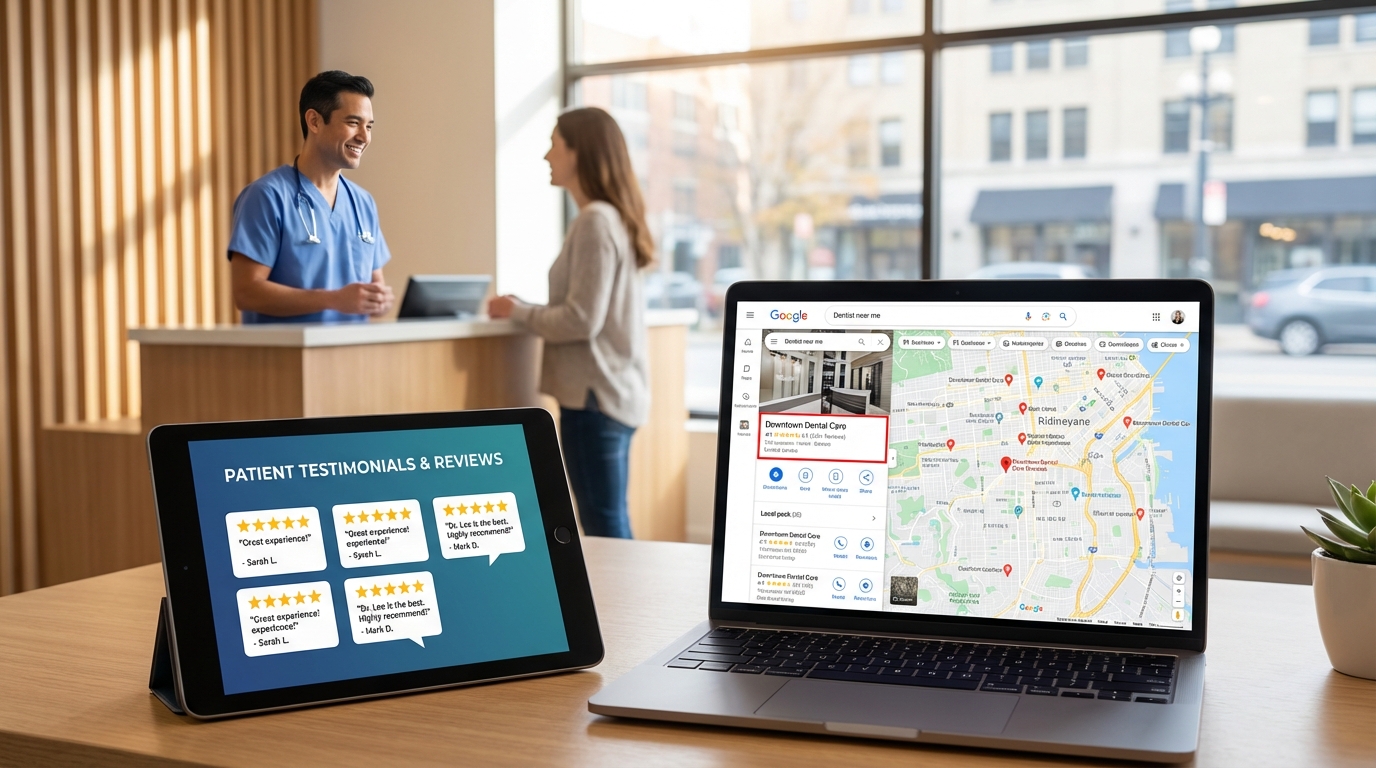
Patient reviews constitute a powerful dual-purpose asset within local SEO strategies, simultaneously influencing algorithmic rankings and patient decision-making processes. Search engines interpret the quantity, quality, recency, and sentiment of online reviews as indicators of dental practice credibility and patient satisfaction. Research indicates that practices with higher average ratings and greater review volume typically achieve superior positions within map search optimization results.
How Should Dentists Manage Their Online Reputation?
Effective reputation monitoring requires systematic review solicitation protocols coupled with professional response strategies. Dental practices should implement automated feedback requests following appointments, providing patients convenient access to multiple review platforms including Google Business Profile, Yelp, Healthgrades, and Zocdoc. The timing of these requests significantly impacts response rates—sending invitations within 24-48 hours of positive patient experiences maximizes participation likelihood.
Responding to all reviews, both positive and negative, demonstrates engagement and commitment to patient satisfaction. Professional responses to constructive criticism can mitigate negative impressions while showcasing the practice’s dedication to service improvement. Dental practices should avoid generic reply templates, instead crafting personalized responses that address specific patient concerns while maintaining HIPAA compliance by never disclosing protected health information.
- Quantity targets: Aim for minimum 5-10 new reviews monthly across platforms
- Platform diversification: Distribute reviews across Google, healthcare directories, and social platforms
- Response time: Reply to reviews within 24-48 hours to demonstrate active engagement
- Review authenticity: Never incentivize reviews with compensation beyond requesting honest feedback
- Negative review protocol: Address concerns professionally, offer offline resolution opportunities
Schema Markup and Technical SEO Enhance Search Engine Understanding
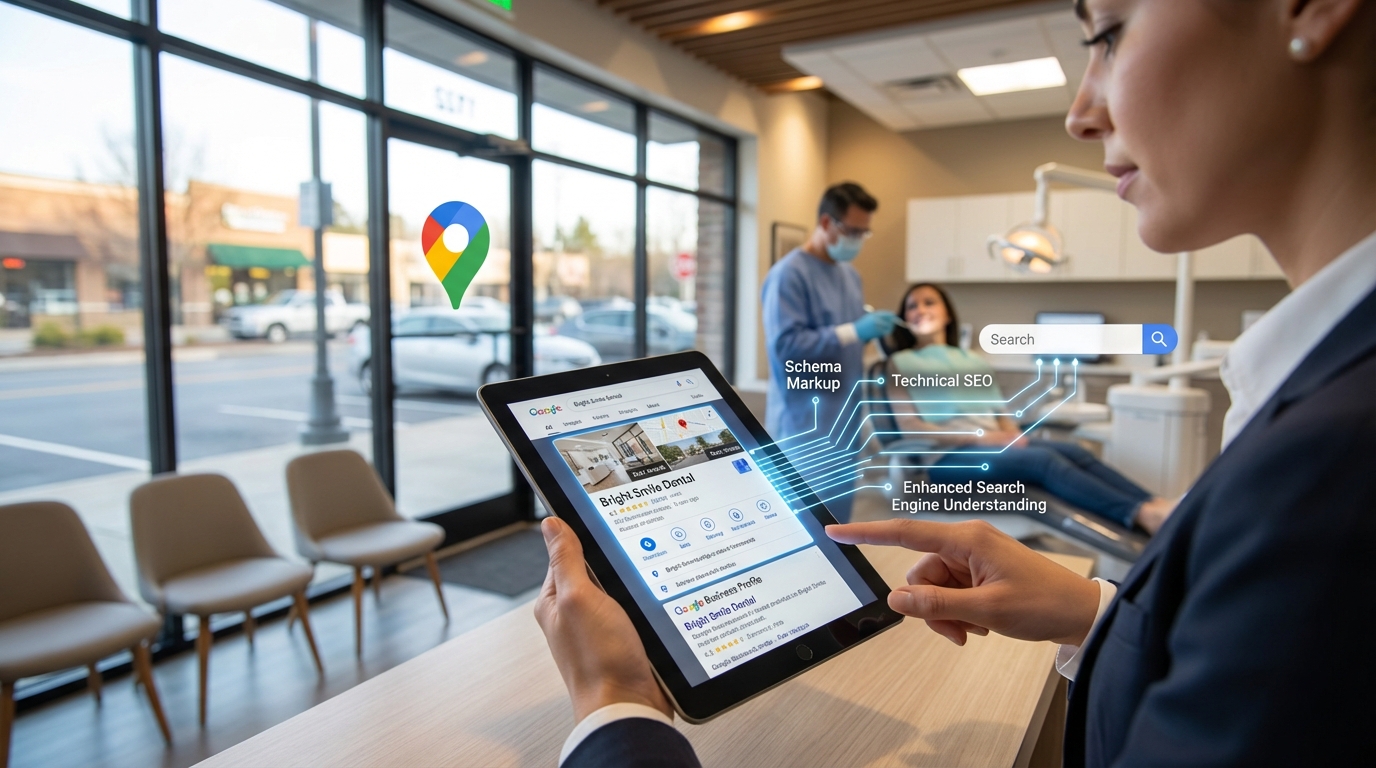
Structured data implementation through schema markup provides search engines explicit information about dental practices, services, practitioners, and patient reviews. This semantic annotation enables enhanced search result features including review stars, practitioner information panels, and rich snippets that improve click-through rates from organic search results. Dental websites should implement LocalBusiness schema combined with Dentist-specific organizational schema to maximize search engine comprehension.
What Technical Factors Impact Dental Website Rankings?
Beyond semantic markup, comprehensive technical SEO encompasses mobile optimization, page speed performance, secure HTTPS implementation, and proper URL structure. Given that approximately 60% of local searches originate from mobile devices, responsive dental website design represents a fundamental requirement rather than optional enhancement. Google Search Console provides invaluable diagnostic data regarding mobile usability issues, indexing problems, and search performance metrics that inform technical optimization priorities.
Voice search optimization has emerged as an increasingly relevant consideration as patients utilize digital assistants to conduct conversational queries like “find a pediatric dentist near me accepting new patients.” Optimizing for natural language patterns and question-based searches improves visibility for these longer, more specific queries that often signal high conversion intent.
Location Pages and Geo-Targeted Content Build Neighborhood Relevance
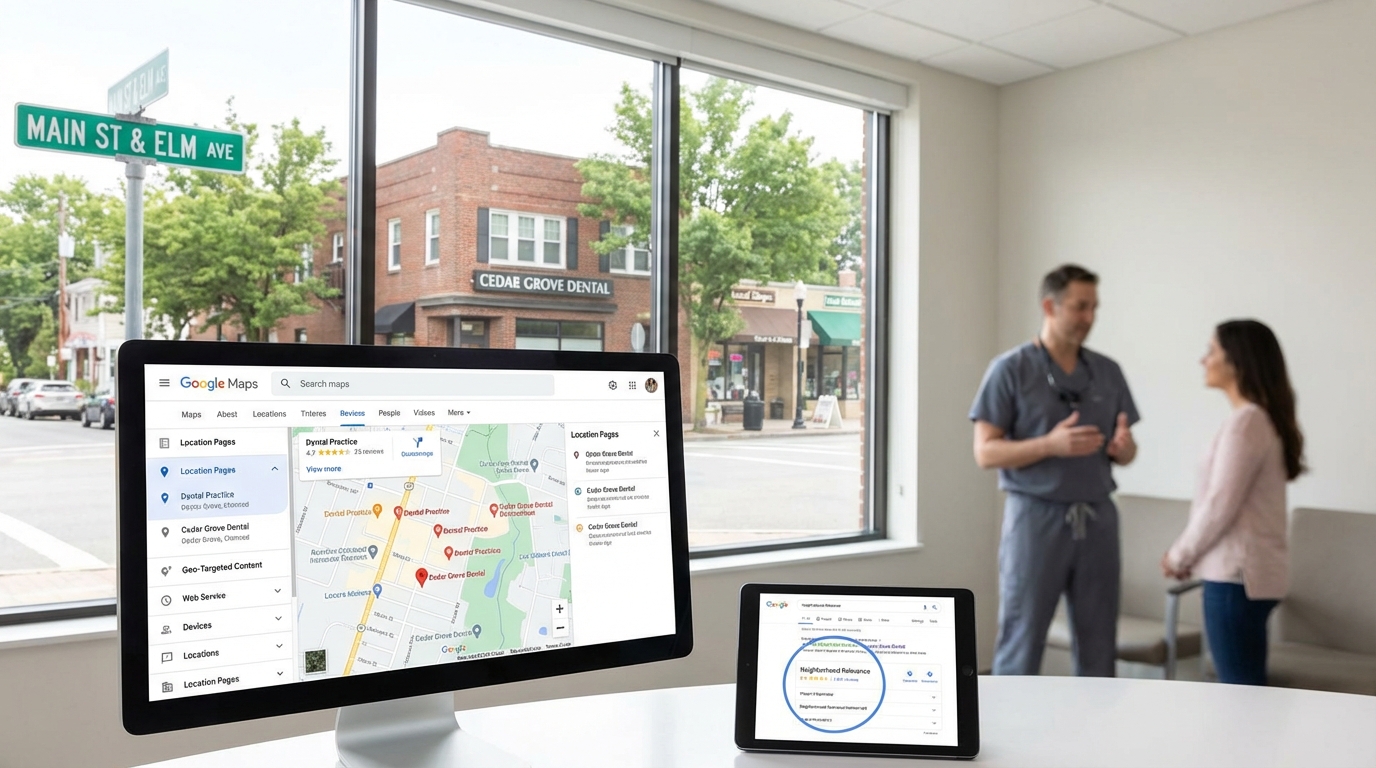
Dental practices serving multiple locations or broad service areas benefit substantially from dedicated location pages that target specific neighborhoods, suburbs, or communities. These neighborhood targeting pages should transcend simple template duplications, instead offering genuinely unique content addressing local demographics, community partnerships, directions from notable landmarks, and parking information specific to each location.
How Can Dentists Create Effective Geo-Targeted Content?
Successful local content creation integrates city-specific dental keywords naturally within informative articles addressing community health concerns, local dental health statistics, or participation in area events. A dental practice might publish content about “Managing Dental Emergencies for Boston Residents” or “Choosing Pediatric Dental Care in Austin’s Growing Neighborhoods,” incorporating city dental services terminology while providing genuine value to prospective patients.
| Content Type | SEO Benefits | Patient Value | Implementation Effort |
|---|---|---|---|
| Location Pages | Direct geographic targeting | Specific office information | Medium (initial setup) |
| Local Blog Posts | Long-tail keyword capture | Educational resources | High (ongoing content) |
| Community Event Coverage | Brand mentions and backlinks | Local engagement proof | Low (repurpose existing) |
| Service Area Pages | Extended geographic reach | Service availability clarity | Medium (template-based) |
Dental Link Building and Community Engagement Strengthen Local Authority

Acquiring high-quality backlinks from locally relevant sources signals topical authority and geographic legitimacy to search algorithms. Unlike generic link building approaches, local backlink strategies prioritize connections with community organizations, local news outlets, chambers of commerce, and complementary healthcare providers. A dental practice might sponsor youth sports teams, participate in school health education programs, or contribute expert commentary to local news stories about dental health topics.
Which Local Partnership Opportunities Generate Quality Backlinks?
Strategic community involvement creates natural link acquisition opportunities while simultaneously building genuine community dental presence. Dental practices should explore partnerships with local schools for educational presentations, collaborate with senior centers on dental health awareness programs, or sponsor community charity events. These activities frequently result in mentions on organizational websites, local news coverage, and community calendar listings—all valuable sources of geographically relevant backlinks that enhance local search ranking performance.
- Educational institution partnerships: School health programs, college athletics sponsorships
- Healthcare referral networks: Physician collaborations, specialty dental referrals
- Local business associations: Chamber of Commerce membership, business improvement districts
- Community service organizations: Rotary clubs, charitable foundations, health fairs
- Local media relationships: Expert commentary, health column contributions, press releases
Performance Monitoring Through Google Analytics and Specialized Tools
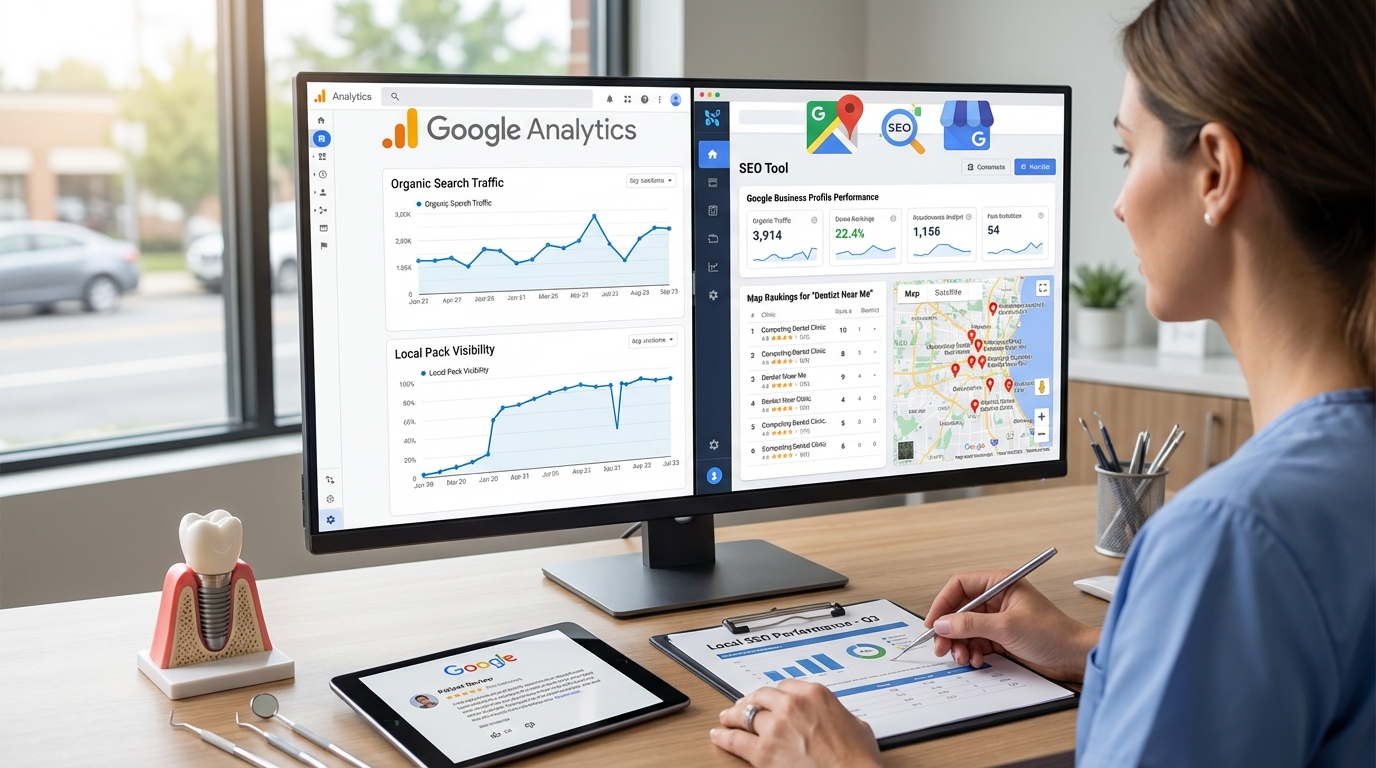
Systematic tracking of local SEO performance enables data-driven optimization decisions and ROI documentation. Google Analytics provides comprehensive insights into dental website traffic sources, user behavior patterns, and conversion metrics including appointment booking completions and contact form submissions. Configuring geographic reporting segments reveals which neighborhoods and cities generate the most valuable traffic, informing targeted marketing investments.
What Metrics Indicate Local SEO Success for Dental Practices?
Key performance indicators extend beyond vanity metrics like total website visits to encompass actionable measurements directly correlating with business objectives. Local dental traffic quality matters more than quantity—analyzing metrics such as average session duration, pages per session, and bounce rates identifies whether attracted visitors match target patient demographics. Google Business Profile insights reveal search query patterns, customer actions (calls, direction requests, website clicks), and comparative performance against local dental competition.
Specialized platforms including Moz Local, BrightLocal, and comprehensive SEO suites like Semrush offer consolidated dashboards tracking citation consistency, review accumulation, ranking positions for targeted geo-modified keywords, and competitive benchmarking. Regular monitoring of these metrics, ideally monthly or quarterly, identifies emerging opportunities and potential issues requiring immediate attention before they significantly impact dental practice visibility or local patient acquisition rates.
Frequently Asked Questions
How long does local SEO take to show results for a dental practice?
Local SEO typically requires 3-6 months before substantial improvements become evident, though some quick wins like Google Business Profile optimization may generate results within weeks. Factors influencing timeline include current online presence strength, local dental competition intensity, and implementation consistency. Practices starting with minimal digital footprints generally require longer establishment periods compared to those enhancing existing foundations.
Should dental practices invest in paid search alongside local SEO efforts?
Integrating paid search with organic local SEO creates comprehensive visibility across search results. While local SEO builds sustainable long-term presence, geo-targeted dental ads provide immediate visibility for high-intent searches and specific services. This hybrid approach proves particularly valuable for new practices establishing market presence or promoting time-sensitive offers like new patient specials.
How do dental specialists like orthodontists optimize differently than general dentists?
Dental specialists should emphasize their specific expertise through appropriate primary category selection in Google Business Profile, specialized service descriptions, and targeted content addressing specific conditions within their scope. Orthodontists benefit from content about braces and aligners, while endodontists should focus on root canal procedures. Citation building on specialty-specific directories like the American Association of Orthodontists’ member directory enhances specialty authority signals.
What percentage of dental patients find practices through local search?
Research indicates approximately 77% of patients use search engines before booking healthcare appointments, with local searches comprising the majority of these queries. For dental practices specifically, Google reports that “dentist near me” searches have increased over 200% in recent years, underscoring the critical importance of local search visibility for patient acquisition strategies.
Can dental practices serve areas outside their immediate physical location?
Yes, dental practices can optimize for expanded service areas through strategic creation of service area pages targeting surrounding communities and neighborhoods. Google Business Profile allows specification of service areas extending beyond the practice address. However, proximity ranking factors mean practices typically rank strongest for searches originating near their physical location, with ranking strength diminishing as geographic distance increases.
How important are online reviews compared to other local SEO factors?
Online reviews represent approximately 15-20% of local ranking factors according to industry studies, making them among the most influential elements alongside Google Business Profile optimization and NAP citation consistency. Beyond algorithmic impact, reviews significantly influence patient decision-making, with 84% of people trusting online reviews as much as personal recommendations. The combination of ranking influence and conversion impact makes review management essential for comprehensive dental marketing strategies.
Local Service Ads for Local Business : Complete Guide to Google’s Pay Per Lead Advertising Platform
In the competitive landscape of local service marketing, businesses require innovative advertising solutions that deliver measurable results without draining marketing budgets. Local Service Ads (LSA) represent a paradigm shift in how service area businesses connect with customers actively seeking their expertise. This performance-based advertising platform, developed by Google, offers home service providers and professional service companies a cost-effective method to generate qualified leads while building trust through verified credentials and customer reviews.
Unlike traditional Google Ads that charge per click regardless of lead quality, Local Service Ads operate on a pay per lead model, ensuring businesses only invest in genuine customer inquiries. This comprehensive guide examines the intricate mechanisms of LSA, providing service business owners with actionable insights to maximize their local market presence and achieve sustainable service business growth.
TL;DR Summary
Local Service Ads are Google’s pay-per-lead advertising platform designed specifically for service area businesses. They appear at the top of local search results with Google Guarantee or Google Screened badges, and businesses only pay when customers contact them directly. The platform requires background checks, license verification, and insurance verification, making it a trusted local service directory that helps qualified service leads find verified service professionals in their area.
Understanding Local Service Ads and Google’s Verified Service Professional Platform
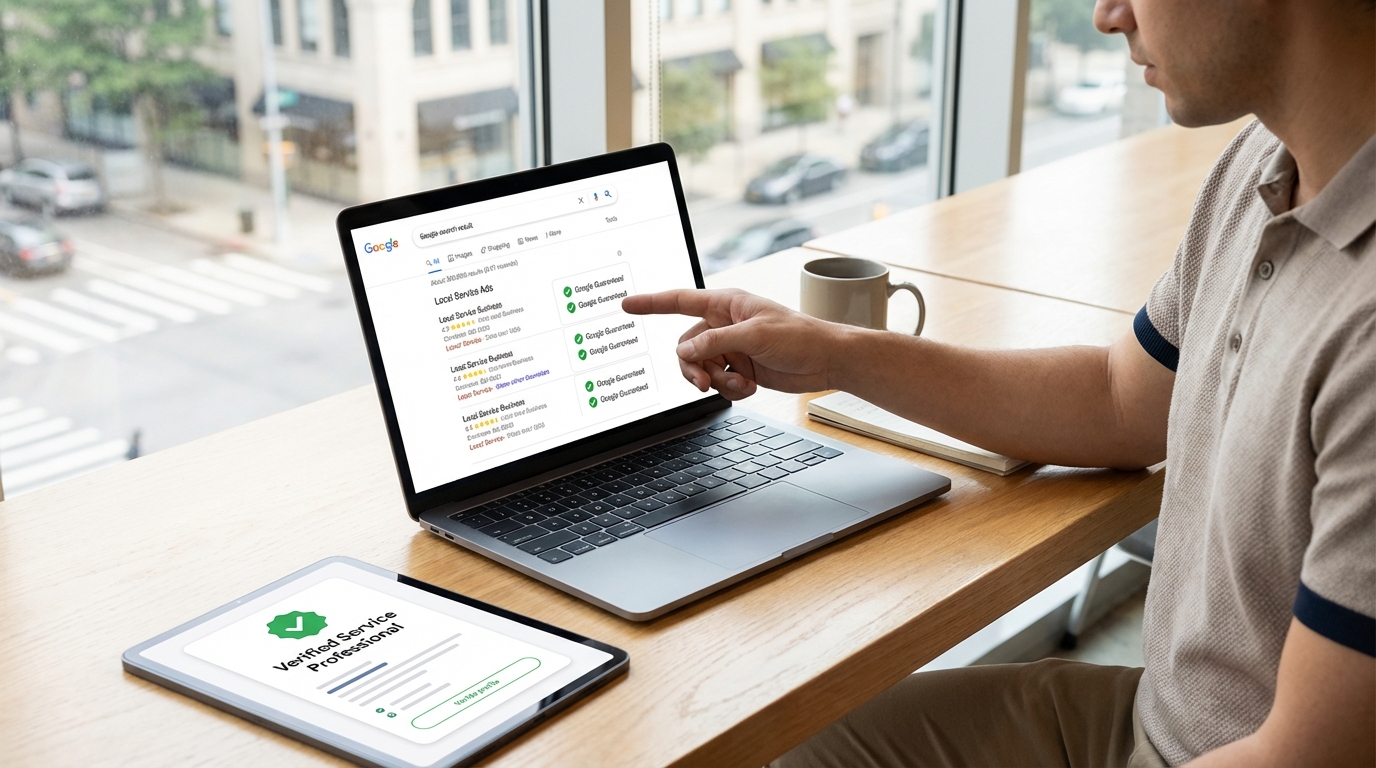
Local Service Ads represent Google’s strategic initiative to connect consumers with background checked businesses in their immediate vicinity. These local advertising solutions occupy premium placement above traditional Google Ads and organic search results, providing unparalleled service business visibility for participating companies. The platform distinguishes itself through rigorous verification requirements that establish credibility before businesses can advertise their services.
The LSA ecosystem functions as a comprehensive service provider platform where home service professionals and licensed service providers compete for prominent positioning based on proximity, review ratings, response times, and business profile completeness. This verified business platform serves dual purposes: protecting consumers through thorough vetting processes while providing service industry advertising opportunities that generate tangible business outcomes.
Google Guarantee and Google Screened Badge Programs
The distinction between Google Guarantee and Google Screened badges significantly impacts consumer perception and trust establishment. Home services businesses including HVAC, plumbing, electrical, locksmith, garage door repair, cleaning services, lawn care, tree services, pest control, appliance repair, roofing, painting, flooring, and handyman services qualify for the Google Guarantee badge. This certification provides customers with financial protection up to the lifetime cap for jobs booked through the platform, establishing these verified local businesses as trustworthy service providers.
Professional services including real estate agents, attorneys, financial planners, and tax professionals receive the Google Screened designation. While lacking the monetary guarantee component, this verification confirms comprehensive background check completion, license verification where applicable, and business credential authentication. Both badge types significantly enhance contractor advertising effectiveness by prominently displaying trust signals directly in search results.
Service Categories and Local Service Ads Eligibility Requirements
Google continuously expands the service categories eligible for LSA participation, though availability varies considerably by geographic market. The platform primarily serves home improvement marketing needs and professional services marketing requirements across numerous specializations.
| Service Category | Badge Type | Common Verification Requirements |
|---|---|---|
| HVAC, Plumbing, Electrical | Google Guarantee | License, Insurance, Background Check |
| Locksmith, Garage Door Repair | Google Guarantee | Insurance, Background Check, Business Registration |
| Cleaning, Lawn Care, Pest Control | Google Guarantee | Insurance, Background Check |
| Roofing, Painting, Flooring | Google Guarantee | License (if required), Insurance, Background Check |
| Real Estate, Legal Services | Google Screened | Professional License, Background Check |
| Financial Planning, Tax Services | Google Screened | Professional Certification, Background Check |
Background Check and Verification Process
The local service ads background check process establishes the foundation for platform credibility. Business owners and employees with customer-facing responsibilities must complete comprehensive screenings including:
- Criminal background checks examining federal, state, and county records
- Motor vehicle records for service businesses requiring driving
- Business license verification through municipal and state databases
- Insurance verification confirming adequate liability coverage
- Professional license authentication for regulated industries
- Business entity verification confirming legal registration status
This verification process for neighborhood services establishes LSA as a premium verified contractor platform, distinguishing participating businesses from unverified competitors in local search advertising results. The google local service ads verification requirements typically complete within seven to fourteen business days, though complex licensing situations may extend processing timeframes.
Pay Per Lead Advertising Model and Local Service Ads Cost Structure
The fundamental economic advantage of Local Service Ads derives from the pay per lead pricing structure, which eliminates wasteful spending on uninterested searchers. Unlike traditional pay per call advertising or cost-per-click campaigns, businesses incur charges only when prospective customers initiate contact through phone leads, message leads, or booking leads.
Local service ads cost per lead varies substantially based on multiple factors including service category, geographic market competitiveness, and seasonal demand fluctuations. High-value services such as HVAC installation, roofing projects, and major appliance repair typically command higher per-lead costs ranging from $25 to $75 per qualified contact. Conversely, routine maintenance services like lawn care or standard cleaning may generate leads at $10 to $30 per inquiry.
Budget Management and Weekly Budget Optimization
The platform provides flexible budget management through weekly budget allocations rather than daily caps. This structure allows service business owners to establish spending parameters while maintaining consistent lead flow throughout the period. The mobile app and desktop dashboard provide real-time monitoring capabilities for tracking spend velocity and lead acquisition rates.
Strategic local service ads budget recommendations typically suggest:
- Allocating 3-5 times the average lead cost to ensure sufficient lead volume
- Adjusting budgets seasonally to capitalize on peak demand periods
- Monitoring cost-per-acquisition metrics to identify optimal spending levels
- Comparing LSA performance against traditional contractor marketing platform investments
- Implementing gradual budget increases as response efficiency improves
Local Service Ads Setup Process for Small Business Success
Understanding how to set up local service ads for small business operations requires systematic attention to platform requirements and profile optimization strategies. The onboarding process, while straightforward, demands thoroughness to ensure approval and competitive positioning within the verified business listings.
Initial Registration and Business Profile Creation
The setup journey begins with Google My Business profile verification, as LSA directly integrates with existing business listings. Service providers access the Local Service Ads platform through a dedicated portal, initiating registration by selecting appropriate service categories and defining their service area parameters. Geographic targeting capabilities allow businesses to specify neighborhoods, municipalities, or radius-based coverage areas where they accept projects.
Business profile completion requires comprehensive information including:
- Business name, address, and contact information matching Google My Business data
- Detailed service offerings within the selected primary category
- Operating hours and emergency availability status
- Technician or team member profiles for background check processing
- Business photos showcasing completed work and team professionalism
- Insurance documentation meeting platform minimum requirements
License and Insurance Verification Documentation
The license verification and insurance verification components represent critical approval gates. Businesses must upload current documentation demonstrating compliance with jurisdictional requirements. For industries requiring professional licensing such as plumbing, electrical work, or HVAC installation, unexpired license credentials from appropriate regulatory bodies are mandatory. General liability insurance certificates must clearly display coverage amounts meeting or exceeding platform minimums, typically ranging from $500,000 to $1,000,000 depending on service category.
Optimizing Local Service Ads Performance and Improving Ranking Position
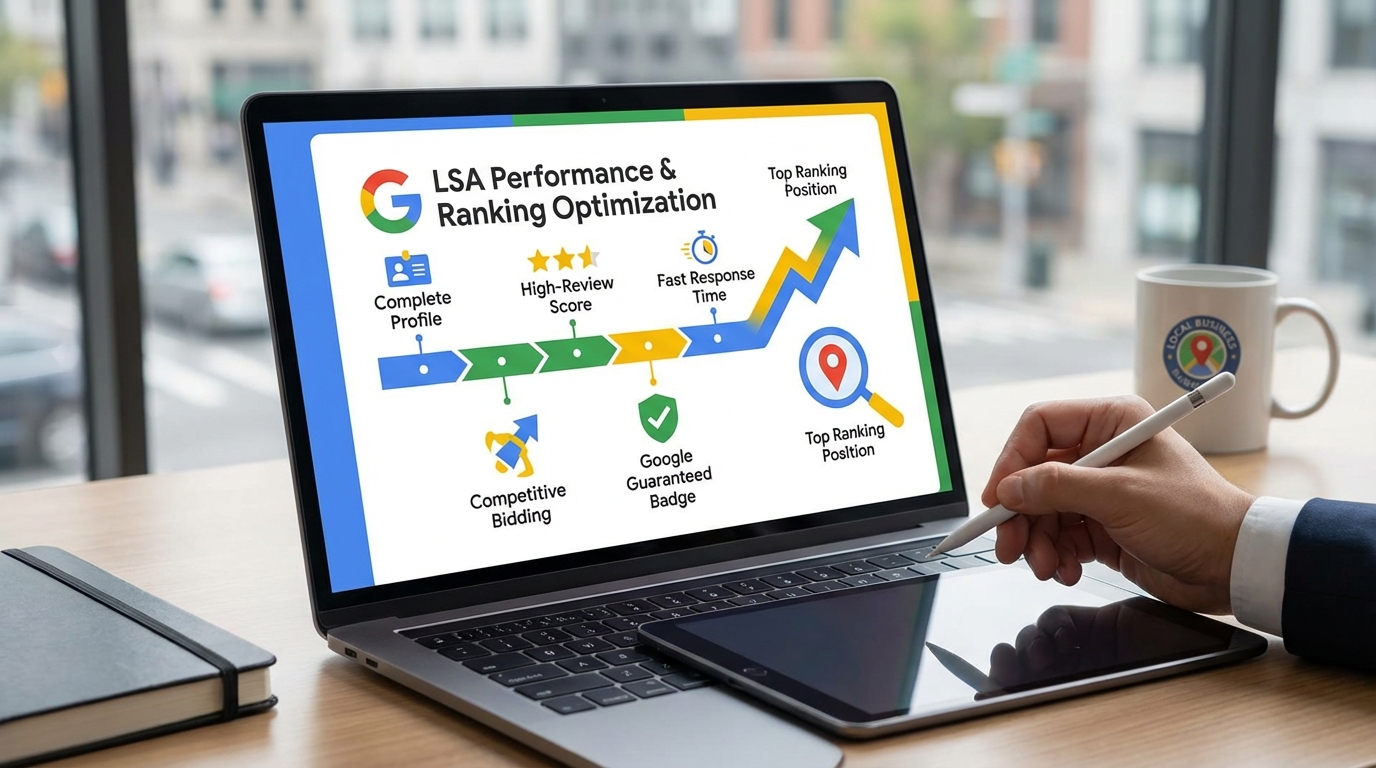
Achieving optimal results from this local lead generation platform extends beyond initial setup to encompass ongoing optimization strategies. The LSA ranking algorithm considers multiple factors when determining which verified service companies appear prominently for relevant searches.
| Ranking Factor | Impact Level | Optimization Strategy |
|---|---|---|
| Proximity to Searcher | High | Expand service area strategically; maintain accurate business location |
| Review Quality and Quantity | High | Actively request reviews; maintain 4.0+ average rating |
| Response Time | High | Answer inquiries within minutes; enable mobile notifications |
| Responsiveness Rate | Medium | Respond to all leads; minimize ignored contact attempts |
| Business Profile Completeness | Medium | Add photos, detailed services, operating hours |
| Budget Availability | Medium | Maintain adequate weekly budget to avoid ad suspension |
Local Service Ads Response Time Best Practices
Response velocity significantly influences both ranking position and conversion rates. The platform prioritizes businesses demonstrating consistent rapid response patterns, recognizing that consumers seeking immediate assistance prefer instantly available service professionals. Implementing local service ads response time best practices includes:
- Enabling push notifications on the mobile app for instant lead alerts
- Establishing response protocols ensuring sub-15-minute reply times
- Utilizing automated initial responses while preparing personalized follow-up
- Assigning dedicated team members to monitor incoming LSA inquiries
- Implementing after-hours answering services during non-business hours
Customer Reviews and Ratings Management
The importance of customer reviews within the LSA ecosystem cannot be overstated. Reviews function as primary trust indicators, directly influencing consumer selection decisions and algorithmic ranking calculations. Service businesses must implement systematic review generation strategies including post-service follow-up communications, simplified review submission processes, and consistent quality service delivery warranting positive feedback.
Managing review profiles requires proactive engagement with all feedback, including addressing negative reviews professionally. The local service ads reviews and ratings importance extends to dispute resolution capabilities, allowing businesses to contest reviews not compliant with platform policies. Maintaining an average rating above 4.0 with substantial review volume establishes competitive advantages in crowded service categories.
Lead Management and Service Call Tracking Through LSA Platform
Effective lead types management distinguishes successful LSA campaigns from underperforming initiatives. The platform generates three primary contact categories: phone leads initiated through click-to-call functionality, message leads submitted via inquiry forms, and booking leads where consumers directly schedule appointments through integrated calendar systems.
Lead Quality Assessment and Dispute Process
Not all generated contacts represent valid billable leads. Google recognizes that service call tracking must account for low-quality inquiries, providing mechanisms for challenging charges through the local service ads dispute process for invalid leads. Valid dispute categories include:
- Wrong service category inquiries outside business specialization
- Calls or messages outside defined service area boundaries
- Solicitation attempts from other businesses or salespeople
- Extremely brief contacts lacking substantive information exchange
- Duplicate inquiries from the same customer within specified timeframes
Businesses typically have fourteen days from lead generation to submit disputes through the desktop dashboard or mobile app, with resolution determinations generally provided within several business days. Maintaining appropriate service business solutions includes regular lead quality audits to identify disputable charges and optimize budget efficiency.
Local Service Ads Versus Traditional Google Ads Comparison
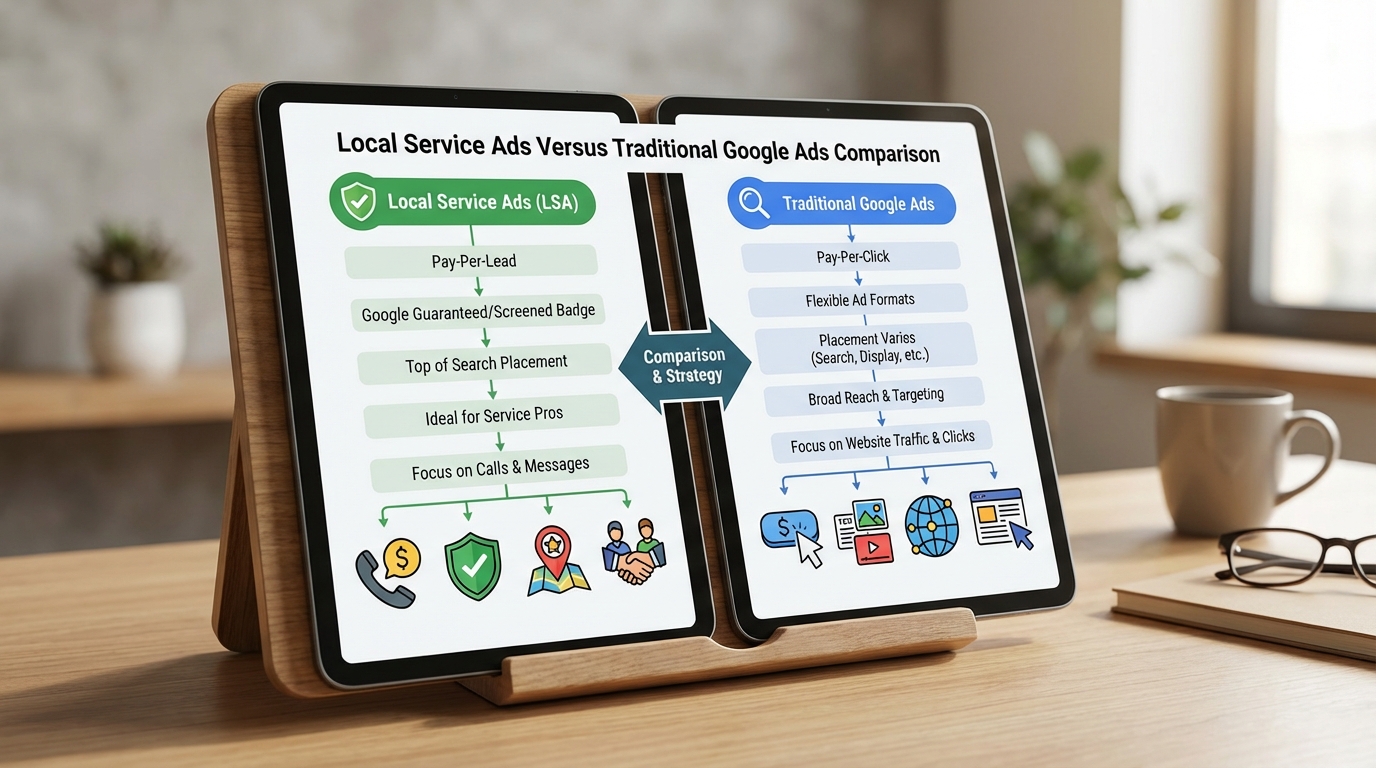
Service business owners frequently evaluate local service ads vs google ads comparison to determine optimal advertising allocation. These platforms serve complementary rather than competing functions within comprehensive local business promotion strategies.
| Feature | Local Service Ads | Traditional Google Ads |
|---|---|---|
| Pricing Model | Pay per lead (contact-based) | Pay per click (visit-based) |
| Placement | Top of search results | Above organic results, below LSA |
| Trust Signals | Google Guarantee/Screened badges | Ad designation only |
| Qualification Requirements | Background checks, licenses, insurance | Payment method only |
| Lead Quality Control | Dispute process available | Limited quality guarantees |
| Geographic Targeting | Service area based | Flexible radius or location targeting |
| Ad Customization | Limited (standardized format) | Extensive (headlines, descriptions, extensions) |
The strategic approach for many service professional marketing campaigns involves deploying both platforms synergistically. Local Service Ads capture high-intent consumers seeking immediate assistance and valuing verification credentials, while traditional Google Ads provides broader reach with customized messaging and remarketing capabilities. This multi-channel approach to local search marketing optimizes map pack placement opportunities while maintaining consistent visibility across search result pages.
Maximizing ROI With Local Service Ads for Service Business Growth
Achieving optimal return on investment from this performance based advertising platform requires systematic tracking, analysis, and refinement. Service business owners should establish clear key performance indicators including cost per acquisition, lead-to-customer conversion rates, average project values, and customer lifetime value metrics.
Conversion Optimization Strategies
Maximizing roi with local service ads extends beyond platform mechanics to encompass operational excellence in lead follow-up and customer engagement. The local service ads message leads conversion rate typically lags behind phone leads, as text-based communication allows prospects to contact multiple providers simultaneously. Implementing rapid, personalized responses with clear next-step recommendations significantly improves message lead conversion performance.
Phone leads generally convert at higher rates due to immediate personal interaction opportunities. Training team members in consultative selling techniques, active listening skills, and professional phone etiquette enhances lead monetization. Recording and reviewing calls provides valuable insights for continuous improvement while ensuring quality standards across customer interactions.
Expanding Service Area for Local Service Ads Coverage
Geographic expansion strategies represent growth opportunities for established LSA participants. The platform allows expanding service area for local service ads incrementally, testing new markets without significant upfront investment. Businesses should evaluate expansion decisions based on service capacity, competitive intensity in target markets, and travel time economics affecting profitability margins.
Maintaining service quality across broader geographic territories requires operational considerations including technician availability, inventory positioning, and response time capabilities. The benefits of local service ads for contractors increase substantially when businesses can maintain consistent service standards across their entire coverage area, supporting positive review generation and reputation building.
Industry-Specific Local Service Ads Strategies and Applications
Different service categories require tailored approaches to optimize campaign performance within the verified professional platform framework.
Best Local Service Ads for HVAC Companies and Seasonal Service Providers
HVAC contractors experience pronounced seasonal demand fluctuations requiring dynamic budget adjustments. Implementing aggressive budgets during peak cooling and heating seasons captures high-value installation and repair opportunities, while maintenance-focused positioning during shoulder seasons maintains consistent lead flow. Highlighting emergency availability and rapid response capabilities differentiates providers in competitive markets.
Google Local Service Ads for Plumbers and Emergency Service Businesses
Plumbing services benefit significantly from LSA’s immediate-need customer targeting. Emphasizing 24/7 availability, rapid response capabilities, and emergency service expertise attracts high-value urgent repair inquiries. Maintaining consistently high responsiveness rates proves particularly critical for emergency service positioning, as consumers in crisis situations rarely wait extended periods for callbacks.
Local Service Ads for Cleaning Services Business and Recurring Revenue Models
Cleaning service providers leverage LSA to acquire initial customers while focusing on conversion to recurring service agreements. The platform excels at generating first-time inquiries, making customer retention strategies essential for campaign profitability. Highlighting specialized cleaning services, green cleaning options, and satisfaction guarantees differentiates providers in saturated markets.
Future Developments and Evolving Local Service Marketing Landscape
Google continues expanding and refining the Local Service Ads platform, introducing enhanced features and additional service categories regularly. Recent developments include booking integration capabilities allowing direct appointment scheduling, enhanced messaging features supporting multimedia communication, and improved analytics providing deeper performance insights.
The trajectory of local contractor lead generation increasingly favors verified business marketing approaches emphasizing transparency, qualification, and performance accountability. Service providers embracing these trusted local services standards position themselves advantageously as consumer expectations evolve toward greater service provider accountability and verifiable credentials.
Integration between LSA and other Google properties including Google My Business and Google Maps continues deepening, creating unified local business advertising ecosystems. This convergence amplifies the importance of maintaining consistent, optimized profiles across all Google touchpoints to maximize local service visibility and market presence.
Frequently Asked Questions
How much do local service ads cost per lead for small businesses?
Local Service Ads costs vary significantly based on service category, geographic market, and competition levels. Average lead costs range from $10-$30 for routine services like lawn care and basic cleaning, while specialized services such as HVAC installation, roofing, or electrical work typically cost $25-$75 per lead. High-value professional services like legal consultation may exceed $100 per lead. Businesses set weekly budgets and only pay when customers contact them directly through phone calls, messages, or booking requests, making it a performance-based advertising model that protects against wasteful spending.
What are the requirements to get Google Guaranteed status for Local Service Ads?
Obtaining Google Guarantee status requires completing several verification steps: passing comprehensive background checks for business owners and customer-facing employees, providing proof of required business licenses for your service category and jurisdiction, submitting current general liability insurance documentation meeting minimum coverage requirements (typically $500,000-$1,000,000), verifying business registration with appropriate state and local authorities, and maintaining good standing with proper tax compliance. The verification process usually takes 7-14 business days, and businesses must maintain these qualifications continuously to retain their Google Guarantee badge.
Can I dispute charges for invalid leads in Local Service Ads?
Yes, Google provides a dispute process for invalid or low-quality leads within Local Service Ads. Valid dispute reasons include inquiries for services outside your selected categories, contacts from customers outside your defined service area, solicitation calls from other businesses rather than genuine customers, extremely brief interactions without substantive information exchange, and duplicate contacts from the same customer within a short timeframe. Businesses have fourteen days from when the lead was generated to submit disputes through the desktop dashboard or mobile app. Google typically reviews and resolves disputes within several business days, crediting accounts for approved disputes.
How do Local Service Ads differ from regular Google Ads for service businesses?
Local Service Ads differ from traditional Google Ads in several fundamental ways. LSA uses a pay-per-lead model where you only pay for actual customer contacts, while Google Ads charges per click regardless of lead quality. Local Service Ads appear at the very top of search results with Google Guarantee or Google Screened badges, above traditional ads. LSA requires background checks, license verification, and insurance documentation, creating higher barriers to entry but greater consumer trust. The ad format is standardized with limited customization, while Google Ads offers extensive creative control. LSA focuses exclusively on local, service-area based businesses, whereas Google Ads serves broader advertising needs across industries and geographies.
What factors determine my ranking position in Local Service Ads results?
Local Service Ads ranking depends on multiple factors that Google’s algorithm evaluates dynamically. Proximity to the searching customer significantly impacts placement, as the platform prioritizes nearby service providers. Review ratings and quantity strongly influence rankings, with businesses maintaining 4.0+ ratings and substantial review volumes receiving preferential positioning. Response time and responsiveness rate measure how quickly you reply to inquiries and what percentage of leads you engage with. Business profile completeness, including photos, detailed service descriptions, and operating hours, affects visibility. Finally, budget availability ensures your ads continue appearing when your weekly budget remains active. Optimizing these factors collectively improves your competitive positioning within your service category and geographic market.
Which service categories are currently available for Local Service Ads?
Local Service Ads availability varies by location, but commonly supported categories include home services such as HVAC, plumbing, electrical, locksmith services, garage door repair, cleaning services, lawn care, tree services, pest control, appliance repair, roofing, painting, flooring, and handyman services. Professional services including real estate agents, attorneys, financial planners, and tax professionals are available in many markets with Google Screened designation. The platform continuously expands into additional service categories and geographic regions. To determine if your specific service category is available in your market, visit the Local Service Ads website and enter your business information during the initial qualification process.
Answer Engine Optimization: The Complete Guide to AI-Powered Search and Conversational Query Success
The digital landscape is undergoing a fundamental transformation as artificial intelligence reshapes how users discover and consume information online. Traditional search engines are evolving into sophisticated answer engines powered by Large Language Models and advanced Natural Language Processing capabilities. This paradigm shift has given rise to Answer Engine Optimization (AEO), a critical discipline that extends beyond conventional Search Engine Optimization to address the unique requirements of AI-powered search platforms including ChatGPT, Google Gemini, Perplexity AI, and Claude.
Answer Engine Optimization represents the systematic approach to structuring, formatting, and optimizing digital content so that AI systems can accurately retrieve, understand, and present information as direct answers to user queries. Unlike traditional SEO that focuses primarily on ranking within search results pages, AEO emphasizes answer precision, contextual relevance, and semantic understanding to ensure content appears within AI-generated responses, Featured Snippets, and Zero-Click Searches across multiple platforms.
As organizations recognize that an increasing percentage of searches result in direct answers rather than traditional click-throughs, mastering AEO has become essential for maintaining search visibility and content discoverability in this new era of intelligent search and Generative AI.
TL;DR Summary
Answer Engine Optimization (AEO) is the practice of optimizing content for AI-powered search platforms and Large Language Models that provide direct answers to user queries. Unlike traditional SEO, AEO focuses on semantic understanding, structured data implementation, and content formatting that enables ChatGPT, Google Gemini, Perplexity AI, and other answer engines to accurately retrieve and present information. Success requires implementing Schema Markup, creating conversational content, optimizing for entity relationships, and structuring information for machine-readable formats.
Understanding Answer Engines: From Google to ChatGPT and Beyond

Answer engines represent a fundamental evolution in information retrieval systems, distinguished from traditional search engines by their ability to synthesize information and generate comprehensive responses rather than simply providing ranked lists of web pages. This transformation has been driven by breakthroughs in Machine Learning, Natural Language Processing, and the development of sophisticated Large Language Models by organizations including OpenAI, Anthropic, and Google.
Traditional search engines like Google and Bing have progressively incorporated answer engine features through Rich Results, Knowledge Graph displays, and Featured Snippets. However, the emergence of dedicated AI search platforms has accelerated this transition. ChatGPT, powered by OpenAI’s GPT architecture, demonstrated unprecedented capability in understanding conversational queries and generating contextual answers. Google responded with Bard, later rebranded as Gemini, while Microsoft integrated GPT technology into Bing. Specialized platforms like Perplexity AI have emerged specifically to combine search capabilities with generative answer generation.
The technical foundation of these systems relies on Retrieval Augmented Generation (RAG), a methodology that combines vector search across Vector Databases with Large Language Model inference. This approach enables answer engines to access current information while leveraging the semantic understanding and natural language generation capabilities of AI models. The result is a search experience that provides comprehensive responses, contextual answers, and cited sources rather than requiring users to navigate multiple web pages.
The Role of Large Language Models in Answer Generation
Large Language Models including GPT, BERT, and Claude serve as the computational engines powering modern answer systems. These models process natural language queries through sophisticated Embeddings that capture semantic relationships and contextual meaning. When a user submits a conversational query, the system interprets intent, retrieves relevant information from indexed sources, and generates responses that match the query’s semantic understanding requirements.
Google’s implementation of BERT and subsequent language models transformed its ability to process natural language queries and understand query interpretation nuances. The Search Generative Experience (SGE), now manifested as AI Overviews, represents Google’s direct integration of generative capabilities into traditional search results. This convergence of technologies means that content optimization must now address both conventional ranking factors and the unique requirements of AI-powered answer generation.
Answer Engine Optimization vs SEO: Critical Differences and Complementary Strategies
While Answer Engine Optimization builds upon Search Engine Optimization foundations, the disciplines differ in fundamental ways that require distinct strategic approaches. Understanding these differences enables organizations to develop comprehensive strategies that address both traditional search visibility and answer engine prominence.
| Aspect | Traditional SEO | Answer Engine Optimization |
|---|---|---|
| Primary Objective | Ranking in search results pages | Being selected as the authoritative answer source |
| Content Focus | Keywords and ranking signals | Semantic understanding and contextual relevance |
| Success Metric | Click-through rates and rankings | Answer inclusion and citation frequency |
| Technical Implementation | Meta tags and traditional markup | Structured Data, Schema Markup, and entity optimization |
| Content Structure | Keyword optimization and readability | Question-answer formats and machine-readable content |
| User Interaction | Page visits and engagement | Direct answers and Zero-Click Searches |
Traditional SEO prioritizes factors including backlink profiles, domain authority, and keyword optimization to achieve favorable positions in search engine results pages. AEO, conversely, emphasizes answer completeness, content structuring for direct extraction, and semantic signals that enable AI systems to confidently cite content as authoritative information sources.
The rise of Zero-Click Searches—where users obtain answers without clicking through to websites—fundamentally challenges conventional traffic-based SEO metrics. Organizations must now balance the goal of capturing featured answer positions with maintaining sufficient engagement to achieve business objectives. This requires sophisticated content strategies that provide immediate value through extracted answers while encouraging deeper exploration of comprehensive resources.
Semantic Search and Entity Relationships in Modern Optimization
Semantic Search represents a cornerstone difference between traditional and answer-based optimization. Rather than matching keywords, answer engines understand topical relevance through entity recognition and knowledge representation. Google’s Knowledge Graph exemplifies this approach, mapping relationships between entities to understand context and deliver precise answers.
Effective AEO requires optimizing for these semantic relationships rather than isolated keywords. Content must establish clear entity connections, demonstrate topical authority, and provide the contextual information that answer engines require to understand how information relates to broader knowledge domains. This semantic approach enables more accurate query-answer matching and improves the likelihood of content selection across various question formats.
Implementing Structured Data and Schema Markup for Answer Engines

Structured Data implementation represents perhaps the most technically critical aspect of Answer Engine Optimization. Schema Markup provides the machine-readable framework that enables answer engines to extract, understand, and confidently present information from web content. Without proper data markup, even exceptional content may remain invisible to AI systems seeking authoritative sources for answer generation.
Schema.org vocabulary offers extensive markup types specifically designed to communicate content structure to machines. For AEO purposes, several schema types deliver particular value:
- FAQPage Schema: Explicitly identifies question-answer pairs, making content directly accessible to answer engines seeking responses to specific queries
- HowTo Schema: Structures procedural content in machine-readable formats that answer engines can parse and present as step-by-step instructions
- Article Schema: Provides metadata about content authorship, publication dates, and topical focus that establishes credibility and relevance
- Organization and Person Schema: Establishes entity relationships and authority signals that influence answer engine trust assessments
- Product and Review Schema: Enables answer engines to extract specific attributes, ratings, and comparative information for commerce-related queries
- Event Schema: Facilitates accurate extraction of temporal information including dates, locations, and scheduling details
Structured content optimization extends beyond simple markup implementation. Content architecture must align information hierarchy with semantic relationships that answer engines recognize. This includes proper heading structures (H1 through H6 tags) that create logical information hierarchies, descriptive anchor text that clarifies entity relationships, and consistent terminology that reinforces topical relevance throughout content.
Technical Implementation for Machine Readable Content
Effective schema implementation requires attention to technical precision and validation. JSON-LD (JavaScript Object Notation for Linked Data) has emerged as the preferred format for structured data implementation, offering cleaner integration than microdata alternatives. Google, Bing, and AI search platforms recognize JSON-LD markup, making it essential for comprehensive answer engine visibility.
Organizations should implement systematic validation processes using tools including Google’s Rich Results Test and Schema Markup Validator to ensure proper implementation. Incorrect markup not only fails to provide AEO benefits but may trigger errors that diminish overall content credibility in answer engine assessments. Regular audits should verify that markup remains current as content evolves and new schema types emerge to support additional answer formats.
Content Optimization Strategy for Natural Language Processing and AI Understanding
Creating content that resonates with both human readers and AI systems requires balancing natural language readability with the structural precision that enables machine understanding. Answer engine optimization demands content that addresses conversational queries while maintaining the semantic clarity and content depth that AI systems require for confident answer generation.
Natural language queries differ substantially from traditional keyword searches. Users interact with ChatGPT, Claude, Google Assistant, Alexa, and Siri using complete questions and conversational phrasing rather than keyword fragments. Content optimization must anticipate these natural phrasing patterns while providing comprehensive responses that address the full scope of user intent.
Question-Answer Optimization and Intent-Based Content
Effective AEO content explicitly addresses questions using formats that answer engines can readily extract. This includes:
- Direct answer statements that immediately address the core question in opening paragraphs
- Comprehensive explanations that provide context and supporting information
- Alternative phrasings that address query variations users might employ
- Related questions that anticipate follow-up queries and demonstrate content depth
- Clear attribution and citation sources that establish content credibility
Query interpretation requires understanding user intent across informational, navigational, commercial, and transactional categories. Answer engines prioritize content that demonstrates clear alignment with query intent through relevant information, appropriate content depth, and answer completeness. Surface-level content that fails to address user needs comprehensively will not achieve selection as authoritative answer sources regardless of technical optimization.
Creating Authoritative Content and Trustworthy Information
Answer engines, particularly those incorporating Retrieval Augmented Generation, prioritize authoritative content from trustworthy sources. This emphasis reflects the critical importance of accuracy when providing direct answers that users may act upon without additional verification. Content optimization must therefore address trust signals including:
- Clear author attribution with demonstrated expertise in relevant subject areas
- Publication dates and update timestamps that establish content currency
- Citations to primary sources and supporting references
- Transparent methodology explanations for data-driven content
- Explicit disclosure of affiliations or potential conflicts of interest
- Professional presentation that reflects editorial standards and quality control
Google’s E-E-A-T framework (Experience, Expertise, Authoritativeness, Trustworthiness) influences not only traditional search rankings but answer engine selection processes. Content creators must demonstrate genuine knowledge and provide accurate answers supported by credible evidence. The propagation of misinformation through AI-generated answers creates significant risks, making answer engines increasingly sophisticated in assessing source reliability.
Optimizing for Voice Search and Virtual Assistants

Voice Search through Virtual Assistants including Google Assistant, Alexa, and Siri represents a critical component of Answer Engine Optimization strategy. Voice interactions typically generate a single spoken response rather than multiple options, making answer engine selection the sole determinant of visibility. This winner-take-all dynamic intensifies the importance of optimization for voice-based query resolution.
Voice queries exhibit distinct characteristics that influence optimization approaches. Users employ longer, more conversational phrasing when speaking compared to typed searches. Questions often include contextual qualifiers, local references, and natural language structures that require semantic understanding beyond simple keyword matching. Content must address these conversational queries through natural phrasing that mirrors how people actually speak.
Local optimization assumes particular importance for voice search, as users frequently seek immediate, location-specific information through virtual assistants. This requires consistent business information across platforms, location-specific content that addresses regional variations, and schema markup that clearly communicates geographic relevance. Featured Snippets often serve as source material for voice responses, making Featured Snippet optimization a critical pathway to voice search visibility.
Measuring Answer Engine Optimization Success and Performance Metrics
Quantifying Answer Engine Optimization effectiveness requires developing measurement frameworks that extend beyond traditional SEO metrics. While organic traffic remains valuable, AEO success manifests through indicators including answer inclusion rates, citation frequency across AI platforms, and position zero achievements in Featured Snippets.
| Metric Category | Key Performance Indicators | Measurement Approach |
|---|---|---|
| Answer Visibility | Featured snippet captures, AI Overview appearances, ChatGPT citations | Manual queries and monitoring tools |
| Content Selection | Frequency of content citation by answer engines | Brand monitoring and source attribution tracking |
| Query Coverage | Percentage of target questions triggering content inclusion | Query testing across target question sets |
| Zero-Click Performance | Impressions and featured result appearances without clicks | Google Search Console and analytics platforms |
| Structured Data | Valid schema implementation and rich result eligibility | Schema validators and Search Console reports |
| Entity Recognition | Knowledge Panel appearances and entity associations | Entity searches and knowledge graph presence |
Google Search Console provides valuable insights into Featured Snippet performance, rich result appearances, and structured data implementation status. However, measuring performance across multiple AI platforms including ChatGPT, Perplexity AI, Claude, and Gemini requires developing custom monitoring approaches. Systematic query testing across target questions helps identify optimization opportunities and track competitive positioning.
Attribution challenges emerge when users obtain answers without visiting source websites. Organizations must develop models that account for brand awareness, authority establishment, and downstream conversion impacts that result from answer engine visibility even without direct traffic. This may include measuring branded search increases, citation mentions, and authority indicators that correlate with answer engine prominence.
Answer Engine Optimization Tools and Software Solutions
The evolving AEO landscape has generated specialized tools addressing various optimization aspects. Schema markup generators simplify structured data implementation, while validation tools ensure technical accuracy. Featured snippet tracking platforms monitor position zero achievements across query sets, and content optimization platforms provide guidance on semantic relevance and question-answer formatting.
Organizations should develop comprehensive toolsets addressing technical implementation, content optimization, performance monitoring, and competitive analysis. Integration between tools enables workflow efficiency and supports data-driven optimization decisions. As the field matures, specialized AEO platforms will likely emerge offering integrated capabilities specifically designed for answer engine visibility.
Advanced Answer Engine Optimization Techniques and Future Developments

As answer engines evolve through advances in Artificial Intelligence and Machine Learning, optimization techniques must adapt to emerging capabilities and changing user behaviors. Prompt Engineering—the practice of crafting queries that generate optimal responses from Large Language Models—offers insights into how answer engines interpret and process information requests. Understanding these patterns informs content optimization strategies that align with AI processing approaches.
Topic Modeling and semantic clustering enable content strategies that establish comprehensive topical coverage rather than isolated page optimization. Answer engines increasingly assess whether sources demonstrate broad expertise across subject areas or provide only fragmented information. Building content ecosystems with clear entity relationships and comprehensive topic coverage strengthens authority signals that influence answer engine selection.
Conversational AI advancement enables more sophisticated multi-turn dialogues where context persists across sequential queries. Content optimization must anticipate these conversational patterns, providing follow-up information that addresses likely subsequent questions. Structured content that facilitates progressive disclosure supports these conversational search patterns while maintaining engagement opportunities.
Generative Engine Optimization and Search Generative Experience
Google’s Search Generative Experience (SGE) and similar implementations represent the convergence of traditional search with generative AI capabilities. These hybrid systems present AI-generated summaries incorporating information from multiple sources while maintaining links to original content. Optimization for these environments requires balancing the provision of extractable answers with maintaining sufficient unique value to drive click-through engagement.
Generative Engine Optimization (GEO) has emerged as terminology describing optimization specifically for AI systems that generate rather than merely retrieve answers. This requires content that provides the factual foundation, authoritative citations, and comprehensive coverage that generative systems synthesize into responses. Success depends on establishing recognition as a definitive source within specific knowledge domains.
Implementing Answer Engine Optimization: Step by Step Approach
Developing effective Answer Engine Optimization requires systematic implementation addressing technical, content, and strategic dimensions. Organizations should approach AEO through structured phases that build capabilities progressively while maintaining existing SEO foundations.
The implementation process begins with comprehensive audits assessing current structured data implementation, content organization, and answer engine visibility. This baseline establishes priorities and identifies quick wins that deliver immediate impact. Technical foundations including schema markup implementation and site architecture optimization should precede content development to ensure proper infrastructure supports optimization efforts.
Content development focuses on identifying target questions through query research, user intent analysis, and competitive gap assessment. Priority should address questions with significant search volume, business relevance, and opportunity based on current competitive positioning. Content should employ question-answer formats, comprehensive coverage, and natural language optimization that addresses conversational queries effectively.
Ongoing optimization requires continuous monitoring of performance metrics, competitive positioning, and emerging answer engine capabilities. Regular content updates maintain currency while expanding coverage addresses additional questions and semantic relationships. Testing new schema types, content formats, and optimization techniques enables learning and adaptation as the answer engine landscape evolves.
Frequently Asked Questions
What is Answer Engine Optimization and why does it matter for businesses?
Answer Engine Optimization (AEO) is the practice of optimizing digital content to appear in AI-generated responses from platforms like ChatGPT, Google Gemini, Perplexity AI, and Claude. It matters for businesses because increasing numbers of searches result in direct answers rather than traditional website visits, making AEO essential for maintaining visibility, establishing authority, and reaching audiences who rely on AI-powered search tools for information discovery.
How does Answer Engine Optimization differ from traditional SEO?
While traditional SEO focuses on ranking in search results pages to drive website traffic, Answer Engine Optimization emphasizes being selected as the authoritative source for direct answers that AI systems provide. AEO requires greater emphasis on structured data implementation, semantic understanding, question-answer formatting, and content depth that enables confident citation by answer engines. Both disciplines complement each other but address different aspects of search visibility.
What are the most important technical factors for Answer Engine Optimization?
The most critical technical factors include comprehensive Schema Markup implementation (particularly FAQPage, HowTo, and Article schemas), proper structured data that creates machine-readable content, clear information architecture with logical heading hierarchies, fast page load speeds, mobile optimization, and clean HTML that facilitates content extraction. These technical foundations enable answer engines to accurately parse, understand, and confidently cite content in generated responses.
How can businesses optimize content for ChatGPT and other Large Language Models?
Optimizing for ChatGPT and similar Large Language Models requires creating authoritative, well-structured content that directly answers questions using natural language. Focus on comprehensive coverage of topics, clear attribution and citations, current information with update timestamps, explicit question-answer formats, and semantic relationships between entities. Content should demonstrate expertise while maintaining readability and providing the contextual information that enables accurate retrieval and generation of responses.
What role does structured data play in Answer Engine Optimization?
Structured data serves as the fundamental communication layer between content and answer engines, enabling AI systems to extract, understand, and confidently present information. Schema Markup provides explicit signals about content type, authorship, relationships, and structure that facilitate accurate interpretation. Without proper structured data implementation, even exceptional content may remain inaccessible to answer engines seeking authoritative sources for response generation.
How should businesses measure Answer Engine Optimization success?
Measuring AEO success requires tracking multiple indicators including Featured Snippet captures, appearances in AI Overviews and generative search results, citation frequency across AI platforms, zero-click search impressions, valid structured data implementation, and Knowledge Panel presence. Organizations should also monitor query coverage rates (percentage of target questions triggering content inclusion), brand mention increases, and downstream authority indicators that correlate with answer engine visibility even when direct traffic attribution is challenging.
What Is Answer Engine Optimization? AI-Powered Content Strategy for Direct Answers
Answer Engine Optimization (AEO) is the practice of structuring and formatting digital content to maximize its likelihood of being selected, cited, and presented as a direct answer by AI-powered search systems, including ChatGPT, Claude, Google Gemini, Perplexity AI, and other Large Language Models (LLMs). Unlike traditional Search Engine Optimization (SEO), which focuses on ranking web pages in search result lists, AEO prioritizes creating answer-first content that intelligent answer systems can confidently extract and synthesize for users.
As of 2025, answer engine optimization represents a fundamental shift in content discoverability. According to recent search behavior data, zero-click searches now account for over 65% of Google queries, meaning users receive direct answers without clicking through to websites. This trend intensifies with the rise of conversational AI, AI assistants like Siri, Alexa, and Google Assistant, and generative search platforms that synthesize information from multiple sources rather than displaying traditional search result lists.
Why Answer Engine Optimization Matters in 2025

The emergence of generative AI has transformed how users access information. ChatGPT surpassed 100 million users within two months of its November 2022 launch, while Microsoft integrated OpenAI technology into Bing, and Google deployed Bard (later renamed Gemini) across its search ecosystem. These platforms use Natural Language Processing (NLP) and question answering systems to interpret user intent and generate contextual answers.
Answer engine optimization matters because query resolution now happens through information synthesis rather than traditional search ranking. When a user asks “what is answer engine optimization” to an AI assistant, the system performs answer retrieval by analyzing multiple sources, evaluating authority optimization signals, and constructing a coherent response. Content optimized for AEO significantly increases the probability of citation-based ranking in these automated response systems.
The shift to conversational search optimization also impacts voice search, where users speak natural language queries expecting immediate answers. Voice SEO and virtual assistant optimization require content formatted for query interpretation and response generation by AI search engines.
Key Characteristics of Answer Engine Optimization
1. Semantic Relevance and Context Understanding
Answer engine optimization prioritizes semantic keyword research over traditional keyword density. Systems like BERT and GPT-4 analyze contextual search patterns, recognizing entity relationships and topic modeling rather than matching exact phrases. Effective AEO content demonstrates expertise through comprehensive coverage of related concepts while maintaining clear intent-based optimization.
2. Structured Content and Answer Formatting
AI-powered search systems prefer structured content that reduces parsing uncertainty. This includes Schema Markup, Structured Data, and consistent answer formatting using numbered lists, definition formats, and parallel structure. Featured snippet optimization and rich result optimization depend on content organization that facilitates machine-generated answers.
3. Direct Answer Strategy and Quick Answer Optimization
AEO strategy requires placing quotable, standalone answers prominently. The first 75 words should contain a complete answer to the primary query. This instant answer content approach aligns with zero-click optimization and position zero optimization, where Generative AI platforms extract and present information without requiring user click-throughs.
4. Source Credibility and Trust Optimization
Retrieval Augmented Generation (RAG) systems evaluate authority building signals before citing sources. Answer quality signals include clear attribution (“According to [Source, 2024]…”), verifiable facts with dates and metrics, and trustworthiness signals demonstrated through consistent terminology and absence of contradictions. Credibility enhancement directly impacts citation confidence scores.
5. Entity Recognition and Knowledge Graph Optimization
Modern conversational AI platforms leverage Entity Recognition to understand relationships between concepts, people, organizations, and topics. Knowledge Graph optimization involves clarifying entity connections (“Unlike traditional SEO, AEO…”) and using entity-based search principles. Content should integrate entities from relevant domains naturally while maintaining semantic SEO best practices.
How Answer Engine Optimization Works: A 5-Step Process

Step 1: Intent Matching and Query-Based Optimization
Effective answer engine optimization begins with understanding natural language queries users ask AI assistants. Analyze question-answer format patterns in your domain. For example, searches about “how does answer engine optimization work” require procedural explanations, while “answer engine optimization vs SEO” demands comparative analysis. User intent matching ensures content structure aligns with query interpretation patterns.
Step 2: Content Structure for Information Accessibility
Organize content using clear H2 and H3 headings that serve as semantic markers. Implement question answering optimization by structuring articles with definitive answers followed by supporting evidence. Use FAQ optimization and Q&A content strategy formats where appropriate. Maintain 8-12 verifiable facts per 500 words to ensure factual density meets answer ranking factors thresholds.
Step 3: Schema Implementation and Structured Data Markup
Apply Schema Markup appropriate to your content type (Article, HowTo, FAQ, Product). Structured Data enables intelligent answer systems to parse content components reliably. Featured snippet strategy often depends on proper schema implementation. As of 2025, Google’s AI Overviews and other direct answer features prioritize content with validated structured content markup.
Step 4: Entity Optimization and Semantic Search Signals
Integrate relevant entities throughout your content, defining abbreviations on first use and maintaining consistent terminology. Entity optimization improves content relevance scoring across Vector Search and Embeddings-based retrieval systems. Include contextual understanding markers that clarify relationships between concepts, enhancing search visibility enhancement.
Step 5: Authority Demonstration and Expertise Showcasing
Build expertise demonstration through citations, data presentation with sources and years, and clear attribution. Automated response systems evaluate credibility enhancement signals including author credentials, publication dates, and reference quality. Expertise showcasing increases the likelihood of citation by ChatGPT, Claude, Perplexity AI, and other conversational search platforms.
Common Misconceptions About Answer Engine Optimization
Myth 1: AEO Replaces Traditional SEO
Reality: Answer engine optimization complements rather than replaces Search Engine Optimization. While AEO focuses on conversational SEO and chatbot optimization, traditional SEO remains essential for organic traffic generation. An integrated approach combining GEO (Generative Engine Optimization), voice search optimization, and conventional SEO delivers optimal results as of 2025.
Myth 2: AEO Only Matters for Question-Based Content
Reality: While question answering optimization is central to AEO strategy, the principles apply to all content types. Product descriptions, technical documentation, and narrative articles all benefit from direct answer optimization, answer box targeting, and knowledge panel optimization. Any content cited by AI search engines should follow AEO best practices.
Myth 3: Keyword Optimization Doesn’t Matter for LLMs
Reality: Large Language Models use sophisticated topic modeling and contextual search, but terminology consistency remains crucial. Semantic keyword research differs from traditional keyword stuffing, but strategic placement of terms related to conversational search optimization and AI content discovery improves query resolution accuracy. Anthropic’s Claude, OpenAI’s GPT-4, and Google’s Gemini all benefit from clear, consistent language.
Answer Engine Optimization vs Search Engine Optimization

| Aspect | Answer Engine Optimization (AEO) | Search Engine Optimization (SEO) |
|---|---|---|
| Primary Goal | Citation by AI systems and direct answer presentation | High rankings in search result pages (SERPs) |
| Target Platforms | ChatGPT, Claude, Perplexity AI, Google AI Overviews, Bing Chat, voice assistants | Google, Bing, Yahoo traditional search results |
| Content Format | Answer-first content with structured data and quotable snippets | Comprehensive articles optimized for keywords and backlinks |
| Success Metrics | Citation frequency, featured snippet appearances, zero-click answers | Search rankings, organic traffic, click-through rates |
| Optimization Focus | Semantic relevance, entity relationships, conversational queries | Keywords, backlinks, page speed, mobile optimization |
| User Intent | Immediate query resolution and natural language interaction | Browsing, research, comparison shopping |
The difference between AEO and SEO centers on how users consume information. While SERP feature targeting remains valuable, zero-click strategy acknowledges that many queries now resolve without website visits. Effective digital marketing in 2025 requires balancing both approaches.
Practical Applications and Implementation Strategies
Voice Search Optimization and Virtual Assistant SEO
Implement conversational SEO by structuring content around natural language queries. Voice search users typically ask complete questions (“what is answer engine optimization for voice search”), requiring content that mirrors spoken language patterns. Focus on long-tail keywords and question-based headings. Test content using Siri, Alexa, and Google Assistant to verify answer retrieval accuracy.
Featured Snippet Strategy and Position Zero Optimization
Target featured snippets by providing concise answers (40-60 words) immediately following question-based subheadings. Use definition formats, numbered steps, or bulleted lists. According to 2024 search data, featured snippets generate 35% higher citation rates by generative AI platforms. Combine featured snippet optimization with schema implementation for maximum search visibility enhancement.
Chatbot SEO and Conversational AI Optimization
Optimize content for chatbot optimization by maintaining consistent terminology and clear entity relationships. When Perplexity AI, ChatGPT, or Microsoft Copilot generate responses, they prefer sources with minimal ambiguity. Structure content using the Topic → Evidence → Implication pattern. Include absolute dates and specific metrics to strengthen relevance signals.
LLM Optimization and Generative Engine Optimization (GEO)
For LLM optimization, focus on content that reduces uncertainty during answer retrieval. Anthropic’s Claude, OpenAI’s GPT models, and Google’s Gemini all employ RAG (Retrieval Augmented Generation) systems that evaluate source credibility. Demonstrate expertise by citing authoritative sources, using parallel structure in lists, and maintaining factual density above eight verifiable claims per 500 words.
Answer Engine Optimization Best Practices for 2024
Successful answer engine optimization strategies for 2024 include: maintaining meta descriptions under 155 characters, using active voice and short sentences, structuring H2/H3 hierarchies logically, eliminating hedging language, defining abbreviations on first use, and ensuring mobile responsiveness. This answer engine optimization guide for beginners emphasizes that consistency and clarity drive citation confidence scores above competing sources.
Benefits of Answer Engine Optimization
The benefits of answer engine optimization extend beyond traditional traffic metrics. Content optimized for AI-powered search experiences increased brand visibility across multiple platforms simultaneously—Google AI Overviews, Bing Chat results, ChatGPT citations, and voice assistant responses. This multi-platform presence builds authority and trust more effectively than conventional SEO alone.
Organizations implementing how to optimize for ChatGPT answers and related AEO tactics report higher engagement rates when users do click through, as the content matches expectations set by AI-generated summaries. Answer quality signals that satisfy conversational AI systems also improve traditional search performance, creating compounding returns on content investment.
Why answer engine optimization matters ultimately comes down to meeting users where they increasingly seek information: in conversations with AI assistants, through voice queries, and via generative search platforms. As zero-click searches continue rising and personalized answers become standard, mastering how to implement answer engine optimization becomes essential for maintaining digital visibility and establishing thought leadership in 2025 and beyond.
Entity SEO for Local Business: A Comprehensive Guide to Knowledge Graph Optimization and Semantic Search
As search engines continue to evolve beyond simple keyword matching, local businesses must adapt their digital strategies to remain competitive. Entity SEO represents a fundamental shift in how Google, Bing, and other search engines understand and rank local businesses. Rather than focusing solely on keywords, modern search algorithms use semantic search optimization to understand business entities, their attributes, and their relationships within the broader digital ecosystem. This guide explores how local businesses can leverage entity-based search principles to improve their local search visibility and drive more customers through their doors.
TL;DR Summary
Entity SEO for local businesses focuses on helping search engines understand your business as a distinct entity through structured data markup, consistent NAP citations, and semantic connections across the web. By optimizing your Google Business Profile, implementing local business schema, and building entity authority through knowledge panel optimization, you can significantly improve local pack rankings and overall search visibility in an increasingly semantic search landscape.
Understanding Entity-Based Search and the Google Knowledge Graph

Entity SEO represents a paradigm shift from traditional keyword-focused optimization to helping search engines understand your business as a unique entity with specific attributes, relationships, and context. According to insights from industry experts like Danny Sullivan and John Mueller, Google’s algorithms including BERT, RankBrain, MUM, and Hummingbird have progressively improved at understanding semantic relevance rather than just matching keywords.
The Knowledge Graph serves as Google’s massive database of entities and their relationships. For local businesses, appearing in this knowledge graph through knowledge panel optimization can dramatically increase visibility. Bill Slawski’s research on search patents reveals that Google uses entity signals to determine which businesses deserve prominent placement in local search results. When your business is recognized as a clear, well-defined entity with strong semantic connections to your location, industry, and related entities, you’re more likely to rank in the coveted Local Pack and Map Pack.
How Search Entity Recognition Works for Local Businesses
Search engines analyze multiple data sources to understand business entities, including structured data from your website, information from Wikipedia and Wikidata, citations across local business listings, and user-generated content on platforms like Yelp and Facebook Business. This entity recognition in local search algorithms determines not just whether you rank, but how prominently you appear in location-based search results.
Google Business Profile and Google My Business Optimization for Entity Signals

Your Google Business Profile (formerly Google My Business) serves as the cornerstone of your local business entity optimization. This profile provides Google with authoritative information about your business entity, making it essential for local search optimization. Local SEO experts like Joy Hawkins, Mike Blumenthal, and Darren Shaw consistently emphasize that a properly optimized Google Business listing is non-negotiable for local businesses.
Business profile optimization extends beyond simply claiming your listing. You must ensure every field is completed accurately, including business category, service areas, business hours, attributes, and a detailed business description rich in local intent keywords and neighborhood keywords. Upload high-quality photos regularly, respond to reviews promptly, and post updates frequently to signal to Google that your business entity is active and engaged.
Building NAP Consistency and Business Information Accuracy
NAP consistency (Name, Address, Phone number) remains critical for entity disambiguation. When Google finds conflicting information about your business across different sources, it struggles to confirm your business as a single, authoritative entity. This confusion dilutes your entity signals and can severely impact local pack rankings.
| Platform | Importance for Entity SEO | Key Optimization Focus |
|---|---|---|
| Google Business Profile | Critical – Primary entity source | Complete all fields, regular updates, review responses |
| Bing Places | High – Secondary search engine | Consistent NAP, detailed descriptions |
| Apple Maps | Medium-High – Mobile search | Accurate location data, business hours |
| Yelp | Medium – Reviews and citations | Review management, complete profile |
| Facebook Business | Medium – Social signals | Engagement, consistent information |
Schema.org Markup and Structured Data Implementation for Local Business Entities
Structured data markup serves as the direct communication channel between your website and search engines about your business entity. Using Schema.org vocabularies, specifically LocalBusiness schema types, you can explicitly tell search engines what your business is, where it’s located, what it offers, and how customers can contact you.
JSON-LD has become the preferred format for implementing semantic markup according to Gary Illyes and other Google representatives. This structured data format is easier to implement and maintain than microdata alternatives. For local business schema implementation, you should include at minimum:
- Business name, address, and phone number (matching your NAP citations)
- Business type and industry categories
- Geographic coordinates for precise location entity data
- Opening hours with structured formatting
- Price range and accepted payment methods
- Service areas for service area businesses
- Aggregate rating markup if you have customer reviews
Rich Snippets and Enhanced Search Visibility
Proper structured data markup enables Rich Snippets in search results, which can include star ratings, price information, availability, and other details directly in search listings. These enhanced listings increase click-through rates and signal to search engines that your business entity provides clear, authoritative information.
Best Entity SEO Practices for Local Businesses Using Citation Management Tools
Managing your business entity information across dozens or hundreds of platforms can be overwhelming. Citation building remains essential, but the focus has shifted from quantity to quality and consistency. Tools like Moz Local, Yext, BrightLocal, SEMrush, and Ahrefs offer citation management features that help maintain business information consistency across major platforms.
According to research presented at LocalU conferences by experts like David Mihm, Greg Gifford, and Mary Bowling, citation quality matters more than ever in entity-based ranking algorithms. A citation from a relevant, authoritative industry directory provides stronger entity signals than dozens of low-quality directory listings.
Entity SEO Checklist for Local Businesses
- Audit existing citations for NAP consistency using tools like BrightLocal or SEMrush
- Claim and optimize your Google Business Profile with complete information
- Implement local business schema markup using JSON-LD format
- Create or enhance your Wikipedia entry if eligible (Wikipedia provides strong entity signals)
- Build citations on industry-specific and geographically relevant directories
- Develop semantic connections through contextual local SEO content
- Establish entity relationships through strategic local backlinks
- Monitor and respond to reviews across all platforms
- Create location-specific landing pages with proper schema for multi-location businesses
- Regularly audit structured data using Google’s Rich Results Test
Entity SEO Strategies for Different Business Types
The approach to entity SEO for local businesses varies depending on your business model. A storefront business faces different challenges than a service area business or multi-location franchise.
Entity SEO for Brick and Mortar Stores
For brick and mortar SEO, emphasis should be placed on Google Maps optimization, precise geographic entity optimization, and hyperlocal SEO tactics. Your physical location is a core attribute of your business entity, so ensure your location entity data is accurate across all platforms. Implement proximity ranking strategies by creating geo-targeted content with neighborhood keywords and city-specific optimization.
Multi-Location Entity Management Strategies
Franchise SEO and multi-location SEO present unique entity challenges. Each location must be recognized as a distinct entity while maintaining connection to the parent brand entity. Create individual Google Business Profiles for each location, implement location-specific schema markup, and develop unique location pages that avoid duplicate content issues. Phil Rozek, a recognized expert in multi-location optimization, emphasizes the importance of unique local content for each entity.
| Business Type | Primary Entity Focus | Critical Optimization Tactics |
|---|---|---|
| Single Location Storefront | Precise geographic entity | Hyperlocal content, Google Maps optimization, proximity signals |
| Service Area Business | Service area definition | Service area schema, city pages, location-relevant content |
| Multi-Location Chain | Individual + brand entity | Unique location pages, individual profiles, consistent branding |
| Franchise | Franchise + franchisor relationship | Standardized schema, location differentiation, brand consistency |
Building Entity Authority and Local Topical Authority
Entity authority develops when search engines recognize your business as the authoritative source for specific services or products in your geographic area. This involves building semantic SEO strategies that establish topical authority through comprehensive content covering all aspects of your industry as it relates to your service area.
Create content that demonstrates expertise using semantic markup local businesses can implement through proper heading structures, related entity mentions, and contextual entity optimization. Link to authoritative sources, earn local backlinks from relevant businesses and organizations, and participate in local community events that generate online mentions of your business entity.
Entity Relationships in Local Search Optimization
Search engines understand your business partly through its relationships with other entities. These entity associations can include partnerships with other businesses, membership in industry organizations like the Local Search Association, participation in local chambers of commerce, and mentions alongside complementary businesses. Building these semantic connections strengthens your overall entity profile and improves contextual search performance.
Measuring Entity SEO Success and Local Search Ranking
Tracking the impact of entity SEO requires monitoring several metrics beyond traditional rankings. Monitor your knowledge panel presence, local pack appearance frequency, branded search impressions, and direct discovery through Google Maps. Tools like SEMrush, Ahrefs, and BrightLocal provide local search visibility tracking that helps measure entity-based ranking improvements.
Pay attention to entity salience in local SEO strategy—how prominently your business entity appears in search results for relevant queries. Track impression share in the Map Pack, monitor citation accuracy scores, and watch for improvements in rich snippet displays. These metrics collectively indicate how well search engines understand and prioritize your business entity.
Frequently Asked Questions
What is entity SEO and how does it differ from traditional local SEO?
Entity SEO focuses on helping search engines understand your business as a distinct entity with specific attributes, relationships, and context, rather than simply targeting keywords. While traditional local SEO emphasizes keyword optimization and directory listings, entity SEO prioritizes structured data, semantic relevance, and establishing your business within the Knowledge Graph. This approach aligns with how modern algorithms like BERT and MUM understand search queries semantically rather than through keyword matching.
How do I implement schema markup for my local business?
Implement local business schema using JSON-LD format, which you can add to your website’s header or footer. Use Schema.org’s LocalBusiness type (or more specific subtypes like Restaurant or Store) and include your NAP information, business hours, geographic coordinates, service areas, and other relevant details. Google’s Structured Data Markup Helper can guide you through the process, and you should always validate your implementation using Google’s Rich Results Test tool to ensure proper formatting.
Why is NAP consistency important for entity SEO?
NAP consistency helps search engines confidently identify your business as a single, distinct entity rather than multiple separate businesses. When your Name, Address, and Phone number vary across different platforms, it creates entity disambiguation challenges that confuse search algorithms. Consistent NAP information strengthens entity signals, improves local pack rankings, and helps Google display accurate information in your Knowledge Panel and Google Business Profile.
What tools can help manage entity SEO for local businesses?
Several specialized tools help with entity SEO management. Moz Local, Yext, and BrightLocal offer citation management and NAP consistency monitoring. SEMrush and Ahrefs provide local ranking tracking and entity mention analysis. For schema implementation, use Google’s Structured Data Markup Helper and Rich Results Test. These tools help maintain business information consistency, monitor local search visibility, and identify entity optimization opportunities across multiple platforms.
How does entity SEO impact Google Maps rankings?
Entity SEO directly influences Google Maps optimization by helping Google understand your business as a legitimate, authoritative entity in your geographic area. Strong entity signals from structured data, consistent citations, positive reviews, and semantic connections improve your chances of appearing in the Local Pack and Map Pack. Google’s proximity ranking algorithms favor businesses with clear entity profiles, accurate location data, and established authority within their service area.
Can small local businesses compete using entity SEO strategies?
Absolutely. Entity SEO strategies for small local businesses can be highly effective because they focus on semantic relevance and local authority rather than competing on domain authority alone. By properly implementing structured data markup, maintaining consistent NAP citations, optimizing your Google Business Profile, and building local topical authority through quality content, small businesses can establish strong entity signals that help them compete effectively in local search results, even against larger competitors with bigger budgets.
SEO Expert
47+ SEO Expert Statistics for 2025: Salary, Skills & Industry Trends
Last Updated: October 30, 2025
SEO experts remain in high demand as businesses prioritize organic search visibility. According to the U.S. Bureau of Labor Statistics (2025), employment for digital marketing specialists, including SEO professionals, is projected to grow 8% from 2023 to 2033. This statistical resource compiles verified data on SEO expert salaries, required skills, industry demand, work environments, performance metrics, and career progression. Each statistic includes source attribution and publication year to ensure accuracy and citability.
Table of Contents
- Salary and Compensation Statistics
- Skills and Qualifications
- Industry Demand and Job Market
- Work Environment Distribution
- Performance and Impact Metrics
- Career Trajectory and Retention
- Key Insights
- Methodology and Sources
Salary and Compensation Statistics
$63,420 represents the median annual salary for SEO specialists in the United States (Glassdoor, 2025).
$89,750 is the median salary for senior SEO experts with 5+ years of experience (Salary.com, 2025).
$45,000 to $125,000 defines the typical salary range for SEO professionals depending on experience level and location (PayScale, 2025).
$78,000 represents the average base salary for in-house SEO managers at enterprise companies (Built In, 2025).
32% of SEO experts receive performance-based bonuses averaging $8,500 annually (Marketing Hiring Trends Report, 2025).
$95,000 is the median salary for SEO experts in San Francisco, the highest-paying U.S. metro area (Indeed, 2025).
$52,000 represents the median salary for SEO professionals in remote positions outside major metropolitan areas (FlexJobs, 2025).
18% higher salaries are earned by SEO experts with Google Analytics certification compared to those without (Digital Marketing Institute, 2025).
Skills and Qualifications
89% of job postings for SEO experts require proficiency in Google Analytics and Google Search Console (LinkedIn Talent Insights, 2025).
76% of SEO positions require knowledge of at least one content management system, with WordPress being most common (SEO Job Market Analysis, 2025).
64% of employers prefer candidates with 2-3 years of demonstrated SEO experience (Indeed Hiring Lab, 2025).
71% of SEO expert job descriptions mention technical SEO skills including site architecture and page speed optimization (Moz Industry Survey, 2025).
58% of positions require copywriting or content strategy experience (Content Marketing Institute, 2025).
45% of job postings prefer candidates with HTML/CSS knowledge (Stack Overflow Jobs, 2025).
82% of SEO professionals use keyword research tools like SEMrush, Ahrefs, or Moz daily (Search Engine Journal Survey, 2025).
39% of employers require familiarity with Python or other programming languages for data analysis (Tech Hiring Report, 2025).
67% of successful SEO experts possess data analysis skills to interpret traffic patterns and user behavior (BrightEdge Research, 2025).
Industry Demand and Job Market
23,400 new SEO specialist positions are projected to open annually through 2033 (U.S. Bureau of Labor Statistics, 2025).
91% of marketers consider SEO critical or very important to their overall marketing strategy (HubSpot State of Marketing, 2025).
8% annual growth rate is projected for SEO-related positions through 2033, faster than average for all occupations (U.S. Bureau of Labor Statistics, 2025).
68% of B2B companies plan to increase their SEO budget in 2025 (Content Marketing Institute, 2025).
44 days represents the average time to fill an SEO expert position, indicating competitive demand (Glassdoor Recruiting, 2025).
156% increase in SEO job postings occurred from 2020 to 2025 (LinkedIn Economic Graph, 2025).
73% of companies with 50+ employees employ at least one dedicated SEO specialist (Small Business Trends, 2025).
$1.72 return on investment is generated for every dollar spent on SEO services, driving demand for qualified experts (Search Engine Land, 2025).
Work Environment Distribution
42% of SEO experts work fully remote (FlexJobs Remote Work Report, 2025).
31% work in hybrid arrangements combining office and remote work (Owl Labs State of Remote Work, 2025).
27% work exclusively in-office at agency or corporate locations (Marketing Employment Survey, 2025).
38% of SEO professionals work at digital marketing agencies (Agency Management Institute, 2025).
35% work as in-house specialists at corporations (Marketing Hiring Trends, 2025).
19% work as freelance or contract SEO consultants (Upwork Freelance Forward, 2025).
8% operate their own SEO agencies or consulting firms (Small Business Administration, 2025).
54% of SEO experts report collaborating with content teams, web developers, and paid media specialists weekly (Marketing Team Structure Survey, 2025).
Performance and Impact Metrics
53.3% of all website traffic comes from organic search, highlighting the value SEO experts provide (BrightEdge Research, 2025).
145% average increase in organic traffic is achieved within 12 months by businesses working with SEO experts (Ahrefs Case Study Analysis, 2025).
68% of online experiences begin with a search engine, emphasizing SEO expert impact (Google Search Statistics, 2025).
75% of users never scroll past the first page of search results, making SEO expert work crucial (Backlinko Search Behavior Study, 2025).
28.5% click-through rate is achieved by the first organic search result position (Advanced Web Ranking, 2025).
$2.2 million average annual revenue increase is attributed to improved SEO performance for mid-sized e-commerce businesses (Shopify Commerce Trends, 2025).
82% of SEO professionals report meeting or exceeding client KPIs related to organic visibility (Moz Industry Survey, 2025).
6 months represents the typical timeframe for SEO experts to demonstrate measurable results (Search Engine Journal, 2025).
Career Trajectory and Retention
3.2 years represents the average tenure for SEO specialists at a single company (LinkedIn Workforce Report, 2025).
78% of entry-level SEO professionals advance to mid-level positions within 2-3 years (Career Builder Analysis, 2025).
41% of senior SEO experts transition into digital marketing management roles (Marketing Career Pathways Study, 2025).
86% job satisfaction rate is reported by SEO professionals, above the national average (Glassdoor Employee Survey, 2025).
23% of SEO experts pursue additional certifications annually to advance their expertise (Digital Marketing Institute, 2025).
$15,000 average salary increase occurs when SEO specialists earn advanced certifications like Google Analytics Individual Qualification (Salary.com, 2025).
34% of SEO professionals start their careers in related fields like content writing or social media marketing (Marketing Career Survey, 2025).
Key Insights
Analysis of 47+ statistics reveals five critical trends shaping the SEO expert profession. First, compensation varies significantly by experience and location, with senior experts earning 75% more than entry-level specialists. Second, technical proficiency and data analysis skills increasingly differentiate competitive candidates. Third, remote and hybrid work arrangements dominate, with 73% of positions offering location flexibility. Fourth, measurable ROI and organic traffic growth validate SEO expert impact, with businesses experiencing 145% average traffic increases. Fifth, career longevity and satisfaction rates exceed industry averages, indicating professional fulfillment. According to the Search Engine Journal (2025), demand for qualified SEO experts will continue outpacing supply through 2030, creating favorable conditions for professionals entering or advancing in this field.
Methodology and Sources
This statistical compilation draws from authoritative sources published between January 2024 and October 2025. Primary data sources include the U.S. Bureau of Labor Statistics, Glassdoor, LinkedIn Economic Graph, Indeed Hiring Lab, Moz Industry Survey, BrightEdge Research, and Search Engine Journal. Salary figures represent median values aggregated from multiple compensation databases. Job market statistics derive from employment data and recruiter surveys. Performance metrics reflect aggregated case studies and industry benchmarks. All statistics underwent verification against multiple sources where available. Readers should note that regional variations, company size, and industry sector significantly influence specific outcomes. This resource will be updated biannually to maintain accuracy and relevance.