SEO National launches search engine optimization campaign for Packer’s Pine
National SEO helps companies outperform their competitors online through strategic search engine optimization. The company is proud to welcome its new client, Packer’s Pine. Founded in 1869, Packer’s Pine is the original maker of pine tar-based shampoos and soaps.
SEO National has a solution for companies fed up with spending endless amounts of money into pay-per-click advertising campaigns: organic search engine optimization. As they seek to grow more companies with this cost-effective and sustainable marketing strategy, they are proud to welcome their newest client, Packer’s Pine.
Founded by Damon Burton in 2007, SEO National “runs” when it comes to search engine optimization. The Utah-based SEO agency is a 100% entry and referral driven business achieving 7-figure earnings without pouring money into expensive paid advertising campaigns. They have attracted clients ranging from Shark Tank featured businesses to Inc companies. 5000 up to NBA team store using strategic search engine optimization.
In welcoming Packer’s Pine to his client list, Burton said the time was right to help this type of business succeed. “Packer’s Pine has been offering natural personal care solutions since the 1860s with pine tar-based soaps and shampoos,” says Burton. “Their plant-based formulas represent the best in today’s clean beauty and health movement. We are excited to showcase their products in front of the thousands of people who are looking for the nature-based products they offer.”
Pine tar is known for its anti-bacterial, anti-fungal and anti-inflammatory properties. Packer’s Pine harnesses these properties in their soaps, shampoos, and body washes. Their products are praised, not only for their fresh pine scent, but also for their success in relieving dry skin-related conditions such as eczema and psoriasis. They are also known to act as natural flea and mosquito repellents. In fact, Packer’s Pine soap was recognized as the insect repellent of choice by the Army Corps of Engineers in the World War II era.
Even though the product is over 150 years old, it faded into obscurity for decades before its current ownership revived the brand and perfected the product. The result is a natural and gentle personal hygiene product free of parabens, sulfates, and creosote and ready to be marketed to a wide audience.
“My SEO company specializes in helping websites get unlimited, consistent traffic, and we’ve been busy making that happen for Packer’s Pine,” says Burton. “We look forward to skyrocketing conversions and revenue for this relevant and up-and-coming company.”
A respected SEO expert, Burton has been featured by Thrive Global, USA Weekly, and the Search Engine Roundtable. He is a member of the Forbes Agency Board and author of the book “Outrank”, which helps entrepreneurs earn more online income through effective search engine optimization.
To learn more about how SEO National is helping companies like Packer’s Pine outperform the competition using search engine optimization instead of paid advertising, call 1-855-SEO-NATL (1-855-736-6285) or visit www.SEOnational.com.
SEO National is a search engine optimization company north of Salt Lake City, Utah. This SEO company offers affordable and effective search engine optimization with a refreshing personal approach to communicating with their online marketing customers.
It is possible to learn how to do SEO on your own, you don’t have to be an SEO specialist or expert. The first thing to do is to convince yourself that SEO is not difficult. If other people can do it, so can you. All it takes is a will to learn and time.
How do I use Google search engine console?

To get started, follow these steps:
- Verify site ownership. Get access to all the information Search Console provides. …
- Make sure Google can find and read your page. …
- Review the mobile usability errors that Google finds on your site. …
- Consider submitting a sitemap to Search Console. …
- Monitor your site’s performance.
What is the Google search console and how does it work? Google Search Console is a free service offered by Google that helps you monitor, maintain, and troubleshoot your site’s presence in Google Search results. You don’t need to sign up for Search Console to be included in Google Search results, but Search Console helps you understand and improve how Google views your site.
What does search console allow you to do?
Google Search Console is a free tool that helps users measure their site’s traffic, view keyword performance, fix problems, and receive messages from Google about their website. It provides insight into how a website is performing in organic search as well as ways to make adjustments to the site in the Google index.
What is Search Console Google Analytics?
Google Search Console allows you to see where your site is in Google search results. You can analyze your SEO ranking along with other Analytics data by linking your Google Analytics account with Google Search Console.
Does Google Search Console help SEO?
Google Search Console is one of the most powerful free SEO tools out there. But most people never use it for anything other than checking pretty metrics like clicks and impressions. While there’s nothing wrong with looking at those things every once in a while, they provide little value as a standalone metric.
What is the Google Play console?

The Google Play Developer Console is a platform that Google provides for Google Play and Android developers to publish and monitor the performance of their apps on the Google Play Store.
What is Google Play and why do I need it? Google Play, also known as the Google Play Store, is where you can download or buy millions of apps, games, and other media to your Android device. You can find programs for a variety of interests. You can download an app or game by navigating to the app or game page in the Play Store and tapping Install.
Is Google Play Console is free?
You have to pay $25 when you want to register as a publisher. So when you yourself want to publish your app to Google Play, then you just have to pay.
Can I get Google Play console for free?
Google Accounts are free of charge: if you don’t already have one, now is the time to set one up. You need a Gmail address, you can create one here. This email will be associated with your Google Developer account.
Is Google Play free?
Enabling Google Play consumer choice helps enable us to offer Android as a free and open operating system. Unlike others in our industry, we don’t charge high operating system licensing fees.
Does Google Play have a fee?
15% service fee for the first $1M (USD) earnings Starting July 1, 2021, the service fee will be 15% for the first $1M (USD) earnings you make each year when you sell digital goods or services.
Why is Google Analytics not accurate?

One of the biggest causes of inaccuracies in Google Analytics is a lack of information about where your visitors are coming from. And while some of this is unavoidable, you can solve most problems by adding tracking information to the URLs you use in your online advertising campaigns.
How accurate is Google Analytics tracking? Because some users choose not to be tracked or block cookies, Google Analytics cannot measure 100% of visitors. But when set up properly, GA measures over 95% of genuine visitors (as opposed to web scrapers and bots).
Pourquoi Google Search Console ?

La Search Console vous permet de contrôler facilement et parfois de résoudre des erreurs de serveur, des erreurs de chargement du site, ou des problèmes de sécurité comme le piratage ou la présence de logiciels malveillants.
How does Google Search Console collect data? The Search Console reports in Analytics use four specific metrics for Google Web Search data: Impressions: The number of times any URL from your site appears in search results viewed by users, excluding paid Google Ads search impressions.
Which of these can the Google Search Console help you with?
6. Which of the following can Google Search Console help? Explanation: Google Search Console is a free tool provided by google with which you can get almost any information about your website and on what keywords it ranks in. So you can optimize in a better way to rank on multiple keywords.
What data can you gather from Google Search Console?
You can see data such as user queries and how often your site’s URL appears in search results (impressions), along with post-click data about site engagement such as bounce rate and ecommerce conversion rate. This combination of data helps you optimize your site for the most profitable traffic.
Does Google Search Console help SEO?
Google Search Console is one of the most powerful free SEO tools out there. But most people never use it for anything other than checking pretty metrics like clicks and impressions. While there’s nothing wrong with looking at those things every once in a while, they provide little value as a standalone metric.
How do I turn on my URL settings?

Welcome to the Android Center! Open your Messaging app, tap Menu>Settings, and see if there’s an option there to open links in the app vs using the main browser app. Open the messaging app and select a menu option…. Go to settings>General settings> check the box that says connect to URL…..
Where do I find the URL settings?
WordPress SEO Quick Start Guide: Three Key Strategies for Success
Editorial Note: We earn a commission from our partners’ links on Forbes Advisor. Commissions have no influence on the opinions or ratings of our editors.
Table of Contents
Anyone who runs a WordPress website is probably familiar with the term WordPress SEO. If this is new to you, search engine optimization (SEO) covers the many strategies, tactics, and best practices used to help websites rank in search engine results. By combining action steps with SEO plugins that simplify complex tasks, new and experienced users can easily tackle WordPress SEO.
What Is SEO and Why Does SEO Matter?
The goal of most websites is to attract visitors and convert them into buyers, customers, members or leads. In a world with 1.8 billion websites and counting, the biggest challenge is to get a website found by as many potential visitors as possible. This is where SEO comes in.
SEO helps search engines find, index and display multiple individual pages of a website in their search results. When SEO is done well, web pages like blog posts, articles and products appear high in the search results when potential visitors search for specific terms. These high rankings drive more traffic to your website, which in turn increases sales, customer registrations and so on.
SEO is complex, but most strategies and tasks can be divided into three basic categories:
It is useful to think of SEO as a three-legged stool. Each leg, or category, must be strong for the stool, your website, to stand. For many, in-page SEO is easier to enhance compared to technical and off-page SEO features. However, it is important to apply SEO strategies in all three categories to achieve and maintain a high ranking in Google and other search engines.
How WordPress SEO Works
Out of the box, WordPress provides many easy-to-use in-page SEO controls, such as custom page URLs, image tags, title tags, and static page and blog page features. These elements are integrated into the WordPress platform and work with all WordPress themes and page creation tools.
WordPress ’built-in SEO features include easily optimized page titles, content, URLs, and image data. None of these on-page SEO activities require additional coding.
However, implementing most of the SEO best techniques in WordPress requires the addition of custom coding to the core theme templates. That can be very difficult. Instead, most users turn to WordPress SEO plugins to expand various features and simplify a multitude of tasks in WordPress.
WordPress SEO Tools and Plugins

There are many WordPress SEO software options on the market, but you only need a few to do the essentials of SEO. Here are some top rated options to consider.
Ready to quickly start your WordPress SEO? Here’s how to put it all together in three steps:
Start With On-Page WordPress SEO
On-page WordPress SEO affects the content you create for individual WordPress pages, including articles, blog posts and product pages, and how the page information is structured. Do you know the terms “keywords” and “key phrases?” They play a critical role in creating SEO-friendly content in WordPress.
In short, on-page SEO creates specific keywords or phrases in various elements of the individual pages of the website. Called “keyword optimization,” this WordPress SEO strategy helps search engines understand the intent of a page and, in turn, rank high in search results for optimized keywords and phrases. relative.
Here’s how beginners and experienced users can tackle SEO on their WordPress page:
1. Begin With SEO Keyword Research
This discovers the keywords and phrases that people use when searching online for information, products and services. Since high-volume keyword optimization can dramatically increase website traffic and drive new business, SEO keyword research should top every SEO checklist. Keywords Everywhere, Semrush and Ahrefs offer a range of keyword research tools.
Semrush’s Keyword Magic Tool provides a goldmine of useful data for fast and extensive keyword research.
2. Optimize Existing WordPress Content
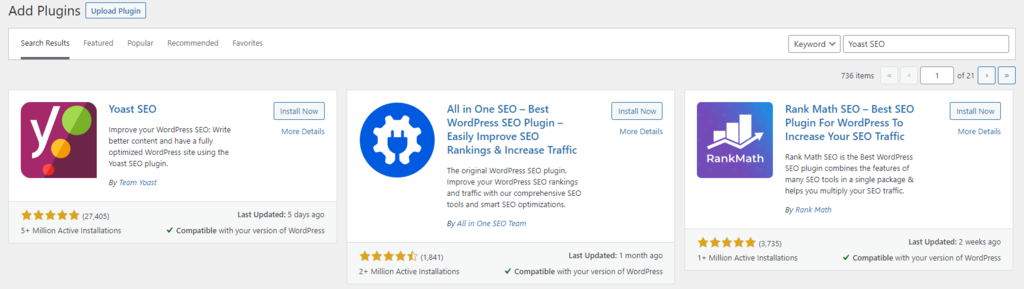
Applying keyword optimization while building a new WordPress website or updating existing content can improve search engine rankings from day one. Incorporating keywords and phrases into your content isn’t difficult, but you don’t want to go out of your way. WordPress SEO plugins Yoast and Rank Math help you find the perfect keyword balance.
3. Optimize Existing WordPress Page Elements
All WordPress page and post formats use page titles (H1), title tags (H2 and H3), image data and URL permalinks. Each of these elements can be optimized for specific keywords without WordPress SEO plugins. However, plugins like Yoast and Rank Math make the job easier and provide SEO quality ratings and tips.
4. Plan and Publish New Optimized Content
Google and other search engines love new content, so use keyword research to create new ideas for articles, blog posts, products, or services that may be of interest to your target audience. Posting new SEO content for regularly targeted keywords helps to boost the overall ranking of the website, in addition it gives you more content to push even for social media marketing.
WordPress SEO plugins like Rank Math, Above, and Yoast provide a complete list of on-page SEO tools including on-page content and SEO scores, in addition to useful SEO and off-page technical features.
5. Add Internal and External Links to Content
When optimizing existing pages and adding new content, be sure to include links to the linked content on your website and relevant external sources. Internal links create thematic authority, help search engines quickly index your new content and can return rankings for existing pages. External links to relevant information on high authority sites can also increase rankings. Both Yoast and Rank Math include useful link tracking tools.
Deploy Technical WordPress SEO
Technical SEO improves the search for a behind-the-scenes WordPress website by using tweaks that affect coding, file management details, and speed issues. Due to the many complexities, this implies, WordPress beginners and professionals in general rely on SEO plugins to manage the technical needs of SEO instead of adding code or programming to the site.
Here are six ways to quickly improve your WordPress technical SEO:
1. Create a WordPress Sitemap
A sitemap contains links to all content on a website. This allows search engines to easily find and index pages to display in search results. Creating a sitemap in WordPress involves adding custom coding to the theme’s feature files, but the Yoast and Rank Math SEO plugins offer simple sitemap features.
2. Add Custom Meta Tags to All Pages and Posts
A meta tag is a piece of code that contains a brief description of the content of a web page. Search engines show these descriptions in search results. Good meta tags drive clicks, so it’s worth creating unique meta descriptions for web pages. Meta tags can be added to WordPress pages with custom code, or with SEO plugins like Yoast and Rank Math.
Rank Math’s Snippet Editor makes it easy to customize meta tag descriptions on every single page to drive higher search engine rankings and attract clicks.
3. Use Schema Markup To Identify Page Types
Schema markup is a piece of code that helps search engines understand the type of content on a page, distinguishing articles, news stories, product descriptions, recipes, and so on. Schema helps search engines quickly index pages correctly and show “rich results” that attract more clicks. Schema can be added to WordPress with custom coding or using SEO plugins like Rank Math or Yoast.
4. Test and Boost Mobile Usability
With over 60% of online searches happening on mobile devices, websites should look good and work perfectly across all screen sizes to rank well in mobile search results. All modern WordPress themes are responsive, meaning they automatically adapt to different screen sizes. However, adding font sizes, menu functions, and file sizes can increase mobile search ranking. Try SEO plugins like AMP for WP and WP Mobile Menu to improve mobile functionality.
5. Improve Page Load Speed
The page load speed is a huge factor both in the user experience and in the search engine rankings. Search engines track when a user clicks on a website and how long they are there. The focus areas are short, so if the pages load slowly, the viewers won’t stop – it’s that simple. When viewers leave quickly, the search algorithms detect a problem and leave the lower page in the search rankings. The WP Rocket and W3 Total Cache SEO plugins offer speed improvements, and upgrading your WordPress hosting service can also help.
6. Lock Down Website Security
The “https: //” at the beginning of a URL indicates that the website has the required SSL certificate, but this is just the tip of the security iceberg. Sound security is an essential part of WordPress SEO because it prevents malware and hacker attacks that can destroy content, erode hard earned rankings and jeopardize user and customer data.
Plugins like Sucuri and Jetpack add security blocks to WordPress websites, plus most WordPress hosting companies offer security options. You can also purchase an SSL certificate from a third party service provider if you wish.
Explore Off-Page WordPress SEO
Off-page WordPress SEO is all about getting links from external websites, blogs and social media channels to boost rankings. The best way to build off-page SEO is to have great content, such as articles, products, videos, recipes, how-tos and so on, to attract links and encourage action organically. However, it never hurts to be proactive with off-page SEO.
Here are three ways to approach off-page SEO SEO:
1. Share Content Across Social Media Channels
Sharing content on social media helps others discover your compelling information and share it socially or link to it from their website. Done regularly, social media sharing can build quality backlinks and you might even find an influencer or two.
Social media planning and publishing is easy to automate with Blog2Social and SchedulePress plugins. If you want to take things to the next level, you can also find social media management software that allows you to plan your posts in advance.
2. Explore Backlink Opportunities
Guest posting, pitching product reviews and finding influential links can build quality backlinks from high domain authority sites. Finding high domain authority websites is key to these efforts and Semrush and Ahrefs offer authority ranking tools. Or, delegate this task to off-page SEO professionals from Fiverr and Upwork.
3. Monitor Backlinks and Disavow Toxic Links
Almost all websites attract backlinks over time. Unfortunately, not all of them are from legitimate websites and these bad backlinks can damage SEO and search rankings. It is smart to periodically check backlinks and remove those that are classified as toxic. SEO search tools Semrush and Ahrefs make this task simple.
Quick Tips To Improve WordPress SEO
Bottom Line
WordPress gives users complete control over SEO, as opposed to the limited SEO tools that platforms like Wix and Shopify provide. This control comes with a higher learning curve, but don’t let that scare you. WordPress websites with good SEO tend to outperform those on other platforms, so learning WordPress SEO is worth it. All you need to do is understand the elements of on-page SEO, technical SEO and off-page SEO, and touch on WordPress SEO plugins to help simplify these activities.
Frequently Asked Questions
How do I SEO my WordPress site?
WordPress SEO can be divided into three skill groups: on-page SEO, technical SEO and off-page SEO. It’s easy to start with on-page SEO tactics while creating the content, then add the technical details of SEO, and finally add off-page SEO to your daily to-do list.
How does WordPress SEO work?
WordPress SEO involves targeted strategies, tactics and tools that help maintain a high search engine ranking. On-page SEO focuses on the use of keywords in content and headings. Technical SEO affects site speed and functionality. Off-page SEO involves backlinks and social promotion. WordPress SEO tools can help with all of these tasks.
Is WordPress best for SEO?
WordPress is an excellent choice for SEO-driven websites because it offers total on-page control and technical SEO, as opposed to the limited SEO options provided by platforms such as Wix and Shopify.
Does WordPress have built-in SEO tools?
Yes, many on-page SEO elements are integrated into WordPress and are easy to use, regardless of experience. The advanced technical needs of SEO can be addressed with custom coding. However, most WordPress users add SEO features with SEO plugins like Yoast, Semrush, AMP for WP and WP Rocket.
Something went wrong. Please try again later.
How many types of SEO are there?
The three types of SEO are: On-page SEO – Anything on your web pages – Blogs, product copy, web copy. Off-page SEO – Everything that happens outside of your website that helps with your SEO strategy – Backlinks. SEO Technique – Any technique done to improve search ranking – site indexing to help bot crawling.
How many types of SEO are there? The three types of SEO are: On-page SEO – Anything on your web pages – Blogs, product copy, web copy. Off-page SEO – Everything that happens outside of your website that helps with your SEO strategy – Backlinks. SEO Technique – Any technique done to improve Search Ranking – site indexing to help bot crawling.
What are the two kinds of SEO?
So, the different types of SEO are: Technical SEO. On-Page SEO. Content SEO.
What are the 4 types of SEO?
Here are four key types of SEO you can get started on.
- On-Page SEO. On-page SEO, also sometimes called on-site SEO, is the process of optimizing the content on your website. …
- Off-page SEO. Off-page SEO is almost everything that doesn’t happen on your website. …
- Technical SEO. …
- Local SEO.
What are 3 main areas of SEO?
Three main components of search engine optimization
- Technical SEO.
- On-page SEO (Content SEO / SEO Relevance)
- Off-page SEO (Promotional SEO / Authority SEO / Inbound or Inbound Links)
What are the 3 C’s of SEO?
Simply put, the basics of SEO can be reduced to 3 Cs: content, code and credibility.
What are the 3 main components of SEO?
Site navigation. Internal links. The URL (per page). Relevant, unique content (per page).
What are the 4 main components of an SEO?
Each component builds on and complements the others. The stronger the links between each of the 4 components of SEO – technical SEO, on-page SEO, off-page SEO, and content – the better the results. Being aware of the connections will help us better understand how to use them better effectively.
What are the three main components of SEO?
Site navigation. Internal links. The URL (per page). Relevant, unique content (per page).
What are 3 main areas of SEO?
Three main components of search engine optimization
- Technical SEO.
- On-page SEO (Content SEO / SEO Relevance)
- Off-page SEO (Promotional SEO / Authority SEO / Inbound or Inbound Links)
What are the 3 C’s of SEO? Simply put, the basics of SEO can be reduced to 3 Cs: content, code and credibility.
What are the 3 main components of SEO?
Site navigation. Internal links. The URL (per page). Relevant, unique content (per page).
What is SEO score in WordPress?
There are many ways to drive traffic to your site, but search engine optimization (SEO) is one of the most effective. SEO is a collection of strategies and techniques designed to help your pages rank higher in search engine results. This increases the visibility of your site and can really help you get started.
Does SEO point matter? If you work in the hospitality industry (or almost any other industry), you may be wondering if SEO is as important as ever. The truth is, yes, SEO is just as important as ever.
What is SEO in WordPress?
SEO stands for Search Engine Optimization. SEO tips are designed to help your site rank higher and more accurately in search engines, such as Google. Let’s say you write a blog about sailboats.
What is SEO and how it works?
Well, SEO stands for “Search Engine Optimization”, which is the process of getting traffic from free, organic, editorial or natural search results in search engines. The goal is to improve the position of your website in the search results pages. Remember, the higher the website is listed, the more people will see it.
Does WordPress have SEO?
There is no question that WordPress is one of the most SEO-friendly CMS, and that is one of the reasons why it is so popular. Not only is it user friendly, but it is easy to implement a bunch of SEO tactics with only a small number of fantastic plugins.
Why is SEO important for WordPress?
SEO headlines and metadata improve how search engines interpret the relevancy of your site. Metadata telling search engine crawlers helps you understand what all your web pages are about. When you add relevant keywords to your metadata, your site becomes more likely to rank for those keywords.
What is SEO score?
SEO Score is a measure of how much the appearance of users and techniques of your site contribute to search engine optimization, and ultimately, higher rankings and organic traffic. Use our free checker to get your SEO score.
What is your SEO score?
What is SEO Point? SEO Score is a measure of how much the appearance of users and techniques of your site contribute to search engine optimization, and ultimately, higher rankings and organic traffic.
How do I check my SEO Score on Google?
Enter the URL you want to review. Click the “Perform an SEO Scan” button. Getting the results from Google SEO analysis, your website will be automatically rated on a scale 0 – 100. Review and address possible SEO issues returned by Google beacon analysis.
Is 100 SEO score good?
A good SEO score is between 80 – 100. The SEO scores in this range indicate that your website meets the highest quality standards for search engine optimization in the area of technical SEO, content, experience user is mobile usability.
Does Google PageSpeed matter?
The simple answer is that page speed affects SEO. Page speed is a direct ranking factor, a fact even better known from Google’s Speed Update Algorithm. However, speed can also influence the rating indirectly, increasing the bounce rate and reducing downtime. At Google, users come first.
What is Google PageSpeed test?
PageSpeed Insights (PSI) reports on a page’s performance on mobile and desktop devices, and provides suggestions on how the page can be improved. PSI provides on-page lab and field data. Laboratory data is useful for debugging performance issues, since it is collected in a controlled environment.
Does Google use PageSpeed Insights?
| Audit | Description | Weight |
|---|---|---|
| Cumulative layout change (CLS) | How many times does a user experience unexpected layout changes. | 5% |
Can I learn SEO on my own?
It is possible to learn how to do SEO for yourself, you don’t have to be an SEO specialist or expert. The first thing to do is to convince yourself that SEO is not difficult. If others can do it, so can you. All it takes is the willingness to learn and time.
How long does it take to learn SEO? If you can learn SEO for a couple of hours every day, you can master the basics of SEO in 4-8 weeks and land your first SEO job in 3-6 months. If you can learn SEO full-time, then you can master the basics even in 1-2 weeks.
Is SEO easy to learn?
SEO is difficult at first, but when you learn algorithmic policies from Google. you can rank your website in no time. Just stay tuned for algorithm updates from Google and its new policies. SEO takes time and patience.
Why is SEO so hard?
To summarize, SEO is difficult because search engines are always changing and updated. It could be something from Google that changes the way it sees a certain type of link, including a major new update to its algorithm, or even recognizes something new as a ranking factor.
Does SEO hard to learn?
SEO is simply not as hard as people claim it to be; you can get 95% of the effort done with 5% of the work, and you absolutely don’t need to hire a professional SEO to do it, nor will it be difficult to start ranking for well-chosen key terms.
Can You Learn SEO by yourself?
There is no better resource that I have found as a starting point for learning SEO from Beginner’s Guide to SEO from Moz. It’s free, and it starts answering more basic questions like “What is SEO?” Read the entire guide once and find out more about the people who send you those spam SEO emails every day.
Can I learn SEO for free?
You can learn how to do Search Engine Optimization, or SEO, completely free of charge. All you need are strong resources written or created by SEO experts. We’ve compiled an updated list of 50 of the best blogs, courses, videos, podcasts, conferences, and SEO tools to get you started.
What is on-page SEO and off-page SEO?
On-page SEO refers to the factors and SEO techniques that focus on optimizing the aspects of your website that are under your control. Off-page SEO refers to the factors and strategies of SEO focused on promoting your site or brand on the web.
What is the difference between off page SEO and on page SEO? On-page SEO focuses on optimizing the parts of your website that are under your control, while off-page SEO focuses on increasing the authority of your domain through content creation and gaining backlinks from other websites.
What is on page SEO?
On-site SEO (also known as on-page SEO) is the practice of optimizing elements on a website (as opposed to links elsewhere on the Internet and other external signals collectively known as “off-site SEO”). to rank higher. and gain more relevant traffic from search engines.
What is off-page SEO with example?
Off-page SEO includes activity from or “behind the scenes” of your website. Technical SEO refers to activities that directly impact the indexing and crawling of your site by search engines. Examples include site speed optimization, structured data, and more.
What is on SEO and Off SEO?
While on-page SEO refers to factors that you can control on your website, off-page SEO refers to on-page ranking factors that are outside of your website, such as backlinks from another site. Also include your promotion methods, taking into account the amount of exposure something you receive on social media, for example.
What is part of off page SEO?
Off-page SEO includes activities performed outside of a website in an effort to increase the search engine ranking of the site. Common off-page SEO actions include creating backlinks, encouraging brand searches, and increasing engagement and actions on social media.
What is off-page SEO beginner?
Off-page SEO is the process of optimizing your web pages off of your website to get back links to it as the only thing you can do outside of your website is to build back links to it. These backlinks act as a vote to the content of your blog.
What off-page SEO include?
Off-page SEO includes activity from or “behind the scenes” of your website. Technical SEO refers to activities that directly impact the indexing and crawling of your site by search engines. Examples include site speed optimization, structured data, and more.
Is social media a part of off-page SEO?
Anything that is done outside of your website and contributes to your ranking is considered off-site SEO: social media marketing, influencer marketing, mentions (direct or indirect), guest blogging (sometimes black-hat ), etc.
What is off page SEO with example?
While gaining links from external websites is the most practiced off-page SEO strategy, almost any activity that a) is outside of your website and b) helps to improve your search ranking position could be thought of as and “off-page SEO”. “These include things like: Social media marketing. Guest blogging.
What is on SEO and Off SEO?
While on-page SEO refers to factors that you can control on your website, off-page SEO refers to on-page ranking factors that are outside of your website, such as backlinks from another site. Also include your promotion methods, taking into account the amount of exposure something you receive on social media, for example.
What is on page and off page SEO with example?
| On page SEO | Off page SEO |
|---|---|
| On the seo page we will use internal links. | In off page seo we will use direct links. |
What is an off page SEO?
“Off-page SEO” (also called “off-site SEO”) refers to actions taken outside of your website to impact your rankings in search engine results pages (SERPs). Along with on-page SEO, these include some of the basic SEO factors that help a site rank high.
How to use SEO if you have no experience
Search engine optimization (SEO) promises many benefits, allowing you to increase traffic to your website, improve brand visibility, and set a course for long-term growth. But if you have no idea what you are doing and no real experience in the SEO world, is this strategy totally inaccessible to you?
The short answer is no! However, even if you have no idea how search engines work and no experience in creating content for SEO, there is a way forward to use this strategy in any way you want.
What is SEO?

Just in case you are not familiar, let us cover SEO Basics. You probably already know that most people rely on search engines to answer their questions, search for new topics and gather information.
You can probably guess that most people click on the first or second result they generate from a particular search rather than scrolling through different pages. Search engine optimization is about increasing your likelihood that your websites will be ranked in one of these top slots.
You have to use a lot of individual tactics to rank higher in search engines. We’ll cover some of those in more detail later.
The Three Paths of SEO for Beginners
If you are a total beginner, there are essentially three ways to harness the power of SEO.
Learn and do it yourself
It may be a little intimidating at first, but you can learn the basics of SEO on your own. Most of the basics are easy to grasp, and there is an abundance of online content that you can use to learn new skills and get some initial practice.
Within a few hours you should understand the basics, and after a few months of practice, you can probably call yourself an expert. Of course, SEO can be difficult, and it is always very time consuming, but if you are patient and persistent, you can hypothetically do everything yourself.
Utilize third-party SEO services
You do not have to do it all yourself. You can also enlist the help of SEO services offered by agencies, freelancers or employees that you hire to build your own team.
This option is more expensive because you probably pay thousands of dollars a month for professional services. But you will save a lot of time, and you will have much more reliable results.
Establish a hybrid approach
The other option is to establish a sort of hybrid approach. You are still learning the basics of SEO and practicing standard techniques independently. However, you will also benefit from the power of third party services to strengthen your skills and compensate for any weaknesses you may have.
This is probably the most balanced approach and most commonly chosen by newcomers to the field.
Learning the Basics of SEO

It is impossible to summarize all SEO in a single article, much less a single section, but we present to you some of the basics here. The two primary considerations you need to consider when optimizing for search engines are relevance and reliability.
Google and other search engines want to prioritize the visibility of the content that they see as relevant to a search query and to recommend it reliably enough.
The relevance side of the equation is mainly attributable to keyword optimization.
Keyword optimization has evolved significantly over the years and is much more sophisticated than it ever was. Nevertheless, the basic idea that you need to create content is explicitly appropriate for search queries that you think your target audience will make.
For example, if you sell Pogo sticks, you need to write a lot of content on your site about Pogo sticks in order for you to point to Pogo stick related research. As a result, companies often spend significant time and money on keyword research to ensure they select the appropriate targets.
The trustworthiness side of the equation is based on a number of factors.
Google prioritizes technically polished and easily accessible websites, so it pays to make sure your website is fully functional and easy for users to use. Furthermore, you need to think about your “authority” score, which mainly depends on the quality and quantity of the links to your site.
Do Early Research and Strategizing — Then Break Actions into Three Components
Onsite technical optimization.
Onsite technical optimization is all about ensuring that your website loads correctly and efficiently. You also want to be sure to enhance the overall user experience.
Mobile optimization, faster loading times and clean coding can all help you here. Additionally, you need to make sure your site appears in the Google index – but if you use a mainstream website builder, many of these issues will be handled in your name.
Onsite content development.
Content is still the heart of SEO. Writing onsite content will help you establish the context of your site and improve its relevancy to user search queries. It is also a useful quality indicator that is used to evaluate the credibility to an extent.
As an added bonus, content is valuable for attracting new users and securing conversions, making it strategically useful even independently of SEO.
Offsite content and link building.
You also need to think about offset content and link building. Building a lot of links is great, but building high quality links is better. You also need to think about the appearance of your links, because unnatural links will earn you a penalty.
Finding the Right Partner for SEO Services

If you decide to work with a third party provider, either exclusively or as part of a hybrid model, you should know that it is essential to find the right partner for your needs. There are three main options to consider:
What to Look for When Shopping for SEO Providers
Timothy Carter
Chief Revenue Officer
Timothy Carter is the Chief Revenue Officer of Seattle Digital Marketing Agency SEO.co, DEV.co & amp; PPC.co. He has spent more than 20 years in the world of SEO and digital marketing building and scaling sales operations, helping companies increase revenue efficiency and lead the growth of websites and sales teams. When he’s not working, Tim enjoys playing a few rounds of disc golf, running, and spending time with his wife and family on the beach – preferably in Hawaii with a cup of Kona coffee. Follow him on Twitter @TimothyCarter
The average cost for project-based SEO services ranges from $ 1,000 to $ 1 million and up. Small businesses that use local SEO can spend around $ 1,000 per month per project. Larger companies at the enterprise level can expect to pay millions of dollars a month.
Who started SEO?
Search engine optimization (SEO) is very much about Google today. However, the practice we now know as SEO is actually ahead of the world popular search engine, co-founded by Larry Page and Sergey Brin.
Who is the father of SEO? The clear choice was Internet marketing veteran Bruce Clay. Fondly known to the search marketing industry as the founding father of SEO, Bruce received the Lifetime Achievement Award of Excellence in Vision, Execution and Market Influence in the Practice of Search Marketing.
Where did SEO come from?
SEO Is a Millennial In 1993, Excite revolutionized the way information was categorized, and in 1994, Alta Vista, Yahoo, and others came on the scene. However, in 1996, SEO really started when Sergey Brin and Larry Page started building what will be the largest, most recognized search engine to date: BackRub.
Is SEO Chinese?
Seo is a family name commonly found in the United States among its Chinese community. It is the transliteration of a Chinese surname which means: slow, gentle.
When did SEO originate?
SEO’s Beginning The first recorded use of the acronym “SEO” dates back to 1997. So, it seems like we’ve been using the term for over 22 years as of this writing. Of course, this is actually before the creation of Google and many of the other search engines on which we depend today.
When did SEO first start?
SEO’s Beginning The first recorded use of the acronym “SEO” dates back to 1997. So, it seems like we’ve been using the term for over 22 years as of this writing. Of course, this is actually before the creation of Google and many of the other search engines on which we depend today.
Will SEO exist in 5 years?
SEO will not be eliminated in the next five years as social media and search engines are more than likely merging. Facebook has already started doing this: they have over 1.5 billion searches on average every day. Twitter did the same; are in partnership with Google.
When was SEO first used?
While it may be argued that SEO and all that of search engine marketing began with the launch of the first website published in 1991, or perhaps when the first web search engine was launched, the history of SEO â € œofficialâ € begins a little later un, ëm 1997.
Who invented SEO?
While SEO was previously Google, the rise of this search engine Juggernaut started by Larry Page and Sergey Brin dominated SEO attention for almost 20 years.
How do I interview for SEO?
Best interview questions to ask SEO candidates
- Tell something about yourself. …
- Tell me about your greatest success at your last job. …
- Why SEO? …
- Tell me about your personal projects, websites, blog, side hustle, conferences, etc.
Why should we hire you for SEO? It benefits you to have SEO professionals working on your site as they have the knowledge and expertise to help you create the best campaign. Your campaign brings better results for your business because you have experts who know how to optimize to improve your campaign.
Why is SEO hard?
To sum it up, SEO is difficult because search engines are constantly changing and updating. It could be anything from Google changing the way it looks to a certain type of link, including a new major update to its algorithm, or even recognizing something new as a ranking factor.
Is SEO hard to do? SEO is simply not as difficult as people imagine it to be; You can get 95% of the effort with 5% of the work, and you absolutely do not need to hire a professional SEO to do it, nor will it be difficult to start ranking for well-chosen keywords.
Is SEO a Waste of Time?
Focusing on SEO to increase your traffic at the expense of real relationships with your audience is a waste of time. Worse, you will never know what SEO mistakes you are making unless you get some basic SEO skills. You can be penalized for building keyword stuff or bad backlinks.
Is SEO worth it 2020?
The short answer is SEO is very effective – not only for generating traffic but also leads and sales. Do not worry. The long answer includes research and data, not just empty statements. Most SEOs get caught up too much in search-specific metrics like SERPs (search engine results page), rankings and organic traffic.
Is SEO useless?
â € œSEO contests are pretty useless. SEO contests never reflect real life performance, they generate a ton of spam that negatively affects the entire ecosystem, they are a huge waste of time & effort. The smart approach to SEO contests is to ignore them.â €
Is SEO still relevant in 2022?
Will SEO still be relevant in 2022? Yes of course. Although some SEO tactics that have been effective in the past have stopped working, SEO has continued to evolve. Constantly reinventing to try to better fit users’ intentions, cutting out spammy, ineffective tactics to get better.
Can You Learn SEO by yourself?
There is no better resource I have found as a starting point for learning SEO than the Beginner’s Guide to SEO from Moz. It’s free, and it’s starting to answer most basic questions like “What is SEO?” Read the entire guide once and you know more than the people who send you this spam SEO email every day.
Can you do SEO yourself?
You can absolutely do SEO yourself or DIY SEO (Do It Yourself SEO). With some research and a lot of practice, anyone can learn how to do SEO for their business. A quick way to get started with SEO is to enter your URL here and then focus your SEO efforts on the recommended action articles.
How long will it take to learn SEO?
If you can learn SEO for a few hours every day, then you can master the basics of SEO within 4-8 weeks and land your first SEO job in 3-6 months. If you can learn SEO full time, then you can also master the basics within 1-2 weeks.
Is SEO easy?
Learning SEO is difficult because there is so much information to read about search engines and how the optimization process works, and this can be overwhelming at first.
How much time it will take to learn SEO?
If you can learn SEO for a few hours every day, then you can master the basics of SEO within 4-8 weeks and land your first SEO job in 3-6 months. If you can learn SEO full time, then you can also master the basics within 1-2 weeks.
Can I do SEO by myself?
If you were wondering, “Can I do SEO myself?” The answer is definite. You do not need to hire an outside agency to improve your SEO, and this guide will give you some basic SEO tips to get you started.
Who can learn SEO?
They start with basic knowledge and learn the basics of SEO in an hour or two. These individuals can become experts in just a few months if they practice regularly on their websites. So, even if you need a long time to learn SEO, remember that the results are worth it. Almost anyone can learn the skill of SEO.
Can I teach myself SEO? There is no better resource I have found as a starting point for learning SEO than the Beginner’s Guide to SEO from Moz. It’s free, and it’s starting to answer most basic questions like “What is SEO?” Read the entire guide once and you know more than the people who send you this spam SEO email every day.
Is SEO easy to learn?
The answer is simple. Learning SEO is difficult because there is so much information to read about search engines and how the optimization process works, and this can be overwhelming at first.
How long will it take to learn SEO?
If you can learn SEO for a few hours every day, then you can master the basics of SEO within 4-8 weeks and land your first SEO job in 3-6 months. If you can learn SEO full time, then you can also master the basics within 1-2 weeks.
What are SEO tools?
SEO tools examine the potential of websites for high ranking on search engine ranking pages. They provide information about backlinks and keywords as well as insights into SEO competition on the internet.
What is SEO and how does it work? Well, SEO stands for ‘Search Engine Optimization’, which is the process of getting traffic from free, organic, editorial or natural search results in search engines. It aims to improve your website position on search results pages. Remember, the higher the website is listed, the more people will see it.
Use SEO to reach New Jersey businesses
What is Search Engine Optimization?

Search engine optimization is the practice of optimizing your website and other online presence to improve your visibility in search engine results. Brands want their websites to rank near the top of search results for specific keywords: the higher you rank your keywords, the more organic traffic you get to your website.
Why SEO Matters for New Jersey Businesses

Effective SEO is a key to effective marketing for NJ’s business concerns because:
What Drives Your Search Rank?

Many factors help determine how well your website appears in search results. These factors include:
Search engines like Google also favor websites that look attractive and functional on mobile screens and have well-designed pages and sitemaps. Your goal is to make sure your users have a good experience on the site, so the more mobile and easy to use your site is, the more Google will reward you with a higher ranking.
Google and other search engines have a very sophisticated technology to identify the best content on a particular topic. Many of the “tricks” that site developers used to increase site ranking are no longer effective. Some really hurt your rank now! Google’s goal is to ensure that relevant and meaningful content is available to those who make New Jersey business decisions on the pages that favor their search results.
SEO Essentials For New Jersey Businesses

You want to have a good position in terms that will help you attract business opportunities. Sometimes these will be very popular terms, but they are often attractive to many companies, which can make it difficult to rank high. It is sometimes more beneficial to focus on specific “niche” terms that specifically appeal to your target audience. Keyword research will be essential here in determining the right keyword combination.
Remember that you want to attract companies looking for products and services. Avoid keywords that seem to drive a lot of consumer traffic, unless you also sell directly to individuals and households. Identify the terms that will matter most specifically to business decision makers so that you can focus your optimization efforts on the best opportunities.
Tips for Developing an SEO Plan

First, identify the best words for your endeavor. Find an SEO services expert who knows the New Jersey business market, or work with a New Jersey business market leader, such as NJBIZ. Once your business expert has identified the right SEO keywords, you can work together to create a comprehensive, on-site content strategy that will result in a high ranking for several keywords relevant to your business.
Keep in mind that writing quality content that indexes well is both science and art. SEO efforts cannot generate overnight results. Google and other search engines are tracking billions of web pages, and changes in your rankings will occur over weeks and months. There are many software tools to help you keep track of your rank.
At NJBIZ, our mission is to help New Jersey business market leaders do more business. For more ideas and insights on how to make SEO work for your business, please contact one of our NJBIZ marketing experts by filling out the site form.
The delivery is athletic, well down the mound and shows a quick arm, although there is some effort in the release. His fastball was 82-85, hitting 88 and missed many bats while the breaking ball was 72-75 and made a solid bite.
How old is Max Clark baseball?
| Franklin Community | Indiana Bulls 16U Black | 6-1 190 |
|---|---|---|
| HIGH SCHOOL | LAST TEAM PLAYED | HEIGHT / WEIGHT |
| L / L | 17 and 5 months | |
| BAT / SPEARS | AGE |
When did Max Clark commit to Vanderbilt? Her engagement date was November 23, 2019. â € œIâ € TMm more than excited! It definitely puts a lot of pressure on me, but I love it, “said Max Clark.
What class is Max Clark?
Max Clark is really awesome. These are the top 100 players in the 2023 class with exploration reports, videos, and their college commitments.
How fast does Max Clark throw?
According to prepbaseballreport.com, some of the measurables generated by Clark include: As a pitcher, his left arsenal includes a fast ball that is 89-91 and touches 93 mph. His curved ball is 70-74, sliding 75-83 and shifting 77-81. As a midfielder, his shots from the outside field reached 92 mph.
Who does Max Clark play for?
How fast does Max Clark throw?
Fast ball, 82-84 mph, hitting 85 mph several times and even reaching 86 mph once, with little effort.
How fast does Max Clark throw?
According to prepbaseballreport.com, some of the measurables generated by Clark include: As a pitcher, his left arsenal includes a fast ball that is 89-91 and touches 93 mph. His curved ball is 70-74, sliding 75-83 and shifting 77-81. As a midfielder, his shots from the outside field reached 92 mph.
Who does Max Clark play for?
Who is Maxwell Clark?
Maxwell Clark is a 2023 OF / LHP with a 6-1 190 pound frame from Franklin, IN, who attends Franklin Community. Large, athletic frame with square shoulders and a physical strength present provided throughout the picture. The fast and fast contraction plays made a run of 6.53 and 60 yards.
What high school does Blake Cyr go to?
Blake Cyr | Windermere HS, Windermere, FL | MaxPreps.
Where is Blake Cyr engaged? Athletic background. Blake Cyr is a 5-11, 170-pound shortstop from Windermere, FL. He has committed to the Miami hurricanes.
How old is Blake Cyr?
Blake Cyr’s Tweets Blake Cyr (22) has been getting extra base hits in the postseason at an alarming rate!
Where does Blake Cyr live?
Blake Cyr is a 2022 SS / 2B with a 6-0 175 pound frame from Windermere, FL, who attends Windermere.
Who is MJ SEO?
Minjun Seo is a 2023 SS / RHP with a 5-11 165 pound frame from Plano, TX, who attends Hebron. Medium frame with a slender structure that shows strength in the lower half. He ran a sixty-yard run of 7.14 seconds.
Is Tulane Baseball good?
The Green Wave is one of the most popular teams in college baseball, having won 10 of its first 12 games and currently ranks first in the American Athletic Conference. Tulane has also won four out of five road games and taken the reigning national champion series and then No.
Does Tulane have a good sports team? Tulane Men’s Baseball According to the analysis of the best colleges for men’s baseball analysis in Division I of Factual College, Tulane ranked 19th out of the 271 schools in its division. This means that the school is in the top 10% of the United States in this category.
Is Tulane good at baseball?
Tulane baseball is widely regarded year after year as one of the best logos and uniforms in college baseball.
Does Tulane have d1 sports?
Tulane competes in NCAA Division I as a member of the American Athletic Conference (The American).
Is Tulane Baseball Division 1?
The Tulane Green Wave baseball team represents Tulane University in NCAA Division I college baseball. The Green Wave baseball team competes in the American Athletic Conference and plays its home games on the Greer Field campus at Turchin Stadium. They are coached by head coach Travis Jewett.
Is Tulane a sports school?
Tulane competes in the NCAA Division I-FBS, and is one of the schools in the American Athletic Conference.
Is Tulane Ivy League?
10) Tulane University (New Orleans, LA) The recognition of Tulane’s history is as impressive as any other Ivy League school; 12 Louisiana governors, 18 Rhodes fellows, 155 Fulbright scholars, four living billionaires, and even a Supreme Court judge have been counted as alumni of this amazing school.
Is Tulane South Harvard? The campus is located in Nashville, one of the U.S. entertainment capitals and a growing business hub. Vanderbilt certainly claims to be the “Harvard of the South.”
Is Tulane a Ivy?
10) Tulane University (New Orleans, LA) With an acceptance rate of less than 20%, Tulane is one of the most selective universities in the country, making it one of the most desirable “Southern Hours” in the world. country.
Is Tulane considered Ivy League?
The Ivy League is a college sports conference in the Northeast formed by the universities of Brown, Harvard, Cornell, Princeton, Dartmouth, Yale and Columbia and the University of Pennsylvania as Ivy League schools. The connotation of the Ivy League, however, extends far beyond the sport.
Is Tulane an elite school?
Tulane University ranks 42nd in national universities. Schools are ranked according to their performance through a set of widely accepted indicators of excellence.
What are the 8 public ivy?
In addition to providing quality education, the eight Ivy League schools (Harvard, Yale, Princeton, University of Pennsylvania, Brown, Dartmouth, Cornell, and Columbia) are known as highly selective private institutions.
Is Tulane considered prestigious?
Classified by the Carnegie Foundation for the Advancement of Teaching as a university with a “very high research activity” of more than 4,300 higher education institutions qualified by the foundation, Tulane remains in a prestigious category that includes only 2% of the universities. at the national level.
Is Tulane an elite University?
“Of all the higher education institutions, these elite schools are considered the most prominent and sought after in terms of acceptance and graduation,” according to an article in Best College Reviews. For Park and other students, however, Tulane represents more than just a security school.
Is Tulane actually prestigious?
The 2022 U.S. edition News’ Best Colleges ranked Tulane 42nd in the list of top national universities in the country, 29th among national private universities and 34th in the list of most innovative schools.
Is Tulane a Tier 1 school?
Tulane University (private) also earned a top-tier National University ranking.
What are the 7 Ivy schools?
The eight institutions are Brown University, Columbia University, Cornell University, Dartmouth University, Harvard University, the University of Pennsylvania, Princeton University and Yale University.
What are the 8 public ivy?
In addition to providing quality education, the eight Ivy League schools (Harvard, Yale, Princeton, University of Pennsylvania, Brown, Dartmouth, Cornell, and Columbia) are known as highly selective private institutions.
What are the 12 Ivy League schools location?
Columbia University is located in New York City, New York; Cornell University is located in Ithaca, New York; Dartmouth College is located in Hanover, New Hampshire; Harvard University is located in Cambridge, Massachusetts; The University of Pennsylvania is located in Philadelphia, Pennsylvania; Princeton University …
Are there 8 or 12 Ivy League schools?
While there are many prestigious colleges in the United States that are confused with Ivy League schools, the original eight schools that make up the Ivy League are Brown University, Columbia University, Cornell University, Dartmouth College, Harvard University, Princeton. University, University of Pennsylvania. , …
SEM vs SEO: What is the difference?
Probably the only place that uses more acronyms and initiations than a web site is military.
Soldiers use them to save time.
At times, it seems that our industry uses them simply to confuse newcomers.
And it is common for even experienced professionals to combine them.
Some of the most common mistakes occur when it comes to similar and related ideas, but clearly different from search engine optimization (SEO) and search engine marketing (SEM) marketing.
At one point, in the days of the first web halcyon (i.e., about 2001), SEO was referring to the SEM component.
But, as the language and nuance of web advertising changed, search engine advertising focused on some form of digital marketing. So, what’s the difference?
Occasionally so-called organic search (SEO) and inorganic (SEM), both focus on using Google (and to the extent of other search engines) to drive traffic to a specific web site .
From a high-level perspective (and don’t worry, we’ll get into details later), SEO is a way to improve your website to generate traffic, while SEM is using paid methods. appear in research.
Do not feel bad about combining these words. It happens all the time.
To help you avoid embarrassing mistakes when communicating with other digital marketers, we have compiled this practical guide to give you an overview of these ideas.
Are you confused? Don’t be, everything will be clear in the end. Now let’s get started.
PPC, Another Variable In The Mix
When we start, to make everything even more confusing, let’s put another start in the mix: PPC or pay-per-click.
Well, that’s not fair because PPC is just one word for SEM – or at least, part of it.
PPC may have been the word that existed in the days of the Wild West with the original search engine strategies when different people used different words to refer to the same thing.
Finally, instant pay ads and search engines meant the same thing: paid digital advertising ads on the search platform.
One search, regardless of whether it is called PPC, CPC (which is the cost per click), paid search, or search ads refers to a paid search ad, usually by search engines such as Google and Bing.
Some terminology and strategies used in digital marketing projects – especially those linked to marketing strategies (both paid and commercial) – may not be easy and clearly defined, though so.
What’s The Difference Between SEO & SEM/PPC?
We know that SEO is a search engine optimization.
However, vendors do not improve search engines. We develop content and websites for search engines (and people, too), so they can better understand, access, and target researchers in our website.
Also, at first it does not always make sense. So, naturally, this is almost absurd.
As with other things in life that are often unrelated, there are abbreviations that will no longer be heard.
Like Humvee, which does not stand for any words that start with U or Yes in it. (It actually represents the High Mobility Multipurpose Wheeled Vehicle, and originated from the original acronym, HMMWV.)
We have also concluded that PPC marketing is (at least for now) the same as or very large SEM component. Here is where they meet:
But, although Wikipedia describes SEM as “an online marketing strategy that includes promoting websites by increasing their visibility on search engine results pages (SERPs) especially through paid advertising,” hurry up to call them the exact same thing.
Also, pay-per-click advertising has its own Wikipedia page separate from search engine advertising (although there are many differences and confusion throughout the page).
And, although PPC is the largest and most needed component of SEM, both PPC and SEM are paid efforts that provide real-time data, ROI, and secure data that can be obtained only publishers on a particular platform.
Why It Matters
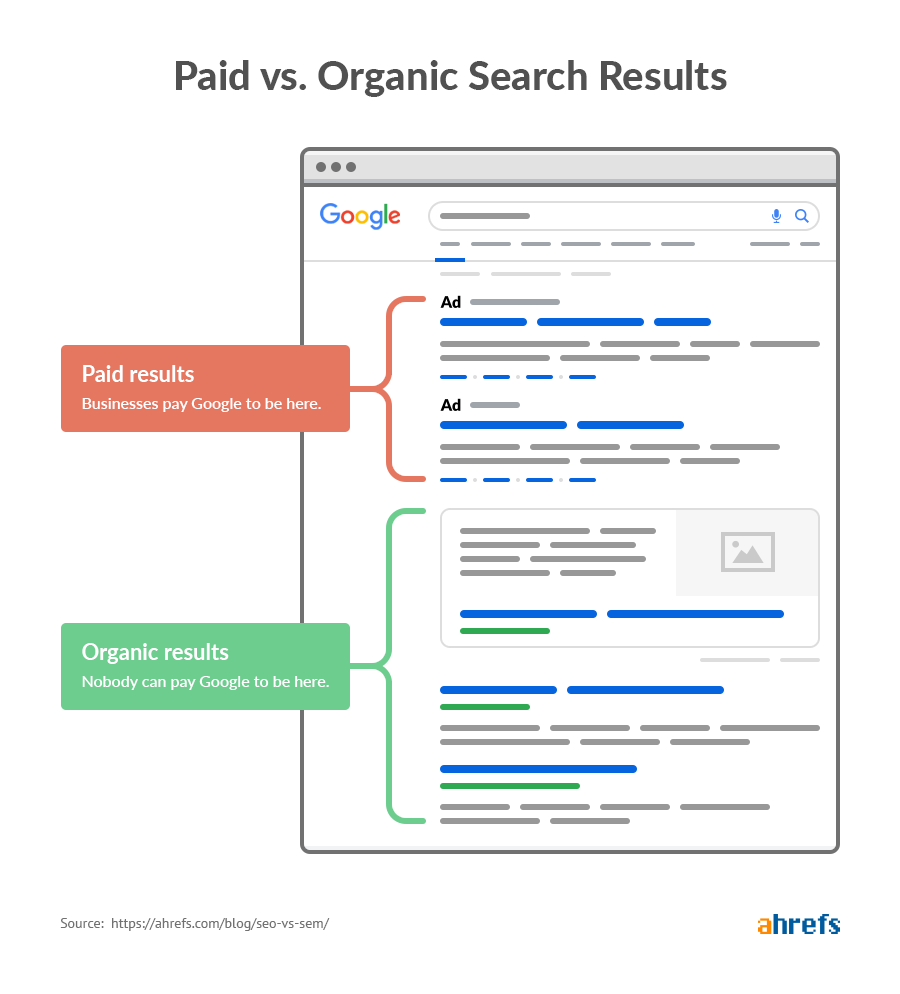
Consistency is the main reason why it is important to clarify these terms.
Too many newcomers, or sellers who are not experts in value-seeking, have embraced these industry definitions and transcended, blended, blended, or exploited them in a way that it dilutes the meaning of truth.
Even well-meaning marketers who do not agree with them or who may even fully understand their words help contribute to the change.
The conferences have established all aspects of their educational offerings around the SEM nomenclature when it comes to paid advertising efforts, but those efforts are not made aggressively by search engineers.
SEM, at least from this perspective, includes PPC ads on search engines but also on third-party planets such as Amazon and YouTube, as well as industry-oriented planets such as Houzz, Thumbtack, or Yelp. It also includes advertising and re-advertising efforts.
And, as the opportunity to advertise on social media grows, it is often used to talk about paid advertising on those networks, too.
Here in the Search Engine Journal, we do our part. Keeping comments and their use consistent will be the best way to keep information organized in a way that makes sense to marketers.
It also helps us, as marketers, to pass on our thoughts and ideas to customers and stakeholders, peers, or a friend who is curious about what we really are living for.
But, you should not assume that anyone knows what you are saying when you use these words.
Be brief and to the point, stating clearly what you are saying and making sure everyone agrees with the definitions of time.
Before we go any further, let us repeat:
Now that we are out of the way, we are not going to move on.
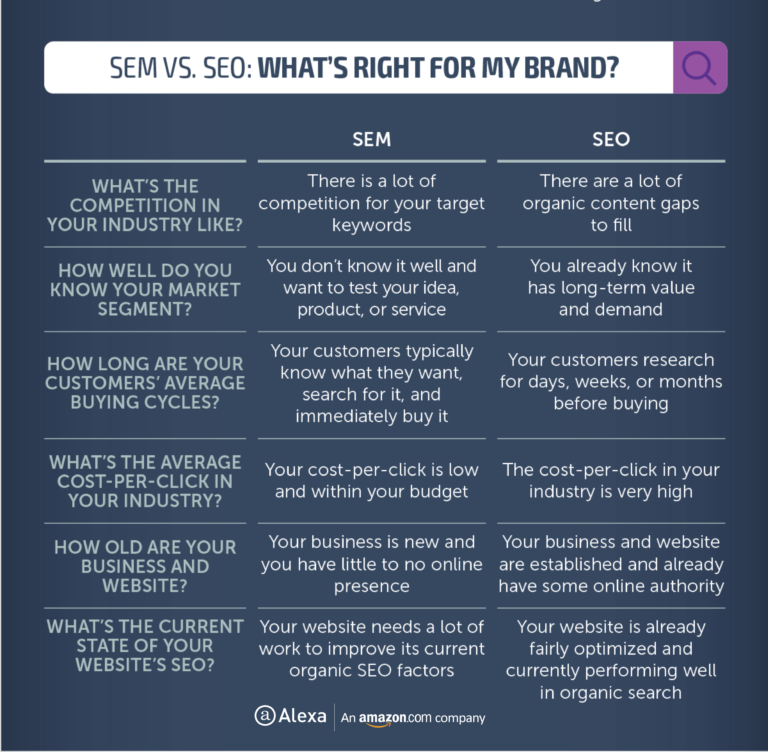
Should I Use SEO Or SEM?
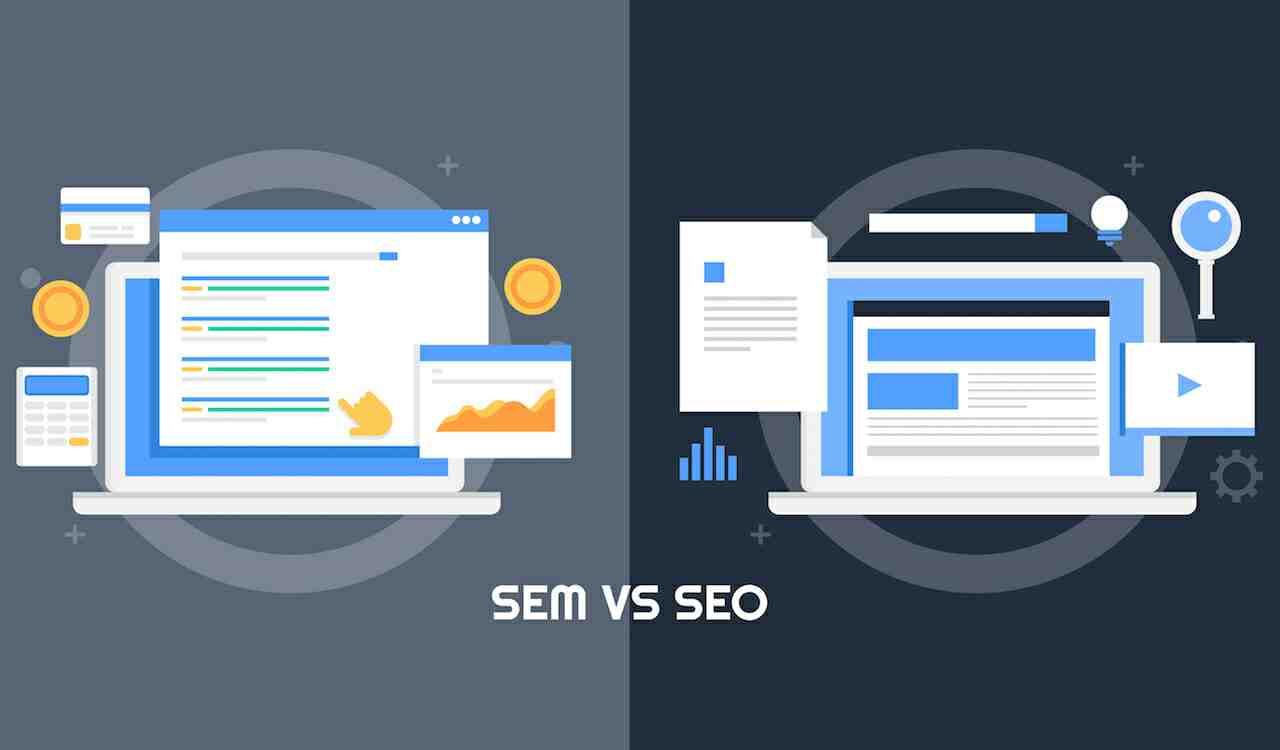
Now that you hope you understand the difference between SEO and SEM, you are no doubt asking yourself the question: Which should I use?
But if you do not have the bandwidth and you can only choose one, here are some things to consider:
What Are Your Goals?
If you want to drive faster, whether it is to promote sales, try new products or give your website more exposure, SEM is the choice for you.
SEO, on the other hand, is a marathon, not a marathon. Taking more time shows results but is good for long-term growth and cohesive quality.
What Is Your Budget?
Obviously SEM campaigns will cost you money. Besides, there is a reason why it is called pay-per-click.
If your budget is tight or you have a low product network, it may not make sense to run SEM.
SEO, on the other hand, is a more time-consuming investment. And, you can ask people who are already paying your salary like writers, IT staff, and marketers to help you.
How Is Your Site Currently Performing?
If your website is already up to date for your keywords, your SEO needs will be largely driven by changes in Google’s algorithm and competition.
In this case, SEM is a big increase. On the other hand, if you do not get a lot of organic traffic, you probably need to organize your SEO before you start spending money on paid ads.
How Much Data Do You Have Or Need About Visitors?
SEM allows you to capture more guest information than natural search.
You can manage your PPC campaigns with dashboards such as Google Analytics, where you can see clicks, comments, CTRs, times, changes, and so on.
You can then use this data to track trends and attract new customers.
How Is Your Online Reputation?
SEO is a great way to manage the report around your name.
Using the same techniques you use to move up the search rankings, you can control the way your organization looks online.
In another notable example (though unsuccessful), UC-Davis paid $ 175,000 to a consulting firm to wipe out bad news networks.
Of course, if you can twist it, you should combine SEO and SEM as complementary search strategies.
In this way, you can use the information you collect in your PPC campaigns to improve your SEO campaigns. This will give you a better idea of exactly what your audience wants when they click on your links, so you can tailor your content to them.
Combining both methods also helps you create re-marketing campaigns.
If your SEO work is driving visitors, but you do not see the conversions you want, you can use SEM to achieve those goals and bring them back to your website.
Combining SEO with SEM can also allow you to fully control search engine results pages (SERPs).
If you have high rankings on the first results page, as well as paid lists on a single page, you have just searched for multiple properties.
The bad thing about this, however, is that your paid list can ruin your natural traffic, which costs you unnecessary money.
Conclusion
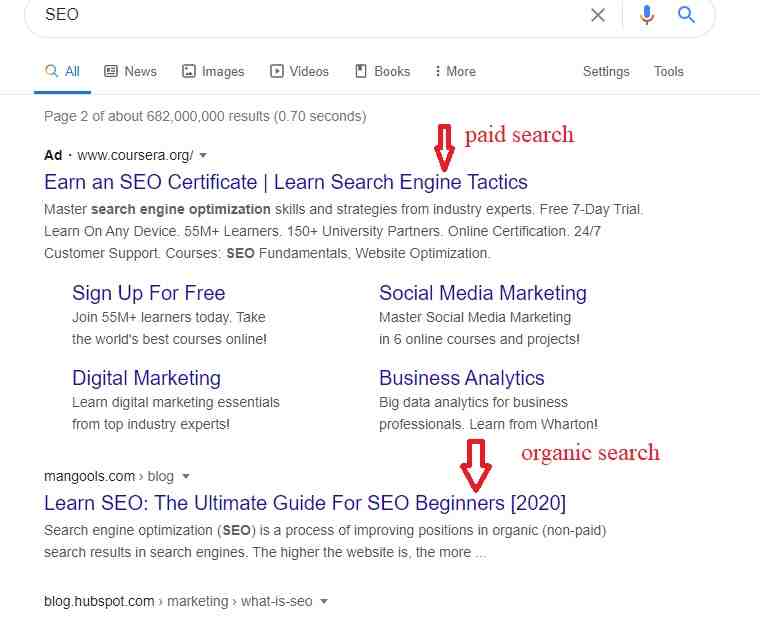
Hopefully, at this point, we have managed to impress you with the difference between SEO and SEM. But if that wasn’t clear, here it is again for the people in the background:
SEO uses free strategies to drive traffic to your website in a structured way. It is a slow process (usually three to six months) but can pay off in the long run.
SEM, including PPC, is the use of paid search forms to drive targeted traffic to your website. It requires a budget but can deliver results very quickly.
Too many people see these as one thing or as a completely separate effort and miss out on the benefits of using them together.
To get good results, both should be part of your digital marketing strategy.
Each of them has different strengths and weaknesses, but when combined, they can give you a real competitive edge.
Image courtesy: Krakenimages.com/Shutterstock
What are the two main types of SEM?
SEM is divided into two parts. One is SEO, which aims to generate more traffic for a particular site. And another is an investment in supported links. We are talking about ads delivered on Google and other platforms.
What are the search engine types? 4 types of search engines
- Leading search engineers. Key search engines such as Google, Bing, and Yahoo! all are free to use and supported by online advertising. …
- Private search engineers. …
- Discounted search engines. …
- Computer search engineers.
What are the types of SEM?
Search Engine Marketing can be divided into three types. It is SEO, Search Engine Optimization, and Paid Production. However, in the industry, the term SEM refers mainly to Search Engine Optimization.
What are the types of search engine marketing?
Search marketing has two main types: SEO (Search Engine Optimization) and PSA (Paid Search Advertising). SEO is a way to get free traffic from search engines by earning high ranks in the SERPs and Paid Search Advertising is a way to pay for your ads appearing on search engine result pages.
What are the three types of SEM?
Pay-Per-Click (PPC), Local and Organic SEO (3) Organic SEO. (3) key factors that influence your ability to find the status of page 1.
What is a main components of search engine marketing SEM )?
This means that search engine marketing will always include the components of paid search (pay-per-click, advertising and advertising campaigns, social media marketing, etc.), while search engine optimization is relies on actions aimed at producing natural (free) results.
What is the main purpose of search engine marketing SEM )?
Search Engine Optimization (SEM) is a digital marketing strategy used to increase the visibility of a website in search engine results pages (SERPs).
What are the 4 main components of an SEO?
Each component builds on and complements the others. When links between each of the 4 sections of SEO – technical SEO, on-page SEO, off-page SEO, and content – â € ”makes the results better. Knowing the connections will help us to better understand how to use them better.
What is included in SEM?
â € œSEM (Search Engine Marketing) is a way to get website traffic by purchasing ads from search engines. home, product listing ads, and all marketing efforts regarding search engines. .
Which is expensive SEO or SEM?
SEO is cheaper than SEM. Advertising costs do not depend on the number of clicks on the website. You do not have to pay for a few quizzes, but they will still bring you more traffic.
Is SEM paid or free? SEM is the practice of using paid text ads in search results. It is also called Paid Search or PPC (Pay-per-click). These ads are usually made up of text ads: They include a title and description to let researchers know what they can expect to find if they click.
Is SEO more expensive than SEM?
For reference, we update the healthcare publication once every two months to include new methods, statistics and ideas that make this article more effective in other publications. on page 1 of the search results. Either way, SEO is much more expensive than SEM or any other predictive strategies.
Which one is better SEO or SEM?
SEM is a good choice if you are looking for quick results. You can have an ad that shows your audience over a period of hours. SEO, on the other hand, takes more time. But SEO provides long-lasting results for revenue growth.
Is SEO or paid search more expensive?
SEO vs Paid Search: Setting Costs As a result, the costs associated with paid search ads can increase rapidly. SEO has no direct costs. Creating natural results is provided free of charge by search engineers, which makes it a cost-effective strategy in the long run.
Which option best differentiates between SEO and SEM?
What is the difference between SEO and SEM? The main difference is that Search Engine Optimization (SEO) focuses on improving the website in order to get traffic from search engine results. On the other hand, the goal of Search Engine Marketing (SEM) is to get traffic and visibility from compost and paid search.
Which one is better SEO or SEM?
SEM is a good choice if you are looking for quick results. You can have an ad that shows your audience over a period of hours. SEO, on the other hand, takes more time. But SEO provides long-lasting results for revenue growth.
Which option best differentiates between SEO and SEM?
What is the difference between SEO and SEM? The main difference is that Search Engine Optimization (SEO) focuses on improving the website in order to get traffic from search engine results. On the other hand, the goal of Search Engine Marketing (SEM) is to get traffic and visibility from compost and paid search.
Is SEM more expensive than SEO?
Costs vary (SEM is always very expensive in the medium to long term), conversion rates vary, commitment rates vary. That is why the argument between SEO and SEM is based on the false premise that you must somehow choose between the two. You do not know.
Is Google a SEO or SEM?
SEO (search engine optimization) refers to the practice of refining your website to make it work better for search engines like Google. SEM (search engine marketing) refers to marketing activities that include search engines, such as SEO and pay-per-click (PPC), home listing to search engines, and more.
Is search engine marketing the same as Google ads?
The SEM platform is a search engine where the name can place ads that appear when users search. The most popular SEM platforms are Google and Bing. Google Advertising is the most widely used SEM platform.
What is the difference between SEM and PPC? PPC stands for ‘Pay-Per-Click’, and refers to the type of online advertising. SEM stands for ‘Search Engine Marketing’, and is a general term used for any type of search engine optimization.
Is Google advertising a Search Engine Marketing?
Search engine marketing is considered by many to be the most effective way to use advertising dollars. The two main search engines that SEM experts are looking at are Google Ads (formerly Google Adwords) and Bing Ads. Google AdWords is basically two networks: the Google Search Network and the Google Display Network.
Is Google a search engine?
Google Search is a fully automated search engine using software known as web crawlers that crawls the web frequently to find pages that can index our index.
What type of marketing is Google Ads?
What is Google Ads? Google Advertising is a paid advertising platform that falls under a pay-per-click (PPC) platform, where you (the advertiser) pay to click or comment (CPM) on advertising.
Is Google Ads considered SEM?
PPC ads using Google, Bing, or other search engines fall under the paid SEM category.
Is SEO and Google Ads the same thing?
To give a simple answer, the main difference between SEO and Google AdWords is that SEO is UNPAID or natural traffic. Google AdWords is considered paid traffic. Continue reading to know more.
What is SEO in simple words?
SEO stands for search engine optimization – that remains the same. It discusses techniques that help your website rank higher on search engine results pages (SERPs).
What is SEO and how it works?
Well, SEO stands for ‘Search Engine Optimization’, which is a way to get traffic from free, natural, editorial or natural search results in search engines. It aims to improve the ranking of your Web site in the search results pages. Remember, the more online a site is, the more people will see it.
What is SEM example?
Online advertising refers to the advertising efforts that businesses and other organizations make on the Internet only. With search engine marketing, businesses pay for their ads to appear as well as search engine queries. Google, Yahoo, Safari, and Bing, for example, are search engines.
Is Facebook a SEM? Google and Facebook are two of the most popular and widely used platforms when it comes to advertising. Google is for search engine marketing (SEM), while Facebook is for social media (SMM) advertising. Of course, these two marketing platforms are very different from each other.
How do you explain SEM?
What is Scanning Electron Microscopy (SEM)? Electronic scanning microscope (SEM) is a type of microscope that uses a vertical electron light to scan the surface of a sample to create a high-resolution image. SEM produces images that can show information about surface structure and topography.
How do you explain SEM analysis?
SEM relies on the detection of strong electrons from surface samples after exposure to a highly concentrated electron lamp from an electron gun. This electron beam is focused on a small area on the sample, using a SEM target lens.
How do you describe a SEM image?
SEM imaging is performed by examining a sample with a strong electron intensity. When these electrons interact with the sample they form secondary electrons, distinct x-rays, and scattered electrons in the background. One or more sources collect these symbols and create images that can be viewed on a computer screen.
How does a scanning electron microscope work simple explanation?
Electron microscope scanning works by scanning the sample with electronic beams. The electron gun fires these beams, then speeds down the column under the electronic microscope. During this process, electronic beams pass through a series of lenses and apertures, which work to focus them.
Is Paid Search SEM or SEO?
True SEM will not succeed without the use of (organic) SEO. SEM uses paid search, i.e., Pay-Per-Click (PPC) and advertising, as well as Social Media Marketing (SMM).
Is Google Ads SEM or SEO? PPC ads using Google, Bing, or other search engines fall under the paid SEM category. Many advertising platforms, including Google Ads, operate at real-time rates. You must understand the auction function of the advertising platform you choose.
Is SEO paid or SEM?
SEO is sometimes used as an umbrella that incorporates SEM, but because SEM refers to paid advertising, it is actually separate. SEM is about getting traffic through paid ads, and SEO is about finding, monitoring and analyzing (free) traffic patterns.
Is SEO paid or organic?
While organic search focuses on unpaid conditions in search results, paid research focuses on paid levels. In fertilizer research, companies use SEO to improve the appearance of their site or ranks in search results. In comparison, paid search allows users to pay for a prominent place in search results.
Is PPC same as SEM?
PPC to SEM. In other words, pay-per-click (PPC) advertising is similar to search engine marketing (SEM), or at least its most important component.
Is Google Ads SEO or SEM?
PPC advertising using Google, Bing, or other search engines falls under the paid SEM category. Many ad services work with real-time rates, such as Google Ads. It is important to understand the function of the advertising auction of the advertising platform you choose.
What is the difference between SEO SEM and PPC?
SEM stands for Search Engine Marketing. It usually refers to a paid search, while SEO (search engine optimization) is related to your natural results. PPC, which stands for Pay-Per-Click advertising, is the way ads are purchased from major search engines.
Is paid search the same as PPC?
Pay per click, or PPC, is the most common paid search method and is often used to refer to paid search in general. As mentioned above, it is very similar to Cost Per Click (CPC): the advertiser pays a search engine for each click on their ad.
12 essential SEO factors on the page you need to know
Have you ever played Tetris? If so, you probably remember how there was no real way to “win” the game. Basically, it got faster and faster with each level.
In a way, search engine optimization (SEO) is the same.
Not for having a captivating 8-bit soundtrack or for rewriting your dreams, but that never ends.
There is no point where you can sit back and relax, content that your site is at the top of search engine results pages (SERPs) once and for all.
Sure, you may have reached your peak today, but an SEO professional’s job is never done.
Every change in Google’s algorithm or competitor’s content can knock you out of the top spot, which means you need to keep up with the changes.
And that means your on-page SEO needs to be on point. But before we dive into that, it’s important to get a high-level overview of how Google and other search engines work.
Search Engine Basics
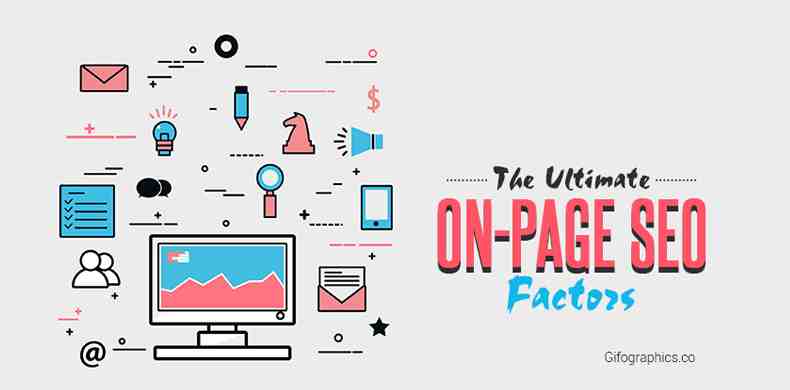
Search engines send out crawlers, or spiders, to explore the Internet. They follow links from one site to another, building a map of the content called a search index.
In the process of exploring websites, these crawlers also evaluate your content, determining what kind of information it contains.
This data is used by the search engine’s algorithm to determine how well the content on that particular website responds to user queries.
The better it answers the query, the higher it will rank in the SERP.
In Google’s relentless quest to provide better results to users, its algorithm is updated frequently. This inevitably leads to changes in rankings, which requires someone to optimize the site to improve or guarantee rankings.
What Is On-Page SEO & Why Is It Important?
On-page SEO, which is sometimes referred to as on-site SEO, is the process of tweaking a page’s content, tags, and internal links to improve search visibility and increase traffic.
In other words, it’s a means of optimizing your site to help search engines better understand your site.
And that, of course, comes with a number of benefits.
The first is in the amount of traffic.
The first five organic results on a search page get 67.60% of all clicks. The next five account for just 3.73%. And it goes down from there. So if you want to get traffic, you need to be near the top.
Second, high-ranking sites have much better click-through rates (CTR). Google’s top mobile search result has an average organic CTR of 26.9%.
Now consider that 92.4% of internet users searching their cell phones for something close visit this business on the same day and you can start to see the impact organic SEO can have on your results. And on-page optimization is an important factor in your organic ranking.
I hope by now you understand the importance of on-page SEO. Now it’s time to get started. Let’s dive right in…
12 Essential On-Page SEO Factors
On-page SEO can be divided into three categories: content, HTML, and site architecture. We will see each one individually.
Content
You’ve heard it before: content is king.
SEO without it is like a nice sports car without an engine – it may look cool, but it’s not going anywhere. But, not all content is not created equal.
Here are the content factors you need to consider to maximize your on-site SEO:
One way Google evaluates your site is based on E-A-T, or experience, authority, and trustworthiness.
In 175 pages of Google’s Search Quality Guidelines, it is mentioned 135 times, which should be an indication of the role it plays in search engine algorithms.
While Google has only confirmed a few elements of E-A-T (PageRank and links), it is generally accepted in the SEO field that on-page signals play an important role in their evaluations.
For a deeper dive into E-A-T, read this article.
The most basic way to tell them that your site’s content answers a user’s question is in the language you use.
Pages that feature the keywords used in a query, whether in the body, titles, or both, are more likely to be relevant to the search.
Sometimes this is easy to determine. If you’re optimizing a furniture store’s website, you’ll likely want to include keywords like [sofa], [dining room set], and [end table].
If you’re a specialty furniture store, be sure to include long-tail keywords like [contemporary art-deco dressers].
In short, you need to know what your target customers are looking for and create content that includes those terms. It’s always a good idea to research, so you don’t miss any opportunities.
Get started by downloading our Keyword Research eBook.
Creating the kind of content that prioritizes search engines and converts human visitors to your site is an art.
Unless you’ve done this before, it can be quite challenging to write copy that reads well and still follows SEO best practices.
We have an entire piece dedicated to helping you master the art, but some of the key takeaways include:
Using images, videos, and infographics does more than make your page visually appealing to visitors. It also gives you opportunities to boost your SEO.
More than 36% of consumers use visual search when shopping online, which means that if you’re not using images, you’re missing out on traffic.
Be sure to optimize your follow-up text whenever possible.
Be aware of image file sizes to avoid lazy loading. Make your images shareable to identify backlinking opportunities, which can help boost your E-A-T.
HTML
HyperText Markup Language or HTML is the code used to structure your web pages and their content.
They tell the user’s browser what to show and where to show it. And it tells search engines what your page is about and where they should rank it.
Here are the HTML on-page SEO factors you need to consider:
This is one of those areas where it’s important to focus on the details.
By itself, this snippet of code that allows you to title a webpage is unlikely to make you climb the SERP rankings.
But in context with other elements on the page (like the ones discussed here), it can help you create context and demonstrate the relevance of your site.
For a more complete look at how to optimize your title tags, read this.
Right now, a veteran SEO professional is throwing her hands at the canvas. “Oh come on,” she is saying, “everyone knows that meta descriptions are not an SEO ranking factor.”
She is only partially right. While it is true that there is a lot of evidence against meta descriptions as a ranking factor, she is wrong about everyone knowing it.
And don’t let the negative Nancy here dissuade you from adding them to your site.
Despite their relative lack of use in SEO, they offer two main benefits: they can help Google understand what your webpage is all about, and more importantly, they have a huge influence on your CTRs.
Better meta descriptions give searchers a better understanding of what your page is about, which in turn leads to more clicks. So don’t neglect them.
We’ve already talked briefly about the importance of visuals on your page, but now it’s time to take a closer look at its technical aspects.
Here are some tips to help optimize yours:
Once again, we have a great resource for more detailed information on optimizing HTML images. Read here.
8. Geotagging (for local search)
It may be a global economy, but most business is still done locally. Connect with people in your neighborhood by optimizing your local on-page SEO.
While this is less important for megacorporations like GMC or Pepsi, for small and medium-sized businesses this is bread and butter.
There are three main SEO tactics to consider when targeting local traffic:
Be sure to include the name of your target location in your keywords and place them in your content wherever they fit.
For more information on creating your own geotagging SEO strategy, read this.
Website Architecture
Having a well-structured website is important for two reasons: first, a logically organized website will be crawled more efficiently by search engines, and second, it will create richer user experiences.
Here are the factors to consider when optimizing your website architecture:
A clunky, slow-loading website does more than frustrate and alienate visitors – it actually hurts your search rankings as well.
Search Engine Journal took a deep dive into the effect a page load time has on SEO and confirmed that page speed is a ranking factor in search results.
However, the minimum speed your site needs to meet is constantly changing.
Currently, it can be fulfilled by reaching the minimum threshold of Google’s Core Web Vitals. If your site isn’t meeting these standards, there are several steps you can take, including:
In 2016, mobile search volume overtook desktop for the first time. And in the following years, that number only grew.
Mobile now accounts for over 56% of all internet usage, with tablets contributing another 2.4%.
As more users are on mobile devices, Google followed the logical path and started to prioritize websites with responsive designs in the mobile search rankings.
This mobile-optimized update only affects search results performed on mobile devices, and while it is still possible to rank these results without responsive design, Google strongly recommends that websites have a mobile version.
You can read more about the effect website responsiveness has on search results here.
There was a time when URLs played a big role in SEO. Professionals would make sure their keywords are included in the web addresses to help them rank higher.
But Google, doing what Google does, changed the algorithm. And what was once so important to rankings now plays a much smaller role.
That doesn’t mean it doesn’t matter. Search engines still include your URLs in their overall score – they just don’t matter as much as they once did.
However, there is evidence that they play a role in a site’s initial ranking, and some professionals believe they are used to grouping pages together. What this means is that while they shouldn’t be your top SEO priority, you also don’t want to ignore them.
Read more about how URLs influence Google rankings here.
Remember E-A-T from the beginning of this article?
One of the best ways for your site to establish experience, authority, and trustworthiness is through links from other reputable sites.
Think of it this way: Who would you rather trust your 401(k) to – a financial advisor who manages Warren Buffet’s portfolio or his cousin Jimmy, who lives in your aunt’s basement? Jimmy can do a good job; he might even surpass Buffett’s guy. But it just doesn’t have the credibility that comes with a strong co-sign.
There are three main types you need to know about for SEO:
Of the three, inbound links are by far the most important. They provide the biggest SEO benefit, but they are also the hardest to come by.
There are a variety of methods SEO professionals use to generate quality inbound links, including using social media, creating shareable infographics, and even requesting backlinks.
But beware: not all incoming links are useful. Some, especially those coming from link farms, forum posts, and guestbooks, may be fake links intended to trick the ranking system. If you don’t reject this, it could hurt your ranking.
Here’s information on how and when you should reject links.
On-Page SEO vs. Off-Page SEO
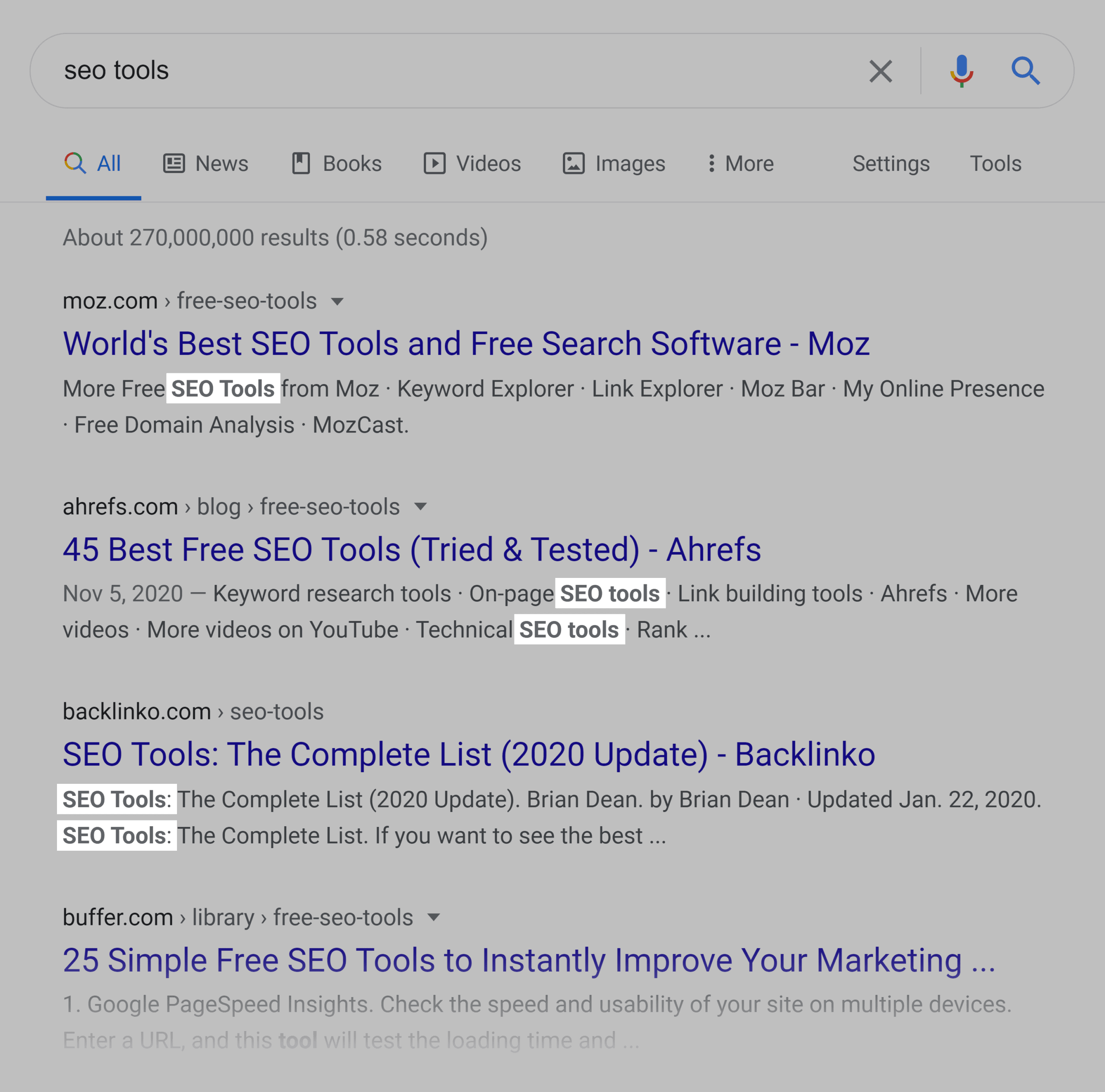
We’ve talked a lot about on-page SEO, but there’s also something known as off-page SEO. The difference, as you could probably tell by the names, is where it happens.
On-page SEO is everything you can do internally to increase your rankings, including keyword optimization, meta descriptions, title tags, alt text, and site structure.
Off-page SEO is all the things that happen externally that affect your site’s rankings. This includes backlinks, E-A-T, local SEO, social media mentions, and pay per click.
You obviously have a lot more control over your on-page SEO, but it’s important to keep off-page SEO in mind too – you need both to get where you want to be.
But you should first focus on building a good and relevant webpage that is fully optimized for search engines before you start investing a lot of resources into link building and promoting your website.
On-Page SEO Is An Ongoing Process
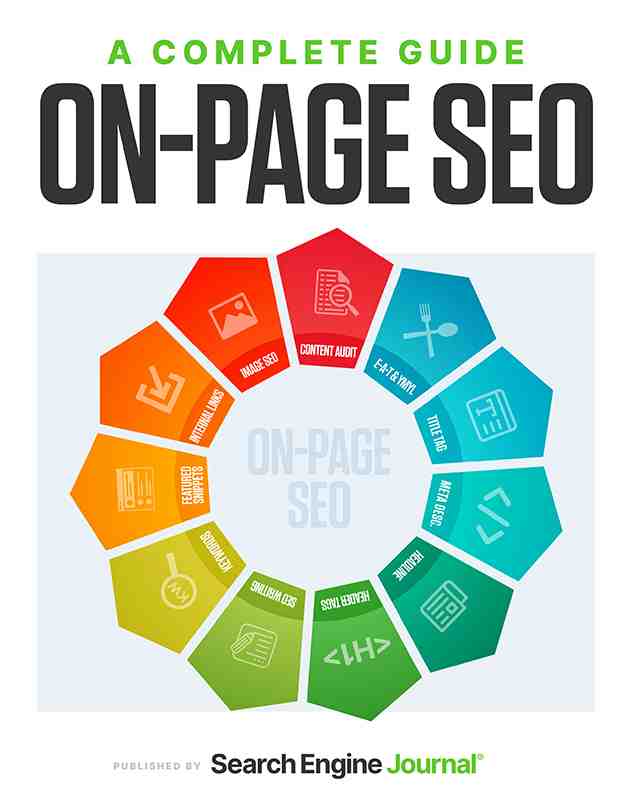
At the end of the day, search engine optimization comes down to one thing: finding the best way to provide searchers with valuable information and ensuring your site is at the top of the SERPs.
Its aim is to provide richer experiences to users while demonstrating its value to search engines. Fortunately, these two go hand in hand. And they start with on-page optimization.
Start with what you can control, carefully evaluating your current site for weaknesses and opportunities for growth.
Put all your ducks on the spot in a row and you’ll start to see results – including an organic improvement in external factors.
Just remember, SEO, like Tetris, is never done. But keep reading and working, and you’ll get the results you deserve.
Featured Image: Paulo Bobita/Search Engine Journal
What are the best on-page SEO techniques?
On-page SEO checklist
- Crawl your website.
- Do an SEO audit and define your site’s architecture.
- Update URLs, page titles and meta descriptions.
- Make sure your keyword is in your URL.
- Include your keyword throughout your page.
- Track keywords and topics for each page.
- Do not use keywords.
What are on-page and off-page SEO techniques? On-page SEO focuses on optimizing parts of your website that are under your control, while off-page SEO focuses on increasing your domain authority through creating content and getting backlinks from other websites.
What are off page SEO factors?
"Off-page SEO" (also called “off-site SEO”) refers to actions taken outside of your own website to impact your rankings on search engine results pages (SERPs). Along with on-page SEO, this includes a number of basic SEO factors that help a site rank.
What is off-page optimization in SEO? “Off-page SEO” (also called “Off-site SEO”) refers to actions taken outside of your own website to impact your rankings on search engine result pages (SERPs).
Why off-page SEO is important?
Off-page SEO helps build a website’s domain recognition and authority. Without it, your site will continually rank below other sites that already have a more substantial lead. While links aren’t the only off-page signals Google’s algorithm applies to rank a website, it’s perhaps the most vital of all.
Why is offsite SEO important?
Why is off-page SEO important? Off-page SEO is tremendously valuable because it tells search engines that your site is important to others on the web. Every link you receive acts as an endorsement from another source that your site is of good quality.
What is more important on page SEO or off page SEO?
Having a website with good SEO (search engine optimization) can make a significant difference in how many pages you rank deeply. If you are a smaller local business; Attention to local SEO efforts is more important than ever.
What is the most important off page SEO activity?
As SEOs, content marketers and bloggers know, backlinks are currently the most important off-page SEO factor. This is because natural links from relevant and trusted websites act as an independent “vote of confidence”, which helps search engines trust your website more.
What is on-page SEO optimization?
Onpage optimization (also known as on-page SEO) refers to all the measures that can be taken directly on the website to improve its position in search rankings. Examples of this include measures to optimize content or improve meta description and title tags.
What is the example of on-page SEO? Examples of some on-page SEO action items include: Optimizing your title tags and meta descriptions. Writing deep, quality content. Cleaning up your site’s code.
What is included in on-page optimization?
On-page SEO refers to the SEO elements you control on the webpage or the webpage code itself. Examples of on-page SEO include content, titles and headers, image optimization, title tags, meta descriptions, structured data, and more.
What is on page SEO with example?
On-page SEO is a type of search engine optimization that uses on-site optimizations to improve a page’s ranking in relevant search results. On-site optimizations target the content and source code of a page and include creating content, inserting keywords, improving page speed, and more.
What is on-page SEO? On-site SEO (also known as On-Page SEO) is the practice of optimizing elements on a website (as opposed to links elsewhere on the Internet and other external signals collectively known as “Off-Site SEO”) to rank higher. and gain more relevant traffic from search engines.
What is on page SEO content writing?
SEO writing is the process of writing content to rank on the first page of search engines like Google. This involves researching keywords, writing high-quality content that matches user intent, and optimizing your headers for easy page crawling.
What is SEO in content writing?
An SEO content writer understands search engine optimization and knows how to write informative, engaging and relevant content. However, they are not always effective when it comes to writing content aimed at driving conversions.
What is on page and off page SEO with example?
| on-page SEO | Off-page SEO |
|---|---|
| On the seo page, we will use internal links. | For off-page SEO, we will use deep linking. |
What is a off-page SEO?
“Off-page SEO” (also called “Off-site SEO”) refers to actions taken outside of your own website to impact your rankings on search engine result pages (SERPs). Along with on-page SEO, this includes a number of basic SEO factors that help a site rank.
What is on SEO and Off SEO?
While on-page SEO refers to factors you can control on your own website, off-page SEO refers to page ranking factors that occur outside of your website, such as backlinks from another website. It also includes your promotion methods, taking into account how much exposure something gets on social media, for example.
What is on page SEO and how does it work?
On-page SEO (also known as on-site SEO) refers to the practice of optimizing web pages to improve a website’s search engine rankings and gain organic traffic. In addition to publishing high-quality, relevant content, on-page SEO includes optimizing your titles, HTML tags (title, meta, and header), and images.
What is on-page SEO in simple terms?
On-page SEO (search engine optimization) refers to the process of optimizing pages on your website to improve rankings and user experience. This is the opposite of off-page SEO, which refers to optimizing elements outside of your site. This can include backlinks or social media mentions.
What is on-page SEO with example?
On-page SEO is the practice of optimizing individual web pages to rank higher and get more relevant traffic on search engines. On-page refers to the content and HTML source code of a page that can be optimized, as opposed to off-page SEO which refers to links and other external signals.
How does on-page SEO help?
On-page SEO helps search engines analyze your site and the content connected to it, so they can identify whether a searcher’s query is relevant to your site. Google is constantly updating its algorithm so it can better understand a searcher’s intent and provide search results that meet that user’s needs.
Can I learn SEO on my own?
It is possible to learn how to do SEO on your own, you don’t need to be an expert or expert in SEO. The first thing to do is convince yourself that SEO is not difficult. If others can do it, so can you. All you need is a willingness to learn and time.
How long does it take to learn SEO? If you can learn SEO for a few hours every day, then you can master the basics of SEO within 4-8 weeks and land your first SEO job in 3-6 months. If you can learn SEO full-time, you can master the basics even in 1-2 weeks.
Can I learn SEO for free?
You can learn how to do Search Engine Optimization, or SEO, completely free of charge. All you need are strong resources written or created by SEO experts. We’ve compiled an up-to-date list of 50 of the best blogs, courses, videos, podcasts, conferences, and SEO tools to get you started.
Is SEO easy to learn?
SEO is difficult at first, but once you learn Google’s algorithmic policies. you can rank your site in no time. Stay tuned for Google algorithm updates and their new policies. SEO takes time and patience.
Does SEO hard to learn?
SEO just isn’t as difficult as people pretend it is; you can get 95% of the effort with 5% of the work, and you absolutely do not need to hire an SEO professional to do this, nor will it be difficult to start ranking for well-chosen keyword terms.
Can You Learn SEO by yourself?
There’s no better resource I’ve found as a starting point for learning SEO than Moz’s Beginner’s Guide to SEO. It’s free and starts by answering the most basic questions like “What is SEO?” Read the entire guide once and you’ll know more than the people who send you those SEO spam emails every day.
Why is SEO so hard?
To summarize, SEO is difficult because search engines are always changing and updating. It could be anything from Google changing the way it looks at a certain type of link, including a major new update to its algorithm, or even recognizing something new as a ranking factor.
Top 5 Free and Paid SEO Courses and Certificates
Search engine optimization (SEO) is one of the top skills needed by business owners and business owners. But the challenge is increasing every day to understand the ins and outs of this model, a key component of the success of any kind with online application.
This article looks at SEO training and certification that can increase your knowledge and improve your career.
The Importance of SEO

Nearly 30% of online traffic comes from search engines, and, according to a report from Statista, since Google launched its search engine in 1997, it has dominated the search engine market. , recorded 92.47% of the market share in June 2021. Google’s biggest competitor, Bing, has only 7% of the market, and Yahoo has 2.85%.
Obviously, when brands want their websites to be satisfied for search, Google is using them.
Over the years, Google has made thousands of updates to its search algorithm, and the SEO methods that worked in one year may not work in another. For website developers and marketing professionals, keeping up with the latest changes in SEO is a necessary part of the job. Fortunately, there are many different SEO training and certifications available to help someone stay informed.
The 2021 report from HubSpot showed that approximately 64% of the market and 63% of brands are actively spending time on SEO. With the difficulty and challenge of getting a website to show up on the top search engine pages (SERPs), there are many incentives to learn as much as possible about SEO. tactics and guidelines.
Jessica Zhao, CMO of Spacewhite, a low -cost, non -professional search engine optimization company, told CMSWire that SEO is something many small business owners don’t think about, but it can make a huge difference in how quickly they grow their business.
“When you’re new to the scene you have a lot of energy – empowered by having a relevant SEO support you from the start,” he says. to judge whether you are genuinely interested and interested in the prospect of learning more. ”
Background Information: No-Click Search Results: An Ongoing SEO Discussion
Google Garage/Coursera

Google Garage, in conjunction with Coursera and the University of California Davis, offers a four-week SEO Fundamentals course, which begins with an introduction on page SEO (11 videos), off-page SEO (four videos), SEO special (seven). video) and later, basic education and research (six videos).
Unlike most Google Garage courses, which are free, the Coursera SEO course requires membership in Coursera. The foundation is offering a free 7-day trial and costs $ 59 a month later.
Coursera also contributes to 28 other SEO courses, including:
Greg Rose, chief experience officer at Intellum, a training provider, told CMSWire that Intellum works with leaders in business technology, including Google, Facebook , Amazon and Twitter, to conduct global marketing training and certification programs.
Rose says each of these programs should include:
HubSpot Academy

HubSpot, which offers training in a wide range of subjects, including marketing, sales, services and more, partners with more than 500 colleges and universities across the board. their education and industry expectations.
“HubSpot SEO Certification is a great choice for creators, marketers and anyone looking to improve their SEO skills on a tight budget,” said Jon Buchan, General Manager of Charm Offensive. different kinds. “
HubSpot’s SEO Certification Course is comprehensive, includes 24 videos and gives marketers everything they need to become proficient in SEO. It breaks down into specific topics, starting with a general overview and introduction to the course, working through the basics, and then moving on to some specific areas of SEO. The course takes about three hours to complete.
Each lesson includes a number of videos, and most have a section of resources featuring examples from videos, articles, links to SEO tools and websites and links to articles and blogs. Once a student has watched the videos in each lesson, there is a short test to see if they have retained the information and then have a chance to work on an SEO worksheet.
The exam consists of 60 random questions drawn from a total of 73 questions, all answered in video and text. It takes about an hour to complete the exam, although students are given three hours to complete. Students must answer at least 45 questions correctly (75%) to pass and must wait 12 hours before retesting before pass first.
Upon passing, students are given a digital certificate and can display the certificate on their LinkedIn profile or their website. The HubSpot SEO certification is valid for one year.
Prerequisite: What You Need to Know About HubSpot’s SEO Certification
LinkedIn Learning

While LinkedIn Learning, formerly Lynda.com, is not free, it is affordable enough to be considered by any SEO or marketing student. It offers over 800 SEO courses, tutorials and videos on the subject of search engine optimization.
The foundation offers a free one -month trial period. After all, the monthly subscription is $ 39.99, or you can opt for an annual subscription of $ 26.99 per month.
Subscriptions to LinkedIn Learning also include LinkedIn Premium, and those who have already subscribed to LinkedIn Premium have full access to LinkedIn Learning at no additional cost.
LinkedIn Learning’s Become an SEO Expert program features 10 courses each, including:
Each class includes exercise videos and files. Upon successful completion of each course, they will receive a certificate that can be displayed on their LinkedIn profile.
“Certificates can be a great addition to any training program because customers who are proficient in your organization’s tools are likely to get more out of them, leading to more revenue. of sustainability, loyalty and support, ”Rose said.
Yoast Academy
The Yoast SEO WordPress plugin is used by nearly 10 million websites, more than any other SEO plugin for WordPress. Yoast Academy comes from the very people who brought you the plugin and offer a free membership and a number of courses, including two SEO courses:
The first Yoast membership, which costs $ 99 per year, also includes training in Local SEO, Ecommerce SEO, SEO Copyrighting, Site Structure, Keyword Research, All Around SEO, Technical SEO and more.
Tips & Warnings: How to Use Keywords in a Modern SEO Strategy
Alison Courses
Alison provides more than 4,000 trainings, all free of charge, covering business, sales and marketing, health, language and construction. Alison offers extensive SEO training and certification, including:
Each course consists of several modules and several topics. The YouTube Marketing and Search Engine Optimization program, for example, involves four uses:
After each class, students will have the option to purchase a digital book (or print it) that they can share on social media, LinkedIn, and more.
Final Thoughts
Machine learning has been a skill that has become a hallmark for the last two decades. As SEO develops, SEO professionals seek training and certification to keep their skills up to date, as well as stand out. extending the value to existing and potential employees.
With free and specialized training available for all skills, SEO students and professionals can educate themselves at a fast pace.
Can I do SEO myself?
You can always do SEO yourself or DIY SEO (Do It Yourself SEO). With some research and lots of examples, anyone can learn how to do SEO for their business. A quick way to get started with SEO is to submit your URL here and then focus your SEO efforts on the recommended features.
How do I practice SEO at home? 6 Steps to Learn SEO for Free – Learn SEO at Home
- Understand the goal of SEO. …
- Master keyword research. …
- Learn the difference between on-page and off-page SEO. …
- Learn to recognize UX signals. …
- Enjoy SEO-friendly content creation. …
- Start building relationships.
Can I do my own Google SEO?
Can I learn SEO on my own?
You can learn how to do SEO on your own, you don’t have to be an expert SEO or an expert. The first thing to do is prove to yourself that SEO is not difficult. If others can do it, so can you. All it takes is the willingness to learn and the time.
Is SEO free on Google?
Google Analytics With detailed information from Google Analytics, software marketers can tailor their budgets and see what works and what doesn’t. no. Google Analytics is one of the best SEO tools that every digital marketer should use.
How much does it cost to do SEO yourself?
| Sort of | Tau |
|---|---|
| Cheap SEO | $ 500 to $ 3,000 a month |
| SEO middle | $ 3,000 to $ 15,000 a month |
| High SEO | $ 15,000- $ 30,000 per month |
| Enterprise SEO | $ 30,000-1 Million a month |
How much does it cost to do SEO yourself?
| Sort of | Tau |
|---|---|
| Cheap SEO | $ 500 to $ 3,000 a month |
| SEO middle | $ 3,000 to $ 15,000 a month |
| High SEO | $ 15,000- $ 30,000 per month |
| Enterprise SEO | $ 30,000-1 Million a month |
How much does it cost to do SEO?
Average costs for basic SEO services range from $ 1,000 to $ 1 million and up. Small companies that use local SEO can spend up to $ 1,000 a month on the project. Large companies, private organizations can expect to pay millions of dollars a month.
How much do freelancers charge for SEO?
Hiring an SEO freelancer or agency by the hour can usually cost anywhere between $ 50- $ 150 per hour. Yes, you can find people for less or more than the hourly cost. For example, this SEO hour rating found that 6% of SEO providers spend more than $ 200/hour.
How much should I pay someone for SEO?
If you’re hiring a top SEO company to run a local organization, expect to pay $ 500.00 a month. A local or international campaign will require a minimum budget of $ 2,500 to $ 5,000 per month.
Is SEO good career in India?
The scope of SEO in India is very broad and has a long future. According to the Times of India, digital marketing segments like Search Engine Optimation, Social Media, and Analytics will have more than 1.5 Lakh jobs and salaries of Rs 4.5-5.5 Lakh in the coming years. .
Is SEO work well paid? Most of those who work in SEO earn at least equal to or more than the average US income. In SEO, it is possible to achieve a payout above the average of up to $ 149,000, but only a small percentage can reach $ 200,000 and above. Apparently after 20 years of experience.
How much do SEO experts make in India?
While new it can be had for around Rs. 1.8-2.8 LPA, professionals with more than 5-8 years of SEO experience can be made at Rs. 3.5-6.6 LPA. But for senior SEO salaries in India (for jobs that require more than ten years of experience), the annual salary is much higher, starting between Rs.
How much does a SEO expert earn?
On average, the SEO Specialist earns $ 49,000 per year, with SEO Managers ’median salary much higher, at about $ 63,000. At the top SEO Directorsâ € ”typically earn between $ 70,000 and $ 120,000â €” and SEO Team Managers and Campaign Managers, at $ 50,000 to $ 100,000.
What is the highest salary of SEO in India?
What is the maximum salary for an SEO in India? The maximum salary an SEO can earn is â12.0 Lakhs per year (₹1.0L per month).
Is SEO a high paying job?
The average hourly SEO salary is about INR 250 which is about 4,50,000 per year. More professionals can earn 11,000,000 INR a year. New members can expect 2,75,000 a year.
Is SEO a good career?
‘ Yes. SEO is a good job choice because it is one of the most sought after jobs in the Digital Marketing field. There are many organizations around the world, hiring SEO professionals to generate better content and get more business.
Is a career in SEO good?
Yes, SEO is a good job in 2022 because you get access to different opportunities. You can work in -house, meet customers, and even start and grow the websites you own. In addition, the three most popular websites Google.com, YouTube.com, and Amazon.com, are also top search engines.
Is SEO a waste of money?
SEO is not a guess. It is not a waste of money, if and time is right. The grass is no better on the other side; it is greener where it is watered. If you take care of your website it will take care of you!
Is SEO a high paying job?
The average hourly SEO salary is about INR 250 which is about 4,50,000 per year. More professionals can earn 11,000,000 INR a year. New members can expect 2,75,000 a year.
How much does SEO course cost?
The cost of SEO training varies: some ads, one or two day classes cost anywhere from $ 1,100 to $ 4,000. Typically, these classes include only the basics (such as just talking about the word â € “and perhaps a little immersion in the more basic ones. ).
Is an SEO course worth it? With the importance of SEO, it’s no surprise that 64% of marketers spend a lot of time learning marketing techniques. Since there are no current SEO degrees or training sets to become “experts” in SEO, experience is often gained through winning experience and, increasingly, through obtaining SEO certifications.
How much is SEO certification?
Cost & Value: To start earning your SEO Essentials Certificate, you must pay a $ 595 fee. With only six hours of coursework, most of the cost here comes from Moz’s name and reputation – not from the class itself.
How do I become Google SEO certified?
To become a qualifier, you must go to the Skillshop website and pass the Google Analytics Individual Qualification exam.
Is a Google SEO certification worth it?
Not much for the certification itself (which, as you can see, isn’t very useful). The real addition of a certificate is that you can learn about SEO in a more organized way. It’s a quick way to learn and more effective than reading blog posts or watching random YouTube videos.
Can you get a certification in SEO?
An SEO certificate is awarded to each person who successfully completes the SEO Course. It shows that you have the relevant training and skills to work with search engine optimization. There are many ways to get SEO certification. You can take an online SEO course or take an introductory class in the classroom.
How much does SEO cost per month?
The cost of SEO is $ 100- $ 250 per hour for US SEO agencies. SEO costs typically start from $ 2,500 â € “$ 10,000 per month for American agencies. The cost of an SEO plan is $ 2819 per month (at Ahrefs) Overseas SEO companies can pay $ 10- $ 50 per hour.
How much does Google SEO cost per month?
| Sort of | Tau |
|---|---|
| Cheap SEO | $ 500 to $ 3,000 a month |
| SEO middle | $ 3,000 to $ 15,000 a month |
| High SEO | $ 15,000- $ 30,000 per month |
| Enterprise SEO | $ 30,000-1 Million a month |
Do you have to pay monthly for SEO?
If you’re hiring a top SEO company to run a local organization, expect to pay $ 500.00 a month. A local or international campaign will require a minimum budget of $ 2,500 to $ 5,000 per month. Some companies offer “samples” at a low price, without a contract.
How much should you spend on SEO per month?
To advertise, most SEO professionals will pay a monthly fee of $ 3,000 to $ 10,000 per month. The budget for local or international SEO should not be less than $ 5000 per month and a local SEO campaign can start at $ 500 per month. $ 2500.
How long does an SEO certification take?
This course is divided into 26 modules and takes approximately 40 hours to complete, with a certificate offered after a 40-question exam. The course is endorsed by the Interactive Advertising Bureau Europe and the Open University.
Does Google SEO Certification Work? Not much for the certification itself (which, as you can see, isn’t very useful). The real addition of a certificate is that you can learn about SEO in a more organized way. It’s a quick way to learn and more effective than reading blog posts or watching random YouTube videos.
Can you get a certification in SEO?
An SEO certificate is awarded to each person who successfully completes the SEO Course. It shows that you have the relevant training and skills to work with search engine optimization. There are many ways to get SEO certification. You can take an online SEO course or take an introductory class in the classroom.
How do I become a Google SEO certified? To become a qualifier, you must go to the Skillshop website and pass the Google Analytics Individual Qualification exam.
What is an SEO certification?
SEO Certification Course Search engine optimization (SEO) is the process of optimizing your website to increase visibility on popular search engines such as Google and Bing. In this certification course, you will learn all things SEO, including website research, link building, keyword research, and more.
Local SEO Scheme: A Complete Guide to Local Marking and Rich Results
How important is schema marking for local search engine optimization (SEO)?
Most local SEO experts and webmasters know the impact of well-optimized SEO elements for landing pages, such as optimized headlines, well-written content, and more.
However, what exactly can you achieve by using schema marking on your local business websites?
When it comes to natural search, there are several reasons why bringing the right and complete plan to apply to your network is a competitive advantage.
In fact, it was reiterated by Google once again that schema helps crawlers crawl to do their job more effectively by helping them understand landing pages and provide relevant information to the SERPs.
In this article, we will share a few tips to help your local business take advantage of using schema to improve your local SEO.
First, let’s start by defining what exactly is schema marking.
The Difference Between Schema, Structured Data & Rich Results

The terms “structured data” and “schema” are often used in the same way as webmaster and SEO.
However, before we delve into the recommendations it is useful to note the semantic differences between these criteria.
Structured Data
Google defines structured data as “a standardized format for providing page information and sorting the content of the page.”
Simply put, this format is designed to help search engines better understand web pages to accurately display parts of the information on search results pages.
Schema
Schema is a form of structured data that is officially launched at schema.org.
Schema was created as a collaborative project developed by all major search engines (Google, Yahoo, Bing, and Yandex) in 2011.
Using the tags available at schema.org enables the landing page to qualify for rich results.
Rich Results
Rich results (formerly called rich sections) are any additional information you see on search engine results pages (SERPs) that go beyond the usual blue label and meta descriptions (bread, stars back) reviews, sitelinks, etc.).
Google provides two tools to analyze the structured data on your website: the Schema Markup Validator and the Rich Results Test.
Below are a few examples of local businesses benefiting from rich results:
Is Structured Data A Local Ranking Signal?

There has been a lot of debate in recent years about whether structured data itself is a hallmark of search engine rankings.
Well-known Google engineer John Mueller has said more than once that structured data itself is not a sign of a direct search ranking.
However, structured data indirectly improves search engine visibility through the following methods.
Structured Data Helps Search Engine Crawlers Better Comprehend Landing Pages
Accurate and well-executed structured data makes crawling search work easier.
A good example would be to compare web houses (directories, photos, media files, etc.) in a garage full of different boxes and items (winter shovels, summer spray pool, etc.).
Let’s say you have a garage sale that you want visitors (ie. Multiple web visitors).
It is Google’s job to advertise your garage sales on search results pages.
For most websites, Google provides the least blue tag and meta descriptions.
However, if your website is properly marked with structured data then Google may well reward your webmaster with larger ads (e.g. richer results) about your garage sales.
Structured data basically puts different logos in your garage making Google search crawl easier.
Structured Data Improves The Possibility Of Obtaining Rich Results Which Improves Click-through Rates
Rich results are more attractive to search results and are more likely to improve CTR (click-through value).
Improving CTR can vary depending on the type of rich result obtained, for example, FAQ Results are very good.
This means that landing pages get more traffic because users are seeing relevant sections.
There are also arguments that increasing CTR could be a sign of SEO itself (more engagement & relevance).
However, having an improved CTR means more traffic wherever your site ranks.
What Structured Data Is Recommended For Local Business Websites?

Most local websites have at least some basic structured and efficient data.
However, the more detailed and detailed structured data is appropriately applied better.
Next, we will provide step-by-step tips on how to properly use structured data:
Select The Best Schema.org Category
Schema.org offers several schema asset options that are particularly suited to local businesses.
To find a local asset for business schema (which will be discussed in detail below), it is necessary to choose the most appropriate part of your local business.
For example, if you are developing an ice cream chain, the most relevant section is schema.org/IceCreamShop.
If you are trying to upgrade your local hardware chain then you would choose schema.org/HardwareStore.
The relevant schema sections will help Google to better understand your website.
What If There Are No Relevant Schema Categories For My Local Business?
If you cannot find a schema.org section that is relevant to your business then the standard section should be schema.org/LocalBusiness.
If you are technically inclined, you can post the tips for the new schema section at the schema.org Github forum.
The developers of schema.org respond to the detailed recommendations of this forum and occasionally create new properties for schema.org.
I Selected The Most Accurate Category So What Should I Implement?
After selecting the appropriate section of your business you should have a schema.org sub-section to ensure that your plan is valid.
Mistakes can stop you from getting rich results.
The following schema properties are required to verify:
Recommended standard schema homes:
How Do You Make Sure Your Structured Data Is Validated?

It is very important to make sure that your structured data is validated correctly.
If this is not the case then your landing page is probably not worth the rich results.
Google specifically states that if there are errors: Rich results may not appear in Google Search rich results.
As mentioned earlier there are two different tools to make sure your plan is correctly implemented: Schema Markup Validator and Rich Results Test.
The Google Search Console also provides structured data improvement reports which will be explained in detail below.
Schema Markup Validator
The Schema Label Signer allows you to enter the details of the system data itself.
It shows both errors and warnings.
It also allows you to test structured data before it can be accessed by web pages by plugging the code directly into the device.
Example of Schema Marking Verification Results
Photo courtesy of Schema Markup Validator, May 2022
Also note that while it is necessary to correct system data errors you will also often see “systematic warnings.”
These warnings are of little concern and Google’s John Muller even said you don’t need to fix all the warnings.
Many sites have a well-structured revenue stream and that is great.
Rich Results Test
The Rich Results test is Google’s official tool for seeing rich results from structured data.
This tool also allows you to preview how rich results will look in Google SERPs.
Example Introduction to the Rich Results Test
Photo by Rich Results test device, May 2022
The Rich Results Test Tool will also report system data errors and warnings.
As mentioned earlier, warnings are normal and do not prevent rich results from being produced.
However, structured data errors must be resolved to qualify for rich results.
Structured Data Monitoring Via Google Search Console
Google also provides systematic data monitoring of the entire site through the Google Search Console.
It is highly recommended that you have a verified Google Search Console account for your local business web site to enable monitoring.
The Google Search Console will provide development reports across the site on how many web pages have verified system data, alerts, and errors.
Google also sends notification emails if there are any issues with the structured data on your local business network.
It is recommended that you pay attention to these notices.
Example of a Site-Based Structured Report
Image Search Google Console, May 2022
How Can I Tell How Many Rich Results My Website Is Getting In The SERPs?

In addition to checking the targets for rich results, it would be good to see how well the local business websites work in all the Google SERPs.
There are several third-party SEO tools that crawl the Google SERPs and provide reports.
One of the most popular tools, Semrush, has a “SERP Feature” report that shows how many rich and compelling results your website is getting.
Example Semrush SERP Visual Report
Is There Anything I Should Avoid When Using Structured Data?
Structured data is meant to be a code for existing properties on your local business website.
Google clearly needs your organized data to match the content of the relevant landing page.
However, organized data spam exists and Google can apply manual penalties if they believe the webmaster is significantly violating the rules.
Be sure to follow Google’s structured data guidelines.
Conclusion
There is no problem with using properly designed and structured data related to your local business websites.
Also, schema.org is constantly updating with new schema properties along with additional interactions through the Google Search Console.
Conventional SEO strategies (meta tag optimization, custom copywriting, graphic design, etc.) often require significant effort and page updates.
In contrast, structured data updates are invisible to users visiting your web site.
It also does not require any direct changes to an item on your web site except that it contains a new code.
They also have great potential to significantly improve the visibility of Google SERPs through rich results.
If you are a local business looking to improve your site be sure to visit schema.org along with your webmaster to start using structured data.
Illustrated: Hangouts Vector Pro / Shutterstock
Install it in the normal way by going to Plugins & gt; Add New and find Schema Click Install then Activate. Once the plugin is installed and opened, your Schema & gt; Setup to start adding Schema tags to your site.
How do I add an aggregate rating in WordPress?
Home Assessment Review or combination
- Go to the WooCommerce administration list, and then select Settings. The configuration screen opens.
- Click the Products tab on the landing screen. …
- In the product screen, scroll down to the review areas and enable product review and product evaluation. …
- Click Save Changes
How is the total calculated? Check Google Search Console This is where you will see the total number of Google-pointed pages on your webpage that have structured catalog evaluation. Google will notify you if there are any errors in your code here or if there are pages that are being referenced but need minor repairs.
What is an aggregate rating?
Combined rating means the dollar value of all contracts, public and private, that the company can perform at any time.
What is crawling in SEO?
Crawling is a discovery process in which site engines send a group of robots (known as crawlers or spiders) to receive updated information. Content can vary – be it web page, image, image, PDF, etc. – but in any case, the content is determined by the links.
What does Google crawl mean? Crawling is the process of finding new or updated pages to add to Google (Google crawled my website). One of Google’s crawlers crawled the page. The words “crawl” and “index” are often used interchangeably, although they are different (but closely related).
What is crawling in website?
Web crawling is the direct download of web pages using the software method, the purpose of which is to consider the content of the web to be searched. The crawler analyzes the content of the page by looking for links to the following pages for extraction and indexing.
What is crawling in SEO?
Crawling is a discovery process in which site engines send a group of robots (known as crawlers or spiders) to receive updated information. The content can vary â € ”it can be a web page, a photo, a video, a PDF, etc. â € laakiin But in any case, it contains what is known as a link.
Why is crawling important in SEO?
The most relevant pages are selected by the search engine, with the best pages appearing at the top of the search. Web crawling is the most important way for search engines to find out what each page is about, allowing them to link millions of search results at once.
What is the importance of the crawling and indexing to the search process?
Crawling is a method used by search engines to find web pages that are generally available. Directory means when search engines crawl web pages and store a copy of all the information on the index servers and search engines display results related to the search engine when the user performs a search query.
Why do we need web crawling?
Web crawling, or spiders, is a type of bot that typically runs on search engines like Google and Bing. Their purpose is to take into account the content of all the web pages so that those websites appear in the search engine results.
Why is crawl budget important for SEO?
Why is a creepy budget important to SEO? A crawling budget is important because it allows web pages to find crawling bots and ensures that new content is identified and indexed quickly. If Google does not point to a page, we will not rank it anywhere.
What is crawling & indexing?
Crawling is the search for pages and links that lead to multiple pages. Instructions are the storage, analysis, and editing of content and links between pages. There are some tips to help you get the most out of your site crawler.
What does crawling mean in search engine?
Crawler is a program used by search engines to retrieve data from the Internet. When a browser crawls the web, it scans the entire web for its contents (for example text) and stores it in a database. It also stores all external and internal links on the web.
What is indexing and crawling in SEO?
Crawling and indexing are two different things and this is a misunderstood SEO industry. Crawling means that Googlebot looks at all the content on the page and analyzes it. Submission means that the page is qualified to be displayed in Google search results.
What does crawling content mean?
Crawling is when Google or other search engines send a bot to a web page or webpage and â € œread it. This is what Google Bot or other crawlers check out on the page. Do not let this be mistaken for pointing the page.
What is schema in website?
Web beacons are basically words or symbols in “shared terminology” that can be used by your online marketing company (like us!) To communicate with search engines like Google & amp; Bing to provide refined search.
What are HTML schemas? Schema.org (often called schema) is a literal term for tags (or microdata) that you can add to your HTML to improve the way search engines read and represent your site in the SERPs.
What is schema in terms of SEO?
Schema tagging informs the search engine exactly what your information is trying to convey on your website. Converts unstructured data into structured data. Adding schema will help the search engine crawl better, increase the ranking of the websites while keeping in mind the other best SEO practices.
Does schema affect SEO?
One of the most recent developments in SEO is the schema markup. This new form of optimization is one of the most powerful but minimal SEO techniques available today. Once you understand the concept and method of marking schema, you can add your own search results page (SERPs).
Does schema help SEO?
Yes, schema can help SEO as rich components. Google provides rich sections and rich cards for certain types of results. Depending on the type of result, these features may provide users with additional information or make your own results stand out in some way.
Why is schema important in SEO?
Schema for Extensive Rich Snippets Schema tagging is important because it makes your website appear better in search results. Thanks to it, additional elements such as images, or videos are presented in rich sections of SERPs. Users see the exact information they need and are more likely to click on those results.
What are schema used for?
schema, sociology, mental structure used by a person to organize knowledge and guide cognitive and behavioral processes. People use schematics to distinguish objects and events based on common objects and attributes and therefore interpret and predict the world.
What is schema used for in SQL?
SQL planning is a useful data concept. It helps us create logical groupings of objects such as tables, archived systems, and tasks.
Why are schemas important in database?
Data collection systems are important because they help developers to figure out how data collection should be organized. The project can only use several tables and chairs. Still, having a schema gives developers a clear reference point on what the tables and project areas are.
What is schema and advantages of using it?
The plan can be shared by several users. It enables you to transfer data objects between schemas. We will have greater control over the access and protection of data objects. The user can be removed without removing the user information attached.
How do I find the schema of a website?
The Schema Structured Data Test can be found on the “Maintenance” tab of the Schema App. Enter any URL, and this tool will display the schema tag found on that page. It is the only testing tool that displays dynamic schema.org data and does not store results.
What is search results page schema?
Links that can help the user understand and navigate the web rankings. reviewed. History The history of this site contains the most recent revisions to accuracy and / or completeness. ContentOfpage.
How do I find my wordpress schema?
Simply go to All in One SEO »Search Engine Page and change the Content Types tab. Here you will see all the types of your mail in the list. For each post type, you will find the Schema marking tab. Switching will allow you to select the default schema type for the specific mail type.
What is Article schema?
Schema (also known as structured data, rich components or microsata), is a language widely understood by search engines, and easily understood. Basically, schema tells search engines what your site or specific page is about in very simple words.
What is schema and example?
Schemata represents ways of restoring the characteristics of certain events or objects, such as determining one’s self-knowledge and one’s socio-political history. Examples of schematics include texts, perceived social roles, beliefs, and worldviews.
What is an example of an event plan? Event planners let you know what you are doing in a particular situation. For example, when a fire alarm goes off, you must leave the building. This may sound plausible, but once again, you do not know what these signs mean. You learned through experience and had data in the structure.
What is a schema provide a personal example?
Planned individuals focus on specific individuals. For example, your friend’s plan may include information about her appearance, culture, personality, and preferences. Community plans include general knowledge of how people behave in certain social situations.
What do schema means?
Schema Definition 1: Introduction to a comprehensive diagram: structured or plan: overview. 2: A cognitive-behavioral process that involves a specific systematic way of recognizing and responding to a difficult situation or stimulus.
What is schema explain with examples?
The system is an outline, diagram, or format. In computation, schemas are often used to describe the structure of different types of data. The two most common examples are the database and the XML plan.
What does schema mean in reading?
STORY: Schema is the original knowledge of the reader. It’s all the information a person knows â € “the people you know, the places you are in, the experiences you have had, the books you have read â €“ it is all your plan. Readers use their original plan or knowledge to understand what they are reading.
What is another word for schema?
On this page you will find 27 similar, concise words, idiomatic expressions, and words related to schema, such as: blueprint, plan, strategy, plan, design, concept, design, project, design, overview and schemas.
What is review schema?
The Google review plan is a type of schema marking that allows you to show average reviews and reviews of your cleaning business network. You can see the marked data after you open the search term SERPs (search results pages).
What is schema and why is it important? System is the cognitive structure that helps organize and interpret information. These systems can be useful because they allow us to take short steps to translate the large amount of information available in our environment.
How do I add a review schema to my website?
How do I add a schema code to my WordPress site?
Install it as usual by going to Plugins> Add Add and search for Schema. Click Install and then Move. Once the plugin is installed and opened, go to Schema> Settings to start adding Schema to your site tags.
What would you say should be the main focus of SEO in 2022?
This Ask SEO question comes from Ian from San Juan, who asks:
“What do you say should be the top SEO focus that came into 2022 for brands that strive to develop a wholesale product business to generate more leads and sales?”
Every year, SEO pros look for a magic bullet.
Even after 21 years, I’m still hoping to find a technique that automatically ranks sites for any query I want.
Most SEO experts I know still look.
And we talk about the latest trends uncovered from our hours of reverse engineering efforts.
And while there are definitely “hot” techniques, I want readers of this column to understand that the basics of SEO don’t change in the long run.
Instead of chasing the algorithm glitches that come with the quick lift of your latest Google rep, I recommend awful back to basics.
The Basics Are Still The Same

Since the emergence of link-based algorithms such as Google’s PageRank, the basics of search engine optimization remain the same.
I can’t guarantee much in life – Google tells me it doesn’t offer a guarantee.
But I can guarantee that if you do the following five things correctly for each request that you want to rank, you will rank for that request.
These are what I consider the five pillars of search engine optimization:
Code
Your web page code is the foundation of all your marketing strategies.
This site code should be built so that search engines can easily find the good content that you create.
Your web page code can’t get you ranked – but if not done correctly it can protect you from ranking.
Content
The content on your web pages should be all-inclusive for your prospects.
You need to have content that works for guests who are ready to buy, as well as those who need more information before making a purchase or filling out a lead form.
Your content should also use keywords and phrases that you want to rank for.
According to Google, your content should exude project skills, authority, and project trust. It is commonly referred to by its culinary acronym, EAT.
Connections
Also known as link building, this is what separates a good SEO expert from a great SEO expert.
Most folks doing SEO can handle the technical side of things. Many can also create a coherent and effective content strategy.
Requires a force public relations mindset and SEO knowledge.
Buy risky links and I don’t recommend that.
Work to create a link strategy that builds on its own. For storage, I will first look at selling equipment and my partners for links.
Then I will look to create link-worthy content that influencers in my field want.
Communications
Social media really doesn’t help your SEO directly, but social media is how we distribute and promote the great content that we create.
Social media is frequently how we connect with influencers from whom we need links.
Your communication strategy is important for SEO, although links from social media will not give you a boost on Google.
Capture
Google Analytics itself can give you content ideas, UX insights, reader insights, and more.
Hire someone to spend time on your data if you don’t know what you’re looking at.
I’ve been doing SEO for 21 years, and I’d still like to have another set of eyes from my team reviewing the data to make sure I’m not missing anything.
Implement these five things better than the others, and you will exalt him every time.
But be aware – you need to get in every request that you want to rank.
Most of us will never win that war all the time.
And that’s one of the reasons SEO happens and not a set-it-and-forget-it tactic.
Know Your Audience

Know your readers it’s not a new trend for 2022, but I see a lot of SEO campaigns are missing.
Just because the jobs that we perform as SEO professionals are sometimes technical, that doesn’t mean our audience is technical.
In fact, I see far too many SEO experts think the audience they are targeting is like them.
In most cases, the audience is very different from the people optimizing the site.
SEO professionals need to practice empathy in our keyword research, UX changes, content creation, and basically, everything we do.
Know your audience likes and dislikes.
Know their political procliities if possible.
Know your average income, age, and gender.
Understand the best way to approach your readers.
This is most likely different for B2B warehouse clients than for companies selling tea or refinancing mortgages.
Use the data provided by search engines, as well as your own web page data, to better understand your readers.
In Conclusion

Stop chasing the latest silver bullets.
Double down on SEO basics that haven’t changed in over 15 years.
Remember that every query is different, and you have to get in every search.
Implement these things and you will achieve your ROI goals.
Featured Image: WAYHOME studio / Shutterstock
Editor’s note: Ask SEO is a weekly SEO advice column written by some of the industry’s top SEO experts, who have been selected by Search Engine Journal. Have questions about SEO? Fill out our form. You can see your answer in the next #AskanSEO post!
What are the SEO techniques in 2021?

21 SEO Tips, Tactics, and Trends for Web Content in 2021
- Prepare for more fanfare about Core Web Vitals. …
- Enjoy useful passages. …
- Pay attention to subtopics. …
- Allow snippets to be featured. …
- Take care of your soil. …
- Create new content with SEO in mind. …
- Walk. …
- Check your website analytics settings.
What is SEO and How Does 2021 Work? On -page SEO. On -page SEO is a major method to directly tell readers and search engines what your page is. Search engines find several factors on a page that can help them in ranking your pages on search engine results pages (SERPs).
What will be the trending SEO technique in 2021?
1. Vitals Web Core Make Page Load Speed Even More Important. Back in May 2020, Google announced a planned update to its ranking criteria in the form of Core Web Vitals: A set of user experience criteria based on page load rate, responsiveness and visual stability.
Does SEO still work in 2021?
So, why is SEO still a good investment in 2021, and beyond ?! Short answer: Yes! SEO is more important than ever! It remains one of the most powerful digital marketing strategies that leads to long -term results.
How SEO will change in 2021?
4. Desktop Page Experience (UX-driven SEO) and Core Web Vitals. Google will gradually implement the Page Experience Algorithm in 2021. This algorithm update consists of several user experience signals, such as Core Web Vitals, that essentially evaluate the overall experience with a web page.
Does SEO still work in 2021?
So, why is SEO still a good investment in 2021, and beyond ?! Short answer: Yes! SEO is more important than ever! It remains one of the most powerful digital marketing strategies that leads to long -term results.
How long does SEO take to Work 2021?
Many SEO firms will state that it takes 4 to 6 months to start seeing results. They are generally accurate, but remember that this is when you first see results, and SEO results will improve over time. Whatever results you want in 6 months should be a little more than you want in 12 months.
How SEO will change in 2021?
4. Desktop Page Experience (UX-driven SEO) and Core Web Vitals. Google will gradually implement the Page Experience Algorithm in 2021. This algorithm update consists of several user experience signals, such as Core Web Vitals, that essentially evaluate the overall experience with a web page.
Is SEO still relevant in 2022?
Why is SEO still relevant in 2022? Yes of course. Although some SEO tactics that were effective in the past have ceased to work, SEO continues to evolve. Constantly reinventing yourself to try and better match user intentions, cutting spammy, ineffective tactics to become better.
Is SEO time consuming?
Unlike other popular marketing channels, SEO does not work instantaneously. Most professionals expect to see results in under 2 months, but SEO can take as much as 12 months to work. Although each company’s SEO strategy is different, most businesses can expect to see decent results in 6 to 12 months.
Why SEO is a Waste of Time? Focusing on SEO to increase your traffic at the cost of building real relationships with your readers is a waste of time. Worse, you never know what SEO mistakes you are making unless you receive some basic SEO skills. You might get penalized for keyword content or building bad backlinks.
How many hours does SEO take?
It can take as little as two hours for a blog post to rank; two weeks for a competitive landing page to rank; six months for a series of pages to rank, or over a year for a brand new site to see SEO traction.
How many hours per month does SEO take?
It can take as little as two hours for a blog post to rank; two weeks for a competitive landing page to rank; six months for a series of pages to rank, or over a year for a brand new site to see SEO traction. The generic answer ‘4-6 months’ is exactly that, generic.
How long does SEO take to Work 2022?
This is a quick answer about how long SEO to start working in 2022: At least 6 months. It’s a considerable amount of time to notice good results from your SEO efforts (if you’ve done it right!). However, 6-12 months is the ideal time frame you will see positive gains from your SEO strategy.
How many hours a week does SEO take?
Even for the small range of organizations I examine here (small to mid -sized businesses), you can see the vast range of potential time spent on SEO campaigns. Added, the number is anywhere between 12 and 104 hours per week. If you put in 12 hours a week, don’t expect to climb to a higher position anytime soon.
Why SEO takes so long?
SEO takes so long because there are several factors involved to get results: SEO keyword difficulty, competition, inbound links, and domain age. Therefore, SEO can take a longer or shorter time depending on how you approach these key search engine optimization areas.
How long it takes for SEO to work?
Many SEO firms will state that it takes 4 to 6 months to start seeing results. They are generally accurate, but remember that this is when you first see results, and SEO results will improve over time. Whatever results you want in 6 months should be a little more than you want in 12 months.
Why SEO is slow process?
It takes time to earn a PhD, earn followers, or earn the trust of your peers and readers. Google understands this, and they also know that it takes time for this achievement to be seen online. That’s just one reason why the SEO process is so slow.
How long does it take to get good at SEO?
It takes 1-3 months to learn the basics of SEO. The basics of search engine optimization can be understood and learned in 3 months, however, more advanced concepts can take anywhere from 6-18 months. This provided you consume daily knowledge and learn from experts.
How long does it take to be good at SEO?
From experience with hundreds of clients, and from what other SEO experts have said, SEO takes an average of four to six months before results begin. Some of my clients who have been online for a long time, gathering domain power, have observed strong keyword rankings in as little as four weeks.
Is SEO difficult to learn?
SEO is not hard to learn. All you need to do is be willing to devote the time and effort needed to learn various SEO concepts. If you are just starting out with SEO and thought what it takes to go from novice to expert, then this post is for you.
Why SEO is long term process?
A more profitable strategy to achieve success is a long-term dedication to SEO because it is an ongoing process that must be maintained. SEO is not a one-time process, it requires constant work. If you do SEO only in the short term, it will produce positive results only in a certain number.
What is SEO How long does it take? From experience with hundreds of clients, and from what other SEO experts have said, SEO takes an average of four to six months before results begin. Some of my clients who have been online for a long time, gathering domain power, have observed strong keyword rankings in as little as four weeks.
Is SEO a long-term strategy?
A long -term SEO strategy means always looking to make those sudden changes. Really it all comes down to planning ahead. You have to start somewhere, so why not with the plan yourself? Use this list to make sure your long -term strategy includes all your SEO needs.
How long will SEO last?
SEO should show results within a 6- to 12-month period. As a result, we mean a measurable increase in traffic and related leads or conversions.
Why is SEO a long-term strategy?
This piece will be divided into three main reasons why SEO is a long -term strategy: constantly changing markets, new competitors, and google / search engine updates.
Will SEO exist in 5 years?
SEO will not be eliminated in the next five years because social media and search engines will more than likely merge. Facebook has already started doing this: they average more than 1.5 billion searches each day. Twitter has done the same; they joined in partnership with Google.
Is SEO a slow process?
SEO can be a painfully slow process. It can take several months after starting your first SEO campaign to notice significant results. And if you one is lucky, it will only take a few months after that for the investment to turn profitable.
How long does SEO for a website take?
You Should Expect To See Results From SEO In 6 To 12 Months … SEO should show results in a 6- to 12-month period. As a result, we mean a measurable increase in traffic and related leads or conversions.
Is SEO a long process?
SEO is a long -term process. SEO is a long -term process and changes to SERPs can only be seen after a certain amount of time. Sometimes the results are visible in a few days, sometimes up to a few weeks or months.
How long it takes for SEO to work?
Many SEO firms will state that it takes 4 to 6 months to start seeing results. They are generally accurate, but remember that this is when you first see results, and SEO results will improve over time. Whatever results you want in 6 months should be a little more than you want in 12 months.
How long will SEO last?
SEO should show results within a 6- to 12-month period. As a result, we mean a measurable increase in traffic and related leads or conversions.
How long should you do SEO?
The short answer is between 4-12 months. The longer answer has to do with all the factors that we discuss that tie into your SEO strategy. If you are targeting competitive keywords, you can start seeing results in 4-6 months.
Does SEO last forever?
On average, you can expect to see results between 3-6 months although there is no guarantee.â € But keep in mind that SEO is never really done either â € “and you donâ € TMt have to simply â € œpull the plugâ €. in months 3-6-12. As many surveyed experts agree, SEO is an ongoing process that needs constant tweaking.
Is SEO still relevant in 2021?
So, why is SEO still a good investment in 2021, and beyond ?! Short answer: Yes! SEO is more important than ever! It remains one of the most powerful digital marketing strategies that leads to long -term results.
Is SEO better than PPC?
SEO can give you consistent results and increase the authority and value of your web pages. Though, PPC can give you immediate results with a highly targeted audience in a time-sensitive period even if your website is not designed for SEO. SEO is very cost-effective and gives you a much higher return-on-investment.
Why is SEO bigger than PPC? SEO vs PPC ROI We have seen that SEO click-through rates are higher than PPC, meaning it has the potential to drive significantly higher volumes of organic traffic your way. In addition, your cost per acquisition (CPA) will be lower with SEO than PPC.
What are the advantages and disadvantages of SEO compared to PPC?
| Green = Advantages Red = Disadvantages | |
|---|---|
| SEO | PPC |
| High uncertainty | Growth is tied to budget |
| Less buyer oriented | Not good for brand awareness |
| Difficult to test A / B | Lack of control over content |
What is difference between SEO and PPC?
PPC vs SEO â € “what is the difference? In short, SEO is how you drive organic traffic to your web pages by optimizing web pages. PPC is advertising that you pay for and it appears at the top and foot of search engine results pages – SERPs. , is displayed on another web site.
Is Google ads and PPC same?
Google Ads is Google’s pay-per-click (PPC) advertising solution, which allows businesses to bid on keywords for the opportunity to show ads on Google search results.
Is SEO better than AdWords?
Adwords is more direct than SEO because you can create an almost instantaneous ad campaign and start getting targeted traffic while with SEO you need more time (especially for new web sites) to get good rankings and traffic.
Does PPC traffic help SEO?
Although PPC does not directly affect SEO, it does not directly help you improve your SEO campaign. By investing in both PPC and SEO, you will help create a cohesive marketing campaign that grows your business.
Does PPC increase SEO ranking?
You want to maximize your bottom line. Consideration of some digital marketing strategies such as PPC and SEO is not only smart, it separates your company from the pack. The question got a rather complicated answer. But in short, no, PPC does not help with SEO resultsâ € ¦at least indirectly.
What is the relationship between SEO and PPC?
A synergy between PPC and SEO boosts visibility. The benefits are obvious: you’ll like increased exposure on search engine results pages (SERPs). Many companies reduce their PPC budget for keywords when they reach a top position for organically. But that can lead to loss of sales.
Why would you prefer PPC over SEO?
Advantages of PPC: PPC produces fast results. Once your PPC campaign starts, you should immediately start seeing more traffic, clicks, and conversions. SEO can take months before you see your site rise to search engine results. Your PPC account can be controlled.
How is Python used in SEO?
Python is an incredible programming language that will help you become a better SEO. You can use python for SEO by eliminating your reliance on Excel and stop using spreadsheets, by leveraging APIs, automating boring tasks and by implementing machine learning algorithms.
What is the purpose of Python? Python is a computer programming language often used to build web sites and software, automate tasks, and perform data analysis. Python is a general purpose language, meaning it can be used to create a variety of programs that are different and not specific to a specific problem.
What does the term SEO Mean?
Search engine optimization (SEO) is the practice of orienting your web pages to rank higher on the search engine results page (SERP) so that you receive more traffic. The goal is typically to rank on the first page of Google results for the search terms that mean the most to your target audience.
What is SEO and how does it work?
Similarly, SEO stands for ‘Search Engine Optimization’, is the process of getting traffic from free, organic, editorial, or natural search results on search engines. The goal is to improve the position of your web pages in search results pages. Remember, the higher a web page is listed, the more people will see it.
What is a SEO in marketing?
SEO marketing is a part of digital marketing that involves the optimization of web sites and web pages for major search engines such as Google.
What is SEO in social media?
The term SEO stands for Search Engine Optimization. You can take certain actions to improve your SEO strategy and increase the visibility of your web pages on search engine results pages (SERP) when someone searches for words or phrases that are relevant to the content on your web pages.
What are SEO tools and what are they used for?
SEO tools provide data and insights about the health and success of your web pages. They help uncover areas of opportunity and identify weaknesses or issues that can prevent you from ranking and increasing visibility in the SERPs. Just as each tool actually has a specific role, the same is true in SEO.
What are SEO tools used for?
SEO tools examine the potential of Web pages for top placement on search engine ranking pages. They provide information about backlinks and keywords as well as insights about SEO competition on the Internet.
What is SEO tool in digital marketing?
SEO means Search Engine Optimization and is a process that works to optimize the technical configuration of a web site, content relevance and link popularity so that pages can be easily found, more relevant and popular for user search queries, and consequently, search engines rank them better.
What is SEO in programming?
What Is SEO Coding? Search engine optimization coding is the process of writing or rewriting a program for your web site in a way that search engines (such as Google) can read and index your content.
What is SEO programming language?
There is no such thing as the “best programming language for SEO”. That doesn’t even make sense. Your web browser renders pages using HTML and CSS. These HTML and CSS pages can be created in any language, python, JavaScript, Ruby, C #, literally any.
Is SEO a coding?
The short answer is: no, SEO usually doesn’t require much (or any) coding arms. You can really do SEO work without touching the code.
What is SEO and how it works?
Similarly, SEO stands for ‘Search Engine Optimization’, is the process of getting traffic from free, organic, editorial, or natural search results on search engines. The goal is to improve the position of your web pages in search results pages. Remember, the higher a web page is listed, the more people will see it.
How to do SEO? | Ask the Experts | dailyuw.com
Want to learn how to do SEO? If so, you’ve come to the right place! In this guide, we’ll teach you everything you need to know about search engine optimization. We will discuss what SEO is, how it works and what you need to do to optimize your website for search engines. So whether you are a business owner looking to improve your website’s position or a web marketer looking to learn more about SEO, this is the guide for you!
SEO stands for “search engine optimization”. This is the process of optimizing a website for search engines. SEO aims to improve a website’s visibility on search engine results pages (SERP).
There are many factors in SEO, but the two most important are on-page optimization and off-page optimization. In-page optimization refers to all the things you can do to improve your position on your website, such as adding keywords to titles and meta tags. Off-page optimization refers to all the things you can do outside of your website to improve your ranking, such as link building and social media buzz. You can read “What are links?” For more information on creating links.
In order to optimize your website for search engines, you need to take a few steps. First, you need to do keyword research to find the right targets. Second, you need to optimize your website title and meta tags. Third, you need to create quality content that includes these keywords. Fourth, you need to create links to your website. And fifth, you need to monitor your results and make changes as needed.
If you follow these steps, you’ll have a great way to improve your website’s ranking on search engine results pages! So what are you waiting for? Get started today with Help My Rank!
Many people are attracted to SEO because it is “free website traffic”. And yes, you don’t pay when someone clicks on organic search results on your site. But make no mistake: SEO is NOT free.
How do you do Google SEO yourself?

DIY SEO: 6 Steps Everyone Can Follow to Get Results
- Set your organic search baseline.
- Investigate your keywords and relevant search queries.
- Publish optimized content.
- Analyze your backlinks.
- Check out the technical issues.
- Stay tuned.
Can I do Google SEO myself?
Can SEO be done by yourself?
You can absolutely do SEO yourself or do SEO yourself (Do It Yourself SEO). With a little research and a lot of practice, everyone can learn how to do SEO for their business. A quick way to get started with SEO is to enter your URL here and then direct your SEO efforts to the recommended actions.
How much does it cost to do SEO yourself?
| Type | Cost |
|---|---|
| Cheap SEO | $ 500- $ 3,000 per month |
| Mid-range SEO | $ 3,000 to $ 15,000 a month |
| Top notch SEO | $ 15,000 to $ 30,000 a month |
| Corporate SEO | $ 30,000-1 million a month |
What is Google’s SEO tool?

Google offers an ever-evolving set of tools that are useful for SEO. These tools help publishers understand why a page is performing poorly and provide them with specific tips for improving their website performance.
What is Google SEO and how does it work? Well, SEO means “search engine optimization,” which is getting traffic from search engines for free, organic, editorial, or natural search results. This is to improve the position of your website on search results pages. Remember, the higher a website is, the more people will see it.
Is Google Analytics an SEO tool?
Google Analytics is a web analytics service that provides statistics and basic analytical tools for search engine optimization (SEO) and marketing purposes. The service is part of the Google Marketing Platform and is available free of charge to anyone with a Google Account.
Which Google tool is used for SEO?
Google Keyword Planner is part of Google AdWords and allows users to research and analyze keyword lists used in PPC campaigns. As part of the Google AdWords advertising platform, it’s designed to help you improve your paid search campaigns. However, it is still a very effective tool for those involved in SEO.
Is Google Analytics a digital marketing tool?
When used with Google Ads, Analytics also gives you the tools you need to deliver great PPC campaigns. Analytics is a must-have digital marketing tool for any business.
What does SEO tool stand for?
SEO means search engine optimization, a process used to optimize a website’s technical configuration, content relevancy, and link popularity to make its pages easier to find, relevant, and popular for users’ search queries, and as a result, search engines rank them better.
What does an SEO tool do?
SEO tools provide information and alerts about the overall health and success of your website. They help identify areas of opportunity and identify vulnerabilities or issues that may prevent you from ranking and gaining visibility in the SERPs. Just as all real tools have a role to play, the same goes for SEO.
What is SEO in simple words?
SEO stands for search engine optimization – it has remained the same. This refers to techniques that help your website rank higher in search engine results pages (SERPs).
What are examples of keywords?

Keywords are words and phrases that people enter into search engines to find what they’re looking for. For example, if you want to buy a new jacket, you can type “men’s leather jacket” into Google, for example. Although this phrase consists of more than one word, it is still a keyword.
What are keyword types? There are 9 types of keywords: short tail, long tail, short, long term, product definition, customer definition, geo-targeting, and intent targeting.
What are the most popular keywords?
| Keyword | Average July – September 2021 | |
|---|---|---|
| 1 | 151.0 million | |
| 2 | Youtube | 151.0 million |
| 3 | amazon | 124.0 million |
| 4 | 73.0 million |
How do I find my most popular keywords?
Use Google Trends to find your most searched keywords on Google. To find the world’s top searches, go to https://trends.google.com. Google Trends also helps you find popular searches for thousands of keywords and topics every day, week, month, and year.
What are the 4 types of keywords?
By examining the user’s intentions behind the search, we can categorize all keywords into four main categories: commercial, business, informational, and navigational. Let’s use a brief breakdown of each type to determine what those types are.
What are good keywords?
The best keywords in your SEO strategy take into account relevancy, authority and volume. You want to find a lot of searched keywords that you can reasonably compete for: your level of competition. Your ability to produce content that exceeds current rankings.
What are good keywords?
The best keywords in your SEO strategy take into account relevancy, authority and volume. You want to find a lot of searched keywords that you can reasonably compete for: your level of competition. Your ability to produce content that exceeds current rankings.
What makes a good keyword?
Your keywords must meet four criteria: significant search volume, high relevancy, strong conversion value, and reasonable competition.
What are examples of keywords?
Keywords are words and phrases that people enter into search engines to find what they’re looking for. For example, if you want to buy a new jacket, you can type something like “men’s leather jacket” into Google. Although this phrase consists of more than one word, it is still a keyword.
What are the 4 types of keywords?
By examining the user’s intentions behind the search, we can categorize all keywords into four main categories: commercial, business, informational, and navigational. Let’s use a brief breakdown of each type to determine what those types are.
What are the 4 types of keywords?
By examining the user’s intentions behind the search, we can categorize all keywords into four main categories: commercial, business, informational, and navigational. Let’s use a brief breakdown of each type to determine what those types are.
What are main keywords?
In SEO, these are the words and phrases that search engines enter into search engines, also called “search queries.” When you cook everything on a page – all your pictures, videos, copies, etc. – down to simple words and phrases, those are your main keywords.
What are examples of keywords?
Keywords are words and phrases that people enter into search engines to find what they’re looking for. For example, if you want to buy a new jacket, you can type something like “men’s leather jacket” into Google. Although this phrase consists of more than one word, it is still a keyword.
What are the types of keyword?
There are three types of keywords by length: Short keywords (also known as good, broad, or general keywords) Mid-tail keywords. Long tail keywords.
How much do freelancers charge for SEO?

Hiring an experienced SEO freelancer or agency on an hourly basis usually costs $ 50-150 per hour. Of course, you can find people who pay significantly less or more for this hourly rate. For example, this distribution of SEO hourly rates found that 6% of SEO providers charge more than $ 200 per hour.
How can I make SEO freelance? To stand out as an SEO freelancer, you need to keep abreast of industry changes so you can follow best practices in real time. On-Page SEO: The key to SEO freelance success is understanding the optimization strategies that take place on your site or page.
How much do SEO freelancers make in USA?
How Much SEOs Earn? The average SEO professional earned $ 81,103 in 2018, more than in 2017. Agencies and freelancers are paid an average of $ 1,779 per month per customer, which is $ 109 more per year. Freelance and agency SEOs bill their clients an average of $ 119 an hour.
What is the minimum salary of SEO?
Entry-level SEO with less than three years of experience earns an average of € 2.8,000 per year. An average SEO with 4-9 years of experience earns an average of € 5,000,000 per year over the average career, while an older SEO with 10 to 20 years of experience earns an average of € 7.8,000,000 per year.
Is SEO a well paid career?
Salary The starting salary for SEO professionals is usually around £ 18,000 for trainees, but for an agency it can be as high as £ 28,000. More experienced leadership and management roles can earn between £ 25,000 and £ 36,000.
How much freelancers earn in USA?
The survey found that, although the average hourly wage for freelancers is $ 20, compared to the US average of $ 18.80, skilled freelancers earn an average of $ 28 per hour, earning more than 70% of the workforce in the region. The general US economy.
Is SEO good for freelancer?
If you want to become an SEO freelancer, you are in good company. It is a popular choice for freelancers and the required field. Every website that has a website wants its websites to appear in the top search results. This may create or impair their business or revenue stream.
Can you freelance SEO?
If you are ready to take responsibility for your career, do the work you love, and help companies succeed, becoming an SEO freelancer can be the job of your dreams. Learning to become a freelance SEO is not a quick and easy process, but it is achievable for anyone with little determination and time.
How much do freelance SEO make?
How Much Does Freelance SEO Earn? As of May 20, 2022, the average annual salary for freelance SEO in the United States is $ 59,249 per year. Just in case you need a simple payroll calculator, it costs about $ 28.49 an hour. This equates to $ 1139 per week or $ 4937 per month.
How much does a freelance SEO make UK?
A typical SEO freelancer has a salary of £ 31,540. Salaries can range from £ 21,200 to £ 58,477. When considering bonuses and benefits, an SEO freelancer in the UK can expect an average value of £ 33,738.
How much a freelancer earns in UK?
The average wage in the UK is £ 15.88 per hour.
Do SEO jobs pay well?
The good news is that 60% of SEO professionals worldwide earn at least or more than the US median ($ 57,456 for men and $ 47,299 for women). 19% of global respondents report earning more than $ 100,000 a year, while some lucky ones (3.38%) report earning more than $ 200,000 a year.
How much do freelance SEO make?
How Much Does Freelance SEO Earn? As of May 20, 2022, the average annual salary for freelance SEO in the United States is $ 59,249 per year. Just in case you need a simple payroll calculator, it costs about $ 28.49 an hour. This equates to $ 1139 per week or $ 4937 per month.
How much does SEO cost per month?

The average SEO cost for US SEO agencies is $ 100-250 per hour. SEO costs for US agencies often range from $ 2,500 to $ 10,000 per month. The average SEO plan costs $ 2,819 per month (per Ahrefs). Overseas SEO companies can charge $ 10- $ 50 per hour.
How Much Does Google SEO Cost Each Month?
How much should you spend on SEO per month?
In general, most SEO experts charge $ 3,000 to $ 10,000 a month for a recurring investment. The national or international SEO budget should never be less than $ 5,000 per month, and a local SEO campaign can run between $ 500 and $ 2,500.
Should I spend money on SEO?
SEO and link building are both important parts of an internet marketing plan. There is no need to spend money on them, but they can be very time consuming. Therefore, your web strategy must allow you to spend a lot of time on these two activities.
How much does SEO cost in 2020?
A typical SEO budget can drop to $ 400-10,000 per month. Of course, it depends on the size of your business, the competition and the level of service you choose. However, there should never be a fixed price for SEO services.
How much does average SEO cost?
The average cost of SEO for small businesses is $ 750-2000 per month or $ 5,000-30,000 for one-time projects. Smaller companies that invest in SEO consulting services pay $ 80 to $ 200 an hour.
Do you have to pay monthly for SEO?
If you hire a top SEO company to run a local campaign, you will pay $ 500.00 per month. A national or international campaign requires a minimum budget of $ 2,500 to $ 5,000 per month. Some companies offer a “trial package” at a lower price, without a contract.
Do you need to pay for SEO?
The average cost of project-based SEO services ranges from $ 1,000 to $ 1 million and more. Smaller companies using local SEO could spend about $ 1,000 a month on a project. Larger enterprise-level companies can cost millions of dollars a month.
How much does SEO cost per month?
The average SEO cost for US SEO agencies is $ 100-250 per hour. SEO costs for US agencies often range from $ 2,500 to $ 10,000 per month. The average SEO plan costs $ 2,819 per month (per Ahrefs). Overseas SEO companies can charge $ 10- $ 50 per hour.
Is SEO a one-time cost?
SEO is not a one-time project; it must be constantly updated, analyzed and adapted to achieve the desired results. Content and links need to be constantly updated and refined. Therefore, most business owners are more than willing to pay a monthly deposit for a quality SEO service.