The three pillars of EES: authority, relevance and experience
What do you need to compete in SEO?
Some say more inbound links, others better content, while some may highlight a technically strong site.
Experienced SEOs know that the most successful sites when it comes to organic search have the right mix of high-level fundamentals.
In recent years, there has been a lot of attention around E-A-T (Experience, Authority, and Reliability) as mentioned in the Google Search Rater Quality Guidelines.
Some have started thinking of these as the most fundamental aspects of SEO.
However, as important as E-A-T is perhaps for some sites, it addresses only one aspect: content.
A holistic SEO program needs to include more.
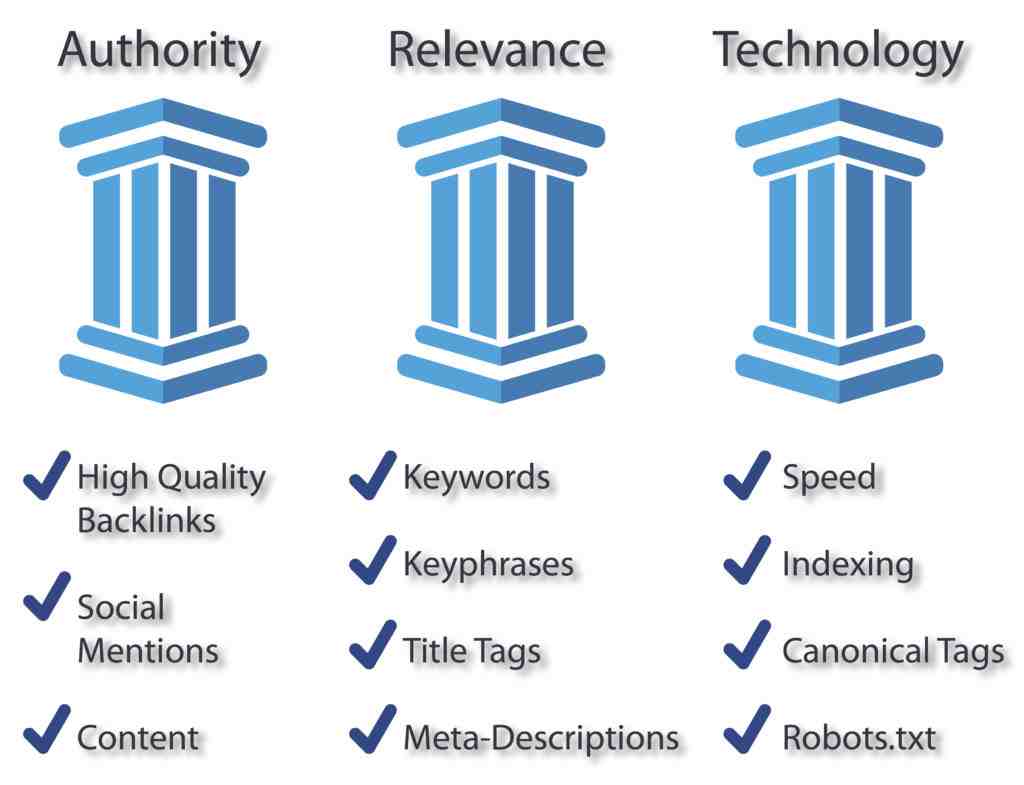
Over the years, I’ve come to think that SEO can be reduced to its most fundamental level to build three things into a site and its pages:
Sites that pay attention to these three are more likely to be evaluated by both search engines and users, and attract more organic traffic over time.
Note that one of my categories, the Authority, coincides with an E-A-T category.
This is because I believe in the highest level of SEO, expertise and reliability are really parts of what makes a site or page authoritative.
Let’s go through each of these A-R-E categories to see how they should be incorporated into a holistic SEO program.
Authority: Do You Matter?
In SEO, authority refers to the importance or weight given to a page relative to a particular search query.
Modern search engines like Google use many factors (or signals) when evaluating the authority of a web page.
Why does Google care about a page’s authority rating?
For most queries, there are thousands or even millions of pages available that can be ranked.
Google wants to bring to the forefront the ones that are most likely to satisfy the user with accurate and reliable information that fully answers the intent of the question.
Google takes care of serving users the most authoritative pages for their questions because users who are satisfied with the pages they click on from Google are more likely to use Google again, thus gaining more exposure for ads. of Google, its primary source of revenue.
Authority Came First
The assessment of the authority of web pages was the first fundamental problem that search engines had to solve.
Some of the earliest search engines relied on human evaluators, but as the world wide web exploded, it quickly became impossible to grow.
Google surpassed all its rivals because its creators, Larry Page and Sergey Brin, developed the idea of PageRank, using links from other web pages as weighted citations to assess a page’s authority.
Page and Brin realized that links were an already evolving, constantly evolving voting system where other authoritative sites “voted” for pages they saw as reliable and relevant to their users.
Search engines use links like we can deal with academic citations. The more academic papers relevant to a source document they cite, the better.
The relative authority and reliability of each of the citing sources also come into play.
So, of our three fundamental categories, authority came first because it was the easiest of the three to break because of the omnipresence of hyperlinks on the web.
The other two, relevance and user experience, will be addressed later, as machine learning / AI-driven learning algorithms have developed.
Links Still Primary For Authority
The great innovation that made Google the dominant search engine in the short term was that it used web link analysis as a ranking factor.
It started with a paper written by Larry Page and Sergey Brin entitled The Anatomy of a Large-Scale Hypertextual Web Search Engine.
The essential knowledge behind this document was that the web is built on the concept of interconnected documents through links.
Since placing a link on your site to a third party site could lead to a user leaving your site, there was little incentive for a publisher to link to another site, unless it was really good and useful. great value for users of your site.
In other words, linking to a third party site acts a bit like a “vote” for it, and each vote can be considered an endorsement, endorsing the page that the link indicates as one of the best resources on the site. web for particular. subject.
Then, in principle, the more votes you get, the better and more authoritative a search engine will consider you, so you should rank higher.
Passing PageRank
A significant part of Google’s initial algorithm was based on the concept of PageRank, a system for evaluating which pages are the most important based on the score of the links they receive.
Therefore, a page that has large amounts of valuable links pointing to it will have a higher PageRank, and in principle is more likely to rank higher in search results than other pages without such a high PageRank score.
When a page links to another page, it passes a portion of its PageRank to the page that links to it.
Therefore, the pages accumulate more PageRank based on the number and quality of links they receive.
Not All Links Are Created Equal
So the more votes the better, right?
Well, that’s true in theory, but it’s much more complicated than that.
PageRank scores range from a base value of one to values likely to exceed trillions.
Higher PageRank pages can have a lot more PageRank to go through than lower PageRank pages. In fact, a link from one page can easily cost more than a million times a link from another page.
Let’s use our intuition for a moment.
Imagine you have a page that is selling a book, and you get two links. One is from Joe’s Book Store, the other is from Amazon.
It’s pretty obvious which one you value most as a user, right? As users, we recognize that Amazon has more authority on this subject.
As it turns out, the web has recognized this as well, and Amazon has a much stronger link profile (and higher PageRank) than any other site involved in book sales.
As a result, it has a much higher PageRank, and can pass more PageRank to the pages it links to.
It is important to note that Google’s algorithms have evolved away from the original PageRank thesis.
The way links are evaluated has changed significantly – some of which we know, and some we don’t.
What About Trust?
You may have heard many people talk about the role of trust in search rankings and link quality evaluation.
For the record, Google says they don’t have a concept of trust to apply to links (or rankings), so you should take those discussions with a grain of salt.
These discussions started because of Yahoo’s patent on the TrustRank concept.
The idea was that if you started with a seed set of hand-picked, highly trusted sites, and then counted the number of clicks you took to go from those sites to yours, fewer clicks more has trusted your site.
Google has long said that they do not use this type of metric.
However, in April 2018, Google was granted a patent related to assessing the reliability of links. However, the existence of a patent does not mean that it is used in practice.
For your own purposes, however, if you want to assess the reliability of a site as a link source, using the concept of trusted links is not a bad idea.
If they do any of the following, then it’s probably not a good source for a link:
Google may not be calculating the trust in the way it does in your analysis, but chances are good that some other aspect of their system will reduce that link anyway.
Fundamentals Of Earning & Attracting Links
Now that you know that getting links to your site is critical to SEO success, it’s time to start putting together a plan to get some.
The key to success is to understand that Google wants this whole process to be holistic.
Google actively discourages, and in some cases punishes, artificial linking schemes. This means that certain practices are considered bad, such as:
What Google really wants is for you to make a fantastic website, and promote it effectively, with the result that you earn or attract links.
Who Links?
The first key knowledge is to understand who can link to the content you create.
Here is a table outlining the main groups of people in any given market space:
Who do you think are the people who can implement links?
Certainly not the laggards, nor the early or late majority.
They are the innovators and the early adopters. These are people who write on media sites, or have blogs, and who can add links to your site.
There are also other sources of links, such as locally targeted sites, such as the local chamber of commerce or local newspapers.
You may also find some opportunities with colleges and universities if they have pages that relate to some of the things you are doing in your marketing space.
Relevance: Will Users Swipe Right On Your Page?
Must be relevant to a particular topic.
Think of every visit on a page as a meeting on a dating app. Will users “swipe right” (think, “this looks like a good match!)?
If you have a Tupperware page, it doesn’t matter how many links you have – it will never rank for used car related questions.
This defines a limitation on the strength of links as a ranking factor, and shows how relevance also affects the value of a link.
Consider a page on a site that is selling a used Ford Mustang. Imagine getting a link from Car and Driver magazine. That link is very relevant.
Well, think of it intuitively. Is it likely that Car and Driver magazine has some Ford Mustangs-related expertise? Of course, they do.
In contrast, imagine a link to that Ford Mustang from a site that usually writes about sports. Is the link still useful?
Probably, but not so useful, as there is less evidence for Google that the sports site has a lot of knowledge about used Ford Mustangs.
In short, the relevance of the linking page, and the linking site, affects how well a valuable link can be considered.
What are some ways Google evaluates relevance?
The Role Of Anchor Text
Anchor text is another aspect of links that is important to Google.
Anchor text helps Google confirm the content on the link receiving page.
For example, if the anchor text is the phrase “iron bath” and the page has content on that topic, the anchor text, along with the link, acts as further confirmation that the page is about that topic.
Therefore, the links act to assess both the relevance and authority of the page.
Be careful, however, as you don’t want to go aggressively getting links to your page that all use your key phrase as the anchor text.
Google also looks for signs that it is manually manipulating links for SEO purposes.
One of the simplest indicators is whether your anchor text appears to be manually manipulated.
Internal Linking
There is growing evidence that Google uses internal linking to assess how relevant a site is to a topic.
Well-structured internal links that link to related content are a way to show Google that you have a well-covered topic, with pages on many different aspects.
By the way, the anchor text is as important when creating external links as it is important for inbound, inbound links.
Related to the internal link is the overall structure of your site.
Think strategically about where your pages fall in the hierarchy of your site. If it makes sense to users it will probably be useful to search engines.
The Content Itself
Of course, the most important indicator of a page’s relevance should be the content on that page.
Most SEOs are aware that assessing the relevance of content to a query has become much more sophisticated than just having the keywords a user is looking for.
Due to advances in natural language processing and machine learning, search engines such as Google have greatly increased their expertise in being able to evaluate content on a page.
What are some things that Google is likely to look for to determine which query page should be relevant?
What About E-A-T?
Of course, Google encourages all site owners to create content that makes the visitor feel that this is authoritative and reliable content written by someone with expertise appropriate to the topic.
But how well they do or are able to assess those categories is still a matter of debate.
The main thing to keep in mind is that the more YMYL (Your Money or Your Life) your site is the more you should pay attention to E-A-T.
YMYL sites are those whose main content addresses issues that may have an effect on people’s well-being or finances.
If your site is YMYL, you should do the extra filling to ensure the accuracy of your content, and show that you have qualified experts to write it.
Building A Content Marketing Plan
Last but not least, create a real plan for marketing your content.
Don’t suddenly start doing a lot of things at random.
Take the time to study what your competitors are doing so that you can invest your content marketing efforts in a way that is likely to provide a solid ROI.
One approach to doing this is to capture their backlink profiles using tools that can do just that.
With this information, you can see what kind of links you are getting and then based on that figure out what links you need to get to overcome them.
Take the time to do this exercise and also to plan which links will go to which pages on the competitors’ sites, as well as what each of those pages will rank for.
Building this kind of detailed look helps you discover your plan of attack and gives you an understanding of what keywords you might be able to rank for.
In addition, study the competitor’s content plans.
Learn what they are doing and consider carefully what you can do that is different.
Focus on developing a very clear differentiation in your content for topics that are in high demand with your potential customers.
This is another time-consuming investment.
Experience
As we tracked above, Google started by focusing on ranking pages by authority, then found ways to assess relevance.
The third evolution of the search was the evaluation of the user experience.
In fact, many SEOs (and me among them) prefer to talk about SEO not as Search Engine Optimization, but as Search Experience Optimization.
Google realized that authority and relevance, as important as they were, were not the only things users were looking for when searching.
Users also want a good experience on the pages and sites that Google sends them.
What is a “good user experience”? Includes at least the following:
In addition, many of the suggestions made above for better content creation also apply to the user experience.
In short, Google wants to rank pages that meet the query and make it as easy as possible for searchers to identify and understand what they were looking for.
Putting It All Together
Search engines want happy users to come back to them again when they have a question or need.
The way to create and sustain that happiness is by providing the best possible results that meet that question or need.
To keep their users happy, search engines need to be able to understand and measure the relative authority of web pages for the topics they cover.
When you create content that is very useful (either engaging or entertaining) for visitors – and when those visitors find your content reliable enough to voluntarily return to your site, or even look for you on others – you have gained authority. .
Search engines work hard to continually improve their ability to match that human search for reliable authority.
As we explained above, that same type of quality content is essential to earn types of links that ensure search engines that you rank highly for relevant searches.
This can be either content on your site that others want to link to or content that other relevant quality sites want to publish, with appropriate back links to your site.
Focusing on these three pillars of SEO – authority, relevance and experience – will increase the opportunities for your content and make linking easier.
Now you have everything you need to know for SEO success, so get started!
Featured Image: Paulo Bobita / Search Engine Journal
What is SEO relevance?
Relevance in SEO can refer to the intent of the searcher, brand, breadth of appeal, and keywords. Properly crafted, relevancy can be beneficial to the SEO of your site in general.
What does the relevance of the content mean? Content relevance is all about your audience’s perception of the relevance of your content to topics, issues, needs, or interests. Content usefulness refers to the ability of your content to help users make decisions or make progress toward goals.
What is SEO in simple words?
SEO stands for search engine optimization, which is a set of practices designed to improve the appearance and positioning of web pages in organic search results.
What is an example of SEO?
White hat SEO helps to improve the performance of a website while still following the rules and regulations of the search engine. For example, if a company uses Google, it will respect their terms and conditions when using their SEO services.
What is SEO and how does it work?
Also, SEO stands for ‘Search Engine Optimization’, which is the process of getting traffic from free, organic, editorial or natural search results in search engines. It aims to improve the position of your website in the search results pages. Remember, the more expensive the website, the more people view it.
What is SEO on a website?
SEO – Search engine optimization: the process of making your site better for search engines. Also the job title of a person doing this for a living: We just hired a new SEO to improve our web presence.
What is relevance in a website?
Relevance is the most specific answer to a question from a user who uses the content of the website. Search engines accurately determine whether the information on the pages matches key phrases.
How do you keep a website relevant?
4 Ideas To Keep Your Website Relevant
- Images that blend in with the graphics. You can never go wrong with high quality photos to attract visitors. …
- Feel minimalist. Although minimalism is nothing new, it maintains its appeal among brands that assume a sophisticated and luxurious aesthetic. …
- Pastel colors. …
- Localized content.
What is relevance in SEO?
What Does SEO Relevance Mean? Relevance in SEO is a reflection of how well the search engine results page (SERP) aligns with the intent of the search engine. For example, if you were to search for information about the U.S. taxation laws, â € œthe undisputed source and most relevant would be the IRS’s. government website.
What does relevance mean in search?
Search relevance is a measure of the accuracy of the relationship between the search query and the search results. Today’s online users have high expectations. Thanks to the high level set by sites like Google, Amazon, and Netflix, they expect accurate, relevant, and fast results.
What is a good Domain Authority?
Scores between 40 and 50 are considered average. A Domain Authority between 50 and 60 must be rated as good. Scores above 60 rank the Domain Authority as excellent.
Is 32 domain authority good? According to Moz, there is no exact number for a domain authority to be considered “good.” They recommend that as long as your DA is higher than your competition, you get a good score. In general, most experts agree that a domain authority between 40-60 is considered a good score.
Is a domain authority of 25 good?
Thus, a good DA score in that niche may be 25 while, in a huge niche such as weight loss, a good score may be closer to 70.
What is a healthy domain authority?
Its logarithmic scale means that it is much easier to improve your score if your domain authority is at 20 or 30 than if it were at 70 or 80. Domain authority between 40 and 50 is considered on average, between 50 and 60 is considered good and over 60 is considered excellent.
Is it better to have a higher or lower domain authority?
What is a Good Domain Authority Score? Domain authority scores range from one to 100. When you have a higher domain authority score, you are more likely to see increases in web traffic and SERP rankings. When you start a new website, its domain authority is one.
What is a good domain authority score?
To rank the domain authority of the website consider that: Scores between 40 and 50 are considered average. A Domain Authority between 50 and 60 must be rated as good. Scores above 60 rank the Domain Authority as excellent.
Is 55 a good domain authority?
If all your direct competitors have scores between 40 and 50, a good domain score for your business falls between 55 and 60. It is enough to help you stay above your competition and have a better chance of ranking higher in search results.
What’s average domain authority?
The average Domain Authority is between 40 and 50, while anything between 50 and 60 is considered pretty good. Over 60 is considered excellent and sites rarely get higher – unless it’s someone like Facebook who has a perfect 100, even with all the fake news stories …
Is it better to have a higher or lower domain authority?
What is a Good Domain Authority Score? Domain authority scores range from one to 100. When you have a higher domain authority score, you are more likely to see increases in web traffic and SERP rankings. When you start a new website, its domain authority is one.
What is a high domain authority?
The Domain Authority (DA) is a search engine ranking score developed by Moz that predicts how likely a website is to rank in the search engine results pages (SERPs). Domain Authority scores range from one to 100, with higher scores corresponding to a higher probability of ranking.
Is a domain authority of 30 good?
You should also know that it is easier to improve the DA of your site if it is between 20 and 30 than between 70 and 80. And to categorize what a good domain authority is, consider the following ranges: Under 30 is poor. 30 to 40 is below average.
What is considered a good domain authority score?
To rank the domain authority of the website consider that: Scores between 40 and 50 are considered average. A Domain Authority between 50 and 60 must be rated as good. Scores above 60 rank the Domain Authority as excellent.
What is a high domain authority?
The Domain Authority (DA) is a search engine ranking score developed by Moz that predicts how likely a website is to rank in the search engine results pages (SERPs). Domain Authority scores range from one to 100, with higher scores corresponding to a higher probability of ranking.
Is it better to have a higher or lower domain authority?
What is a Good Domain Authority Score? Domain authority scores range from one to 100. When you have a higher domain authority score, you are more likely to see increases in web traffic and SERP rankings. When you start a new website, its domain authority is one.
How do you write relevance?
Write down the significance of the study by looking at the overall contribution of your research, such as its importance to society as a whole, and then proceed downward — to the individual level, and this may include yourself as researcher. Start broadly then gradually reduce to a specific group or person.
How do you write the relevance of an article? Prepare yourself with a good dose of inspiration and these 5 strategies to help you write a relevant article.
- Know the goals and person of the site. …
- Gather information and create a plan. …
- Write the content. …
- Review the text. …
- Optimize the article.
How do you write relevance in an essay?
You should consult the wording, and relate each part of your argument to the subject (s) in question. 5. Remember that each paragraph should contain only one idea or topic that was announced in its first sentence. This idea or topic should be directly related to the question or topic you have been asked to discuss.
How do you explain relevance in an essay?
1. Relevance is a very important factor of good essays and term papers. It is very important that all parts of an essay are directly related to the answer to the question. Any part that departs from the subject (s) concerned will weaken its effectiveness.
What does relevance mean in a outline?
Declaration of Relevance. A statement of relevance is a statement that lets the audience know why they should hear your topic. You need to relate your topic to your audience. Think about what the audience might have in common with your topic.
What is meant by relevance in writing?
When something is “relevant,” it’s important. Its relevance is clear. Relevance is simply the form of the noun of the adjective “relevant”, which means “important for the matter in question.” Artists and politicians are always worried about their relevance. If they are no longer relevant, they may not be able to keep up.
How do you write relevance in research example?
Write down the significance of the study by looking at the overall contribution of your research, such as its importance to society as a whole, then proceed downwards – to the individual level, and this may include yourself as researcher. Start broadly then gradually reduce to a specific group or person.
What is the relevance of a research study?
The significance of the study is a written statement explaining why your research was required. It is a justification of the importance of your work and the impact it has on your field of research, it is a contribution to new knowledge and how others will benefit from it.
How do you write a research context example?
Briefly describe the area you will be researching. Explain why this area is important. State what topics of current interest or “hot topics” are in this area. Describe the specific area in the field you are researching.
What is relevance in a paragraph?
Relevance is the concept of one subject being connected to another subject in a way that makes it useful to consider the second subject when considering the first.
What are the qualities of a good paragraph write at least three of them?
Effective paragraphs have four main characteristics: subject matter, unity, coherence and adequate development.
What is an essay What are the relevant points to be kept in mind while writing an essay?
An essay has three basic components – an introduction, a body, and a conclusion. The purpose of the introduction is to introduce your essay. Typically present information in the following order: A general statement on the topic that provides context for your argument.
What is paragraphing in academic writing?
Paragraphs don’t just make text easier to read by breaking it down on the page. They are a key tool in creating and signaling structure in academic writing, as they are the building blocks of an argument, separating each point and showing how they come together to form the structure.
How much does SEO cost per month?
| Tip | Cost |
|---|---|
| Cheap SEO | $ 500 to $ 3,000 a month |
| Medium range SEO | $ 3,000 to $ 15,000 a month |
| High-end SEO | $ 15,000- $ 30,000 per month |
| SEO Enterprise | $ 30,000-1 Million + per month |
How much should I spend on SEO per month? How Much Can You Expect to Spend on SEO? If you are hiring a top SEO company to run a local campaign, expect to pay $ 500.00 per month. A national or international campaign requires a minimum budget of $ 2,500 to $ 5,000 per month.
What does SEO cost in 2021?
In fact, small businesses spend anywhere from $ 100 to $ 5,000 a month on SEO services. But again, the average tends to be around $ 500 a month. As you might expect, agencies and freelancers that charge a higher monthly fee also tend to perform better.
How much is SEO 2021?
The average cost for project-based SEO services ranges from $ 1,000 to $ 1 million and up. Smaller companies that use local SEO can spend about $ 1,000 a month per project. Larger enterprise-level companies can expect to pay millions of dollars a month.
How much does SEO cost in 2022?
Most SEO projects in 2022 cost between $ 1500- $ 5,000 a month based on the scope of the project. One-time projects will range from $ 5,000- $ 30,000 and hourly rates for consultants fall between $ 100- $ 300 per hour.
What is the average cost for SEO services?
How Much Can You Expect to Spend on SEO? If you are hiring a top SEO company to run a local campaign, expect to pay $ 500.00 per month. A national or international campaign requires a minimum budget of $ 2,500 to $ 5,000 per month. Some firms offer a “trial package” at a lower price, without any contract.
How much does SEO work cost?
The average SEO costs are $ 100- $ 250 per hour for US SEO agencies. SEO costs often range from $ 2,500 – $ 10,000 a month for US agencies. The average SEO plan costs $ 2819 per month (per Ahrefs)
How much does average SEO cost?
The average cost of SEO for small businesses is $ 750 to $ 2000 per month or $ 5000 to $ 30,000 for one-time projects. Smaller companies that invest in SEO consulting services can expect to pay $ 80 to $ 200 per hour.
Is SEO worth the money?
SEO is helpful if you have the right strategy in place and work with a partner who knows how to get results. About 93% of online experiences start with a search engine, and the close rate of SEO leads is much higher than that of traditional marketing. So, SEO provides an impressive return on investment (ROI).
Why SEO is worth investing in?
SEO works. This is very important because traffic equals leads and leads turn into sales. By investing in SEO and raising your rankings in Google you will drive more traffic to your website which can generate more leads and sales for your business.
Is SEO even worth it?
The short answer is that SEO is very effective – not only in generating traffic but also in leads and sales. Don’t worry. The long answer includes research and data, not just blank statements. Most SEOs get caught up too much in search-specific metrics such as SERPs (search engine results page), rankings, and organic traffic.
Is SEO worth it in 2020?
While some traditional marketing methods may become obsolete, SEO is here to stay in 2020. Whether you’re investing in SEO early on or just starting out, it can still be a major driver of traffic and leads to your website.
What does it mean if a website has authority?
An authority website is a trusted site. It is trusted by its users, trusted by industry experts, trusted by other websites and trusted by search engines. And yes it is a rather nebulous term.
Why is authority important in a website? Your Domain Authority is important because it is representative of how you rank on the search engine. It helps you better understand the credibility of your site in the eyes of the search engines and you can see how it compares to your competition.
How do I find the authority of a website?
Where can you find Page Authority? Page Authority metrics are embedded in dozens of SEO and online marketing platforms across the web. In the Moz ecosystem, you can check the Domain Authority using Link Explorer, MozBar, Moz’s free SEO toolbar, or in the SERP Analysis section of Keyword Explorer.
How do you determine authority?
Authority is determined by search engines and is essentially how much weight they give to any given site. A website will only be able to reach users if it is authoritative enough to rank well, and the authority is to make it happen.
What is authority in a website?
An authority website is a trusted site. It is trusted by its users, trusted by industry experts, trusted by other websites and trusted by search engines.
Which tool is used to check the Domain Authority of a website?
1. MozBar. Since Moz is the company that created the Domain Authority, many people rely on MozBar to help them find their domain score. This tool highlights the Domain Authority of any site.
Improve Your Rankings With This Off-Page SEO Checklist For Restaurants
In 2022, an online presence for your restaurant business is essential.
When looking for new places to eat, people turn to having thousands of results at their fingertips – and the competition is fierce.
If you want locals to find your restaurant when looking for places to eat in the area, you need to improve your online presence and stand out in those search results.
Search engine optimization (SEO) is one of the best and most affordable ways to differentiate your restaurant online.
While on-page SEO is about optimizing your website, off-page SEO focuses on spreading your reach online.
Below, you’ll find an off-page SEO checklist for restaurants featuring all the elements you need to monitor regularly.
You’ll learn about Google My Business, TripAdvisor, Yelp, social media, link building, and more.
1. Claim Your Google Business Profile

Google Business Profile (GBP), formerly known as Google My Business, is one of the most powerful tools for businesses anywhere.
This allows owners to increase the visibility of their business on Google and make a good first impression by highlighting what makes them unique.
Any information you decide to highlight is what customers will see when they search for your restaurant or restaurants near them on Google.
If you want customers to find your restaurant on Google Search and Google Maps, you need to claim and fill out your Google Business Profile.
The more information you add about your restaurant, the more likely hungry customers will find it.
Your restaurant website is the most important element you need to add to Google My Business.
This will give you free backlinks that are invaluable and make it easier for people to navigate to your website.
Equally important for business is displaying your menu and order page.
Additional must-have Google My Business information includes:
To make your GMB profile more attractive, showcase daily specials, promotions, events and behind-the-scenes videos.
If you have multiple restaurant locations, we recommend that you have a separate Google My Business profile for each location.
2. Claim Your Profiles On Yelp And TripAdvisor

Yelp and TripAdvisor are both second on this off-page restaurant SEO checklist.
According to a BrightLocal survey, 98% of customers read online business reviews in 2021.
Websites like TripAdvisor and Yelp are visited by millions of consumers every month.
Naturally, that’s where your restaurant needs to be.
Add your restaurant to TripAdvisor and Yelp, or claim your listing if it’s already there.
Yelp For Restaurants
Once you’ve filled out your basic information, follow these steps to customize your Yelp profile and stand out from the crowd:
TripAdvisor For Restaurants
The above rules also apply to TripAdvisor.
Start by filling in the basics of the profile such as name, address and website.
Next, improve your profile with these tips on how to rank higher on TripAdvisor:
3. Link Your Website On Social Media

Social media is another important aspect of off-page SEO for restaurants. While this is not a direct ranking factor, it can still affect SEO indirectly.
How? Having your social media profiles redirected to your website will get you additional traffic and business, and build your authority online.
However, just having a profile is not enough.
You need to have an active presence and interact with your followers to encourage them to share your content.
Each social network has its own function.
On Facebook, you can post your menu using the ‘Start Order’ button to actively increase sales.
Instagram is where your dishes will shine. Post photos that your followers won’t be able to refuse.
Twitter is an excellent place to address customer concerns.
Use it to update followers on opening hours changes, new menu items, events, and anything else they might want to know about.
While Facebook, Instagram, and Twitter are the holy trinity of social media platforms, there are other platforms you can take advantage of that can deliver surprising results, such as Pinterest, Snapchat, or TikTok.
On Pinterest, you can post photos of your delicious menu, link to your website, create recipe boards, interact with others in the restaurant industry, and create exclusive gifts.
Snapchat can help you attract more local subscribers using geofilters and engage your audience with little games and discount codes hidden in your stories.
Use TikTok to connect with a younger audience, create hashtag challenges, create funny skits and challenges, and take customers behind the scenes.
Don’t forget to add all your social media profiles to your website.
Use social media to share user-generated content as well.
However, make sure you have written permission from the customer to share their posts on your page.
4. Do Link Building Outreach

Getting quality backlinks from high authority websites can help increase your site’s authority, reputation and search ranking.
Showcasing your restaurant in local online publications will also expose your business to new customers.
First, look for websites that rank highly in the food industry and approach them with guest post promotions.
You can offer your knowledge as a chef or restaurant owner and include a link to your restaurant website in the article.
Next, find a local business directory and contact to add your restaurant.
The same is true for websites that rank the best restaurants in an area.
Offer to include a discount code for their visitors to sweeten the deal.
Create A Restaurant Blog
If you want relevant websites to link to you naturally, consider starting a blog where you share your experiences in the restaurant industry.
Remember to do keyword research to find topics that interest people to read so that your articles can rank highly.
Here are some restaurant blog topic ideas for you to explore:
When searching for keywords, pay attention to your restaurant’s cuisine and key selling points.
If you own a vegetarian restaurant, for example, you wouldn’t write about “how to cut a steak” but rather “vegetarian lunch box ideas” or “how to season vegetables for grilling.”
5. Collaborate With Food Influencers

Food bloggers and influencers with social media followings can be excellent promoters for your restaurant.
They can help increase traffic to your website and improve your search engine rankings by linking to your domain.
Invite local influencers to exclusively sample your latest menu item so they can post about it on their blogs and social media.
You can also give special discount coupons to their followers.
You can find local influencers on subreddits created by and for food bloggers or use a tool like meetup.com to find gatherings of foodie groups in your city.
Try paid blogger outreach software if you want to invest more in blogger outreach.
6. Keep Your NAP Updated Throughout All Platforms
NAP consistency (name, address, phone number) is an important step in restaurant SEO and a must-have item on this off-page SEO checklist.
Your NAP information must be available on your website, social media and third party websites.
Search engines really like this information, as it helps users find answers to their questions.
In order for your restaurant information to show up in relevant searches, you must display your NAP information and update it continuously across all platforms.
Make sure the information is spelled the same and is displayed in the same format.
Otherwise, it can confuse users and make you untrustworthy for search engines.
7. Add Your Restaurant On Popular Review Platforms And Business Directories
Once you’ve covered your base with Google My Business, Yelp, and TripAdvisor, it’s time to research additional directories and websites where you can list your restaurant.
Some of them will help you get valuable backlinks, but all of them will expose you to new customers.
For example, Bing may not be as popular as Google, but it’s worth adding your restaurant to Bing Places.
Here are other websites where you should add a restaurant to improve off-page SEO:
Remember the advice from the previous section – keep your RAN information consistent across platforms.
Summary
Good food is just one element of your restaurant’s success.
Without a solid online presence, you cannot cater to today’s foodie audience.
Getting attention online starts with your website but continues with off-page restaurant SEO.
From social media to review websites and food blogs, check out all the items on this off-page SEO checklist to keep your restaurant at the center of the local community – and a dominant force in search results.
Featured Image: Monster Ztudio/Shutterstock
Technical SEO refers to website and server optimization that helps search engine spiders crawl and index your site more effectively (to help improve organic rankings).
How are you structuring your SEO strategy in 2022?
How to Create an SEO Strategy in 2022
- What is SEO? …
- Mobile SEO. …
- Brainstorm and Research Topic List. …
- Create Long Tail Keywords Based on the Topic. …
- Build Pages for Each Topic. …
- Prepare Blog. …
- Create a Consistent Blogging Schedule. …
- Create a Linking Plan.
Pourquoi s’intéresser aux moteurs de recherche en tant qu’entreprise ? 1- Le SEO permet une croissance exponentielle La prend du temps, mais a vaut le coup : la premiere results page de Google génère 90% des clics ; le site en premium position obtient plus de 30% de visiteurs en moyenne (source: Backlinko).
What are the backlinks in SEO?
Backlinks are links that are created when one website links to another. Backlinks are also called “inbound links” or “inbound link.” Backlinks are important for SEO.
What are backlinks in SEO and how do they work? Backlinks occur when one website links to another website. Also referred to as inbound or inbound links, backlinks make their connection through an external website. Links from these outside domains lead to pages in your own domain.
What are SEO backlinks examples?
Google and other major search engines consider backlinks to be “votes” for certain pages. Pages with a high number of backlinks tend to have high organic search engine rankings. For example, here’s a link from Forbes to my website. Since the link leads directly to a page on my website, it is a “backlink”.
What does a backlink look like?
Definition of backlink A backlink is a link (for example, starting with something like this https://) from one page on a website to another page on a different website.
Is SEO a one-time project?
In short, SEO Jumpstart is a one-time optimization that gives you a starting point to be found by search engines, and ultimately potential clients, customers or audiences.
Does SEO have to be done every month? The truth is, you don’t have to pay an agency for a monthly SEO campaign. And as the director of an agency, I’m sure many of you are shocked to hear this. SEO is not rocket science.
Is SEO a one-time cost?
SEO is not a one-time project; it needs to be constantly updated, analyzed, and adjusted to give the desired results. Content and links should be continuously improved and improved. This is why most business owners will be more than willing to pay a monthly retainer for quality SEO services.
What is the cost of SEO?
Average SEO costs are $100-$250 per hour for US SEO agencies. SEO costs often range from $2,500 – $10,000 per month for US agencies. Average SEO plan costs $2819 per month (per Ahrefs)
How long should you pay for SEO?
If you can’t budget for 6 to 12 months of SEO, you might be better off putting that budget elsewhere. Paying for just a few months of SEO is, in most cases, no better than throwing away your money. SEO is a long-term marketing tactic, and should not be seen as a way to quickly generate sales.
How often do you pay for SEO?
If you hire a top tier SEO company to run local campaigns, expect to pay $500.00 per month. National or international campaigns will require a minimum budget of $2,500 to $5,000 per month. Some companies offer “trial plans” at lower prices, with no contracts.
How long will SEO last?
You Should Expect To See Results From SEO Within 6 to 12 Months… SEO should show results within a 6 to 12 month period. By results we mean a measurable increase in traffic and associated leads or conversions.
Does SEO last forever?
SEO is a lot of things, but predictable and “forever” is not. We don’t rely entirely on SEO and we don’t think other businesses do either; As always a healthy mix of marketing activities is the best way to ensure your prospect funnel doesn’t collapse overnight.
Is SEO dead in 2021?
Don’t be fooled: SEO is not dead, but evolved into more than a few years ago. If you’ve been debating whether to invest in SEO for your business or not, read on to find out why SEO isn’t dead – but is actually thriving – in 2021.
Is SEO dead in 2022?
No. SEO is not dead in 2022. SEO is still a very powerful digital marketing strategy. SEO will continue to change as Google updates its algorithms, but that’s to be expected.
What is da and pa in SEO?
If you’ve spent any time with SEO, you’ve probably heard the terms Domain Authority (DA) and Page Authority (PA). These two metrics provide some insight into how strong your site’s SEO is and how well you rank on Google and other search engines.
What is DA & PA? Domain Authority and Page Authority (DA/PA) are indicators developed by MOZ, a highly respected and reputable digital company, that predicts how well a page will rank in search engine results. Scores for DA/PA are calculated algorithmically on a scale from 1 to 100.
What is DA in SEO?
Domain Authority (DA) is a search engine ranking score developed by Moz that predicts how likely a website is to rank on search engine results pages (SERPs). Domain Authority scores range from one to 100, with higher scores corresponding to a greater likelihood of ranking.
What is DA in backlink?
Some businesses pay thousands of dollars to get one 80 DA backlink. Domain Authority (DA) is one of the most important metrics when it comes to websites. Developed by Moz, DA is a reflection of how popular and trustworthy a site is. The higher the DA, the better the link.
Which DA and PA is best for SEO?
Among the best-known are a pair of metrics developed by the SEO experts at Moz: Page Authority (PA) and Domain Authority (DA). PA and DA are similar in terms of scores, on a scale from 1 to 100, which measure the relative likelihood of a strong search engine ranking for a page or site, respectively.
What is good DA in SEO?
Its logarithmic scale means it is much easier to increase your score if your domain authority is at 20 or 30 than if it is at 70 or 80. Domain authority between 40 and 50 is considered average, between 50 and 60 is considered good and over 60 is considered very good.
What is difference between DA and PA?
DA is referred to as Domain Authority, which is a search engine ranking score. In practice, it predicts your website’s performance in investigating how well the website ranks in the SERPs (Search Engine Results Pages). While PA is Page authority that is used to predict how a web page will rank in the SERP.
Quand on utilise d’ailleurs ?
The expression ces deux ne doivent pas tre confondues. D’ailleurs, au sens propre, signifie « d’un autre endroit, d’autres endroits » : Il en est venu de toute la région, et même d’ailleurs. Au figuré, cette locution a le sens de « du reste, au reste » et s’emploie alors le plus souvent avec une valeur concessive.
Qui d’ailleurs synonyme ?
De plus, du reste, du coup, pendant qu’on y est.
Quelle est la différence entre d’ailleurs et par ailleurs ?
« D’ailleurs » est utilisé pour signifier « de plus », « pendant qu’on y est », c’est une conséquence logique. Quant l’utilisation de « Par ailleurs », blemish signifie « d’un autre côté », « par un autre moyen », c’est une opposition.
What is a website maintenance plan?
A website maintenance plan is exactly what it looks like: an ongoing plan to maintain and support your website. It often requires more in-depth work than most people can do or know how to do well, so they turn to an outside digital marketing agency or vendor to maintain their website for them.
Why do you need a website maintenance plan? The main benefit with a maintenance plan is the fact that the developer or website designer will be on hand to assist with content and design updates when needed. This ensures brand identity as a maintained website will avoid issues like broken links, dead pages and outdated information.
What does website maintenance mean?
Website maintenance is the practice of monitoring the overall health and performance of your website. Keeping a website up to date is essential to ensure it is functioning at full capacity, attracting and retaining site visitors.
What is website maintenance and why is it so important?
Professional website maintenance services will ensure that your website is always safe and up to date. This will help you to focus on running your business instead of worrying about your website being hacked or broken.
How long does maintenance take on a website?
Treatment times can vary greatly. Sometimes the site may be inactive for a few minutes. Other times it can be an hour or two, or even longer.
14 Mobile Optimization Best Practices You Must Know
It’s been a while since Google started announcing its first-person shooter.
When this was first published, SEO professionals were scattering it everywhere to make sure their website complied with Google’s Core Web Vitals and the best models for developing guidelines.
Optimizing for a mobile website is a complete venture into SEO, which requires specialized expertise and its own best practices to be successful. .
Too many, many businesses need a complete, efficient implementation of their website on mobile. And not everyone is measured.
In many cases, sometimes many sites fail in achieving their goals to comply.
Clearly, this is a mistake given the fact that mobile design is a common part of our digital society:
In order to get the best quality on the line, you need to use it for a wide variety of devices and eye solutions. It’s not just for computer users.
And now, Google is announcing their update of the online experience. But that update is more general than this article, even though it plays on the experience page.
In order to achieve optimal mobile performance, it is important to ensure that you create a mobile site that is consistent with these best practices, and also provides opportunities to increase your Core Web Vitals numbers.
By using a responsive design rather than an m-dot subdomain, monitoring best practices and image formatting and optimization, and monitoring dynamics and downsizing, you can achieve a great website. good to reach as many people in your audience as possible.
This is where your mobile site will thrive.
1. Make Sure All Content Is The Same On Desktop & Mobile
The idea behind this best practice is to avoid duplication of issues and accusations of harassment.
To be safe, always make sure everything is the same on the desktop version of your site as it is on the mobile phone.
One of the best methods to use to ensure this happens is to design the response.
Answer design, for those unfamiliar, involves creating a paper style that uses “questionnaires” to automatically switch designs between a wide range of different conditions and devices.
If you want to spice up all the speed possible and tweak your design and features, consider looking at CSS sprites to reduce requests to the native side.
2. Above The Fold Isn’t Gone Entirely

It’s important to remember that in a mobile environment, where endless things roll, the herd isn’t complete.
It’s best to have some text above the fold on a mobile design, to show someone that you have a reason to roll.
The psychological benefits and demands of wanting to see what you have to offer haven’t gone completely over, so you still have to apply for this on most mobile devices.
3. Use A ‘Top Down’ Development Approach
The “from the top to the bottom” development approach means that you consider all the possible outcomes of each decision made in a pattern from start to finish.
You build for mobile-first, rather than desktop-first, and then install it on a mobile design afterwards. This optimization process is good because you don’t have to insert issues into the final design.
Here’s an example: You create a computer website. About three-quarters of the way through the process, you decide you want to make a mobile site up.
You create the image. But, after you’ve checked the logo and gone through all the changes, you’ll find a box here. And you get a bug there. Then you get a bug there. This is because the bottom path is inefficient and causes general cramping.
This can lead to unforeseen problems at the last minute, causing accidents and increasing unstoppable hours. for the first time the project was implemented.
In fact, if the top-down approach for mobile is straightforward right from the start, these bugs and fixes won’t pop up in the end, causing this terrible issue.
4. Don’t Focus Exclusively On The Mobile Consumer, Though
As the mobile phone and the desktop are integrated, so do the goals and needs of the users these principles.
When you focus on what your users want to achieve on a case -by -case basis, you create a unique way to reach customers through your website more effectively.
Whether a user buys a product or does research on the services you provide, a mix of user goals and customer acquisition of the business will continue.
Therefore, focusing specifically on these concepts and values will reduce the need.
No less important, mind you, is only less needed as this mix of mobile and desktop continues.
5. Use Responsive Design Techniques
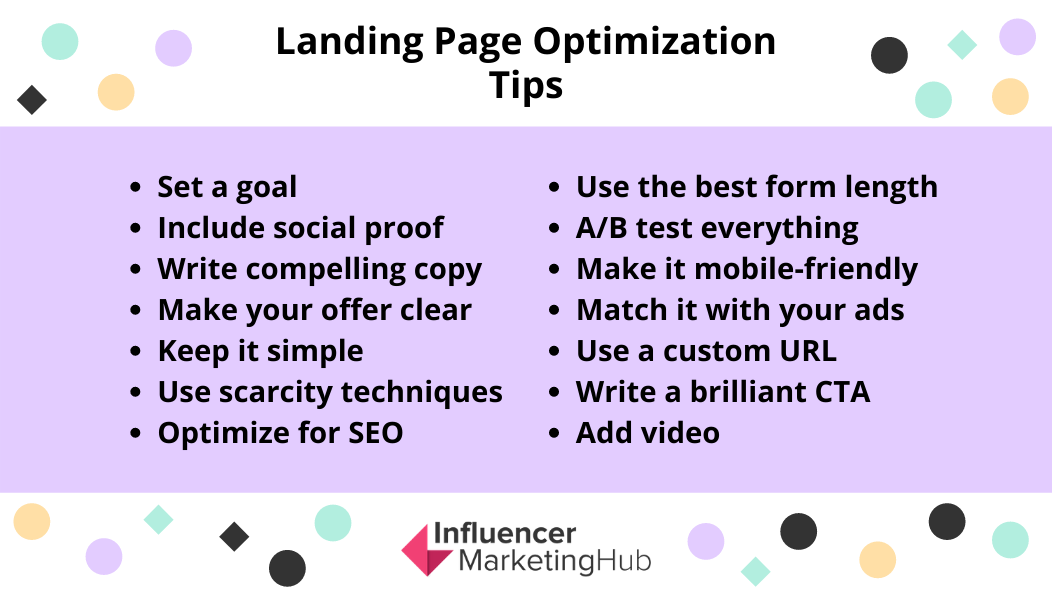
Gone are the days of various m-dot websites (m.example.com).
There is no compelling reason to use such an approach in the pre-telephone era.
The structure can be very confusing, with many URLs generating duplicate content if not properly configured.
There are many ways available to ensure that a positive change is complete, but otherwise, m-dot implementations have gone the dodo path with the advent of new technologies.
Today, good practice involves a response design. These designs use what are called visual cues to define the visual cues that will be supported by the design.
Each different resolution is what is called a “breakpoint” in the pattern, or the point at which the response pattern changes from one resolution to another.
The advantage of using this type of structure is that you are not confronted with the double issues of what you do on the m-dot implementation.
In addition, your mobile performance will be on the latest technology.
6. Think ‘Code’ Instead Of ‘Images Everywhere’ To Increase Site Speed
Do you really need to use that two color as a 2-pixel wide to 1200-pixel high repeat?
If you don’t, and you can sign instead, sign instead.
While a small thing may not significantly interfere with the speed of the site, the command can be added afterwards.
The next time you do a site test or create a website, think: “Do I really need this image here or can I tag it?”
If the image is not needed, tagging the object can help increase the speed of the site, especially on a design website that uses a lot of ata.
7. Customize WordPress For Mobile
Many plug-ins are available for WordPress.
There are so many, some that offer jobs for increasing mobile networks.
The most useful tools for this purpose are Duda Mobile, W3 Total Cache, as well as plug-ins for reducing HTML and CSS.
8. Don’t Use Intrusive Interstitials To Sell Your Product
Yes. We know. Your product is the best, most dangerous to illuminate this planet. That’s why we might visit your website and do research on it before we buy.
But, we don’t need to have an annoying ad to block our activities on your website to scare us into buying.
If possible, keep the interference minimization, and keep the ads towards the bottom or go to the side with an option to click on the ad and remove at best.
It’s important to note that Google punishes harassment.
It’s important to read their technical guidelines along with their webmaster guidelines on this topic, as well as their blog post on this topic.
9. Check Your Site On Multiple Operating And Display Systems
Any SEO needs to know how to identify vulnerabilities on a website that have these practices, including where and how to find problems on different displays and devices.
You want to check your website on more than one user, as well as on more than one display device. Doing this ensures that your website fits as wide of displays and advertisements as possible.
But, what if you can’t afford thousands of tracking devices?
All of this comes down to a few requests. Yes! These types of problems can be detected in more than one application.
Google’s Web Developer Chrome Extension
If you’re on a budget, using Google’s Web Developer Chrome Extension can help you explore how your website looks in a variety of different screen sizes and resolutions.
It also offers the ability to see how your website is viewed through different device instructions, how objects interact with through four channels. example, and more.
They can also be used to scan the website code for problems.
BrowserStack
BrowserStack.com is a great tool for testing on a wide variety of search engines, systems, and visual aids. They also have Google Chrome extensions that you can use for this purpose.
You can search any site over 2,000 real -time tools, search engines, and applications.
With a paid account, you have unlimited access to their additional exam fees.
Cross Browser Testing
CrossBrowserTesting.com is another tool in the BrowserStack that you can use for test and machine testing.
It offers over 1,500 research and test bases, offering products that are not short of what you can do.
You can compare images with their tools, as well as the ability to demonstrate how your website behaves on the devices of the world.
10. Follow Mobile Video Best Practices
Yes, there are excellent mobile video SEO examples! Google still needs tags placed on the page in order for its search engine to better understand the video on that page.
This article from Search Engine Journal’s Matt Southern details Google’s five recommended video SEO best practices.
Features such as page rank, links, indexes, and video files are important.
There are also other things you want to keep an eye on as you create videos
For example, you want to make sure your videos are accessible to the general public. This means making sure that your confidential YouTube ads are made available to the public, and that you have to have a Google -accessible page with that video.
With formatted data, using the VideoObject data type in Schema.org is recommended.
Google recommends using the best mobile video templates for effective mobile video performance:
“If the user’s primary reason for visiting is for video, this user experience should be immersed and re -introduced.”
Aside from the obvious, other best mobile video SEO examples include:
Make your videos easy for Google to find. So far:
Mobile video SEO is not always as easy as one might think.
While not every box needs to be checked, there are things that can ruin your mobile video streaming and indexing if you don’t.
11. Use Schema.org Structured Data
Schema.org organizes data that is important for not only identifying the pages on your website that contain specific, authoritative information. pressure to be seen by scanners but when it comes to mobile identity throughout the game, expect to see an increase in reliance on Schema .
The concise and easy -to -understand way the information can be converted into rich snippets in mobile search.
But, in any case, here is the author’s idea to use standardized data even on computer operations because it can help you. displays rich snippet results related to your website. This can help improve the visibility of your website when implemented correctly.
12. Don’t Block Supporting Scripts Like JavaScript, CSS, Or Things Like Images
This should be common when developing sites for any platform, whether desktop or mobile, but some people are still doing it.
It’s important to make sure the script support for your mobile app is not blocked, as this blocking can lead to problems such as mobile 404s down the line. It can also be found on desktop 404s.
But, if you block these files from being crawled by Google, they will not be able to crawl these files to see that your website is working properly.
If they can’t do this, it can end up in low rankings because they can’t fully understand your website.
13. Image Compression And Optimization
For the mobile website, image classification is an important part to be right. This means you need to make sure that the images are clearly defined for all image sizes with all the appropriate resolutions.
It is not possible to make a single image and ensure that it can be seen anywhere. Well, you can. But it would seem misleading to resolutions that have not been made.
Instead, using the best full SEO examples and making sure you create the best images in all results as well as fast loading is a recommended option.
So there are a lot of best photo templates that Google recommends to use to make your images stand out for mobile. They suggest the following:
The trick to integrating images into your mobile search is to: Create a balance between multiple images, mount them on a mobile device, and ensure page speed without reducing images to on any major device your audience is looking for.
14. Optimize Overall Page Size
The size of the page is a big deal for any mobile site. In order to be truly portable, the page size must load quickly. To do this, the entire DOM volume needs to be upgraded.
To do this effectively, you need to consider not only what I discuss on the link above, but also the following:
Don’t Use Unnecessary Custom Fonts
Using unwanted traditional fonts can make your page load more difficult and increase the amount of data required. to get your page up and running.
This translates into more page load times and can increase your Core Web Vitals score from the required level.
If possible, use system fonts so you can minimize the risk it causes.
Optimize Your Images
You also want to make sure you use your images while preserving the quality of the images. It’s not a professional result if someone comes to your website and the quality of your image is crunchy because of the pressure, you haven’t achieved the best result.
Ideally, you should use a large number of compatible files that will get the highest quality on mobile devices to improve your website while making sure you don’t score below that. good condition.
It is a delicate balance system and requires someone with skill in sorting the images to achieve the desired results.
Reduce The Amount Of Resources The Overall DOM And Critical Rendering Path Need
The more resources your page needs to submit, the higher the speed of your page. It should not have more than 10 plugins (max) and three to four file formats in order to run a web page.
This author looked at situations where there are 160 plugins installed and the page file size is 10 MB. It’s definitely not what you want.
To be most effective, this author suggests that pages on a WordPress site should not exceed 150-250 KB – on average – and should not include more than five up to seven resources max (CSS, external fonts if needed, a custom file, a JavaScript file, and three plugins). If you need more, you may not be as comfortable as you think.
And don’t underestimate the savings that can be saved by using online forums.
Minify Your Pages
The process of shrinking your pages involves compressing your files to save space and reduce the overall loading time of pages as a result.
Using minification as a process will help you eliminate unwanted white space in your code, and add that four. unlikely to provide the minimum opportunity required.
Ideally, the best practice would not include plugins. You want to hire a developer to reduce your pages by five.
If you’re already heavy on plugins, adding someone else to reduce your pages is a bad idea. In these cases, you will want to employ a professional-level professional to ensure the best result.
If you have a small number of installers, then hiring a professional installer for this task will help you achieve better page loading times. and score Core Web Vitals.
If you really have to use an adhesive, be sure to use it as a temporary measure until you can get in a professional fit and reduce it. four code.
Mobile-First Is Here; The Need For Implementation Has Reached Critical Mass
With the advent of Google’s mobile-first index, running your cross-platform, cross-device, cross-compatible website has now become a top priority.
This means that the longer you delay, the more likely you will not only be performing mobile, but not having access to mobile will cost you more in many ways.
If you haven’t made the leap to the cell phone, why not?
Photo Credit: Dragana Gordic/Shutterstock
Optimization is the problem of finding a set of tools in a intended task to obtain high or low performance evaluation. The problem is that many machine learning algorithms are based, from the matching of sequential models to the ‘ learning computer neural connections.
Why are mobile and desktop Rankings different?
Differences in Indexing Google’s John Mueller confirms that mobile indexing is just an index and is separate from the indexing part of the algorithm. He also showed that classification plays a role in the sometimes varied in the search engine rankings between mobile and desktop search.
What does mobile first index mean? Mobile-first indexing means that Google makes extensive use of mobile content for indexing and ranking. Historically, the brand has first used the page content format when evaluating the relevance of a page to a user query.
Why do search strategies differ for mobile devices?
In many cases, people react differently depending on the type of device they use. In general, a mobile user seems to be more concerned with what they are looking for and is closer to making a purchase. Often a desktop user searches for more information about a topic, product or service.
Why can organic results differ on desktop vs mobile?
Fast places. The landing page gives users more experience than they do on competitors’ desktop models. The mobile website has a higher CTR (click-through-rate) from physical search results than its competitors. Reading and overview of the user experience is more common on mobile vs desktop.
Why do you think that visits from mobile phones are different from other Web visits?
When mobile users appear on a page, they do not want to record and resize so they can read the content and find the content. they are looking for. Instead, they leave the site and go somewhere else with a mobile experience.
What are the differences between search on desktop and search on a mobile phone?
The main difference between desktop and mobile search engines is how the text results appear. The results of text messages are usually larger because they are more visual. In most cases, photos or videos will be displayed and listed.
Is mobile SEO different from desktop?
Desktop SEO is focused on the general public, usually without a sitemap. Nowadays, mobile SEO is usually focused on local searches because many mobile users are looking for local results. Google knows what mobile users are looking for as they search.
What’s the difference between mobile and desktop?
Tablets have templates that allow objects to move across the screen and many messages or images can come to life. improve in a public space. Mobile devices are often used in modeling images (and your small size means that even on the map, space is limited).
How does mobile search differ from desktop search?
The main difference between desktop and mobile search engines is how the text results appear. The results of text messages are usually larger because they are more visual. In most cases, photos or videos will be displayed and listed.
Can I do SEO work at mobile?
To reach people on all devices, you can use it not only for search engines on computers, but also for mobile. Unlike desktop, mobile search engine optimization (SEO) is concerned with the user’s location, size of their screen, device used, and so on.
What’s the difference between mobile and desktop?
Tablets have templates that allow objects to move across the screen and many messages or images can come to life. improve in a public space. Mobile devices are often used in modeling images (and your small size means that even on the map, space is limited).
What does mobile desktop mean?
Mobile Desktop is a Windows desktop environment that behaves like a regular computer. The difference between what you see on the screen is happening on a remote server. Unlike a regular PC, your desktop is portable, which means it comes from any computer, thinner, and even from home!
Can I use my mobile as desktop?
With the Samsung Galaxy S8/S8, Note 8 or later, you have the DeX display. Powered from the console, DeX is a computing environment for Android. Just connect your phone to a nearby HDMI wireless display, connect the devices, and you’re ready to go.
Is computer and mobile same?
A laptop is a general term for any type of laptop. These devices are designed to be extremely portable, and often fit in your hand. Some mobile devices — such as tablets, e-readers, and smartphones — are powerful enough to do many of the same things you can do with a computer or laptop.
How do you optimize performance?
12 High -Speed Web Design: Performance Testing and Optimization Examples
- Use a Content Distribution Network (CDN)
- Move your website to a better host.
- Add lots of images to your website.
- Reduce the number of plugins.
- Reduce the number of JavaScript and CSS files.
- Take advantage of the use of websites.
What does it mean to maximize performance? Operational instruction is the process of developing a system to enhance its performance, and thus make it more efficient and effective.
Why is performance optimization important?
Web -based functionality offers many benefits such as increased conversion rates, page views, search engine optimization. search, and even low server bandwidth costs. These are especially important when looking at mobile networks.
Why is performance speed important?
When thinking about website performance, the most obvious thing for your website is speed. Page speed, also known as page load time, is the key metric that measures and improves the quality of your website, as it has a huge impact on whether or not it will be searched. the visitor a web page or not.
Why is optimized important?
The purpose of the experiment is to achieve the ‘best’ against a set of guidelines or limits. These include a number of factors such as productivity, strength, reliability, durability, quality, and usability.
Why is performance optimization an important aspect of secure software development?
NB: It often reduces readability and introduces sub -rules or technologies used to improve performance, systems may be disrupted making it difficult to maintain and debug, so it is recommended to do the test at the end of the stages of development.
Can SEO be done on mobile phone?
Mobile SEO is based on integrated web search engine optimization with direct visibility on mobile devices, such as phones. and dads. Thanks to the increasing number of mobile devices, webmasters have to really worry about their mobile SEO plan.
Is SEO different for mobile and computer? Desktop SEO is focused on the general public, usually without a sitemap. Nowadays, mobile SEO is usually focused on local searches because many mobile users are looking for local results. Google knows what mobile users are looking for as they search.
Can I do SEO in Android?
Google does not offer any Android apps specifically for SEO, but there are some Google apps related to the example. Google Analytics. Google Analytics ’website app is a simple analytics tool for monitoring SEO performance.
Can I do SEO work at mobile?
To reach people on all devices, you can use it not only for search engines on computers, but also for mobile. Unlike desktop, mobile search engine optimization (SEO) is concerned with the user’s location, size of their screen, device used, and so on.
Can I do SEO for free?
But for 75 percent of other jobs, a free tool usually does the trick. There are actually hundreds of free SEO tools out there, so we want to focus on only the best and most useful ones to add to your toolbox. Tons of people in the SEO community have helped with researching SEO software in this post (see comment at the end).
Can I do SEO by myself?
You can always do SEO yourself or DIY SEO (Do It Yourself SEO). With some research and lots of examples, anyone can learn how to do SEO for their business. A quick way to get started with SEO is to submit your URL here and then focus your SEO efforts on the recommended features.
Is SEO possible with mobile?
With responsive design, you don’t need to worry about doing SEO for your mobile website, because mobile users will be able to use your website like other visitors. While satisfying for the user experience, SEO for responsive websites should also be based on the user experience.
Can I do SEO on mobile?
Mobile SEO is the process of satisfying your website to ensure that your website looks good and works well on mobile devices. When you implement mobile SEO, you give a good ranking on the website to the users since it looks great on any device, no matter how big your site is.
Why optimization is needed?
The purpose of maximization is to achieve the “best” measure according to a set of criteria or limits. These include a number of factors such as productivity, strength, reliability, durability, quality, and usability.
Why do we need to improve in deep learning? While learning the deep practice of learning, we need to improve the weight each time and reduce the workload. An optimizer is a function or algorithm that changes the characteristics of the neural network, such as the weight and rate of learning. Thus, it helps to reduce overall loss and improve accuracy.
Why is optimization important in real life?
Maximization at the heart of the order indicates the efficient use of resources to achieve the best goal under a system. of conditions. In a typical example, the goal could be to reduce costs in a production system (e.g. crude oil) that has resources of labor, raw materials, and so on.
What is optimization used for in real life?
Many models exist in the industry. Manufacturers are using the model to learn how to operate their equipment, sell raw materials, finished products, and more. Airlines and other passenger transport services use the instruction to determine their arrangements.
Why is optimization so important?
For example, it plays an important role especially in business as it helps to reduce costs which can lead to higher revenue and competitive advantage. competition. There are several methods to use: routines and methods to use the weak cluster.
What is optimization and why it is used?
Improvement methods are used in many areas of research to find solutions to increase or decrease some research, such as reducing costs in the production of a good or service, increasing revenue, reducing materials. dangerous in developing a good product, or increasing productivity.
What does mobile-friendly website mean?
A mobile hosting website is one that is designed to work in the same way on mobile devices. This means that nothing is changed or cannot be used on a computer or mobile device. Things like shopping are limited, as they are difficult to use on a mobile phone.
What constitutes a mobile website? As the name suggests, mobile devices mean things that appear not only on desktop computers but also on mobile devices. small. This means the text is easy to read, links and advertisements are easy to click, and the material is easy to apply to the general public.
How do you know if a website is mobile friendly?
Google offers a website where you can search your website to see if Google says it is mobile hosting. Just paste the URL of your website in the space shown below, then click “Analyze.” In a few seconds, Google will tell you if your site is mobile -friendly.
What does a mobile friendly website look like?
A mobile hosting website is one that is designed to work in the same way on mobile devices. This means that nothing is changed or cannot be used on a computer or mobile device. Things like shopping are limited, as they are difficult to use on a mobile phone. And no Flash animation is used.
What is it called when a website is mobile friendly?
Think of a hosted website such as a mobile app, but the responsive site takes precedence. A website that pretends to change or respond to the device in which it is viewed.
What does it mean to be mobile friendly?
Mobile Definitions You may hear a mobile website called an “answer” or “mobile” website. help “. All of these terms mean that the site in question runs smoothly and is easy to use and navigate on a mobile device, such as a phone or tablet.
Do you want website to be mobile friendly?
Mobile hosting is one of the most effective ways to retain visitors on long -term websites. People are more likely to stay on a website that is easier to use and less likely to leave, which means for you a mobile website will reduce your savings.
Why your business needs a mobile friendly website?
Having a mobile friendly website means your email address and phone number are easy to find and click. All your customers have to do is click and the phone will start ringing. This is better for your customers and for you because it may result in a purchase.
What is the advantage of a mobile friendly website?
Mobile Websites Load Faster Mobile hosting websites load faster than desktop websites. when you search on a mobile device. The speed of the site is very important because 87% of visitors lose interest and will leave your site if it doesn’t load properly within 3 seconds.
Search Engine Optimization (SEO) Tools Market Size, Scope and Prediction Ahrefs, Screaming Frog, Google, KW Finder, MOZ, SEMRush, SpyFu, Yoast SEO, Siteliner and Bonus Tool. – New York Irishwoman
New Jersey, USA – The Search Engine Optimization (SEO) Tools Market Report is the definitive tool to help industries, businesses, and organizations make informed decisions for business growth. With the help of the market tactics and strategies covered here, it becomes easy for traders to maintain their position in the market. Market research plays an important role in gaining a better perspective as well as an understanding of the market scenario and target market. It also allows business participants to keep up with the competition. It reduces investment risk and helps companies make calculated decisions. It also helps with strategic planning. This market analysis report makes it easy to spot new trends. This Search Engine Optimization (SEO) Tools market research report describes various techniques that can be used to identify development trends.
This Search Engine Optimization (SEO) Tools Market Analysis report provides important and stable data related to the growth of the market by looking at several key business segments. This data helps business operators make the right decisions in their business. This detailed market research report plays an important role in assisting economic operators to generate huge revenue and expand their business. It also discusses important aspects including changing customer preferences, socioeconomic changes, increasing competitors and forecasting potential producers and market size for the period 2022-2029. This helpful Search Engine Optimization (SEO) Tools Market research report covers several fundamental factors influencing the growth of the market.
Get a complete PDF sample copy of the report: (including full summary, list of tables and figures, chart) @ https://www.verifiedmarketresearch.com/download-sample/?rid=163383
Key Players Mentioned In The Search Engine Optimization (SEO) Tools Market Research Report:
Ahrefs, Screaming Frog, Google, KW Finder, MOZ, SEMRush, SpyFu, Yoast SEO, Siteliner and Bonus Tool.
This Search Engine Optimization (SEO) Tools market report covers important market segments based on type, application and region. The regional analysis segment includes key regions such as Europe, North America, the Middle East, Africa and Asia Pacific. It shows important business metrics including population density, quality, development and general market scenarios. It also discusses important data covering key industry topics such as market expansion and market situation developments. This in-depth report on the Search Engine Optimization (SEO) Tools market also sheds light on important technologies and helps organizations better understand their customers’ shopping habits. It shows the global market scenario for the forecast period 2022-2029.
Search engine optimization (SEO) tools Market segmentation:
Search engine optimization (SEO) tools market, by product
• Product Page SEO • Content SEO • Technical SEO • Local SEO • Voice Search SEO
Search engine optimization (SEO) tools market, by application
• Large Enterprises • SMEs (Small and Medium Enterprises)
Get Discount on Purchasing This Report @ https://www.verifiedmarketresearch.com/ask-for-discount/?rid=163383
Scope of the Search Engine Optimization (SEO) Tools market report.
Determining the pulse of the market becomes easy with this detailed market analysis of search engine optimization (SEO) tools. Major players can find all the competitive data and market size of major regions such as North America, Europe, Latin America, Asia-Pacific and the Middle East. As part of the competitive analysis, some strategies pursued by key players are outlined, such as mergers, collaborations, acquisitions and launches of new products. These strategies will greatly help operators in the sector to strengthen their position on the market and grow their business.
Key questions answered in the report:
1. What are the top five players in the Search Engine Optimization (SEO) Tools market?
2. How will the market for search engine optimization (SEO) tools change over the next five years?
3. Which product and application will take the lion’s share of the search engine optimization (SEO) tools market?
4. What are the drivers and restrictions of the search engine optimization (SEO) tools market?
5. Which regional market will show the greatest growth?
6. What will be the CAGR and size of the Search Engine Optimization (SEO) Tools market over the forecast period?
For more information or query or customization before purchasing, please visit @ https://www.verifiedmarketresearch.com/product/search-engine-optimization-seo-tools-market/
View Search Engine Optimization (SEO) Tools Market Using Verified Market Intelligence: –
Verified Market Intelligence is our BI-enabled platform for the narrative storytelling of this market. VMI offers in-depth predicted trends and accurate insights into over 20,000 and more emerging and amp; niche markets, helping you make critical decisions impacting revenue for a bright future.
VMI provides a holistic overview and a global competitive landscape with respect to the region, country and segment and key players in your market. Submit your market report & amp; results with an integrated presentation function that saves over 70% of the time and resources for investors, sales and amp; Marketing, research and development and product development interventions. VMI enables data delivery in Excel and interactive PDF format with over 15 key market indicators for your market.
View Search Engine Optimization (SEO) Tools Market Using VMI @ https://www.verifiedmarketresearch.com/vmintelligence/
About us: Verified Market Research®
Verified Market Research® is a leading global research and consulting firm that has been providing advanced analytics research solutions, personalized consulting and in-depth data analysis to individuals and businesses seeking accurate, reliable and up-to-date data research and technical advice for over 10 years. We offer insights into strategic and growth analysis, data needed to achieve business objectives, and help make critical revenue decisions.
Our research studies help our clients make superior data-driven decisions, understand market forecasts, exploit future opportunities and maximize efficiency by working as a partner to deliver accurate and valuable information. The industries we cover span a broad spectrum including technology, chemistry, manufacturing, energy, food and beverage, automotive, robotics, packaging, construction, mining and amp; Gas. Etc.
At Verified Market Research, we help understand the holistic market indicating the most current and future market factors and trends. Our analysts, with their extensive experience in data collection and governance, use industry techniques to collect and review data at all stages. They are trained to combine modern data collection techniques, superior research methodology, subject matter expertise and years of collective experience to produce informative and accurate research.
Having served over 5,000 clients, we have provided reliable market research services to more than 100 global Fortune 500 companies such as Amazon, Dell, IBM, Shell, Exxon Mobil, General Electric, Siemens, Microsoft, Sony and Hitachi. We have partnered with some of the world’s leading consulting firms such as McKinsey & amp; Company, Boston Consulting Group, Bain and Company for customized research and consulting projects for companies around the world.
USA: +1 (650) -781-4080UK: +44 (753) -715-0008 APAC: +61 (488) -85-9400 US toll free: +1 (800) -782-1768
Email: [email protected]
Website: – https://www.verifiedmarketresearch.com/
Who is using Tailwind CSS?

Who Uses Tailwind CSS? 257 companies reportedly use Tailwind CSS in their technology stacks, including Super Chat, überdosis, and OnlineDoctor.
Is Tailwind Better Than CSS? The same ideology can also be applied to this problem, Tailwind is a utility class while CSS is a style sheet language. The purpose of having a utility framework is to allow a developer to develop custom user interfaces faster and also allow developers to create components easily.
What is Tailwind CSS used for?
Tailwind CSS is basically a utility CSS framework for quickly creating custom user interfaces. It’s a highly customizable low-level CSS framework that gives you all the building blocks you need to create bespoke designs without annoying opinionated styles that you have to fight to ignore.
Why you should not use Tailwind CSS?
If your app uses Tailwind, you’re pretty much stuck as switching to any other framework or preprocessor will require a significant amount of refactoring. While this doesn’t really matter much for prototypes, it’s an important consideration for apps that you’ll keep going forward.
Is Tailwind CSS good for beginners?
Tailwind’s CSS tutorial as well as Tailwind’s CSS examples are something that could prove to be very useful for beginners who want to master the basics of this utility CSS framework.
What is the point of Tailwind CSS?
Tailwind CSS works in the front end of a website. For this reason, it is reasonable for developers to demand maximum responsiveness. Well, Tailwind offers the ability to create responsive themes for your web applications and remove all unused CSS classes.
Is Tailwind CSS widely used?
Since its release, Tailwind has built a decent following. More than 260,000 developers have used it to improve their design systems. Statistics like these make Tailwind one of the most popular CSS frameworks on the market, and all in less than two years. There are many reasons for this.
Is CSS Tailwind better?
Tailwind CSS is not the first utility CSS library, but it is one of the most popular and lightest. It is a highly customizable low-level CSS framework and provides all the building blocks the developer needs to create a fantastic interface for any website.
Is Tailwind CSS better than bootstrap?
Bootstrap is the most popular HTML, CSS and JS framework for developing responsive mobile first projects on the web. On the other hand, Tailwind CSS is described in detail as “A utility CSS framework for rapid user interface development”.
Do big companies use Tailwind CSS?
257 companies reportedly use Tailwind CSS in their technology stacks, including Super Chat, überdosis, and OnlineDoctor.
Is Tailwind CSS good for SEO?
First, it is important to understand that Tailwind CSS is a CSS preprocessor, which means it is used to generate CSS code from simpler code written in the Tailwind language. This can be beneficial for SEO as it can help clean up the code and make it more readable for search engines.
Why you should not use Tailwind CSS?
If your app uses Tailwind, you’re pretty much stuck as switching to any other framework or preprocessor will require a significant amount of refactoring. While this doesn’t really matter much for prototypes, it’s an important consideration for apps that you’ll keep going forward.
What is the advantage of Tailwind CSS?
Allows you to create complex responsive layouts freely – the Tailwind CSS framework uses a predefined mobile first approach. The availability of utility classes simplifies the free creation of complex responsive layouts.
Is Tailwind better than Bootstrap CSS?
Tailwind offers predefined widgets for building a site from scratch with rapid UI development. Bootstrap comes with a pre-built responsive mobile-first set of components that have a defined UI kit. Tailwind CSS uses a set of utility classes to create an uncluttered user interface with greater flexibility and uniqueness.
Which CSS framework is easiest?

Tailwind CSS: Easy CSS for Beginners Tailwind requires the least amount of learning and is easy to use. You can also customize your website using Tailwind’s CSS helper classes. Main features: it is a first-of-its-kind framework that provides tutorials.
Which CSS framework is faster? UIKit is considered to be one of the best CSS frameworks. It is a lightweight, open source and modular front-end framework for developing fast and powerful web interfaces.
Which is the best CSS framework?
9 best CSS frameworks in 2022
- Bootstrap. I can’t think of a conversation about CSS frameworks that wouldn’t include Bootstrap. …
- Foundation. Foundation is the perfect choice for experienced developers who love freedom but want the power of a comprehensive framework. …
- Bulma. …
- Queued CSS. …
- UIkit. …
- Milligram. …
- Pure. …
- Tachyons.
Which CSS framework should I learn?
It is always recommended to start with CSS if you are a beginner because it is simple or if you have less time and do not want to write many lines of code then Bootsrap is the best option and if you want more control over your style and if the mixed HTML and CSS code don’t get confused, go with Tailwind CSS.
Which CSS framework is the easiest?
Consisting of compiled CSS and JavaScript, UIKit is easy to use and provides all the tools you need for modern web design: grid, custom icons, components, animations, and more. UIKit is compatible with Less and Sass.
Which CSS framework is best in 2022?
Bootstrap Bootstrap is considered one of the best CSS frameworks due to its responsive design. Contains CSS and JavaScript based design templates for typography, forms, buttons, navigation and other interface components.
Is tailwind create free?

Get access to Tailwind Create. Get started with the FREE Tailwind plan and log into Tailwind Create. Tailwind Create can be used to create Pinterest pins, Instagram posts and stories, and Facebook posts, making content creation even easier!
Is Tailwind worth making? Tailwind helps me save so much time each month that I definitely think the small investment is worth it. And now I can save even more time with Tailwind Create. This new tool will help make Pinterest planning even easier by letting you create, plan, publish and analyze all of your pins in one place.
Is it free to use tailwind?
You can use Tailwind Tribes for free, even if you don’t have a paid Tailwind account and your Tailwind free trial has ended. However, you will need to go a step further to play properly by the rules of a tribe and gain credit for sharing your tribe mates’ badges.
Is tailwind for Instagram FREE?
Take the guesswork out of Instagram marketing with a smart assistant. Meet Tailwind – Instagram’s smart assistant that lets anyone confidently create scroll-blocking posts. Try Tailwind for free. No credit card required.
Does tailwind cost money?
So how much does Tailwind cost? Well, at first glance Tailwind costs only $ 9.99 a month, and unless you run a very large blog or no longer have team members, there’s no need to venture beyond the Tailwind Plus plan.
Is Tailwind free to use?
Tailwind Starter Kit is free and open source. It does not change or add any CSS to that already from TailwindCSS.
What do you get with Tailwind free?
With Tailwind’s Free Forever plan, you will not only have 15 design opportunities each month, but you will also be able to schedule 20 posts per month. Again, this isn’t ideal with Pinterest, but it’s definitely better than going completely on your own.
Is tailwind for Instagram FREE?
Take the guesswork out of Instagram marketing with a smart assistant. Meet Tailwind – Instagram’s smart assistant that lets anyone confidently create scroll-blocking posts. Try Tailwind for free. No credit card required.
Is Tailwind good for Instagram?
Tailwind is an official Instagram partner, so you can rest easy knowing your account is safe.
Is there a free tailwind?
Tailwind offers two different free trials depending on your business. They have a free trial for bloggers / small businesses and a free trial for large businesses. If you’re a blogger or run a small business, your free trial will consist of planning and publishing up to 100 Pinterest pins.
Is tailwind better?

Tailwind CSS is not the first utility CSS library, but it is one of the most popular and lightest. It is a highly customizable low-level CSS framework and provides all the building blocks the developer needs to create a fantastic interface for any website.
Is Tailwind worth using? Since it offers a faster styling process and is a responsive and stable framework, it’s here to stay. Tailwind can help you save time and change the way you design websites, so it’s worth taking the time to test.
Is Tailwind better than Bulma?
There is no obvious and clear winner. If you are looking for a utility-first framework that allows you to build custom components from scratch, then you might want to consider Tailwind.
Is Tailwind better than bootstrap?
In comparison, Tailwind CSS only requires the base stylesheet file which amounts to 27kb. It’s true that Bootstrap has a much larger set of components and features, however if you don’t need some components like modals or accordions, maybe Tailwind is a better choice for lighter projects.
Is Bulma better than bootstrap?
Considering how long it has been around, Bootstrap has a larger community than Bulma. As a result, more tools are available (such as themes and plugins), and more questions are answered on the internet. While 90% of Bulma works in IE11, Bootstrap has better compatibility with this browser.
Can I use Bulma with Tailwind?
Tailwind is a utility CSS toolkit that has no pre-made components. You can use one of the predefined component libraries like TailwindUI, but Tailwind itself doesn’t include them. Bulma on the other hand is a more traditional CSS framework with an existing set of components that you can build on.
Is there anything better than Tailwind?
Bootstrap, tachyons, Bulma, Material-UI, and Sass are the most popular alternatives and competitors of Tailwind CSS.
Which one is better Tailwind or bootstrap?
In comparison, Tailwind CSS only requires the base stylesheet file which amounts to 27kb. It’s true that Bootstrap has a much larger set of components and features, however if you don’t need some components like modals or accordions, maybe Tailwind is a better choice for lighter projects.
Can you use tailwind for Facebook?

Tailwind now allows you not only to post on Instagram and Pinterest … but also to schedule your posts on Facebook. Now you can also schedule and publish to all your social networks directly from Tailwind with one brilliant click!
Is Tailwind only for Instagram? Tailwind is an official Instagram partner, so you can rest easy knowing your account is safe.
What can you do with tailwind?
Tailwind CSS works in the front end of a website. For this reason, it is reasonable for developers to demand maximum responsiveness. Well, Tailwind offers the ability to create responsive themes for your web applications and remove all unused CSS classes.
Is Tailwind worth learning?
So is Tailwind worth it? In my opinion, this is a resounding yes. If you are ready to master Pinterest and are considering purchasing a Tailwind membership, be sure to read my recommendations first.
Is Tailwind good for production?
Tailwind CSS is incredibly performance focused and aims to produce the smallest CSS file possible by generating only the CSS you are actually using in your project. Combined with network minification and compression, this usually leads to CSS files under 10kB, even for large projects.
Why you should not use Tailwind?
1. Tailwind makes the code difficult to read. Other people who don’t like Tailwind tend to start off by claiming that it makes your HTML loud and disgusting, and I’ll do the same. Honestly, that’s a valid argument if you care about your developer experience.
Can I use tailwind without paying?
You can use Tailwind Tribes for free, even if you don’t have a paid Tailwind account and your Tailwind free trial has ended. However, you will need to go a step further to play properly by the rules of a tribe and gain credit for sharing your tribe mates’ badges.
How do you use tailwind tribes for free?
Is tailwind for Instagram FREE?
Take the guesswork out of Instagram marketing with a smart assistant. Meet Tailwind – Instagram’s smart assistant that lets anyone confidently create scroll-blocking posts. Try Tailwind for free. No credit card required.
How long is the free trial of tailwind?
There is no time for this free trial. The trial period will expire once the 100 pins have been used. However, there is a 14-day time limit for the free trial for large companies. The free trial for large companies allows users to access all of Tailwind with no financial commitment.
How do I post to Facebook with tailwind?
How do I contact Tailwind?
You can contact us by sending an email to [email protected] or by clicking on the blue question mark in the lower right corner of the Tailwind dashboard – here you can seek help or send us a message directly.
Is Tailwind free to use?
Tailwind Starter Kit is free and open source. It does not change or add any CSS to that already from TailwindCSS.
Who uses Tailwind?
Who Uses Tailwind CSS? 265 companies are reportedly using Tailwind CSS in their technology stacks, including Super Chat, überdosis, and OnlineDoctor.
7 reasons why people believe SEO myths
Some days in the world of SEO, it feels like “Groundhog Day” – a 1993 regular movie where Phil Conners (starring Bill Murray) repeats that day over and over again.
But instead of the day repeating itself, the same question is asked over and over again. Usually something like this happens: what are some common SEO stories that you feel need to be eroded?
The topic of SEO fairy tales and plot techniques is popular. We recently published an article on fairy tales (11 tricks in search, Google and Big Tech) here on Search Engine and we have published several others over the years. So we are not going to get into any physical or imaginary myths here.
The big question is: why do your boss (and / or your colleagues and / or team) keep asking you questions about these SEO stories? Or how does your client feel about some random, long-lost strategy? Shouldn’t they know better?
Part of your job is to understand and educate them about how search actually works – why E-AT-T is not a standard, why the Domain Authority is not standard Google uses it or why the words LSI are a funny concept.
Keep reading to learn about the main reasons why people believe in SEO myths and how other SEO professionals interact with them.
1. Repetition
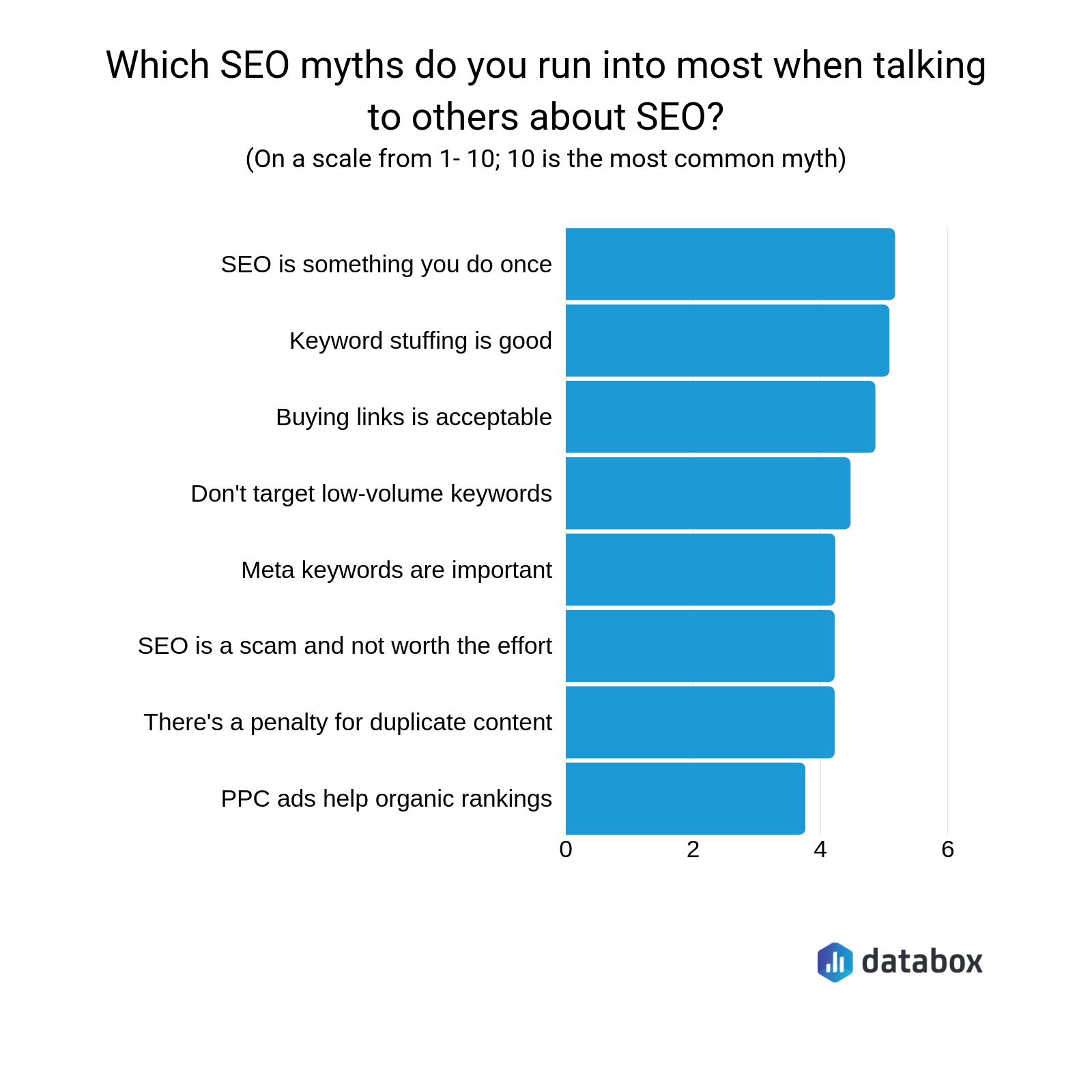
SEO fairy tales feel believable when repeated over and over again. Inaccurate information is spreading in our industry. It is shared in conference presentations, in blog posts, on social media, on podcasts and elsewhere. Before you know it, you have a story (or a new SEO boogeyman).
So if you find yourself in this situation what should you do?
Holly Miller Anderson, senior product manager for SEO, North America, under Armor, put it this way: “Education. Do not argue. ”
“One of the best things about SEO is to be very passionate about educating the org and the leadership team on SEO stories,” Anderson said. “The host talks as often as possible (i.e. lunch and style learning) about SEO stories and invites people to come in and hear other stories, share those who have heard, and provide different resources and assurance. “
This creates a safer environment for people to express their views or understandings about SEO without viewing them as stupid, Anderson said. It also provides an SEO discussion forum guide to deal with myths in a non-threatening way.
2. Myths typically are the “easy answer”
SEO is “free travel.” At least, most of the customers are watching it. Sometimes, SEO is easy, as far as clients think all you have to do is x, y and z and then sit and wait for all the rankings, traffic, conversions and revenue.
Well, often “good to be true” responses are the only source of SEO. Table gungumen azaba. Everyone is promoting meta tags, answering questions, making mobile social networking sites and trying to create “great” content.
Sometimes, and even worse, these “easy answers” can be strategies that can hurt your customers. And this is something you would never want to miss, says Himani Kankaria, founder of Missive Digital.
“I will tell them that I will not do it and I will not let my team do it because doing the wrong thing will result in customer loss, and then cleaning it up will also make it more expensive,” Kankaria said. “After all, what guarantee is there that cleaning up this mess will bring back results?”
The only way to fight bad data is to get the best out of it, says Keith Goode, senior product manager at Cox Automotive.
“Developers and even some SEOs will sometimes find a bad idea in the blog from the last 11 years (e.g., PageRank sculpting) and will not bother to do more research to find out what is arguing with it or refute it, “said Goode. . “Therefore, they will implement a change on their website which is causing unwanted impact.
Goode added that “The way I deal with this kind of unfamiliar information is to generate new articles that refute bad advice,” Goode said. “Best of all, I will show them a story about a Googler directly. Still better, if I could find a Google Update document that contradicts the original claim, this would fix it. “
3. Information overload
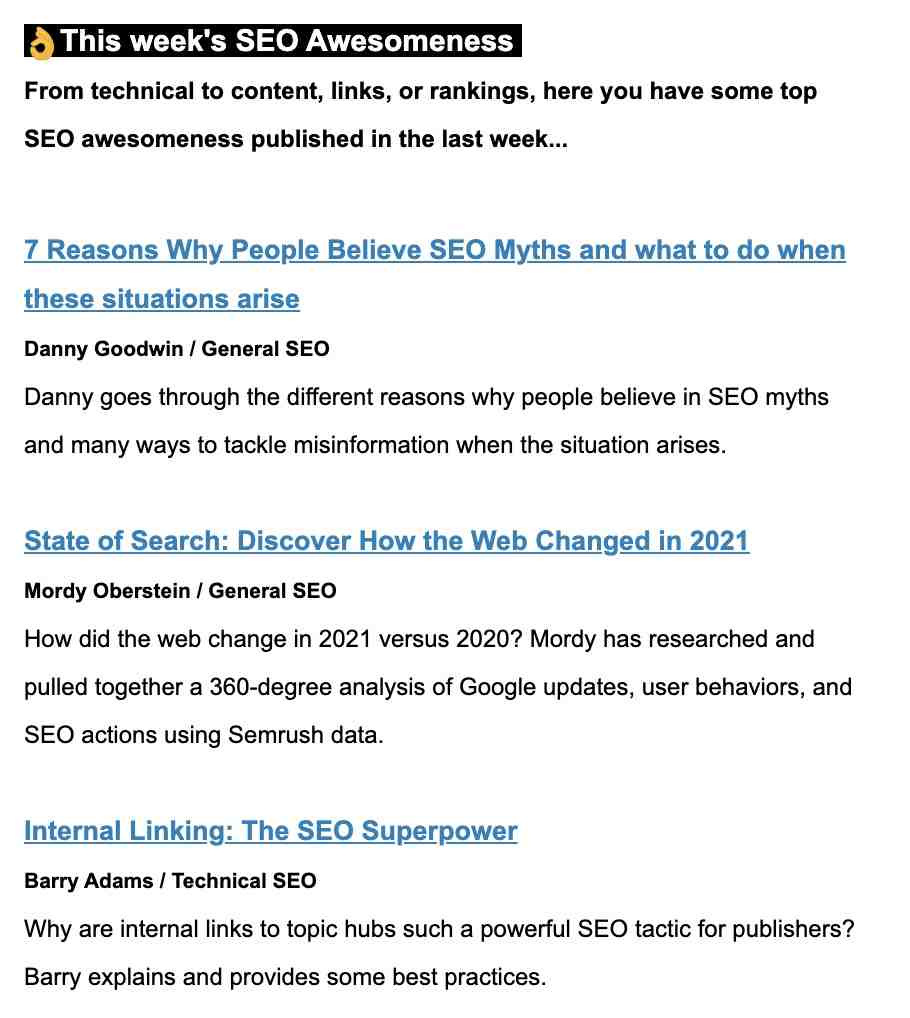
You can find all kinds of information about SEO. There are unlimited help sheets, news, guides, readings, social media updates, ebooks books, lessons, podcasts, videos, and more. Talk about the details!
But do you know what else is easy to get? SEO misunderstanding.
Dave Davies, SEO Leader at Weights & amp; Biases, it turns out that most SEO myths are derived from the real nut. He said he found that identifying this pill and discussing why you are not implementing the strategy in this case is helpful.
“In addition, some strategies have worked but not now, and creating this context is doing wonders,” Davies said. “Think of a forum spam in the early 2000s, or drowning words at almost the same time. Come to think of it, SEOs have really ruined the results. Sorry about that.”
Maria White, head of SEO at Kurt Geiger, says communication is the best way to deal with misunderstandings.
“First, I collected documents from trusted sources (Google and SEO experts who do a lot of research, like Barry Schwartz, Jason Barnard, Lily Ray and Marie Haynes),” White said. “I then used the document to inform the client why it was not a good practice and to talk about the possibility of a fictional injury or a misdemeanor that may have resulted in a strategic result.”
4. It ranks well on Google, so it must be true
There is a belief that what is good on Google means that it is accurate and trustworthy. I have seen this happen a lot over the years. For example, when people say stats, they write [keyword + stats], look at the first result, find stats, print that round of post and publish.
However, when you look at the actual sources, you will realize that someone sometimes took information or statistics from context, and transformed it into something that never existed.
But Google does not always provide the best answers or standard answers. Google’s algorithms fail to determine accuracy.
Luckily, most SEO experts follow every piece of information that Google says about SEO. Among them is Marie Haynes, who collects everything Google says in websites, specific announcements, videos, forums, meetings, and more.
“We store the data internally,” Haynes said. “For many SEO topics, whether they are myths or not, we can support our recommendations with a web link that reflects what Google is recommending.”
Aleyda Solis, Founder in Orainti, takes a similar approach.
“I refer to Google ‘s official documents on the subject where it was expressed, if any, or to seek comment from a Google representative from the Q&A or conference, where the subject was discussed and clarified, with my information / thoughts on it and the example of “real life” with how it actually works if any, so they can see for themselves.
5. Lack of critical thinking
The SEO search engine list just takes you so far. It is your job to collect and manage all the data, arguments and data we can before taking action. After all, the goal is to do what works best for your brand, business, or customers.
So ask everything. Do not hesitate. Find out who, what, where, when, why, and how everything you read, watch, or heard.
Most of your clients do not have the ability to think deeply about SEO. They lack our experience, knowledge, and information. And although it is difficult, sometimes it is important to remain silent, especially if the situation requires a profound change in thinking, says Kaspar Szymanski, co-founder of SearchBrothers.
“Most clients appreciate that the only purpose I, even when it comes to highlighting flaws in their current SEO system, is to help them and make their websites visible for relevant questions,” he said. ji Szymanski. “What is not well understood is the fact that ultimately the theory of molecular research is all about signal input. Improving the search engine is essentially managing that signal input. The best advice that customers embrace carefully is to control it. what goes into search engines to achieve the best results. “
6. The source seems legit
For those of us who have been in the industry for many years, we have seen some famous people and websites that publish some information that is uncertain, deceptive, or inaccurate.
So we need to provide quality data as an effective way to learn from, according to Bill Slawski, Director of SEO Research at Go Fish Digital.
“Unfortunately, there is a lot of inaccurate information in the world, and some SEOs are more interested in writing popular clicks rather than something that can be accurate,” Slawski said. “These authors can be successful sometimes in terms of the fees paid by the content providers, but they do not help SEO clients who want the business to succeed.”
Any media or website that is published periodically receives error information. Most honest people acknowledge and correct their mistakes. This does not always happen in SEO. Some people, if corrected, will either ignore it or – worse – stand firm on harmful content.
What should you do when you have to deal with clickbait or incorrect data? Find out where they encounter the information. Then point them to two or three easily identifiable resources that are highly effective, said Michael Bonfils, managing director of SEM International.
“My usual answer is, ‘I hope it’s that easy,’ ‘Bonfils said. “But really, this is what we do and how it works.”
7. It’s considered “best practice”
In SEO, frustrated at times, the answer is often “dependable.” This is because what is considered the best SEO practice in e-commerce SEO may differ from news SEO or local SEO or business SEO.
No two websites, even in the same market, are identical. Some strategies and techniques may work for many websites, but inevitably the results will vary. Some SEO “best practices” may prove to be “best practices” for some websites.
One solution here is to divert the discussion to your goals and strategies, says Jes Scholz, chief marketing officer at Ringier.
“Remind them how the current strategies work and doing all the current strategies with the story is impossible, either because of resource problems or strategic conflicts or whatever it is,” he said. from Scholz. “They should be empowered by ending the question of how to proceed.”
Davies said it was really good to ask ourselves.
“It simply came to our notice then. As knowledgeable as I think I am, my thinking is erroneous at times, ”Davies said. “Basically, while 9 out of 10 times you can be right, test and find out that a person can pay a high price on time.”
The solution can be as simple as conducting an experiment.
“Look for a set of pages that can test something with clear search engine optimization but hopefully less business (sites with its own ideas but small clicks are often remembered),” Davies said.
What to do when faced with these SEO myths?
The key is not whether the stories will be broken, but how you break the story, says Ryan Jones, VP, SEO, Razorfish.
“You have to let the client / client go down easily. It is possible that the story may have been a good idea or a common theory decades ago and they did not continue to exist,” Jones said. “They may have hired bad SEO in the past. You do not want them to feel guilty about it, but you do want them to give you the right advice to move on. You need to do it carefully, and there is time and place. “
In short, you can save the “good actually…” and the struggle tone for your next Twitter argument.
“Don’t ruin a great conversation to join the SEO discussion. An email guarantee or discussion can be obtained in this case,” said Jones. “
Corey Morris, chief strategist at Voltage, says it is important to be cautious when dealing with any rumors or misunderstandings when a client or contact loses information about how SEO works.
“Make it a learning path,” Morris said. “By tackling the benefits of how Google works, what the rewards are, and why things are (or are not included) in this, I can have a goal with them.”
Kevin Rowe, VP of strategy and product at PureLinq, has a standardized process that includes, in part, a litmus test of three questions to prioritize and assess risk on the net. These questions are:
“It is important that you treat the client as they are intelligent people who have good ideas and are not educated in SEO,” Rowe said. “Because professional SEOs do not always mean we have the best answer.”
But what if the customer is stubborn about the idea? Jason Barnard, founder and CEO of Calicube, says you might stop working with them.
“Why waste time?” Barnard said. “There is no shortage of smart business owners in the world who do not consider SEO as a quick-and-easy-to-use-all-time success. Let’s work with clients who want to connect SEO is one of the most important digital strategies for business. ”
New on Search Engine Land
About The Author
Danny Goodwin is the Editor-in-Chief of London Search Engine Optimization. In addition to daily articles on SEO, PPC, and more for Search Engine Optimization, Goodwin also manages the Search Engine Optimization queue for expert topics. It also helps organize our event list, SMX – Search Engine Optimization. Prior to joining Search Engine Optimization, Goodwin was the Editor-in-Chief of Search Engine Optimization, where he led editorial work for the brand. He was also an editor at Watch Engine. He has spoken at numerous research conferences and events, and has been recognized for his expertise in numerous publications and podcasts.
What is off-page SEO? | HTMLGoodies.com
On-page SEO strategies can make your content more visible and expand your reach. But if you want to improve your Google rankings to increase organic traffic and help your brand really explode, you need to improve your Off-page SEO strategy. In this comprehensive search engine optimization guide, we will discuss Off-page SEO and how it differs from On-page and SEO SEO, and offer many tips and tools that can help you make the most of this important step. to improve rankings in research. search engine results pages (SERPs) and traffic.
If you have not yet done so, you can check out our Guide to Improving Web Search Engine Optimization.
What is Off-page SEO?
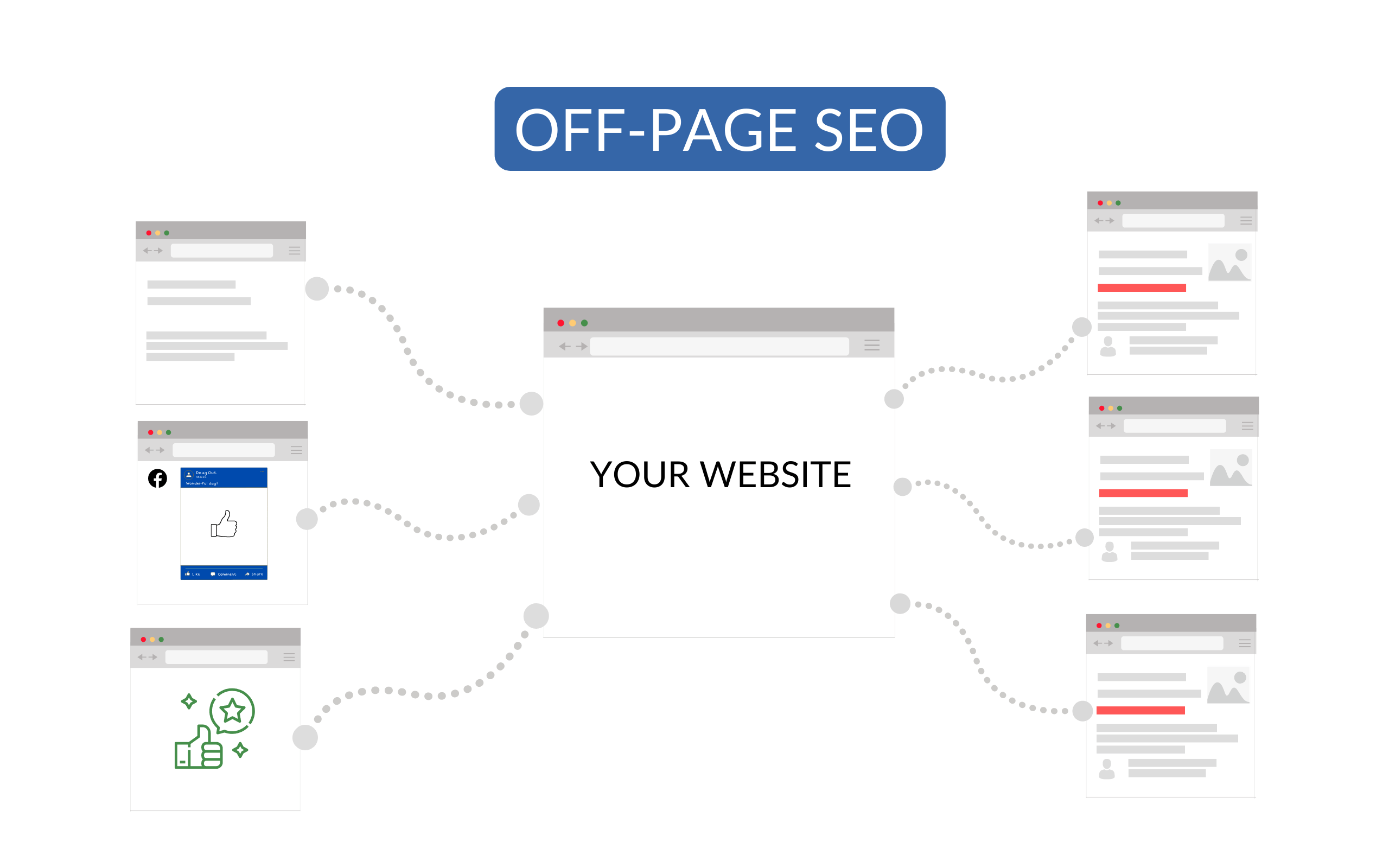
You will find many off-page SEO definitions that vary in complexity, but actually refers to SEO services that are not related to the actual content on your website. In the simplest case, if the project is dealing with something on your website, it is On-Page SEO. And if it deals with something on a certain website or platform, it kills SEO pages.
Off-page SEO has evolved and evolved over time, as it is thought to be nothing more than a building block. However, nowadays, off-page search engine optimization involves many things, as digital advertisers have found ways to improve their vision rather than collaborating with methods such as content marketing, social media advertising, content creation (send your business details to a list of directories). to inform the public about your location, services, etc.), brand building, and much more. By using such off-page SEO strategies, you can help search engines and users better understand your website and what it offers, which can help you improve your relevance, trust, and control.
If you are not familiar with the Off-page SEO strategies we have listed, do not worry, because we will dive into them and much more in a minute. But first, let’s discuss the difference between Off-page and On-page SEO to see how both can help you achieve rankings, visibility, and traffic goals.
What is the Difference Between Off-page SEO vs. On-page SEO?
To ensure that your website has the best search engine possible, you need to pay attention to Off-page and On-page SEO strategies. What is the difference between On-page SEO and Off-page SEO? Let’s look at this now with some examples from each of them.
As mentioned above, the main difference between On-page and Off-page SEO is that the former aims to improve things on your website while the latter focuses on other areas, such as other websites and platforms. . One way you can look at it is to think of On-page SEO as improving the content you have full control over (content, source code HTML), while Off-page SEO, while still effective and important, puts others in control through backlinks, logos on social media, and the like.
There is a difference between On-page and Off-page SEO worth mentioning that it can help you see the importance of using both as part of a comprehensive SEO strategy. On-page SEO will help determine what your position is for, while Off-page SEO will help determine your size. Combine those two together, and you can find the desired location and knowledge on Google, Bing, and other search engines.
These are some of the differences between Off-page and On-page SEO. Is one more important than the other? The answer to this is that they are also important since On and Off-page SEO work together to provide the best possible rankings. In other words, you can not just focus on on-page SEO strategies and ignore Off-page SEO altogether, or vice versa. If you do this, your value will be reduced.
However, if you have to design two strategies based on what you should start attracting, then On-page SEO will be successful. You should make sure that your website is optimized before you deal with any Offshore SEO strategy since you have total control over SEO.
What are On-page SEO Factors
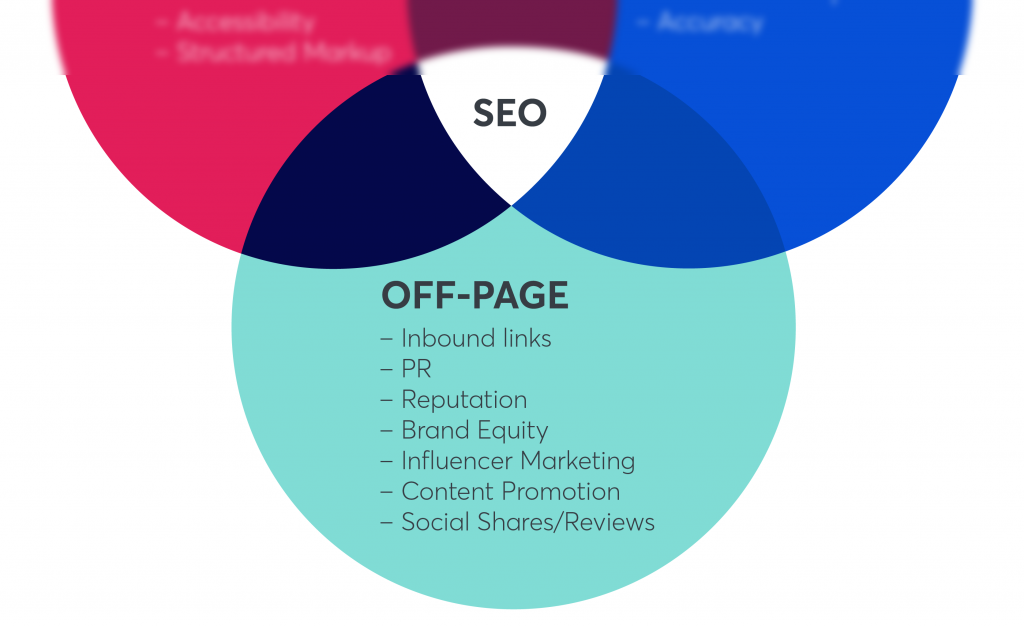
Since this guide focuses on Off-page SEO, we will go into more detail on such strategies in a little bit. But, before we do, here are some on-page SEO tips to help you understand your counterpart. As you can see, the following follows the idea that On-page SEO interacts with elements on your website that you have full control over. Implement the following on-site SEO services, and you should be able to rank higher for specific keywords and drive more relevant traffic to your website.
Title Tag
Sometimes called meta title, the title is the title of the website you see on the search engine results pages (SERPs). Dealing with your title tags is a good place to start implementing effective SEO strategies on a site. Why? Because the title is the main position of the page.
To make the most of your title tags, put your word as close to the beginning as possible. Avoid inserting punctuation marks with important words, or they will appear meaningless and immoral.
Meta Description
Lastly, do not exceed 55-60 characters, plus spaces, to ensure that your theme is not tampered with.
Look at the bottom right icon of the SERPs, and you will find meta comparisons. It tells users what they can find on the website. Although Google has stated that meta information is not part of the algorithm for search, it is important for On-page SEO for two reasons. First, getting the most up-to-date meta information can lead to click-and-drop traffic to your website. Second, if a key that the user has clearly searched for appears in your meta description, Google will take a bold step, which may also trigger a click.
URL
When creating meta descriptions, include words that are naturally intended, without suffocation. To avoid any cuts, limit the meta description to 160 max.
Your website URL is an on-page SEO standard, so it should be as safe as possible. It is found in the web browser address bar and shows where your website is hosted on the website.
Headings and H-Tags
When creating a URL, put your main keyword first, and do not repeat the words. Keep it as short as possible, so it is easy to read, remember, and write. Use dashes instead of bold while sharing keywords in the URL.
Headlines are H1-H6 tags on a web site that provide a structured layout and help the reader download content easily to find what they are looking for quickly. Headlines appear in the eyes of search engines and require more weight than other text on the page.
ALT Text
To ensure optimization, get only one H1 per page. You can get as many H2-H6 tags as you want to give your site a more consistent look. Depending on the keywords, your main keywords should be in H1, and your second keywords should be in the H2 and H3 symbols. Your other brand will not be a burden to SEO.
The ALT image of the image serves several purposes. Since it describes the contents of the picture, it helps blind readers to understand the context of the picture. If the image does not load, the ALT text can give the user an idea of what the image should be. Lastly, it helps search engines understand your content while downloading images.
Content
When creating the ALT text, include the targeted word. Make sure you have at least one picture on each page that includes the first word you mean. And be descriptive, but do not exceed 8-10 words in length.
You can use any of the best on-page SEO techniques in the book, but if your site content is missing, you will not see the search engine rankings you want.
Content on your site is what users are coming for. What they are reading and what could cause them to come back for more. Therefore, the content of your site must be relevant and provide value since visitor status is a signal condition. In addition to providing value to your visitors, improved page content may increase the likelihood that other websites are linking to you.
Schema Markup
Content content also plays an important role in on-page SEO since its keywords make it easier for search engines to understand what your website is about so that they can give you the right ranking.
Internal Linking
Keep this in mind, you should include the keywords you are targeting in the main content of your main page at least 3-4 times per 1,500 word message. Make sure that these words exist in the first 100 words of the page and that they are naturally distributed among other things. Once your keywords are checked, verify the content addresses of the user. Does it answer all the questions your customers may have? If not, update your content, so that they do not find those answers elsewhere. The better you fit the purpose of the user search, the higher you can value.
You can increase the search engines’ perception of your content by adding content (structured data) to your web pages. Google uses many such types of data to add “rich results” to the SERPs, such as recipe information, star ratings for products, and so on. Many WordPress plugins can help you do this easily.
Have you ever read an article on a website in the text? If you click on this link for more information and it goes to another page on this website, then it is a link. This type of integration is one of the best ways to boost your website’s SEO and rankings, because it can increase the traffic by current visitors and make them more interested in your content.
Core Web Vitals
Integration reveals one of the major differences between on and off-page SEO. You can easily control how you link pages on your website with internal links. With external integration (Off-page SEO), you must build relationships with other webmasters.
You should find links to the main content of each page. For the highest position for the target audience, your text (text that can be clicked in the hyperlink) of the link should contain the word. However, you should avoid overdosing by using the same text over and over again. Use different words instead.
Page Speed
While it is not the most important on-page SEO metric, Core Web Vitals has been an important metric since 2021. Google introduced this signal setting to measure the user experience of the website by fast uploading, how the faster the user can interact with the page, the visual stability of the content. To improve the quality of your Web site and enhance the user experience of on-site SEO efforts, use Google’s Speed Insight Insights.
For more information on Core Web Vitals, we recommend reading:
If you have ever visited a website that is slow and loads permanently, you may not last long without looking for a source. This is why page speed is important for user experience and On-page SEO, as slow web pages often make visitors look elsewhere.
Mobile Friendliness
The speed of your site refers to how fast your pages load before users can interact with them. There are several ways to speed up your site, such as:
To speed up your site, use Google’s Speed Insights tool.
While some people may be able to access the Internet for the first time on their desktop or computers, Google and other search engines believe that mobile phone use is king. As a result, websites are usually indexed and sorted according to the mobile version of their content. If your sites are not mobile friendly and are optimized for smartphone use, invest and try to ensure that your on-site SEO strategies are up to snuff.
For more information, see our guide on the basics of On-page SEO.
What is the Difference Between Off-page SEO vs. Technical SEO?
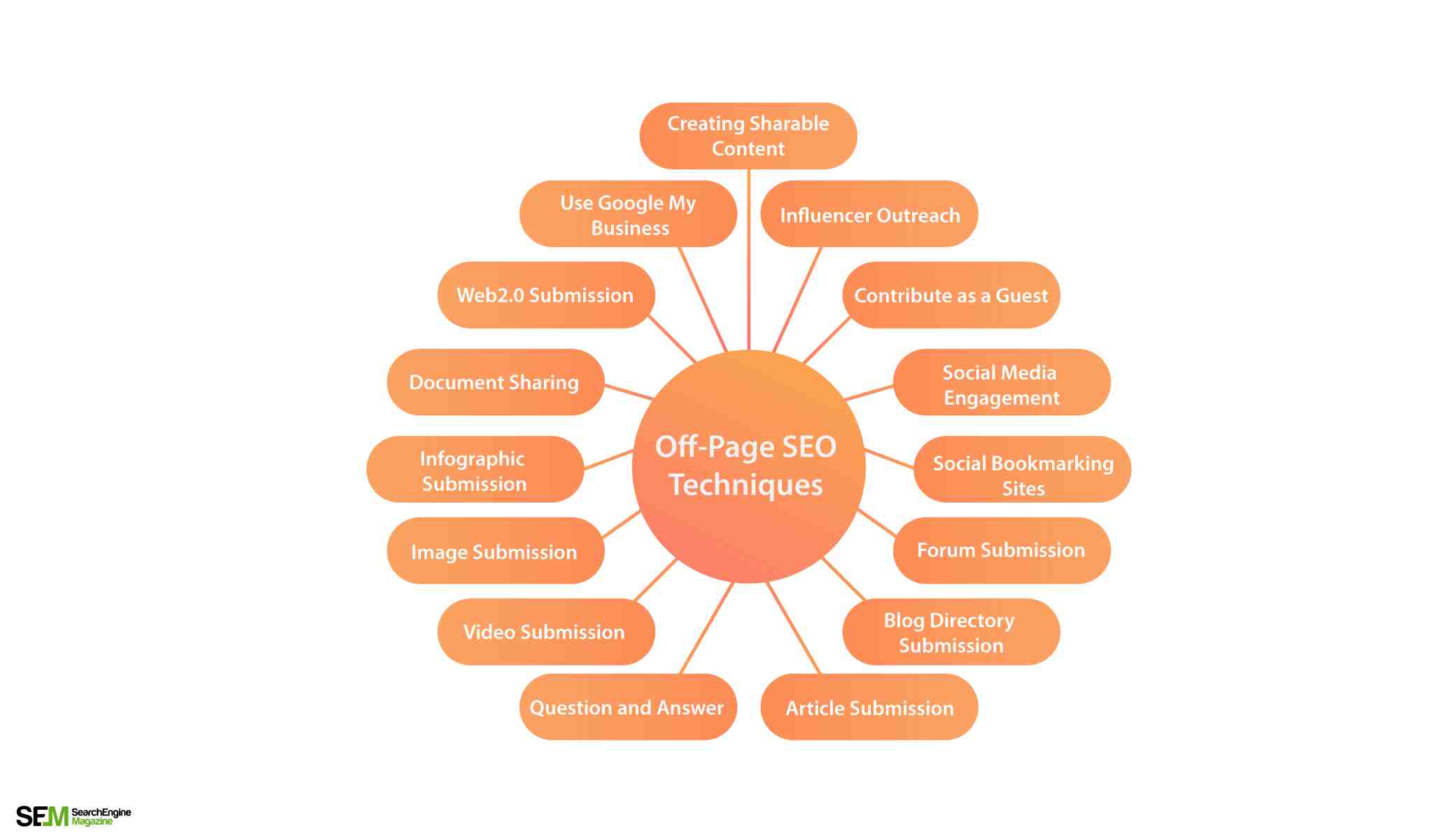
You can also search the list of Best SEO Tools for On-Site SEO.
Here are some reviews of the most popular on-page SEO Tools:
Technical SEO Tips
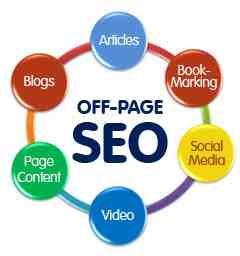
Now you know the main differences between A-page and Off-page SEO. Now, let’s talk about the difference between Off-page SEO and SEO technology. As its name suggests, technical SEO interacts with improving the technical aspects of your website or sections so that you can land higher in the SERPs. How is it different from Off-page SEO? Because many consider technical SEO to be an integral part of SEO-Page.
Add An SSL Certificate
You can get the best content in your niche, but if your SEO skills are lost, you will be your worst enemy as your website will prevent you from getting your eyes on the content.
Check Your Mobile Friendliness
However, if your technical SEO strategy is on point, you will have a strong foundation to help level your content as much as possible.
Check Your Page Speed
A good SEO SEO strategy has many components. Some of these come with the on-page SEO tips mentioned earlier.
Find And Fix Broken Links
Google uses SSL certificates as a status signal. They provide improved security for your website and give visitors some much-needed security. Some online advertising services include SSL certificates at no extra cost, so keep this in mind if you are looking for a new provider.
Fix Crawl Errors
As mentioned above, mobile computing is an important part of on-page SEO. Since technical SEO is also an integral part of on-page SEO, it comes as no surprise that you should look for mobile friendly here too. Use Google Phone Test to get a quick answer or no.
Optimize Your XML Sitemap
Here is a mentioned section of on-page SEO which is also part of the list of SEO search engines. Google’s Speed Sight Insights tool will speed you up and give you tips for speeding up.
Perform A Technical SEO Site Audit
Bad web links for SEO and user experience. If a user encounters a broken link, they may never visit your website again. Use a tool like Broken Link Checker from WordPress to find broken links. It will check your website to find broken web links from time to time and send you a notification so you can fix them.
Off-page SEO Checklist
If Google cannot check your site, you will have trouble finding a position. Crawler errors make Google difficult to check your pages, so you need to fix them to minimize any profile damage. You can detect crawling errors (do this weekly) using the Closing report in your Google Search Console.
Google uses web maps to find and index pages. You can create your XML website map using tools like Google XML Sitemaps or Yoast. Once created, the website map must be submitted to Google using the Google Search Console. After launching, you can upgrade your website map using a powerful XML website map (if your website has 50,000 URLs and more), give quality page priority, and so on.
Link Building
If you want to make sure that you do not forget any aspect of SEO technology, use the tools to make life easier and do all the dirty work for you. Ahrefs, Semrush, and Moz are examples of software that can help you conduct weekly web searches to spot SEO technical issues.
Off-page SEO strategy expands your reach and visibility with the help of external channels (sites, platforms, etc.) in your industry. As the number of improved web links pointing to your website and brand increases, search engines will start to take notice and place you higher in the SERPs.
Here are several off-page SEO strategies to help you achieve this goal:
Building a affiliate link involves having some websites to link to yours. Such links are officially referred to as web links in the SEO world, and are an integral part of any off-page SEO strategy.
Depending on why link building is important, it allows access from quality sources to your website. This helps Google see your content as safe and relevant, which can help you get higher rankings in the SERPS. In simple words, backlinks are like lots of trust for your website.
Create Unique Content
Backlinks are helpful for any website, but they are especially good at promoting new pages. For example, you can find the best, most comprehensive piece of content on a website depending on the specific topic. But if the site it is on is brand new without a large following, people may have trouble finding it. With backlinks from trusted websites, Google can see that you have great content and put your website as the next authority in your search engine, and this can improve the ranking of your search engine. With those best rankings, more people will have access to your sites, your traffic will increase, and you may start to lose loyal followers.
In most cases, the better the backlinks you have, the higher your ranking will be. This is why Off-page SEO strategies should include affiliate link building strategies to attract more backlinks. But more importantly, it should include quality content promotion that other websites would like to link to. Talk about quality, it means everything when it comes to backlinks. Get internet links from trusted websites, and you will get the upgrade value you want. But if you have a bevy of backlinks from spam sites that do not suit your niche, your value may not be lost.
Manual Link Building
Is building a joint path easy? Not necessarily, as you not only need to get these web links, but you need to build a collection of great relevant backlinks. So, if you want to use it for your own benefit to create a dominant reputation for competitors, you need to start building affiliate channels as soon as possible. Here are some ways to do this:
We started with the most powerful collaborative building strategy of all: Creating relevant and relevant content. According to Google’s website management guidelines, the key to gaining relevant, high quality web links is to create interesting content that can become popular and engaging in your own. Knowing this, you should invest time and resources to provide such content and possibly hire creators if you cannot do it yourself.
Request Backlinks
Unlike other affiliate building strategies in this category, having unbeatable content on your website will collect back data that competitors will find it difficult to copy over time.
This way of building affiliate links involves adding links to your own website through click releases, guest posts, blog comments, etc., so you can make a name for yourself as a thought guide or gain traffic. It can also enhance interaction with customers in your niche, allowing you to expand your brand reach. The main advantage of building a collaborative approach is that it puts you in control, unlike other strategies that enable others – such as a third-party website or journalists – to monitor results.
What is the problem with building a collaborative road? Aside from the fact that it can take a lot of work, it does not build improved collaboration methods. In fact, Google may see such web links as user-friendly if done incorrectly.
Content Marketing
Perhaps, you already know at least some thought leaders in your niche. And you probably know that getting backlinks from them can give your website a huge boost. How can you find a way to increase your value proposition? By contacting the webmaster directly and finding him.
This type of message delivery takes time, and can be frustrating at times if you do not receive a response. But finding affiliate marketing is an effective marketing strategy that can help you improve your SERPs. Before looking for a backlink, make sure the website is secure and relevant to your site. To increase your chances of getting a positive response, create an effective written email that introduces yourself and information about your needs. You can use the online template to find collaborative strategies, so you do not have to re-invent the strategy.
Read: Link Building Strategies for SEO
Many people think that content marketing is just an on-site SEO activity since it usually involves promoting the content and publishing it on your website. While this part of the content marketing is definitely SEO-related, you can turn it into a traffic generating strategy, Off-page.
When viewed as a whole, content marketing is on and Off SEO pages. Why? Because your organization can generate content that resides on your website (On-page), and can create and publish content that resides elsewhere (Off-page).
For example, you may have created eye-catching data that delivers data in an easy-to-digest format. And this information is so good that a reputable newspaper decided to link it. This will classify it as a content ad with the turn of the Off page. Or, you may have written a guest message posted on someone else’s site. That is content advertising, but it is another example of Off-page since it does not travel on your website.
Content Syndication
All of this goes back to the need to create quality content that is informative, entertaining, entertaining, and sharing. The better your content, the easier it will be to collect traffic from Off-page on the pilot.
Depending on where you might focus on trying off-page content marketing, mentioned information and guest posts are a good place to start. After that, you can also encourage your content team to focus on eBooks, white paper, search papers, readings, and surveys around your niche.
If this sounds like a big deal, keep in mind that content marketing can be used in conjunction with other components of an off-page SEO strategy, such as social media, link building, and public relations.
Creating your own new content is always a challenge not only for the bloggers but also for the publishers. What do such publishers do when they need to keep the flow of content, but they can’t always get it from local creators? They turn to external sources to add their own original content. Doing so not only saves time and frees up domestic resources for other purposes, but can also add new voices and ideas to the current library.
Linked content is linked between websites in major radio networks or TV groups, and publishers use a similar approach to keep up-to-date, sometimes up-to-date content on their website. . If you need an example, look no further than Yahoo !, because it is a powerful platform, a popular platform that usually combines elements from different sources.
Forums and Communities
Where do you fit this bill? You can link your content to other publications as part of Off-page SEO strategies. However, content integration should be done carefully because it can be a bit difficult.
Google will not always display the linked content since it is the original copy. And when you do, Google will always show the most relevant version of the content to users based on their search, which may not be your favorite version. Does that mean you should avoid it? No, just as content integration can get more attention to your work and build your name / logo, even when URLs are aligned to the original.
When implementing this Off-page SEO strategy, make sure that any website that has your affiliate links includes a link to the original domain. And to keep search engines from extracting content from their content instead of yours, you can ask the website using the links you used to use the noindex meta tag.
Online communities are often overlooked or ignored as an Off-page SEO approach. Why? Because forums, online communities, comment sections, etc., are the most popular places to use website SEO, as people use them for collaborative purposes with results mixed.
This nonsense has led many people to abandon discussion forums with communities to expand their reach through off-page SEO techniques, but that does not mean you must do so. In fact, there is no better time than now to use these resources to build your brand and it is better since there is a good chance that your competitors will be somewhere.
Guest Posting
Should forums and communities take the most off-page SEO efforts? No, but when you add them to the current Off-Strategy strategy, you can generate more traffic and make sure you have an effective marketing strategy if done right.
The old-school approach targets discussion forums for building collaborative relationships through aging. So instead of using that mindset, focus on creating partnerships through discussions with clients in the niche. Doing so can help to establish your own reputation and establish you as an authority or expert in this area.
As for where to implement this strategy, two of the most obvious options are Quora and Reddit. They both have a congested collection and allow you to answer relevant questions from potential audiences and customers. In addition to those great platforms, you can find meetings and communities in your niche and use any relevant information or answers you may have to find useful user questions.
Influencer Marketing
If you want to get the most out of your joint venture budget, sending a visitor may be your best bet. When asked about the main strategies of building a link, SEO experts consider hosting as a major option over other options such as copying competitors ’data, directories and domains, cracking backlinks, social media, event discussions and blog comments, among others.
What is a guest posting? Create content and submit it to another website. This website is rewarded for providing value and information to its audience. You, meanwhile, as a postman, you get a lot of rewards. Not only can you put your brand in front of a new audience intended to get high quality traffic, but you can also establish yourself as an expert on the subject.
The common mistake many make when sending a visitor is to focus only on finding a way back. While this is useful for Off-page SEO efforts, focus on the opportunity to create a brand instead, because it will help you increase your efforts to create quality content for your new audience.
Effective advertising has evolved over the years, and you can relate much of it to the growing popularity of social media. Over the years, social media has been all about writing sponsored content as bloggers. Now, Tik Tok, Instagram, YouTube, and the like are all smart since this is where everyone’s eyes are.
Local SEO
You can look at influencers as shortcuts to generate more traffic and build your brand. They already have a strong audience, some of whom are great. By collaborating with influencers and allowing them to reach you, you can get your brand and content in front of new audiences during recording.
Although many users go back to Google to find the information they are looking for, social networking sites have become a search engine. They may be used differently, but people use social networks to find content every day. Cut ties with influencers to show your content, and some of those same people can access your content.
When using effective advertising to build affiliate links, make sure that they are not followed since the use of affiliate links in sponsored content is contrary to Google Webmaster Terms.
You can easily call local SEO a search engine itself, but it has some off-page SEO factors that are worth mentioning. The first is Google My Business, which specializes in establishing online links for local businesses, large and small. How is Google My Business Considered Off-Page SEO? Because it is not on your website.
How important can Google My Business be to Off-page SEO efforts? It is important since statistics show that 80% of users turn to search engines for local data, and almost half of all Google searches search for local data. Ignore Google My Business as part of the Off-page SEO strategy, and competitors will appear in results not yours. Take some time to improve your Google My Business account, and you can make a name for yourself locally, even if you are new.
Public Relations
Citations is an area of local SEO related to Off-page SEO. is an online reference, such as a business account, which usually provides details of your company name, address, and phone number. Details are important for local businesses looking to land on a map pack or those who want to make a position for search terms that are targeted below.
Consistency is important with citations, as inconsistencies indicate inconsistencies. If your address or phone number varies across your website, you will provide misleading information to customers and cause other issues. To avoid this, take the time to make sure your name, address, phone number, and any other important information is relevant.
Read: Home SEO Tips and Tricks
Reputation Management
SEO and public relations have been seen as a forum for various studies in the past. Now, they are connected.
Most SEO experts use digital PR as their preferred method of building links since it gives you the ability to get a large number of web links. Use the digital PR campaign to promote the interesting story and related assets that come with it, and a recent study found that you can get affiliate links from many specific domains of 24 on average.
Podcasts
In addition to building a collaborative approach, public relations also contributes to Offline SEO Signals by enhancing public awareness and research. It pushes your brand in front of your intended audience and causes buzz, so they start talking about you. Digital PR builds trust signals by placing you as a thought leader in your field.
And it results in traffic jams.
Another important aspect of Off-page SEO is brand management, where you do everything in your power to minimize negative and positive feedback. Do you need to manage a name only if you have a useful or popular brand? No, because on the Internet, everyone needs it as words – good and bad – can spread like wildfire. What can happen if you do not have an off-page SEO strategy to protect your reputation? The following negative consequences:
Reviews
This is something that can happen without managing the site. To make it part of an off-page SEO strategy, try the following tips to keep your reputation from being tarnished, so your search engine rankings fail:
More than half of Americans claim to have listened to at least one video, and the number is increasing every day. In short, podcasts are very popular. Remove them from the Off-page SEO strategy, and you may lose a large number of followers.
Popular cracking cracks are just one reason to use them to expand your brand through Offline SEO. Here are some:
Social Media Optimization
Expand your Off-page SEO efforts by giving less time to podcasts, and you may find it easier to build your brand and reach your audience than used, congested channels.
Why do so many people buy things online instead of in stores? After convenience, they do this because they can read the reviews before investing. By having this much-needed stability, they can confidently pull on what’s on their purchase. And even if they did buy one at the store, they would probably ask for an online review first.
Statistics show that almost 90% of shoppers read online reviews before shopping. So if you are selling services or products, it is clear that your brand is built through reviews it is important to see success.
Reviews are often ignored in relation to Off-page SEO. While they can create trust, increase volume, and generate ads on autopilot, online reviews and offers SEO benefits to help Google understand your website. Google uses reviews to get branded signals, so if yours is valid, they can improve the domain power of your website and place you in the SERPs.
A recent study found that 93 percent of people who regularly use the Internet access social networking sites. So, you cannot ignore social media as an important part of Off-page SEO strategy.
Does this mean you should focus only on social media to improve your place in the SERPs? No, because while it is important to spread the word about your brand and content, social capital is not a direct position.
Off-page SEO Tools
Instead of focusing on public shares and the number of your followers, look at social media platforms as a search engine type. Sure, some use social media to interact with others, but most users turn to it to find answers to their questions. Improve the availability of your platform, and you will be in front of potential customers looking for answers or new products to follow. In fact, many people will use social media to make initial contact with the brand. You can use this to your advantage to interact and interact with them to provide customer service, share your content, drive traffic, increase volume, and more.
For more suggestions on social media, we recommend reading the following tutorials:
Off-page SEO Courses
Here are some social media development tools and software to enhance your social media presence:
Example HootSuite Social Media Management Tool
Example SEMRush SEO Tool Dashboard
Why you need off-page SEO?
It can be daunting to tackle off-page SEO strategies on your own if you have little SEO knowledge or experience at all. Does this mean you should hire foreign visitors to manage your Off-page SEO for you? This is an option, but you can also seek the help of these Off-page SEO tools which can make your job of building affiliate links easier and easier. And while they all have off-page SEO features, these options also provide on-page features to ensure effective SEO strategies:
We hope this Off-Page SEO guide helps you know how to improve your rankings in addition to A-page and SEO SEO. To learn more about the subject matter and its on-site and technical counterparts, try the following tutorials to ensure that you find the search engine of your choice:
What is more important on page SEO or off-page SEO?
You can read the previous part of this series here: A Guide to On-Page SEO
Is on page SEO important?
Read about Best SEO Software (Free and Paid).
What are the three types of SEO?
Off-page SEO helps build website expertise and domain power. Without it, your website will continue to be valued less than other websites that already have a great leader. While link building is not the only site signal used by Google’s algorithm for ranking, it is probably the most important.
Is it good to get off site SEO? Off-page SEO means all the things you can do outside of your website to help you improve your SERP rankings: link building, forums, impact awareness, and content advertising, to name a few. In scale, on-page SEO helps search engines understand what others think about your product, services, or website.
What are main types of SEO?
As Google’s search algorithm has improved itself and rankings have become more profitable, the best SEO services out there have become equally important. This happens not on your website, but somewhere online. Link Building: Most SEO sites are just a matter of building your website links.
- On-page SEO is important because it helps search engines understand your website and its content, and find out if it is related to the query. As search engines increase, more and more attention is focused on relevance and meaning in search engine results pages (SERPs).
- There are three types of SEO you need to improve your search engine optimization strategy: on-page SEO, technical SEO, and off-page SEO.
- What is 3C and SEO? In short, the key SEO elements can be boiled down to 3 Cs: content, number and safety.
- 6 SEO Tips You Need To Improve Your Website Traffic
- On-page SEO. This is the type of SEO that you are probably familiar with. …
- Off-page SEO. The meaning of off-page SEO is a bit complicated. …
What is page off-page SEO?
SEO technology. …
Local SEO. …
What is off page SEO with examples?
App Store optimization. …
What is off page SEO and what is the best?
YouTube SEO.
What is off page SEO?
What is Off-Site SEO? While on-page SEO refers to the things you can control on your website, off-page SEO refers to the page rankings that occur from your website, such as backlinks from another website.
What is on page and off page SEO with example?
| What is the site & amp; off page SEO process? On-page SEO focuses on improving the parts of your website that are within your reach, while on-page SEO focuses on enhancing the power of your domain by creating content and getting backlinks from other websites. | Off-page SEO only tells Google what others think about your website. For example, if you have high-quality affiliate links that point to your pages, search engines will assume that you have found great content – a type that offers value to users. |
|---|---|
| Off-page SEO is an optimization process for external profiles to improve the popularity, expertise, power, trust, and relevance of a website. Improved external page traffic is achieved by getting some well-known online links or upgrading your website, and ensuring the quality of your content. | Off-page SEO is about everything that does not happen directly on your website. Your website optimization is called on-page SEO and includes things like website design, content and speed optimization. Off-page SEO on, among other things, link building, social media, and local SEO. |
What is difference between on page SEO and off page SEO?
| On the SEO page | Disable Page SEO |
|---|---|
| In on-page SEO we will use internal links. | Off page SEO we will use direct links. |
What is the difference between on site SEO and off site SEO?
On the SEO page
What is off page SEO?
Disable Page SEO
Which is more important on page SEO or off page SEO?
In on-page SEO we will use internal links.
What is off-site SEO examples?
Off page SEO we will use direct links.
While on-page SEO focuses on improving the quality of your website, off-page SEO focuses on optimizing certain pages and locations within the website to improve your ranking in the search rankings.
What is off-site SEO?
Off-page SEO is about everything that does not happen directly on your website. Your website optimization is called on-page SEO and includes things like website design, content and speed optimization. Off-page SEO on, among other things, link building, social media, and local SEO.
What is onsite and off-site SEO?
On-page and off-page SEO are equally effective â € ukAll on-site and off-page SEO are essential to improve the ranking of your site. It’s like building a house. On-page SEO is the foundation, while off-site SEO is the main process.
What is onpage and offpage SEO?
Anything that happens outside of your website and contributes to your reputation is considered off-page SEO: social media ads, banner ads, quotes (direct or indirect), text your own work online (sometimes black-hat), etc., and so on.
What is onpage SEO?
What is off page SEO with examples? Off-page SEO includes services from or “behind the scenes” of your website. Technical SEO refers to activities that directly affect the sensitivity and crawl of your website through search engines. Examples include web speed optimization, structured data, and more.
What is difference between onpage and offpage SEO?
| “Off-site SEO” (also called “off-site SEO”) refers to activities performed outside of your website to influence your position in the search engine results pages (SERPs). With on-page SEO, these include many of the basic SEO elements that help a site to rank. | In short, website SEO is what you do for your website to make it easier to find search engines. External SEO includes the activities you do outside of your website, in addition to advertising. This helps you easily find them through these same search engines. Doing one of these will help make your website easier to navigate. |
|---|---|
| On the SEO page. Disable Page SEO. Seo’s page includes good content creation, good keyword selection, keyword placement on standard locations, giving relevant title to each page and so on. Off page Seo includes affiliate link, popular link building, search engine, link exchange and so on. | On-page SEO (search engine optimization) refers to the process of optimizing your website to improve the ranking and user experience. This is the opposite of off-page SEO, which means improving things outside of your website. This may include backlinks or mentioning social media. |
What is online and offline SEO?
On the SEO page
What are the benefits of off page SEO?
Disable Page SEO
- In on-page SEO we will use internal links.
- Off page SEO we will use direct links.
- If you post a blog about the latest developments in your industry to your business website, this will be an example of online SEO. If you publish a blog about industry development as a “contributing visitor” to a well-known industry blog and this visitor website is affiliated with your website, this would be an example of SEO for line.
Off-Site SEO Benefits
What is off page SEO and what is the best?
Improves Ranking: It helps your website to rank higher in the SERPs thus resulting in better traffic.
What is a good off page SEO score?
Surprising appearance: The higher the position, the more it will be traffic flow due to affiliate numbers, social media mention and so on.
What is the most popular and effective off page SEO method?
Improvements in PageRank:
MarketMuse SEO Software Rating | HTMLGoodies.com
If you are looking to increase search engine rankings, an SEO tool like MarketMuse can help. Is this the right SEO software for you though? We will help you make that decision by analyzing the features, advantages and disadvantages of MarketMuse, along with prices in this review.
What Is MarketMuse?

Making sure your content follows the right SEO practices is critical to ranking high in search engine results pages (SERPs) and Google rankings. Unfortunately, performing accurate SEO manually can take a ton of time (sometimes estimated at 19 hours per piece of content) while offering mixed, often unpredictable results.
That’s where a cloud SEO software tool like MarketMuse can save the day, as it provides digital marketers and web developers with several features so you can easily create comprehensive and authoritative content that is readable and attainable by the masses.
According to the MarketMuse homepage, its creators designed the software concept, so AI could do all the heavy lifting in terms of content research, creation, and optimization. In doing so, Internet marketers and SEO consultants can create a great piece of content in an average of eight hours, which is less than half the time it would take on your own. In short, MarketMuse helps content marketers write ideal content for any topic. And it helps you save time in achieving the SEO and traffic results you desire without frustrating and expensive testing and failing.
While we will discuss MarketMuse’s features in more detail in a minute, here are the basics of what this search engine optimization software can help you do:
Read: Link Building Strategies for SEO
What are MarketMuse’s Features?
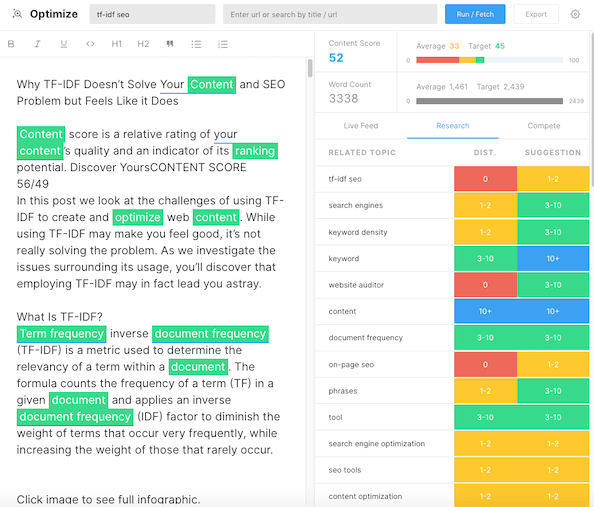
MarketMuse has an extensive feature set that can take your content, website, traffic and sites to another level. Some of its core features are:
SEO Research
Research is an essential part of content creation, and sometimes it can take longer to complete than developing an article, post, etc. If you’re afraid of doing keyword research for your content, you’ll be pleased to know that MarketMuse can do all the dirty work to save tons of time and effort.
Using the Research feature in MarketMuse is as simple as selecting its tab on the left side of the software dashboard and entering a topic in the search bar. MarketMuse will return a detailed list of related topics and keywords covered by the top quality articles. It will also reveal the suggested content distribution and, even better, keyword variations.
Instead of using the same keyword repeatedly, which can appear to be spam and negatively affect the readability of your content, these keyword variations let you inject relevant phrases into your pieces. In the end, you get more readable and naturally optimized content. And if you have a team of content writers, you can export the list of various keywords for future use.
Competitor Analysis
Under the Research tab is the Compete feature, which assists with content and market research. Put a keyword at the top, and you’ll see Google’s top 20 articles for that query, their content scores, and a heat map detailing the distribution and how well the topics were handled. From this easy-to-read data, content marketers can instantly spot content gaps and fill them with new articles to gain a competitive edge and more traffic.
Read: SEMRush vs Ahrefs SEO Tool Comparison
Optimize Content
True to its name, this MarketMuse feature helps you optimize content once it’s written, so you get the most bang for your SEO money. The way it works is simple: Paste your content into the editor, and see how you score and what can be improved.
You will receive a content score to see how it compares to similar pieces, along with a target score that you should aim for. And you will also see the word count of your piece, along with the average for similar pieces and how many words your content should include to make it SEO friendly.
With those scores, you can see where your content is lacking. To reach your targets, you simply need to increase your word count and inject more keywords. If that seems like too much work, MarketMuse will offer suggestions on how to make immediate improvements through its sidebar Feeding, Research and Competition sections.
Feed will tell you if any keywords should be replaced by others, Research will offer keywords you can add, and Compete will offer a comparison of the best articles from competitors to see where your piece stands in terms of content score and word count.
Thanks to MarketMuse’s Optimize feature, content creators can quickly draft articles without worrying about perfection. Copy them to the Editor, and let the software help you optimize easily.
Questions
Do you want to see what questions your audience is seeking answers to? Then select the Questions feature in MarketMuse and enter a keyword at the top. Doing so will generate a list of the most frequently asked questions on that keyword so you can find out what content to create or put FAQs on your site.
Connect
The Connect feature at MarketMuse is all about connecting. With it, you can get quick tips on creating internal and external links to optimum sources so you can enjoy the maximum SEO boost.
Thanks to AI MarketMuse, the software can examine your website to determine what it means. It then uses that data to make suggestions for internal and external linking, so you don’t have to find it independently.
MarketMuse Pros And Cons
Now that you see what MarketMuse can do, let’s take a look at what the SEO software does well and where it could improve.
What Are MarketMuse’s Pros?
Although MarketMuse is strong in many areas, the biggest advantage of SEO software may be its free plan as it gives you access to 35 monthly queries and all of its features. This free plan lets you see if MarketMuse fits your needs before investing your hard-earned cash into the SEO software, should you need it more often.
Beyond the generous free plan, MarketMuse shines in its article optimization that allows you to generate new content without worry as you know the software will help you make the most of it afterwards. .
The competitive analysis at MarketMuse is another advantage, as it allows you to see content gaps to fill immediately without having to guess what to write. And if you’re wondering what your market customers are looking for, the Questions feature eliminates the need to guess through fast, detailed data.
Add a user-friendly interface that beginners can easily find, and you’ve got yourself a solid SEO tool.
Read: Best SEO Software and Tools (Free and Free)
What are MarketMuse’s Cons?
If you plan on doing a ton of SEO research and mobile phone optimization, the MarketMuse interface may be a little harder to use than on a desktop. Sharing data with your content team can be a bit awkward, as you can’t share links and instead have to export files. Lastly, you will need to keep an eye on your queries as they are limited by the pricing plan you choose. Speaking of pricing, that may be MarketMuse’s biggest drawback, as it’s very expensive once you move past the free plan, as you are about to see.
What is MarketMuse’s Pricing?
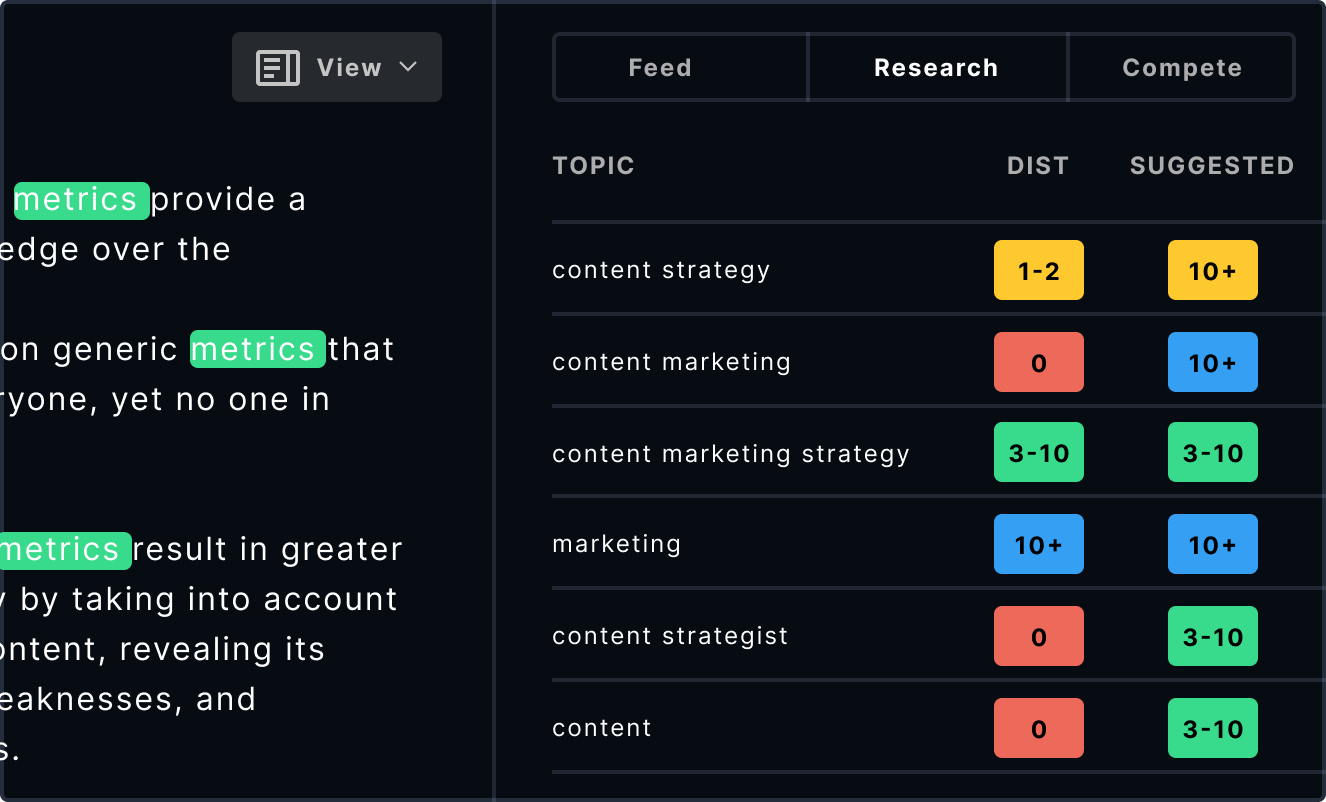
While MarketMuse makes it easy to quickly create SEO-friendly content, you may experience sticker shock when looking at its pricing. Here are the different pricing tiers you can choose from:
Looking for reviews of other SEO tools and SEO software? Check out these additional SEO product reviews:
Read more search engine optimization tutorials and SEO tool reviews and comparisons.
If you have a fast growing website or run an agency, MarketMuse is an ideal tool to add to your content marketing arsenal. There are a few disadvantages, but they are quickly outweighed by the powerful keyword research of this tool and optimization of features.
What are Marketmuse credits?
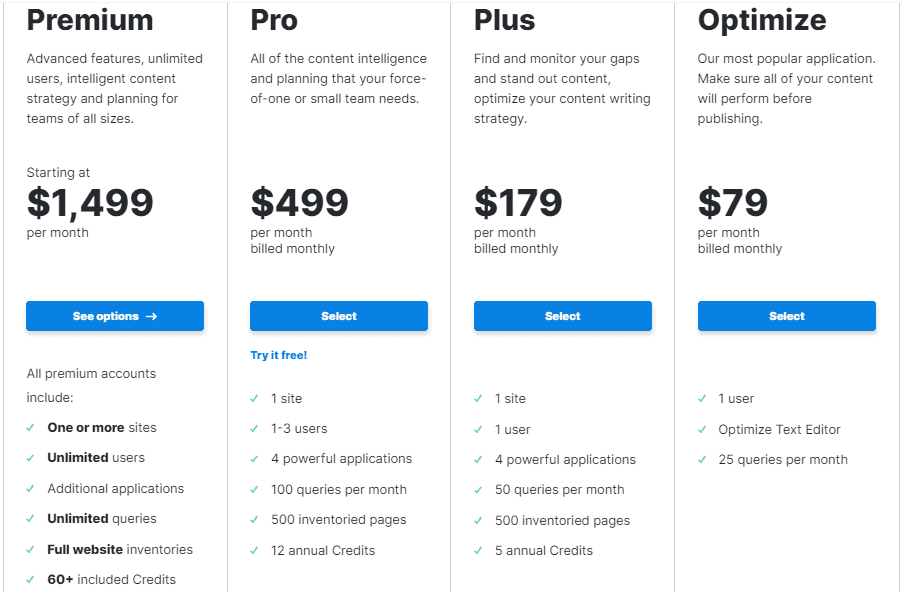
Credit is the money used to purchase Content Briefs and First Drafts, and can also be used to purchase additional Inquiries.
Is MarketMuse Free? MarketMuse is available for free. Prices start at $ 79 / month and grow with you based on your needs.
What is MarketMuse?
MarketMuse is an AI-powered content marketing and keyword planner tool created by founders Aki Balogh and Jeff Coyle in 2013. It uses machine learning and artificial intelligence to analyze content, suggest topics to cover, and develop briefings to help your brand or agency create better content.
What is Frase app?
Frase helps you create better SEO content, faster. Watch the 2 minute explanation video: https://youtu.be/yvAUhKjT0Bc Over 200,000 content creators, SEO’s and agencies use Frase to research, write, and optimize high quality SEO content in minutes instead of hours. Start a trial here: https://app.frase.io/register.
How much does Clearscope cost?
Because Clearscope has only two pricing tiers: $ 350 / month or an “Agency and Enterprise” scheme. So yeah, not cheap. Especially when you compare Clearscope with other SEO tools on the market, like Ahrefs.
What is Muse AI?
Muse.ai is an artificial intelligence solution designed to help businesses store, share and embed video or audio files on a unified interface.
What is Clearscope used for?
Producing content that gets results To drive organic traffic, content needs to be more than just sharing, clickable and readable. Clearscope helps you produce content that is highly relevant to what people are looking for.
How much does Clearscope cost?
Is SEO surfing good?
Surfer SEO is ideal for SEOs looking for a data-driven analytics tool with a great interface and is completely affordable at only $ 29 a month. We like it because it gives us the ability to customize our content in a way that no other tool in that price range does.
Is SEO worth it 2020?
The short answer is that SEO is very effective – not only for traffic generation but also guidance and sales. Do not worry. The long answer involves research and data, not just blank statements. Most SEOs are overly caught up in search-specific metrics like SERPs (search engine results page), rankings, and organic traffic.
How do I get my SEO score up in surfing?
10 Things You Can Do In A Surfer To Improve Your Site NOW
- A tool to explore your page against the top pages.
- Optimize relevant expressions with True Density.
- Keyword tool to add your keywords to the right places.
- Analyze parts for long-term keywords.
- Create a link building plan based on common competitors backlinks.
What is a good score on Surfer SEO?
Generally, a score between: 0 – 33 warns of irrelevant or low quality content. 34 – 66 represents worthy quality or relevance, or high quality with low relevance, or low quality with high relevance.
How do you get a Clearscope?
The step-by-step process
- Step 1: Select a target keyword with an existing audience.
- Step 2: Create a report in Clearscope on the keyword.
- Step 3: Create an outline based on Clearscope’s glossary of relevant terms.
- Step 4: Do good research (eg …
- Step 5: Write the first draft.
How much does Clearscope cost?
Because Clearscope has only two pricing tiers: $ 350 / month or an “Agency and Enterprise” scheme. So yeah, not cheap. Especially when you compare Clearscope with other SEO tools on the market, like Ahrefs.
What does Clearscope do?
Clearscope helps content teams of all sizes drive organic traffic. Given a target keyword, Clearscope analyzes best performing organic content to make recommendations that can be implemented on relevant terms, word count, readability, content type and similar headings.
How to Add Clearscope to Google Docs?
Inside your Google Dock, select ‘Clearscope’ from your Add-ons list. 3. Paste the shared link inside.
What does Clearscope do?
What Is Clearscope, Exactly? Clearscope.io is a keyword research and content optimization tool. Its bread-and-butter feature is called â € œOptimizeâ €. This feature rates your content based on “relevance and content capacity”.
How do you use Clearscope in Google Docs?
Clearscope Keyword Research To run a new search, all you need to do is enter a keyword, select a Google locale and language and click “Go”. Wait a few seconds for Clearscope to find relevant keywords based on your target keyword. You will then get a list of relevant keywords based on the target keyword you entered.
Does MarketMuse work?
You will often find pages with very low content scores outperforming their competition. However, what I can say is that every time I have used MarketMuse to optimize a page, its overall search performance has improved – sometimes slightly, but often dramatically.
How much does Clearscope cost? Because Clearscope has only two pricing tiers: $ 350 / month or an “Agency and Enterprise” scheme. So yeah, not cheap. Especially when you compare Clearscope with other SEO tools on the market, like Ahrefs.
How do you get a Clearscope?
The step-by-step process
- Step 1: Select a target keyword with an existing audience.
- Step 2: Create a report in Clearscope on the keyword.
- Step 3: Create an outline based on Clearscope’s glossary of relevant terms.
- Step 4: Do good research (eg …
- Step 5: Write the first draft.
How to Add Clearscope to Google Docs? Inside your Google Dock, select ‘Clearscope’ from your Add-ons list. 3. Paste the shared link inside.
How do I create a Clearscope report?
To run a new Report, all you have to do is add your target keyword. Select the Google locale you want Clearscope to use to analyze best performing content. Finally, select the language you want Clearscope to do the analysis on. After adjusting these parameters, you can click on the “Run report” button.
How does Clearscope work?
Given a target keyword, Clearscope analyzes best performing organic content to make recommendations that can be implemented on relevant terms, word count, readability, content type and similar headings. He does the research in advance for blogging and compiles it into one report.
What does Clearscope do?
Clearscope helps content teams of all sizes drive organic traffic. Given a target keyword, Clearscope analyzes best performing organic content to make recommendations that can be implemented on relevant terms, word count, readability, content type and similar headings.
How do you use Clearscope in Google Docs?
Clearscope Keyword Research To run a new search, all you need to do is enter a keyword, select a Google locale and language and click “Go”. Wait a few seconds for Clearscope to find relevant keywords based on your target keyword. You will then get a list of relevant keywords based on the target keyword you entered.
Is SEO surfing good?
Surfer SEO is ideal for SEOs looking for a data-driven analytics tool with a great interface and is completely affordable at only $ 29 a month. We like it because it gives us the ability to customize our content in a way that no other tool in that price range does.
SEO Glossary: More than 200 terms and definitions you need to know
Search engine optimization, like any specialized industry, has its own unique set of terminology, definitions and abbreviations.
This SEO glossary contains over 200 of the most common terms that you are likely to hear and that you will definitely need to know throughout your SEO career.
| B | C | D | E | F | G | H | me | J | K | L | M | N | About | P | Q | R | S | T | U | V | In | X | Y
A
Above the Fold
The content that appears on the website before the user scrolls down. In 2012, Google created a page layout algorithm to lower the rankings of sites with too many ads in that space.
AJAX
Asynchronous JavaScript and XML is a type of programming that allows a website to send and receive information from a server to dynamically change that page without reloading.
Algorithm
A complex computer program used by search engines to retrieve data and deliver query results. Search engines use a combination of algorithms to deliver web pages ranked through a results page based on a number of ranking factors and signals.
Algorithm Change
Some algorithmic changes go completely unnoticed. However, the impact of a major algorithmic change can usually be noticed quite quickly, although it sometimes takes weeks for the change to take effect. Algorithmic changes take three forms:
Alt Attribute
HTML code that provides information used by search engines and screen readers (for the blind and visually impaired) to understand the content of an image.
AMP
Accelerated Mobile Pages (AMP) is an open source HTML platform that enables faster display of a desktop page on mobile devices. It was used as a criterion to gain visibility in the Top Stories carousel.
The AMP logo has since been removed from search results, and Google has announced that AMP is no longer required to be displayed on Top Stories. The emphasis is now on Core Web Vitals to measure faster page delivery and loading, and the impact of AMP is now questionable.
Analytics
The science of collecting, analyzing, and interpreting data in order to take future action based on what has worked (or has not worked) in the past.
Anchor Text
Clickable link word or words. This text is intended to provide people and search engines with contextual information about what the linked page or site is about. For example, if you were creating a link to send visitors to the Search Engine Log, “Search Engine Log” is the anchor text.
Artificial Intelligence (AI)
The science of computers doing tasks that require human intelligence. Rather than following a set of pre-programmed rules (such as an algorithm), the AI computer system is basically a digital brain that learns. Artificial intelligence can also make and make decisions without human intervention.
Authority
A combination of signals used by search engines to evaluate sites and websites for ranking purposes.
Author Authority
Authority is the concept of using the reputation and credentials of the person who writes online content as a ranking factor. Originally, Google tested this in conjunction with Google+, but despite several patents pending, no evidence supports authority as a ranking factor.
Google is putting emphasis on EAT to reduce online misinformation, especially in YMYL niches such as health and finance. In these spaces, author authority building is recommended to keep the brand credible, even if ranking is not currently affected.
B
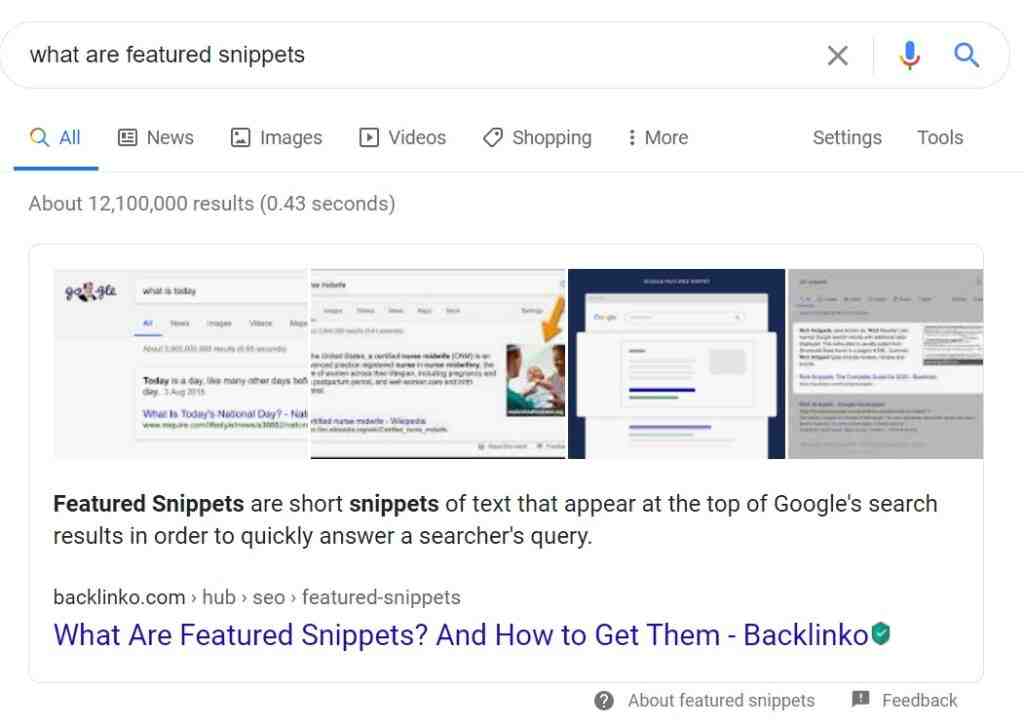
B2B
Short for business-to-business. In B2B SEO, the purchasing cycle is longer, products and services are more expensive, and the recipients are professional decision-makers.
B2C
Abbreviation from company to consumer. In B2C SEO, the purchasing cycle is usually shorter (although it still varies by industry), products and services are (mostly) cheaper, and the audience is the audience.
Backlink
Baidu
The most popular search engine in China, Baidu, was founded in January 2000 by Robin Li and Eric Xu.
Bing
The name of the Microsoft search engine. Bing was launched in June 2009, replacing Microsoft Live Search (formerly MSN Search and Windows Live Search). As of 2010, Bing operates Yahoo’s Organic Search Results as part of an agreement that Microsoft and Yahoo entered into in July 2009.
Black Box
A complex computer program that is poorly understood. Inputs and outputs can be observed, but the process itself cannot be accessed due to its confidential nature. For example, Google’s algorithm is a black box.
Black Hat
Risky tactics that go against Google’s Webmaster Guidelines.
Blog
Publication of content sorted in chronological order with the most recent content at the top. Content reflects personal or corporate interests and may be written by an individual or group of associates. Blogs were originally called web logs or internet blogs. However, since “internet log can also refer to server log files, the term was misleading.” To avoid this confusion, the acronym “blog” has become a common term.
Bounce Rate
The percentage of website visitors who leave a site without visiting another page on that site. Bounce rates vary widely by industry and niche. While a bounce rate may indicate a potential problem with your content or website, it’s not a direct ranking factor, according to Google.
Bot
Branded Keyword
When a user’s query contains an exact match or variation of a specific company or brand name. For example, “Search Engine Journal”, “SEJ”, “SearchEnginejournal.com”, and “Search Engine Journal SEO 101 Guide” are some examples of branded keywords.
Breadcrumb
A navigation element that helps users easily see where they are on your site.
Broken Link
The link was not found, leading to the 404 error. Typically, the link is broken when:
C
Cache
Technology that temporarily stores web content such as images to reduce future page load times.
Cached Page
A snapshot of the website as it appeared when it was last indexed by the search engine.
Canonical URL
An HTML code element that specifies the site’s preferred URL when multiple URLs have the same or similar content to reduce duplicate content. Also known as canonization.
ccTLD
Top-level domain with country code. For example, a UK based company would have a domain like this: www.example.co.uk where uk is ccTLD.
Citation
In local SEO, a quote is any online mention with a brand name, address, or telephone number (NAP). The quotes are usually found in directories, social networks and community profiles, site resource lists, or any brand mention on the Internet that does not link to the site. NAPs can affect ranking and visibility on Google maps.
Click Bait
Content designed to entice users to click, usually by over-promising or intentionally misleading headlines so publishers can monetize their ads.
Click Depth
Click depth is the number of clicks it takes to move from the home page or entry page to the landing page on your site. The more clicks you need, the less likely Google is to index or rank your page.
The pages closest to the home page are considered the most authoritative and most likely to be searched and indexed by Google.
Click depth is important for smooth page indexing and link capital flow; therefore it indirectly influences the ranking.
Click-Through Rate (CTR)
The speed (expressed as a percentage) at which users click on the free search result. This is calculated by dividing the total number of free clicks by the total number of impressions and then multiplying by 100.
Cloaking
Showing different content or URLs to people and search engines. Violation of Google’s Webmaster Guidelines.
CMS
Means a content management system. A web application that allows you to create, transfer, and manage digital assets.
Co-Citation
How often two sites (or websites) are mentioned together by a third party site, even though the first two items do not link (or reference) each other. This way, search engines can determine the thematic similarity.
For example, imagine the Search Engine Journal and Search Engine Roundtable never linked together or mentioned each other. However, other websites and blogs would likely list both SEJ and SER in popular search engine news publication lists.
To see this in action see: related: https: //www.searchenginejournal.com/ search log
Code To Text Ratio
The amount of text displayed on a page compared to the amount of code used to construct the page is called code-to-text ratio. A higher text-to-code ratio is considered to provide a better user experience but is not a direct ranking factor.
Poorly written comments, often off-topic and self-promotional, posted by spambots in the hope of getting a free (but ultimately worthless) link.
Competition
There are two types of competition:
Content
Content is King”
A phrase often used by conference speakers and authors of popular SEO (and digital marketing) publications. In this context, “content is king” usually means that content is essential to any SEO, digital marketing, or business success.
This sentence actually comes from Bill Gates’ essay “Content is King,” published January 3, 1996.
Conversion
When the user performs the requested action on the site. Conversion examples include:
Conversion Rate
The speed (expressed as a percentage) at which site visitors perform the desired action. It’s calculated by dividing total conversions by traffic, then multiplying by 100.
Conversion Rate Optimization (CRO)
The process of improving the number or quality of conversions that occur on a website. Some popular CRO tactics include testing changes to the page design, texts, images, price, call to action, and messages.
Core Update
When Google is making extensive updates to its core algorithm. Google sometimes announces a specific theme for its updates, such as the Page Experience update, but core updates are non-specific and happen several times a year.
Core Web Vitals
A set of metrics that measure the performance of a website in relation to the user experience. Core web metrics were introduced with the Page Experience update as the main signals for a good user experience:
Google confirmed Core Web Vitals as a ranking factor, but said relevance and other factors may be more important.
Correlation
The degree to which there is a relationship between two or more items. Often used in SEO research to infer variable relationships in search rankings due to the nature of black box algorithms. However, always remember that the correlation is causation.
Crawl Budget
The total number of URLs that search engines can and are willing to crawl on your site over a specified time period.
Crawl Error
Crawler
The program that search engines use to index the web. Bots visit websites to gather information and add or update the search engine index.
Also known as: Bot, Spider, Web Crawler
Crawling
The process of gathering information by the crawler from billions of public web pages to update, add and organize web pages in the search engine index.
CSS
Cascading style sheets describe how HTML elements (e.g. color, fonts) should appear on web pages and adapt to display on different devices.
Customer Journey
All the potential moments (or touchpoints) where a potential customer comes into contact with or interacts with the brand. All of these interactions are designed to ultimately persuade, influence, and transform a potential customer into a customer, customer, or subscriber.
While the customer journey can vary greatly depending on the type of business and industry, it typically consists of four main “steps”:
Awareness & gt; Consideration & gt; Decision & gt; Stopping
Google’s Avinash Kaushik offers an alternative framework:
See & gt; Think & gt; Is & gt; Care
Also Known As: Purchase Process, Consumer’s Path To A Decision, Customer Path To Online Purchase, Marketing Path, To Buy Path, Purchase Path
D

Data
All the hard numbers representing real customers – who, what, where, when, why, and how – are all needed to make informed decisions about SEO strategies and tactics.
Dead-End Page
A website that does not link to any other website. It’s called so because once a user or bot shows up on that page, there’s nowhere to go any further.
Deep Link
Deep Link Ratio
When an internal link points directly to a page other than the home page on your site, it is called a precision link. The deep link to link ratio of your homepage is known as the deep link ratio.
Having links directly to deep pages on your site is considered to be an indication of the quality of the content on the site. The more precise links you have, the better the website is. There is no evidence that the deep link ratio has any direct impact on the ranking.
De-index
When Google removes a site or website, temporarily or permanently, from search results, in particular from the search index. Google provides a tool to remove URLs in Search Console for voluntary cases; however, a site may also be removed from the index as a penalty for violating the Google Webmaster Guidelines by manual action.
Direct Traffic
In Google Analytics, users who go directly to your website by typing a URL directly into a browser or clicking a bookmark are referred to as direct traffic. Google will also include any traffic sources it does not recognize in direct traffic.
Directory
List of websites, usually categorized by related categories and maintained by editors. Depending on the directory, the inclusion may be free or paid. In the past, links from directories (eg DMOZ) were highly searched for, leading to widespread abuse and a general devaluation of this type of link building.
Also known as: web directory, link directory
Disavow
If your link profile contains a large number of spammy, artificial or low-quality inbound links that may be detrimental to your rankings – and you cannot remove them for good cause (e.g. the link exists on the site you have no control over it) – you can use the Disavow Tool Google to tell Google to ignore these links.
DMOZ
Open Directory Project. This human-edited website directory was launched on June 5, 1998 and closed on March 17, 2017.
Do-follow
A link that does not use the “nofollow” attribute. In other words, a link.
Domain
Website address – usually ending with an extension like .com, .org, or .net. For example: www.searchenginejournal.com is the domain of this website.
Domain Age
The domain registration date, until today, is called the age of the domain. For example, Search Engine Journal was registered on June 10, 2003, so it has a significant domain age.
It was once thought that a higher domain age would give a domain more authority, but this idea of domain age as an influence on ranking has been rejected.
Domain Authority
Domain History
Every activity, including backlinks and website built previously on the domain, is known as the domain history.
If the previous site on the domain received a penalty, it will remain connected to the domain and cause problems for the new owner.
It is recommended that you always check your domain history before purchasing a domain.
Doorway Page
Web pages that are created for the purpose of positioning in search engines for specific keywords with the sole purpose of redirecting users who clicked that page to another site.
DuckDuckGo
A search engine that was founded on September 28, 2008. It is often praised for its emphasis on user privacy and the lack of filter bubbles (search personalization). DuckDuckGo uses over 400 sources to handle its search results, including vertical search engines, its own crawler, DuckDuckBot, Bing, and Yandex. There were 4 billion searches on DuckDuckGo in 2016.
Duplicate Content
When a significant amount of content on one website matches or is incredibly similar to content that exists elsewhere on the same site, or on a completely different site.
Dwell Time
The amount of time between the user clicking on a search result and the return to the SERP from the website. A short residence time (e.g. less than 5 seconds) may indicate to search engines that the quality of the content is poor.
E

E-A-T
Expertise, authoritativeness and credibility are concepts taken from the Google Search Quality Evaluator guidelines and became known as E-A-T.
E-A-T represents the signals used by Google to determine content quality, but it is not a direct ranking factor.
Google is committed to stopping the spread of disinformation, especially from sites operating in Your Money Your Life (YMYL) niches, such as finance or health.
E-commerce
Buying and selling products, all online.
Editorial Link
A link that is passed from one site to another without the recipient asking or paying.
.edu Links
Educational institutions have a .edu Top Level Domain (TLD). For example, stanford.edu. A link from such a page is called a .edu link.
Links from .edu sites were considered “hard to come by” and were believed to be of greater link building value. As a result, link writers were targeting .edu links until many of the lesser-known .edu sites were devalued by Google and any benefits of links were ignored.
Engagement Metrics
Methods for measuring user interaction with websites and content. Examples of engagement rates include:
Entities
People, places, organizations, websites, events, groups, facts, and more.
External Link
F
Featured Snippet
For some queries, usually questions (i.e. who / what / where / when / why / how), Google sometimes displays a special block over organic search results. This field contains a summary (as a paragraph, list, table, or video) as well as the publication date, page title, link to the website from which the reply originated, and the URL.
Findability
How easy it is to detect content on a page, both internally (by users) and externally (by search engines).
First Link Priority
The concept of internal linking is that Google treats links differently if there are two links on the web page pointing to the same page. Google was thought to consider the anchor text from the first link to have a greater impact.
There is no conclusive evidence of how Google treats the same link on a page. When linking to a page, it is recommended that you do this first for the user and apply the link to the anchor text where relevant.
Links that appear at the bottom (or “footer) of the webpage”.
Freshness
Freshness refers to the age of the content posted on the Internet.
Google is believed to be pBlan-kriority on fresh content in certain niches for certain search queries depending on certain factors. For example, searches related to COVID announcements or sports results.
Inquiry Deserves Up to date (QDF) is part of the Google algorithm that determines when a query should show up-to-date information, especially for breaking news, recurring events, information inquiries and product inquiries.
G
Search engine founded by Larry Page and Sergey Brin in September 1998. Google marked a radical move away from human-edited web directories by relying on web indexing technology and a complex algorithm to analyze hyperlink patterns to rank your sites. Google is the most used search engine in almost every country in the world.
Google Analytics
A free web analytics program that can be used to track audience behavior, traffic sources, content performance, and more.
Google Bomb
The practice of making a site number one for a surprising or controversial search phrase. This has been achieved with a large number of sites linking to a specific website with specific anchor text to help it rank for that term.
For example, in 2003, the White House biography of President George W. Bush ranked first in the search for “unhappy failure.”
Googlebot
A web indexing system used by Google to find and add new sites and web pages to its index.
Google Dance
The term has been used since 2002 for the unstable period when Google updated its search index approximately every month.
Google Hummingbird
The Google search algorithm that was officially announced in September 2013 after having been used for a month. Hummingbird’s goal was to better understand the full context of the queries (i.e. semantic search) rather than specific keywords to provide better results.
Google Panda Algorithm
A major update to the Google algorithm that was initially rolled out in February 2011, followed by numerous subsequent updates. Google Panda’s goal was to reduce the visibility of low-value content, often created by ‘content farms’. In 2016, Panda became part of Google’s core ranking algorithm.
Google Penguin Algorithm
Google’s main algorithm that was launched in April 2012, followed by a series of updates and refreshes. Penguin’s goal was to reduce the visibility of over-optimized sites or sites abusing certain spam tactics (e.g., low-quality linking, keyword stuffing). In 2016, Penguin began operating in real time as part of Google’s core algorithm.
Google Pigeon Update
The name (given by the SEO industry, not Google) of a major update to Google Local Search, which was introduced on July 24, 2014. Pigeon’s goal was to increase the accuracy and relevance of local searches by using more traditional Google ranking signals and improving distance and locating ranking parameters.
Google RankBrain
A major shift to Google’s algorithm was officially introduced in October 2015, although it had been tested many months before. Thanks to RankBrain, Google added machine learning to its algorithm and was named the third most important ranking signal. In June 2016, it was revealed that RankBrain was involved in every query and is influencing the rankings.
Google Sandbox
The theorized and debated (but never endorsed by Google) “waiting period” that prevents new sites from getting the full benefit of their optimization efforts. Typically, this effect is most commonly seen with new sites targeting competing keywords, and can only be overcome if the site gains sufficient authority.
Google Search Console
Google Search Console offers several helpful features, including the ability to monitor sites for crawl errors and site speed. These pages are also used to provide notifications about manual actions.
Google Search Quality Rater Guidelines
Google uses a guidance document for its internal Quality Controllers that can be referred to when manually reviewing websites.
The original internal document was confidential, and then Google publicly published its Search Quality Assessment Guidelines online, which are updated from time to time.
The information in the document is a guide to creating high-quality content and incorporates the concept of an EAT. The guidelines are not a list of any direct ranking factors.
Google Trends
A site where you can view data visualizations about the latest search trends, articles, and topics.
Google Webmaster Guidelines
Google’s guidelines for good website optimization practices as well as “illegal” practices that may result in manual actions. Just:
.gov Links
Government organizations have a .gov top level domain (TLD). For example, usa.gov. A link from such a site is known as a .gov link.
Only US government entities can apply for and obtain a .gov TLD. Other countries have their own national version, for example .gov.uk.
Government TLDs are highly regulated and trusted sources of information. For this reason, a link from the .gov domain is considered to be of significant value and is the target of sending spam.
Gray Hat
A supposed “gray” area between techniques following Google’s Webmaster Guidelines, but then add an element that bends the rules a bit.
Guest Blogging
A popular link building tactic that involves creating content for other websites in exchange for a backlink pointing to your own pages.
H
Heading
The HTML header tags (H1-H6) divide the content into sections based on importance, with H1 being the most important and H6 being the least important. Headline tags should be used naturally and should include your target keywords where relevant as this can provide a small SEO benefit.
Headline
Head Term
A popular keyword with lots of searches that are usually difficult to rank for.
Also Known As: head keyword, short tail
Hidden Text
Any text that the user cannot see, which aims to manipulate search rankings by loading web pages with content-rich keywords and copying. This technique is contrary to Google’s Webmaster Guidelines and may result in manual operation. For example, adding text that is:
Hilltop Algorithm
Influenced by the HITS algorithm and added to the Google algorithm in 2003, Hilltop has assigned “expert” status to certain sites or websites posted on a specific topic that also link to unrelated pages on that topic.
HITS Algorithm
Hyperlink-induced topic search is a link analysis algorithm that evaluates value not only from content and incoming links (authorities), but also outgoing links (hubs).
Homepage
The default or introductory web page of a website.
.htaccess File
A server configuration file that can be used to rewrite and redirect URLs.
HTML
Denotes a hypertext markup language. HTML tags are specific code elements that can be used to improve SEO performance for websites and websites.
HTTP
Hypertext Transfer Protocol is a way of transferring data from a computer server to a web browser.
HTTPS
Hypertext Transfer Protocol Secure uses the Secure Sockets Layer (SSL) protocol to encrypt data sent between a website and a web browser. HTTPS is a minor Google ranking factor.
Hub Page
An authoritative central resource (e.g. a page or article) dedicated to a specific topic (keyword) that is constantly updated and linked and leads to related web pages.
I
Inbound Link
Link to a website that comes from an external website. For example, if the Search Engine Journal were to link to Google, this would count as an inbound link on the Google side; if Google were to link to the Search Engine Journal, it would be an incoming link on the SEJ side.
Index
Search engines use databases to store and retrieve information gathered during the indexing process.
Indexability
How easily a search engine bot can understand and add a page to its index.
Indexed Page
The website detected by the crawler has been added to the search engine’s index and may appear in the search results for relevant queries.
Information Architecture
How the website is organized and where the different content and navigation elements are located on the website.
Information Retrieval
The process of finding information (e.g. text, images, video) from a large database and then presenting the most relevant information to the end user.
Internal Link
IP Address
Internet protocol address. IP addresses can be:
Neither of them will help you get a better ranking; however, a dedicated IP address can increase the speed of your website.
J
JavaScript (JS)
A programming language that allows you to dynamically insert content, links, metadata, or other elements into web pages. JavaScript has the potential to make it difficult for search bots to index and index web pages and increase page load times for users.
K
Keyword
A word, words or phrase that an SEO specialist or marketer is targeting to match and rank according to what users are looking for. Words used on web pages can help search engines determine which pages are most relevant to appear in organic search results when a searcher enters a search query. Keywords usually represent topics, ideas or questions.
Keyword Cannibalization
A type of self-competition that occurs when multiple pages from one site are ranked for the same query on the SERP. This can result in lower CTR, less authority, and lower conversion rates than if you had one consolidated website that ranked well.
Keyword Density
How often a word or phrase appears in the body of the webpage. At best, this unproven concept is outdated if it ever had any relevance to search engines. There is no ideal percentage that would improve a page’s rank.
Keyword Research
The process of discovering any relevant topics, topics, and terms entered into the search engines, and the magnitude and level of competition for those terms. This practice is made possible by various free and paid tools.
Keyword Prominence
When a keyword is placed as high on a website as possible to influence the ranking of the search term.
Using a keyword inserted at the beginning of a page, for example in the first paragraph, sends a strong signal to Google about the page.
Keyword exposure acts as a ranking signal if the page’s theme is relevant to the keyword.
Keyword Stemming
In language and grammar, words are constructed around stem or stem variations. For example, shopping, shopping, stores are all varieties of the core “store”.
When trying to rank for a term such as “store”, using variations of that word on the page (purchases, purchases) will be treated by Google as the same keyword. This also applies to plural such as bicycles / bikes or fly / flies.
The origin of keywords is Google’s ability to understand the variations of a keyword and is part of its algorithm.
Keyword Stuffing
Adding irrelevant keywords or repeating keywords outside the natural to a website in the hope of increasing search ranking. This spam tactic is contrary to Google’s Webmaster Guidelines and may result in manual action.
Knowledge Graph
The entity database that Google uses to reveal facts and information about people, places, and things (or entities) – and their combinations – in the Knowledge Panel or carousel at the top of the search results for relevant queries.
Knowledge Panel
The field that appears at the top or on the right rail (computer only) of page 1 of Google search results for relevant queries. This panel contains facts and information about people, places, and things, as well as links to related sites or Google searches.
KPI
Indicates a key performance indicator. The measurement method companies use to measure whether their marketing and business goals are being met.
L
Landing Page
Latent Semantic Indexing (LSI)
An information retrieval method designed to help search engines identify the correct context of a word. LSI doesn’t play a useful role in SEO these days.
See: Google semantic latent indexing
Lead
A person who may or may not be interested in your product (s) and / or service (s). The prospective customer is willing to provide his email address (and usually other personal or contact details) in exchange for something he deems valuable from the website.
Link
A connection between two websites built with HTML. The link allows users to go to websites, social networks and applications. Links play a crucial role in the search engine ranking and ranking of sites.
Link Bait
Deliberately provocative content to grab people’s attention and attract links from other websites.
Link Building
The process of acquiring links to other trusted and relevant websites to improve your rankings and visibility in organic search results. Link building can be done by:
Link Equity
The value of inbound links for relevance, authority, and trust.
Link Farm
When a group of sites connects together, usually through automated programs, in the hope of artificially increasing search rankings. Spam tactics.
Also known as: Link Network, Blog Network, Private Blog Network
Link Juice
A term that should never be used in public or on the Internet.
Did you mean…: Authority or PageRank
Link Profile
Any type of link that points to a specific website. The quality of your site’s link profile can vary greatly depending on how you acquired them and the anchor text used.
Link Stability
When the link remains on the site for a certain period of time without changes or updates.
Google applied for a patent that dealt with the link opt-out and the frequency of link changes on a page, but there was no evidence that link stability had any effect on ranking.
Link Velocity
How fast (or slow) the site accumulates links. A sudden increase in your link speed could potentially be a sign of spamming, or it could be caused by viral marketing or by doing something new to publish (whether intentionally or unintentionally).
Links, Internal
Links from one page to the other in the same domain. Internal links can be inserted on the page, in the main navigation menu, or in the sitemap.
Internal links can be used to indicate the importance of a page on your site. For example, a page that is directly linked from the home page, compared to a page that is linked to four clicks from the home page.
Internal links are important because Googlebot’s crawlers use internal links to navigate your site and find new pages.
Links, NoFollow
In a hyperlink, rel = “nofollow” is an attribute added to the link to show that you are not giving any credit or endorsement to the page you link to
Nofollow was originally introduced by Google to curb comment spam and devalue all nofollow links, but have since changed the way the directive works.
Nofollow is now considered a “tooltip” meaning they can still use some information about linking patterns, but generally accept that no weight should be passed over the link.
Links, Outbound or External
An external or outgoing link is a link from a page in domain x to a page in domain y. For example, a link from searchenginejournal.com/google to google.com/about-us
External links to authority sites have been found to add value to the page as it shows that the site is well researched and uses trusted sources.
External links are not considered to have any influence on the ranking and should only be used to cite sources where appropriate.
Log File
A file that records information about users such as IP addresses, browser type, Internet Service Provider (ISP), date / time stamp, referring / exit pages, and number of clicks.
Log File Analysis
The process of mining log file data to identify trends, administer the site, track user traffic to the site, gather demographic information, and understand how search bots index the site.
Long-Tail Keyword
M
Machine Learning
A subset of artificial intelligence where the system uses data to learn and adapt a complex process without human intervention.
Manual Action
Google term for penalty. Google will take manual action on the site after a verifier (i.e. a Google employee) has manually checked the site to confirm that it does not comply with Google’s Webmaster Guidelines. Punished websites can be degraded or completely removed from the search results. Manual actions can be assessed on the entire site or only on certain websites.
Meta Description
A tag that can be added to the “header section of an HTML document.” It acts as a description of the website content. This content is not used in ranking algorithms, but is often displayed as “the snippet that appears in search results.” Accurate and engaging descriptions can increase your organic click-through rate.
Meta Keywords
A tag that can be added to the “header section of an HTML document.” Adding a few keywords here will not help you rank – search engine algorithms have ignored this tag for years for ranking purposes due to abuse (in the form of keyword stuffing).
Meta Tags
Information that appears in a website’s HTML source code to describe its content to search engines. The title tag and meta description are the most common types of meta tags in SEO.
Metric
A method of measuring activity and performance to evaluate the success (or lack thereof) of an SEO initiative.
N
Natural Link
Negative SEO
A rare but malicious practice in which Internet spam techniques are used to harm the search rankings of another site, usually a competitor.
Niche
A defined market or area of interest consisting of a small group of people with great passions.
Noarchive Tag
Meta tag telling search engines not to cache a copy of your page.
Nofollow Attribute
A meta tag that tells search engines not to use one particular outbound link. This happens in cases where a website does not want to transfer permissions to another website or because it is a paid link. The nofollow attribute looks like this:
& lt; a href = “http://www.example.com/” rel = “nofollow” & gt; Here is the anchor text & lt; / a & gt;
Noindex Tag
A meta tag that tells search engines not to index a specific web page in their index.
Nosnippet Tag
Meta tag telling search engines not to display a description with your listing.
“(not provided)”
Following the transition of search engines to safe search in 2011, keyword data was removed from Google Analytics and replaced with the word “(not specified)” – making it impossible to determine which queries were responsible for visitors finding the page.
O
Off-Page SEO
Demand generation and brand awareness activities that take place off-site. In addition to link building, promotional tactics can include social media marketing, content marketing, email marketing, influencer marketing, and even offline marketing channels (e.g. TV, radio, billboards).
On-Page SEO
All these activities take place on the website. In addition to posting relevant, high-quality content, on-page SEO includes HTML code optimization (e.g., title tags, meta tags), information architecture, site navigation, and URL structure.
Organic Search
Natural or free auctions that appear on the SERP. The free search results that are analyzed and classified by algorithms are designed to provide users with the most relevant results based on their query.
Orphan Page
Any website to which no other page on this site links.
Outbound Link
A link that takes visitors to a page on a different site than the one they’re currently on.
P
PageRank
According to Google: “PageRank is a measure of the importance of a page based on inbound links from other sites. Put simply, each link to a page on your site from another site adds to that site’s PageRank. Not all links are created equal. The algorithm is named after Google co-founder Larry Page.
Page Speed
The time it takes for the website to load completely. Page speed is a ranking factor.
Pageview
The website is loaded in the browser.
Paid Search
Pay-per-click ads that appear above (and often below) organic search engine results.
PBN
Means a network of private blogs.
Indicates a Portable Document Format file. PDF files can contain text, images, links, videos, and more.
Penalty
Persona
A fictional representation of the ideal site visitor or customer – their demographics, behavior, needs, motivations and goals – all based on real data.
Also known as: Customer Persona, Marketing Persona
Personalization
When search engines use your search history, web browsing history, location, and relationships to create a set of search results tailored to a specific user.
PHP
Hypertext Preprocessor is a scripting language used to create dynamic content on web pages.
Piracy
Search engines are designed to lower the organic search rankings for infringing content. In 2012, Google introduced a filter to reduce the visibility of sites reported to multiple DMCA takedown requests.
Pogo-sticking
When, after entering a query, the search engine jumps back and forth between the SERP and the pages listed in those search results.
Position
PPC (Pay Per Click)
An ad type where advertisers are charged a certain amount (usually determined by bid, relevance, account history, and competition) each time a user clicks on the ad. The combination of PPC and SEO can result in more properties, clicks, and SERP conversions. In addition, PPC data can inform you about your SEO strategy, and vice versa.
Q
QDF
Query posts deserve freshness as a search engine may choose to display newer web pages in search results (rather than older pages) if a particular search term is gaining ground, possibly because an news event has caused a spike in searches for that topic.
Quality Content
Content that helps you successfully achieve your business or marketing goals (e.g. generating organic traffic or social campaigns, winning top positions in search results, generating leads / sales).
Quality Link
Incoming link from a reliable, relevant, or trusted website.
Query
A word, word, or phrase that the user enters into a search engine.
R
Rank
Where the website appears in organic search results for a specific query.
Ranking Factor
A single component that constitutes a complex series of algorithms that determine where websites with organic search results for a specific query should appear. For years, Google has said its algorithms “rely on more than 200 unique signals” to help users find the most relevant website or answer.
Reciprocal Links
When two websites agree to exchange links with each other.
Redirect
A technique that directs a user (or search engine) who requested one website to another (but equally relevant) website. There are two types of redirects:
Referrer
URL data that identifies the source of the user’s website request.
Reinclusion
The process of asking a search engine to return a site or web pages to a search index after the indexing is removed.
Relevance
The way search engines measure how closely related the content of a website is to suit the context of the query.
Reputation Management
The practice of creating a positive perception of a brand or person on the internet – including in search results and on social media – by minimizing the visibility of negative mentions.
Also Known As: Online Reputation Management, Public Relations
Responsive Website
A website designed to automatically adapt to a user’s screen size, whether viewed on a desktop computer or a mobile device.
Rich Snippet
Structured data can be added to your website’s HTML to provide search engines with contextual information as they are indexed. This information can then be displayed in the SERP, resulting in an extended list, known as an extended fragment.
robots.txt
The Robots Exclusion Protocol (or Standard) is a text file available at the root of your site that tells search engine crawlers which areas of your site should be ignored.
Return on Investment (ROI)
A way to measure the effectiveness of SEO activities. This is calculated by dividing the organic search revenue by the total investment cost, then multiplying by 100.
S
Schema
A form of microdata that, when added to a web page, creates an extended description (commonly known as an extended snippet) that appears in search results.
Scrape
A technique used to copy content or information on a website by means of a computer program or script. Search engines such as Google collect data to build a searchable index of websites.
Search Engine
A computer program that allows users to enter a query to retrieve information (e.g. files, web sites, web pages) from that program’s index (i.e. a web search engine such as Google indexes web sites, web pages, and files found on the World Wide Web) . The search index is created and updated by the crawler, and the items are analyzed and classified by a series of algorithms.
See also: Baidu, Bing, DuckDuckGo, Google, Yahoo, Yandex
Search Engine Marketing (SEM)
A general term for increasing your site’s visibility on search engine result pages, covering both paid and organic activities.
Search Engine Optimization (SEO)
The process of optimizing a website – as well as all content on it – so that it appears in prominent positions in organic search engine results. SEO requires understanding how search engines work, what people are looking for (i.e. keywords and key phrases), and why people are searching (intention). Effective SEO makes your website attractive to users and search engines. It is a combination of technical (SEO on-page) and marketing (SEO off-page) aspects.
Search Engine Results Page (SERP)
The page search engines are shown to users after performing a search. Typically, search engines display around 10 organic search results, sorted by relevance. Depending on your query, other search features may appear, including:
Also known as: SERP when it relates to multiple pages of search results.
Search History
Search engines track every user’s search (text and voice), every webpage they visit, and every ad they click on. Search engines can use this data to personalize the results for logged in users.
Also Known As: Web browsing history.
Share of Voice
How many impressions a brand receives in the SERP for search terms compared to the total number of impressions a brand’s competitor receives for the same search terms.
Sitelinks
Up to six algorithmically selected links that appear below the same site listing in a top rated free search result. Pages can be blocked as sitelinks in Search Console or Bing Webmaster Tools.
Also known as: Deep Links (Bing).
Sitemap
List of pages on the site. There are two types of sitemaps:
Sitewide Links
A link that appears on every page of your site, usually in the sidebar or footer of blogs or sites that use templates.
Social Media
Platforms (websites and applications) on which users can interact with each other and create, share and use content.
Social Signal
All the factors that prove the authority and influence on popular social networking sites. For example, the user’s social authority on Twitter.
While many correlation studies indicate that social signals do influence rankings (e.g., the number of likes / shares received for a given content), Google has publicly stated that social signals are not a direct ranking factor. Popular sites that engage with social media rank well for other reasons.
Spam
Spider
Split Testing
A controlled experiment in which two or more websites were compared to measure the effect of another variable on conversions. After your pages have been displayed long enough, a “winner” can be announced to your site visitors to collect the appropriate amount of performance data.
SSL Certificate
A digital certificate used to authenticate a site’s identity and encrypt information sent to the server using Secure Sockets Layer technology.
Status Codes
Response codes sent by the server when you click a link, request a web page or file, or submit a form. Common HTTP status codes important for SEO:
Stop Word
A frequently used word. For example: a, w, for, is, z, w, w. Search engines have ignored these words in the past to save time / resources in indexing. Search engines have evolved a lot from the start, and stop words do matter at times, so there’s nothing to worry about for SEO purposes.
Subdomain
A separate section that exists in the root domain. For example: http://jobs.searchenginejournal.com/ is a subdomain that exists in the main domain https://www.searchenginejournal.com/
T
Taxonomy
Organizing and categorizing your website to maximize content finding and assisting users in performing their desired site tasks.
Time on Page
An inaccurate estimate of the time a user spends browsing a specific website. Pages with high exit rates can significantly distort this data.
Title Tag
HTML meta tag that acts as the title of the website. Typically, the title tag is the title used by search engines when displaying their search listings, so it should contain strategic and relevant keywords for that particular page. The title tag should also be written to make sense for people and attract as many clicks as possible. Typically, title tags should be less than 65 characters long.
Top-Level Domain (TLD)
Extension of the given web address. They include:
There are also many other industry and country specific options.
Also Known As: gTLD (generic top-level domain); Domain extension.
Traffic
People (and sometimes bots) who visit your website.
Trust
It generally relates to the history of the domain (e.g. whether it cites or includes expert sources, builds a positive reputation, follows the Webmaster Guidelines).
TrustRank
A link analysis technique to separate good “reputable source pages” from Internet spam.
U
User-Generated Content (UGC)
Any form of content – videos, blog posts, comments, reviews, etc. – created by users or customers.
Universal Search
When search engines take data from multiple specialized databases to display them in the same SERP. Results can include images, videos, messages, purchases, and other types of results.
Unnatural Link
Any links that Google finds suspicious, deceptive, or manipulative. An unnatural link could cause Google to take manual action on your site.
URL
The Uniform Resource Locator is a specific string of characters that points to a resource on the network. The term URL is usually an abbreviation for a letter-based web address (e.g. www.searchenginejournal.com) entered into a browser to access a website.
URL Parameter
Values added to the URL to track where the traffic is coming from (i.e. which link someone clicked to discover your site or website). Here is an example of a URL parameter (in bold):
https://www.searchenginenejournal.com/example-article-url/999999/? yjsource=share-back-traffic& yjmedium=desktop-share-button& yjcampaign=twitter
Usability
How easy it is for people to use your website. Website design, browser compatibility, disability enhancement, and other factors all play a role in improving usability and making your website accessible to as many people as possible.
User Agent
User Experience (UX)
The general impression users leave after interacting with the brand, its presence on the Internet and its products / services.
V
Vertical Search
A specialized type of search where the focus is only on a specific topic, type of content, or media. For example, YouTube (video), Amazon (shopping), Kayak (travel), Yelp (business reviews).
Virtual Assistant
A bot that uses natural language processing to perform tasks such as web searches. For example, Siri by Apple or Cortana by Microsoft.
Visibility
Visibility and positioning of the website in organic search results.
Voice Search
A type of voice-activated technology that allows users to speak to a device (usually a smartphone) to ask questions or perform an internet search.
W
Webpage
A document that exists on the web and can be viewed by web browsers.
Website
A collection of websites hosted together on the web.
Website Navigation
How a website links its webpages to help visitors navigate through this website. Site navigation comes in several different forms, including:
Also Known As: Internal Links (or Internal Links), Site Architecture
Webspam
Any methods that exist with the sole purpose of cheating or manipulating search engine algorithms and / or users.
Also Known As: Black Hat SEO, Spam, Spamdexing, Search engine spam
White Hat
Tactics in line with Google’s guidelines for webmasters.
Word Count
Total number of words that appear in the copy of the content. Too small (or thin) content can be a signal of poor quality to search engines.
WordPress
A popular blogging and content management system.
X
XML
Extensible Markup Language is the markup language used by search engines to understand the data on your site.
XML Sitemap
A list of all pages on the site that search engines need to know.
Y
Yahoo
Yahoo was founded in April 1994 and was an extremely popular search engine and portal in the 1990s. Yahoo was mostly human driven, at least until June 2000, when an unknown search engine named Google began feeding into Yahoo’s organic search results. The deal lasted until 2004, when Yahoo started using its own search technology. As of 2010, Yahoo’s organic search results are powered by Microsoft’s Bing search engine.
Yandex
The most popular search engine in Russia, Yandex, was founded on September 23, 1997 by Arkady Volozh and Ilya Segalovich.
Featured image: Blank-k / Shutterstock
What are the different types of SEO content formats?
The most popular types of SEO content
- Content in abbreviated form.
- Content in a long form.
- Blog content.
- Pillar content and evergreen.
- Comprehensive content.
- Content for social channels.
- Data driven content.
- Mental leadership.
What are the three types of SEO? There are three types of SEO you need to get a good round of your organic search strategy: on-page positioning, technical positioning, and off-page positioning.
What is SEO format?
SEO Writing is a form of writing that helps web pages become more visible to the major search engines. A highly visible website with good content shows up in the first few pages of results when someone searches for that topic.
What is SEO document?
You can make sure that the right people are watching your content by making it easier to find your content. Search engine optimization or SEO is the process of increasing a website’s visibility on search engines in order to attract more relevant traffic.
Whats SEO stand for?
SEO stands for Search Engine Optimization and is the process used to optimize a website’s technical configuration, content relevance and link popularity so that its pages can be found easily, more relevant and popular in relation to user search queries and consequently search engines are expected to better evaluate them .
What is whitehat technique?
The White Hat SEO technique, on the other hand, refers to strategies that target a human audience that doesn’t try to break into the search engine’s algorithm. Any good SEO campaign will focus more on White Hat SEO, quality content, and link building as the core of their approach.
What are the GRAY Hat techniques? Gray hat marketing is a combination of widely accepted SEO techniques, such as paying someone to write an article for your website, and forbidden practices known as “black hat marketing”, such as hiding keywords on a page by making them the same color as the background.
What is an example of white hat optimization?
Examples of white hat SEO include: Offering high-quality content and services. Fast site loading and mobile friendliness. Use of descriptive, keyword-rich meta tags.
What is white hat optimization?
White hat SEO is a collection of approved search engine optimization tactics designed to increase a website’s position on the search engine result page (SERP). Search results that appear as a result of approved methods and not payments or scams are known as organic search results.
What is an example of black hat optimization?
Common examples of black SEO strategies include using invisible text, doorway pages, keyword stuffing, page swapping, or adding unrelated keywords to a page. Each of these techniques is defined below, with an insight into how they can harm any company’s website.
What is black hat techniques?
Black hat SEO is a practice that is contrary to the guidelines of search engines and is used to obtain a higher position for a site in search results. These unethical tactics do not solve the seeker’s problem and often result in penalties from search engines. Black hat techniques include keyword stuffing, cloaking, and the use of private link networks.
What is a black hat tool?
Black hat SEO refers to a set of techniques that are targeted only at the search engine results and not at people. The techniques used can range from spamming to completely malicious, all of which go against the guidelines set by the search engine.
What is black hat in digital marketing?
Black hat SEO is the practice of violating search engine guidelines in order to manipulate the SERP (search engine result page) in order to gain higher rankings. Marketers who use black hat SEO methods may face Google penalties, be wiped out from search engines, or see a total drop in ratings.
What is considered a black hat?
Black hat hackers are criminals who hack computer networks with malicious intent. They can also host malware that destroys files, holds computers hostage, or steals passwords, credit card numbers, and other personal information.
What are the two techniques of SEO?
SEO techniques fall into two broad categories which are White Hat SEO and Black Hat SEO.
What is SEO and what are SEO techniques? Search engine optimization (SEO) is the art and science of increasing your pages’ rank on search engines such as Google. Since search is one of the main ways to discover online content, higher search engine rankings can lead to increased traffic to your website.
What are the three main components of SEO?
We covered the three basic parts of SEO: Technical SEO, Content / Relevance SEO, and Promotion / Authorship SEO.
What are the 3 Cs of SEO? Simply put, the basics of SEO can be boiled down to the 3 C’s: content, code, and credibility.
What are the 3 most important on-page SEO factors?
In summary, the most important on-page SEO factors are well-written and original content, a good title and description tag, formatting with proper use of the header and subtitles, the use of images and their descriptions, and well-composed URLs that contain the most important keyword and are not too long.
Which is the most important on page SEO factors?
Meta tags are the most important on-page SEO factor. It consists of four basic elements: Meta Title, Meta Description, Meta Keywords and Meta Robots Tag.
What are the 3 main components of SEO?
There are three types of SEO you need to get a good round of your organic search strategy: on-page positioning, technical positioning, and off-page positioning. By breaking down your strategy and thinking of SEO as these three categories, it will be much easier to organize and execute your optimization plans.
What is SEO and its components?
SEO stands for “Search Engine Optimization”. Simply put, SEO helps you increase your online visibility on search engines like Google or Bing when potential customers search for keywords related to your business. The better your SEO is, the more visible you become, which increases your potential for customer visits.
Why is glossary important in a book?
While particularly important for technical translations and marketing content, the glossary provides the basis for consistent, high-quality translations of all kinds. Ultimately, a glossary not only saves you time and money, but also helps ensure the success of your brand across languages and cultures.
How important is it to provide a glossary of terms and a reference list? A list of key terms with their definitions will help to ensure that the correct terms are used consistently throughout the text. In the case of technical translation, it would be unacceptable to translate the word differently each time.
What is the purpose of glossary in a book?
Think of glossaries as being specific to your book. Glossaries are words combined with their definitions to make them look like a dictionary page. It’s so simple. What words and what definitions you put in depends a lot on what you write.
What is a glossary and what is it used for?
noun, plural glossaries. a list of terms from a specific subject, field or area of use with accompanying definitions. such a list on the back of the book explaining or specifying difficult or unusual words and phrases used in the text.
What is glossary explain with example?
A glossary definition is a list of words and their meanings. An example of a glossary is the alphabetical list of difficult words at the end of the book.
What does a glossary show?
A glossary of special, unusual, or technical words or phrases is an alphabetical list of words and phrases with their meanings, for example at the end of a book on a specific topic.
How do location landing pages work in SEO?
The opinions of business associates are their own.
Landing pages are a common feature of most digital marketing strategies. Even if you haven’t invested much in marketing and advertising, your website may have different pages for different audiences. Creating different landing pages allows you to tailor your content to very specific types of people, increasing your overall chances of converting or at least winning someone.
So how do location-based landing pages work in the context of search engine optimization (SEO)? And are they really as powerful as claimed?
What is a location landing page?

Location landing pages are similar to other types of landing pages. These are pages on your site that are optimized for very specific content. They differ from other landing pages for two reasons. First, they are location-based. For example, you might have a different landing page for each major city in the continental United States. Second, they are fully optimized for SEO. While your secondary goal may be to reach specific people in certain cities, your main motivation is to get more traffic from search engines.
The value of location landing pages for SEO

Why are landing pages so valuable for SEO?
I’m not going to cover the basics of SEO here, so you may need background information to understand this. Suffice it to say: SEO is about increasing search engine traffic, and that involves creating good content, connecting with your audience, generating relevant traffic, and gradually increasing your web presence.
Related: The Secret to Keyword Research for Local Businesses
Landing pages help you in many ways.
Related: Why a user experience is crucial for quality SEO
Tips for utilizing SEO location landing pages

Of course, the success of location landing pages is not guaranteed. You need to use them properly to reap the benefits. These are some of the most important strategies to follow:
Not every business needs landing pages to succeed in SEO. However, if you’re trying to target audiences in many different cities and avoid national competitors, these may be exactly what you need to improve your results without spending money.
Related: Your SEO Checklist: 4 Steps to Optimize Your Website
Exclusive: Tom Brady Appoints CEO of Lowe as New CEO of TB12
The richest person on earth is breaking all the rules, and so should you
Food Network star Geoffrey Zakarian distills the entire hotel industry in just 48 words
Overcome 5 common obstacles that prevent you from running a full-time business
How this first-generation American founder embraces fast food giants
Do you want to improve your creativity and focus? Try eating chocolate for breakfast
How the creator of Dugout mugs started his company with $ 30 million
How do I SEO my landing page?

How to Create an SEO Landing Page
- Publish to a custom URL. …
- Specify your keywords. …
- Incorporate your keywords strategically into your landing page. …
- Don’t worry about the length of your page. …
- Secure links to your page. …
- Leave your seasonal landing page online. …
- Speed up your page. …
- Make your content shareable.
Should you index landing pages? Therefore, it is recommended that you do not index the short-term events page. Clear Website Analysis: Another reason you should use the ‘No Tracking’ option is to get clear metrics for each landing page campaign. If you want, you can run tests to compare indexed page traffic to non-indexed page traffic.
How do I promote my landing page?
The easiest way to promote your landing page is to copy the URL and share it on email campaigns or social media platforms. You can find the campaign URL in a few different places. You can copy your URL from the confirmation page as soon as it is published. You can also copy your page URL from the Campaigns page.
How do I advertise my landing page on Facebook?
Link click ads help promote a variety of offers and direct visitors to landing pages that click. You can use Facebook link click ads with multiple ad placements. This will allow you to deliver the same ad to multiple audiences on your placement.
Can you post a landing page on Facebook?
You can also use landing page tools like Unbounce (which we’ll talk about in a minute). When you create a Facebook landing page, you want it to be visible when you’re ready to publish it, but it doesn’t require a homepage or display on your site through normal navigation.
Should landing pages be optimized for SEO?
In addition to optimizing for user activity, landing pages can make it easier to track / analyze visitor activity and edit it as needed. Therefore, the main purpose of a landing page is to optimize the user experience when visiting your site, especially on your first visit. This in itself is a good reason to implement them in SEO.
Where is website location?

You’ll see the IP address next to the website URL in the line that says ‘Route Tracking.’ This is the IP address of the website, and you can use it to find the location of your server in the next section. The easiest way is to find the website URL on whatsmydns.net.
What does a window location search do? location.search returns the query portion of the URL with a question mark (?). This returns a string, and then we perform a substring operation on that string. substring (1) means returning a string, skipping the first character.
What is location in Web?
The location interface indicates the location (URL) of the object to which it is linked. Changes made to it are reflected in the object to which it relates. Both the document and the window interface have a linked location that can be accessed through the document.
What is location URL?
A Uniform Resource Locator (URL), colloquially called a web address, is a reference to a web resource that determines its location on a computer network and the mechanism for finding it. A URL is a type of Uniform Resource Identifier (URI), although many people use the two terms interchangeably.
How do I get my website indexed by Google?
The easiest way to index your site is to request indexing through the Google Search Console. To do this, open the Google Search Console URL Verification Tool. Paste the URL you want to crawl into the search bar, and wait for Google to verify the URL. If the URL is not indexed, click the “Request Indexing” button.
How long does Google take to crawl my site? It can take several hours to several weeks for Google to crawl new or updated content, John Mueller said. However, this can sometimes take longer due to technical issues with your website or because GoogleBot is busy with other things. such as indexing major sites. So, it varies.
Why is my website not indexed by Google?
You don’t have a domain name The first reason Google doesn’t index your site is because you don’t have a domain name. This could be because you are using the wrong URL for the content or it is not set up correctly in WordPress.
Why is Google not indexing my site?
Reasons why Google isn’t crawling your site may include technical issues, and the quality of your site’s content may not be the best or overall authority for your domain, which could affect the crawling of your website or pages.
Why are my pages crawled but not indexed?
The “Indexed, not currently indexed” report indicates that the content is eligible to appear in the Google index, but Google chooses not to include it. There may be other low-quality pages that Google doesn’t follow.
How do I know if a site is noindex?
So the way to check the noindex is to do both: Check if the X-Robots-Tag contains the & quot; noindex & quot; or & quot; none & quot; In HTTP responses (try curl -I https://www.example.com to see what they look like) Get the HTML and scan the & quot; noindex & quot; or & quot; none & quot; content attribute.
What is a noindex page? noindex means that search engines should not index a website and therefore should not appear on search engine results pages. nofollow means that search engine spiders should not follow the links on this page.
Which pages should be noindex?
You should index low-value content or content that you don’t want users to find in search results. Noindex will leave the page open to your on-site audience, but this means that its content will not affect your site’s authority and users will not be able to find the page through a search query.
What is noindex used for?
The “noindex” tag tells search engines not to include this page in their search results. The most common way to index a page is to add a tag to the body of the HTML or in the headers of the response. In order for search engines to see this information, the page must not already be blocked (disabled) by the crawler.
Do noindex pages affect SEO?
However, a site and its pages will not be ranked in Google or other search engines if the pages have a noindex meta tag. Pages with noindex are not ranked because the spider must not index the content of those pages.
Should I noindex category pages?
Should you not index tags and categories in food blogs? â € œNo, do not index these pages. Category and tag pages are very important pages that you want to crawl a lot. As soon as you start crawling them, Google will crawl them less and less.
How do I know if a site has noindex?
So the way to check the noindex is to do both: check the HTTP responses for an X-Robots-Tag containing “noindex” or “none” (try curl -I https://www.example.com to see what they contain what they look like) Get the HTML and check the content attribute meta tags “noindex” or “none”.
What is noindex tag test?
The Noindex tag, when used on pages, tells Google to ignore the page completely and may lose its ability to rank, so it’s a very destructive piece of code to replace.
Does Google follow links on noindex pages?
It depends. In the past, we told Google’s John Mueller that “links are indexed between URLs, so if one side is missing, the link is ignored.” So if page A links to page B and one of those pages is indexed, it looks like Google won’t read the link.
Do you know how do you fix submitted URL marked noindex?
Confirm status. Browse the list of pages in the report to see if those pages are still listed in the XML Sitemap and are indexed. Clear your site’s cache to make sure you’re viewing the latest version of the site. If it’s just a handful of URLs, you can do it manually.
How do I fix excluded by noindex tag?
How to fix it? Resolving this issue involves changing the meta tag “noindex” to “index”. How you do this depends on your CMS. For example, in WordPress, you may have a plug-in called Yoast that provides both page-level settings and site-wide settings for indexing certain types of content.
What is the submitted URL?
URL submission is the process of manually submitting your URL to search engines to expedite indexing. By doing this, you let the search engines know that new information has been added to your website.
How do I fix submitted URL not found 404?
To fix this error, simply update your Sitemap to include only the real-time URLs of your website. If you’ve previously added spelling mistakes in your URL, you should correct them instead of deleting them. After updating your Sitemap. You can request a validation request from the Google Search Console.
Why are backlinks so important?
Why are links important? Backlinks are especially valuable for SEO because they represent a & quot; trust vote & quot; from one site to another. In essence, links to your website are a signal to search engines that others guarantee your content.
Are the links still relevant in 2021? Even in 2021, backlinks will remain one of the most powerful SEO tools. Along with great content, this is a sure way to not only improve your search rankings, but also increase your conversions.
Are backlinks important in 2020?
Backlinks are also called “inbound links” or “inbound links”. These are important for SEO because they represent a “voice of trust”. These are a signal to search engines that others will respect your content highly.
Are backlinks really useful?
Backlinks are the most important factor that affects your ability to be on Google and earn free traffic to your website. A strong linking strategy is the cornerstone of any search engine optimization strategy.
Do backlinks matter anymore?
The short answer is yes, links remain an important factor in determining the order of organic search. According to Brian Dean of Backlink, the number of referring domains is one of Google’s most important ranking factors.
What are backlinks 2021?
A backlink (also called an inbound link) is a link that comes from another website to your website. Visually, the link can be placed as text, an image, or as a button – as long as the source is another website, all of these connections are considered backlinks.
Are backlinks the most important for SEO?
Each backlink acts as a “vote of confidence” for the referring site. When they link to you, they show that your content is trustworthy and increases your rankings. So getting backlinks is the most important SEO factor you should focus on for your website.
Are backlinks still important for SEO in 2021?
You still need backlinks This may be obvious, but it should still be in your 2021 SEO Handbook. Because everyone is equal, rating backlinks is the only way Google can distinguish between the two sites. According to the study, links were No. 1 in achieving high rankings.
Are backlinks still important for SEO?
Backlinks are especially valuable for SEO because they represent a “voice of trust” from one site to another. In essence, links to your website are a signal to search engines that others guarantee your content.
Are backlinks still important 2020?
Is creating backlinks important in 2020? Well, the short answer is yes! Google is constantly updating its algorithms and collecting an amazing amount of data to decide which content is at the top. In the old days, people stuffed keywords into their websites, added a few backlinks, and it was an SEO hit.
Are backlinks still important?
Absolutely. Backlinks are an important component of SEO. Earning authoritative backlinks is one of the most important signals Google takes into account when ranking content. We may never know exactly what Google’s ranking factors are, but here are some recommended best practices.
Are backlinks worth in 2022?
Or what if the pages were simply ranked by site speed? Sounds pretty ridiculous. Think about it a little while reading the introduction. But rest assured, in 2022, links will be important, and you won’t really get rankings without them.
Are backlinks still important 2020?
Is creating backlinks important in 2020? Well, the short answer is yes! Google is constantly updating its algorithms and collecting an amazing amount of data to decide which content is at the top. In the old days, people stuffed keywords into their websites, added a few backlinks, and it was an SEO hit.
Do backlinks matter anymore?
The short answer is yes, links remain an important factor in determining the order of organic search. According to Brian Dean of Backlink, the number of referring domains is one of Google’s most important ranking factors.
4 Simple Tips for Writing SEO-Friendly Internal
There are many SEO friendly content writing tools that you can improve. Keywords are still important, as the title page does. You should also consider Alt scripts and CTAs. Here are 4 easy steps to writing SEO friendly content.
Alt text

If you are interested in a high ranking in search results, writing SEO friendly content is the way to go. Relevant content will attract more readers and get the desired traffic. Everyone wants to leave a positive impression and earn brownie points. SEO friendly content writing requires careful planning and implementation. If you can not create it yourself, you can always get help from a website or author service. Applying these tips will ensure that you provide quality content that always helps your audience. By following these simple steps, you will find that your website will get more website traffic and will get more visitors.
First, define the right audience for you. Think about what they would like to write about. It can be a simple sentence or a complex essay system. Use tools like Keywords Everywhere to understand what your beautiful audience is looking for. In addition to knowing the volume of search, you should consider the subject matter of your content. When writing a custom paper about a product or service, you can use tools that help you assess your research volume each month.
Search engine optimization is important to ensure the visibility of your website to your customers. Although most marketers are aware of the importance of search engine optimization, they are often confused about how to write SEO friendly content. To avoid such a situation, write anyway or, again, get help from an article writing service or from professional writers. In this way, your content will grow significantly in search engines, ensuring more readers get your content. Also, you can do online research to learn about SEO.
Lastly, do not forget to update your content. People are tired of Google ‘s recent updates, so it’s important to keep up-to-date with your latest updates. This will increase the popularity of your website and gain more customers. If you are too busy writing SEO friendly content, consider using professional writing tools. You will be glad you did! Keep up the good work. It will pay off in the long run.
Keywords are still a ranking factor

While keywords are a very important position, the search engine also takes into account all the content of the page. Researchers read the site to find the information they are looking for, so good SEO-friendly content fits the needs of the user and the search engine. Keywords are still the status of SEO friendly content, but they are not as important as they used to be.
Search engines rely on passwords to rank web pages. These words are words or phrases that people type into search engines to find what they are looking for. Your website needs to include those targeted keywords in a specific location, including the beginning of the content text, meta description, page title, and page title. Key words can also be used in pictures, as long as they have a right-click value.
In addition to content, critical research is essential. By doing serious research, you can create content that answers the questions people ask. Key words carry too many benefits for one person’s questions. In the past, keyword research has been an important factor for SEO-friendly content, but the main focus of keyword research should be content quality.
Using keywords in the H1 symbols is still a good practice. However, using the same words in the H1 symbols on different pages can cause problems. One mistake most SEO professionals make is stuffing pages with keywords. While using keywords in your copy is still important, their place has changed. The use of keywords in a page copy is still considered a status quo, but its effectiveness is greatly diminished.
Page headlines are a key element

As page title is one of the most important SEO content writing tools, it is important to use keywords in the title to help your brand. While you can try to make the headline natural by using your keywords in a way that does not bother the reader, it is still important to keep the value in the right range. Listed below are some suggestions for writing an SEO friendly theme.
First, write a headline for SEO social media sites that gives what the site promises. People are looking for relevant paper service information on the internet and should not be misled by false promises. Otherwise, they will bounce off your website and never come back. So, writing headlines for SEO social media sites is important to generate traffic. Remember that your site headline should be informative, engaging, and engaging.
When writing SEO friendly content, you have to focus on a few important things. First, your website must be relevant to the topic you are trying to cover. Make sure you highlight your products and services most importantly. Also, make sure to highlight any type or value that your audience is interested in. This will help your website stand out in the search results and increase the trust of the reader. Once this happens, your website will again see it in the search engine and drive more ads.
Second, you should keep the headline of your site no longer than 12 words. Avoid keywords that contain too many keywords as Google punishes pages with too many keywords. For example, titles like “Technology Tips for You – Best Tech Tech” will not appeal to readers. In addition, it will also cause a reduction in click-through. Lastly, site headlines are important factors for writing SEO friendly content.
Link building

If you want your website to be more visible in search results, you need to make it SEO friendly. Naturally, high quality content strengthens trust between search engines and users. Creating content with friendly SEO services will enhance the vision and marketing of your website.
One of the most important things to consider when writing SEO-friendly content is its length. A hundred words of information about your product or service will not cut it, nor will Google. Users of the same search engines want more detail. Examine your competition to see what their keywords rank, and aim for at least a thousand words for your SEO friendly article. Ultimately, the content of your content will determine whether your website will rank significantly on the SERPs.
Matching file names is another way to make your content SEO-friendly. Make sure you use complex to share words in your file name. Incorporate photo captions or videos to increase SEO value. Keep in mind that SEO friendly content takes time to create. But, the results are worth it. There are many ways to make your content SEO-friendly.
Post navigation

Author Writer Opportunity for SEO Content An SEO content writer understands search engine optimization and knows how to write useful, compelling, and relevant content. Of course, they are not always effective when it comes to writing content that is intended to excel in volume.
How can I learn content writing at home?
Here are some great content writing lessons in India that will help you improve your content writing process:
- ECT (Time of Knowledge and Hour) …
- Henry Harvin Education. …
- Digital Academy 360 ….
- IIDE (Indian Institute of Digital Education) …
- V-Experience.
Can I write content from home? The best way to start writing content from home is to create and develop a blog and then do independent work for online publications. You can also contact other companies and ask if you can offer your services.
How much do SEO writers make?
| Annual salary | Monthly payment | |
|---|---|---|
| Big Money | $ 60,000 | $ 5,000 |
| Kashi 75 | $ 43,500 | $ 3,625 |
| Average | $ 38,953 | $ 3,246 |
| 25 Percent | $ 29,500 | $ 2,458 |
Are SEO writers in demand? The simple fact is: SEO writers are in great demand. Writers with the knowledge of the best SEO services usually have a waiting list of clients who wait their jobs patiently because they understand the importance of SEO writing.
What is an SEO writer?
An SEO consultant is a professional blogger who uses well-known search engine rankings to create well-optimized content. They have to understand Google profiles, as well as the best services used in writing.
What SEO means?
SEO means Search Engine Optimization and is the process used to improve a website’s technical structure, content relevance and link popularity so that its pages can be easily found, more relevant and popular for search queries. useful, and as a result, search engines preferred them.
What is a SEO content writer?
An SEO content writer understands search engine optimization and knows how to write useful, compelling, and relevant content. Of course, they are not always effective when it comes to writing content that is intended to excel in volume.
What makes a writer a good SEO writer?
An SEO writer is one who can look at a set of words, find out what the person looking for those phrases wants to know, and write it clearly and concisely. A good SEO writer also has to be able to use keywords effectively to help the reader find their content in search engines.
What are SEO writing?
What is SEO script? SEO writing is the process of writing content for a position on the first page of search engines like Google. This includes searching keywords, writing quality content that is relevant to the user’s purpose, and optimizing your theme to quickly crawl the page.