7 steps to on-site video SEO
Videos are an organic search opportunity. They can appear on Google video carousels and improve a page’s ranking when embedded.
Here’s how to optimize videos on the site.
On-site Video SEO
1. Ensure relevance. A video should contribute to the purpose of the page. Don’t add videos solely for search engine optimization. Put visitors first. Helpful and relevant videos drive engagement and send positive signals to Google.
Keyword research, the foundation of all SEO, applies to videos. Google intuitive words and phrases. A query that produces video carousels is worth optimizing.
2. Emphasize quality. Make sure your video is clear, organized, and to the point. Ask your friends, colleagues, and target buyers to review it.
Study the videos on Google carousels to gauge what’s available for a given query.
3. Use an attractive thumbnail. Video thumbnails appear in search results in carousels and video rich snippets. A video’s thumbnail is also what people see on the page before playing it.
Therefore, thumbnails are important for organic clicks and page engagement. Create a unique image that reflects the intent of the video.
4. Upload to YouTube. Options for video hosting include your own site and third-party platforms (free and premium). But YouTube is the best option for organic rankings because Google owns that site.
When uploading to YouTube, use the above custom thumbnail of 1280 x 720 pixels with a minimum width of 640. It’s important to add extensive explanatory content, which will help Google categorize that video and rank it higher. Then confirm that Google can generate a transcript of the video. A transcript indicates Google’s understanding of the content.
When uploading a video to YouTube, confirm that Google can generate a transcript.
5. Use structured data. A video must be viewable and playable on a page to have any chance of generating video rich snippets. Using the YouTube video embed code easily accomplishes both.
When embedding YouTube videos, add ?rel=0 to the video URL within the code to prevent Google from suggesting competitors. With that string present, YouTube will suggest its own videos instead.
Adding ?rel=0 to a YouTube embed code prevents Google from suggesting competing videos.
Also consider using Schema.org structured data when embedding your video. It’s not necessary for video rich snippets, but it doesn’t hurt. Videoschema.com offers a free Schema.org generator.
Using YouTube as a hosting platform means Google will probably pull all the metadata (author, post date, description) without the structured data. But definitely include Schema.org markup (and a transcript) when not hosted on YouTube.
6. Lazy loading videos. Videos can slow down a page. Always lazy load videos to ensure good scores on Core Web Vitals.
There are solutions to implement lazy loading depending on your platform. WPbeginner offers a solution for WordPress that also adds ?rel=0 to the embed code. A site called Section Design has a tutorial for Shopify. Wix claims to provide lazy loading by default.
Otherwise, check with your platform provider.
7. Produce a video XML sitemap. An XML sitemap can link to every video on your site, increasing discovery by search bots. Humans don’t see XML sitemaps.
Keep an eye on the “Video Pages” report in Search Console to make sure Google can access and index that content.
What is the first step of SEO?
Defining relevant keywords is the first step in creating search engine optimized website content. By using the keywords and creating your topics around them, you will create content that will give answers to Google searches.
What are the steps of SEO? To understand the process, you need to create a plan, have a strategy, and know all the steps in the process.
- Audit. The process. …
- Technical SEO. The process. …
- Keyword research. The process. …
- Location Demographics. The process. …
- Content strategy. The process. …
- Writing and editing content. The process. …
- Classification. The process.
What is SEO in video editing?
Video SEO is simply optimizing your video to be indexed and ranked on search engine results pages for relevant keyword searches. There are many optimization strategies to give your videos a higher chance of ranking, which are outlined in this article.
What is SEO and examples? What is search engine optimization? Search Engine Optimization (SEO) is the art and science of getting pages to rank higher on search engines like Google. Because search is one of the main ways people discover content online, higher search engine rankings can lead to increased traffic for a website.
Why is video SEO important?
Video gives you a boost in rankings, allowing more people to view your site, which means more people will click on your link. But, in reality, they won’t stay on your site very long if the content on your page isn’t high-quality.
What does video SEO mean?
Video SEO is a holistic process that optimizes traffic for your video content from Google, Bing, and other search engines. YouTube SEO (also called YouTube optimization) is the process of maximizing your search presence and related videos within the YouTube platform.
Is video marketing important for SEO?
How important are videos for SEO? Videos are important for SEO and the broader success of digital marketing. While we wouldn’t say your SEO will suffer if you don’t have, or start recording, videos to use, just know that more than one of your competitors are taking advantage of video marketing.
Why is SEO so important?
In short, SEO is crucial because it makes your website more visible and that means more traffic and more opportunities to convert prospects into customers. Take a look at the SEO tools you can use for optimal ranking.
What is SEO in editing?
An obvious answer is search engine optimization (SEO). SEO is a set of techniques you can use to ensure that search engines, like Google, can read and understand your magazine content. This means that they can then serve you as a highly ranked search result for relevant queries.
What is SEO proofreading?
What is SEO review? SEO review involves checking for common language errors, such as grammatical errors, spelling errors, typos, and punctuation errors, plus an additional SEO optimization step, such as checking keyword usage and topic coverage.
What does SEO mean in editing?
Edition | Search engine optimization (SEO)
What does SEO mean in writing?
Search engine optimization (SEO) is the practice of improving a website to improve its visibility when people search for topics, services, and products on search engines like Google or Bing.
What SEO stands for?
SEO stands for search engine optimization and is the process used to optimize a website’s technical setup, content relevance and link popularity so that its pages are easily found, more relevant and popular for search queries. users search and, as a consequence, search engines rank them better.
What is SEO stand for business?
Search Engine Optimization (SEO) is how you help customers find your site when they search Google, Bing, and Yahoo. By building your site the right way and optimizing for your keywords, you will drive more traffic to your page and generate more sales. Here are 10 tips to help you rank higher in online searches.
What is SEO and how it works?
Search Engine Optimization (SEO) is the art and science of getting pages to rank higher on search engines like Google. Because search is one of the main ways people discover content online, higher search engine rankings can lead to increased traffic for a website.
Why my YouTube channel is not growing?
Poor video quality plays a big role when you wonder why my channel isn’t growing. Most of the time lighting, audio in your video, poor quality camera can result in poor video quality. In addition to video quality, video editing is an important factor that affects the experience of viewers.
Why isn’t my YouTube channel growing fast? Poor recording quality can be one of the reasons why your YouTube channel growth has slowed down. Audio and video are two main factors that affect the quality of your recording. If one or both are significantly corrupted, your videos may not perform at their best.
What is the fastest way to grow YouTube Channel 2022?
#1 Optimize Your YouTube Channel Profile Your profile description should immediately tell the viewer what value you will bring to them. You also need to build social credibility, so make sure you give your audience a reason to subscribe to your channel instead of the many options available to them.
Is it worth starting a YouTube channel in 2022?
Starting a YouTube channel may seem daunting at first, but it’s one of the best ways to tap into a thriving and engaged audience to grow your following as a content creator. The short answer is: yes, it’s worth starting a YouTube channel if you can engage your audience with unique content.
What is the best time to post YouTube 2022?
The Best Day and Time to Post on YouTube in 2022 According to a social media trend report, the best days to post on YouTube are Friday, Saturday, and Sunday. Meanwhile, the best times to post these days are: Between 6 p.m. m. and 9 p.m. m.
How long until YouTube channel grows?
It takes 2-3 months to get 100 subscribers on YouTube. This is true if you start a new channel with 0 subscribers, have no audience from another platform, or are not yet famous.
How long it takes to get 1000 subscribers on YouTube?
How long does it usually take to grow a YouTube channel?
You may be wondering, “How can I grow my YouTube channel fast? And how long will it take to grow my YouTube channel?” According to the data, a channel takes an average of 22 months to reach 1,000 subscribers.
Why is my YouTube channel dying?
Often with inactive channels, there are subscribers who no longer engage with your channel because you’re not actively uploading content. Some people may have even unsubscribed before you became inactive. But whatever the reason, you can re-engage them by recreating old videos that worked well on your channel.
Why do YouTube channels fail?
Most YouTubers fail because they are not patient, they are not honest with themselves about the quality of their videos, they are not continually learning, and their content is primarily made for them, rather than their audience. These are the most common reasons why many YouTubers fail.
Why is my YouTube channel not getting anymore?
First, YouTube’s algorithm favors watch time and channels that can hold viewers’ attention longer. And second, if your viewers can’t see a full video (or at least the main parts), they probably won’t be interested in subscribing or watching any of your other videos.
What do YouTubers do when their channel dies?
According to Google, there are two things that happen with a deceased person’s channel: Google follows the person’s plan if they’ve created one using the “Inactive Account Manager” feature or. If in case the YouTuber dies without any plan, Google keeps your data safe, private and secure.
Do YouTube videos help with SEO?
A well-ranked video and well-done YouTube SEO can help increase exposure even on standard SERPs. A popular video that inspires many people to click on the brand’s website can also indirectly help increase your site’s ranking.
Do videos help with SEO? Video marketing is a great way to improve your SEO strategy. If used correctly, it will help your website outperform online competitors. Websites that display video content are more likely to rank at the top of Google search results. Studies show that 85% of marketers use video as a tool to boost SEO.
How do I increase SEO on YouTube?
Rank Higher With These YouTube SEO Tips Choose your keywords wisely. Include keywords in the video title. Include keywords in the video file. Optimize your description.
How does SEO work on YouTube?
YouTube SEO is the practice of optimizing your channel page, playlists, metadata, description, and videos. You can optimize your videos for the YouTube search engine as well as other search engines. Users can find your videos through Google, Bing, etc.
Do YouTube captions help with SEO?
In fact, adding transcripts and subtitles to your videos is a proven strategy to improve SEO, views, engagement, and search rank.
Does subtitles help YouTube algorithm?
Subtitles improve the SEO positioning of your video. All the text that is uploaded along with your video on YouTube contributes to the ranking of your video in search engines. If you include popular keywords in your video title and description, your video will rank higher when people search for those keywords.
Do YouTube tags help with SEO?
YouTube tags are keywords that you can add to your videos to improve their SEO and help people find them through search. Here’s everything you need to know about this essential component of any business SEO strategy.
Do subtitles help in SEO?
Adding subheadings and subheadings of your content helps your SEO by adding your script that has keywords in your well written content, these features emphasize specific keywords in your content.
What is a backlink in SEO?
A backlink is when one website links to another with anchor text. An example of a backlink is any article you find that links to another source or website. You can find examples of website backlinks all over the internet, especially on popular blog sites that link to relevant content.
What is backlink in SEO with an example? Backlinks are links from one page on one website to another. If someone links to your site, then you have a backlink from them. If you link to another website, then they have a backlink from you. For example, these words link to YouTube, so they now have a backlink from us.
What is a backlink and how does it work?
A backlink is also known as a hyperlink or inbound link. In SEO, backlinks are the incoming links that refer from other pages on the web to your own web pages. Google treats these backlinks as a “seal of approval” between two websites. The more backlinks a page has, the more likely it is to rank at the top of Google.
What is the purpose of backlinks?
In essence, backlinks to your website are a signal to search engines that others are vouching for your content. If many sites are linking to the same web page or website, search engines may infer that the content is worth linking to and therefore also worth appearing in a SERP.
What is the difference between links and backlinks?
What is the difference between backlinks and internal links? Backlinks are links from other websites that point to your site. Internal links are links that point from one page of your site to another. Both have SEO value, but backlinks are often more difficult to obtain and therefore considered more valuable.
What are backlinks in simple terms?
Backlinks (also known as “inbound links,” “incoming links,” or “one-way links”) are links from one website to a page on another website. Google and other major search engines consider backlinks as “votes” for a specific page. Pages with a large number of backlinks tend to rank high in organic search engines.
What is a backlink and why is it important?
Backlinks are like votes, telling Google that a particular website is trustworthy and that the content on the site is valuable, credible, and useful. So, the more “votes” you have, the higher your site will rank in Google and other search engines.
Why is it called a backlink?
It is called a backlink because it is a link that points to a website. Backlinks are also known as incoming links or incoming links. The opposite of a backlink would be an outbound link, which is a link that points from your website to another.
25 tips to optimize your content for people and search engines
Google’s helpful content update has now been completed, and while it did not produce the impact many expected, it certainly drew our attention to reviewing and improving the content.
We’ve determined that Google is taking the next steps to make human-written content available for humans. With this in mind, it should be possible to optimize content for both individuals and search engines.
Here are my top tips for improving your content for better search results and reader satisfaction.
1. Review the readability
Readability rating is one of my top tips for optimizing online content.
We read and accept information on the Internet differently than in print. Short, simple sentences are easier for us to digest.
In the US, the average reading age is 12-14 years.
In the UK, guidelines encourage us to get our writing to do something that a 9-year-old can understand. The UK Bureau of National Statistics recommends writing that is easy for all users to understand.
Putting this into practice is more difficult than it sounds and is often overlooked.
Search engines also love “legible” content. They use natural language processing (NLP) to process language based on linguistic rules to understand the relationships between words.
The intended meaning can be easily lost if these relationships are too complex.
For example, this sentence has a readability score of 11 (OK) in the Hemingway Editor:
And Google’s NLP tool identifies the “sales funnel” and “target audience” as the most relevant actors. But this passage aims to focus on PPC management in e-commerce.
I simplify this to get a readability score of 7 (good) and run the updated version using Google’s NLP tool:
This is not only easier to follow, but also more relevant to your intended topic.
2. Keep language simple, precise and concise
While continuing to be readable, it’s best to keep your language as accurate and concise as possible.
Delete unnecessary or complex words.
Try to write things in their simplest form, keeping pace and rhythm to keep them interesting.
This will help readers keep track of your content and help search engines to process it.
3. Use synonyms and close variants
It is not a good idea to repeat the same terms or phrases. Produces content that is laborious to read and may seem unreliable to a discerning audience.
Optimize your content by upgrading repeated words to their counterparts. This will make reading much more interesting and engaging.
It will also provide search engines with more contextual information and avoid the temptation to misuse certain keywords that could result in poor search performance.
The use of synonyms consolidates the topics you write about, providing many different points of reference. It can also give you broader ranking opportunities.
For example, the Search Engine Land guide “What is PPC?” ranks for a wide range of different synonyms and close PPC variants, such as paid search, search marketing, paid search marketing, paid search advertising, paid-per-click search, and more.
Each content item is a collection of entities, and both search engines and humans understand relationships between multiple entities.
Over time, people have learned, for example, that Buckingham Palace is a royal residence located in London, England:
So it is linked to entities like London (location), the late Queen Elizabeth II (person) and certain events, to name a few.
While some relationships between entities, such as these, are well-defined and visible, others are more subtle. Therefore, it’s important to research entity relationships and take into account the links you create in your content.
Creating the right associations helps build the bigger picture and give context to the topic. This is useful for readers and search engines. If you wrote about Buckingham Palace but didn’t mention the royal family, your content would be missing.
But the relationships between individuals also help to clarify the meaning. If you are writing content about the historical figure of Anne Hathaway, affiliated entities such as William Shakespeare and Stratford Upon Avon provide context. A piece of content about Anne Hathaway, a modern-day movie star, is likely to bring together actors like movies, acting, the Academy Awards, and New York City.
So, when you include a number of appropriate units in your content, it improves the overall element. It helps provide search engines with broader benchmarks to increase their confidence in what you are talking about and shows readers that you have thoroughly researched the topic and provided them with a valuable resource.
5. Structure your content
Make sure your content has a logical, structured structure. This makes it easier for readers to digest and for search engines to interpret.
For example, this Ideal Home article on how to load a dishwasher has a simple and effective structure. Provides general tips for getting the best results, then includes the top and bottom baskets.
Other, competing articles have tons of tips. While useful, their structure is not so logical and easy to understand.
6. Use headings
An effective headline structure is crucial for both individuals and search engines.
Clear, descriptive headlines help busy readers scan your text faster or jump to areas of interest.
Well-constructed headers are also critical to accessibility. They are used by assistive technology, so good headers enable screen reader users to navigate effectively and understand the content as intended.
Just like humans, search engines love headlines as well.
The clear headers H1, H2 and below help search engines understand what your page is about, what each paragraph covers, which topics are important, and how they relate to each other.
Mordy Oberstein recently reported some really interesting findings on how improving ambiguous headlines helped index much of its content.
I don’t know if it’s me or in general, something happens more these days, but I’ve seen more & amp; more of my pages on my SEO Rant site are indexed but not indexed.
So I made a few changes. Lo & amp; here the pages are now indexed
Here’s what I found fixed my problems pic.twitter.com/RjvjEkvz6G
This really shows how important clear, informative headlines are to your content’s success.
7. Use formatting correctly
The way you format your content helps convey its meaning.
For example, a numbered list can be a step-by-step process or a ranking system. Bullets usually indicate a list of items of equal importance. Bold or italic text helps to make items stand out and emphasizes their importance.
You are reading this article now, and I promised you 25 tips. So I tagged these 1-25 to reinforce the message in the title.
Proper formatting will help people read your content the way you want it to. It will also facilitate scanning and processing. This also helps search engines as they also recognize these formats and their shared meanings.
For example, some formatting will suggest a classification such as address. Other elements, such as tables, imply certain relationships. Charts can show averages and ranges.
If I’m interested in London weather all year round (maybe I’m planning a trip there), graphs and tables convey this information better than text:
So the formatting here helps support the message. It creates better resources for people and search engines by setting up items most efficiently.
Receive the daily newsletters that marketers rely on.
8. Use a contents section and jump links
If you are creating long form content, adding a skip linking content section to each main section can be helpful optimization.
This will help readers navigate easily between sections, accessing the information they need. It enhances the user experience and makes the content more digestible.
From an SEO perspective, these unique internal links help to clarify what certain snippets are focused on, which can improve ranking of long articles based on snippets.
In a 2020 article How Artificial Intelligence Powers a More Helpful Google, Prabhakar Raghavan explained:
“Highly detailed searches can be the most difficult to correct because sometimes a single sentence that answers your question can be buried deep in a webpage. We recently made a breakthrough in the rankings and are now able to better understand the relevance of specific passages. By understanding the passages in addition to the relevance of the entire page, we can find that information about the needle in the haystack that you are looking for. “
So search engines are able to identify useful snippets and match them with your queries, but it certainly doesn’t hurt to point them in the right direction with a clear content section.
9. Choose usefulness over word count
When writing or optimizing your content, try to describe what is useful to users, rather than trying to count words.
Most people can review the content that is written to achieve word count. Search engines can too. The content becomes empty and meaningless.
Helpful Google Content Guidelines asks the following questions:
“Are you typing up to a certain number of words because you’ve heard or read that Google has a preferred word count? (No no).”
Clearly then, they are keeping an eye on it too.
If you focus on providing enough depth to satisfy your target audience, they’ll really find it useful. You will avoid empty words and information that is there just for the sake of it.
10. Do your search term research
Great content should always be based on research. We often think we know what our target audience wants, but as content producers we may have a skewed perspective.
Data about your search terms appear here. It is a treasury of information about what people are actually looking for. While it’s important to use it with caution, it shouldn’t be taken lightly.
Knowing how people search for topics you write about is essential to optimizing your content. Readers will find your content is more relevant to what they were looking for to discover your content, and search engines will display your content in the right context.
Here’s an example of content in a very specialized niche that has been optimized based on search data and republished to a new URL:
Visibility has increased significantly and Google Analytics is showing a lower exit rate and bounce rate for the new page compared to the previous version. This optimized content is clearly more effective for searches by both the search engine and the readers.
11. Identify an appropriate scope
Consider where the content begins and ends. Should it be combined with other resources to create a better and more useful resource? Or should it be broken into bite-sized pieces?
When you optimize your content, it’s better for both people and search engines if you take scope into account. Something very short may be considered poor content from a search perspective and lacking detail for readers.
On the other hand, a very long resource may be easier to digest in parts or sections that are related to each other. Breaking it down can create a series of more focused pieces of content that will perform better in search results because they are more defined.
For example, Search Engine Land’s guide to SEO is general information and links to more detailed sub-topic chapters. Trying to cover all about what SEO is in one resource would be too broad a scope.
12. Give direct answers to questions
If you ask a question in your content, please answer directly. Do not mix or waffle.
Use the expected units or classifications in response. Think of the answer you would like to see!
For example, this passage directly answers the question simply and effectively:
(Disclosure: GeoSLAM is my current customer.)
And this one gives a simple answer based on the expected temperature measurements in degrees Celsius and Fahrenheit:
Most people use search engines to find answers to their questions quickly. They don’t want to read the debate. They want access to something definitive and unambiguous.
13. Use images to improve understanding
People are visual learners by nature, so consider updating or enhancing your images to optimize your content.
Gorgeous visuals also improve search performance. They can increase your click-through rate, show up in image searches, and increase your SERP property.
The key is to make sure your photos really add value to your content.
If so, it will likely enrich your message.
For example, this technical article on LiDAR technology helps you understand with simple diagrams:
14. Add videos to improve the experience
In 2020, over 3 billion internet users were using online video content. This number is expected to reach 3.5 billion next year, based on Statista data. Therefore, where videos lend themselves to supporting or enhancing your content, consider them as part of your optimization plan.
Lots of people prefer watching rather than reading, so video content enhances their overall experience.
You will only get real search benefits if you create original video content yourself. If your budget isn’t that far, it’s still possible to host useful video content from other vendors.
Overall, the goal is to create a better content resource, which can result in additional perks such as more actions and backlinks.
15. Assess internal links
Remember to use internal links when optimizing your content.
Does your content link to other useful internal resources? Are there links to it on other internal pages?
Improving internal linking increases the convenience for readers as it allows them to learn more about the topic of interest. It is also crucial for search engines, helping to discover content, meaning and thematic connections.
Earlier this year, Google’s John Mueller explained:
16. Update external links
Adding external links to your content is a great way to get rich and optimized.
This may seem counterintuitive at first. Why would you refer readers to another website?
But there are many benefits if you consider this approach.
People will find your content more trustworthy and useful if you back up claims, statistics, or citations from a reliable third-party source. They also add value by giving your audience a quick route to more information.
However, they do require regular checking to make sure you’re still sending your readers to the most appropriate source.
Transparent, relevant sourcing also demonstrates expertise in your field, which is appreciated by search engines. They provide context that helps solidify the relationship between content on a specific topic and other expert or authority websites that cover it.
17. Give examples
A great tip for improving your content is to provide real examples. Are there areas that could be better explained by showing how something works than by trying to explain it in words?
You will notice that in this article I have provided many examples to help you follow my way of thinking. They reinforce my arguments by showing you a representation of advice in action, making it easier to apply to your own content.
Showing your idea in action increases credibility and makes it more useful and engaging.
18. Ask the experts
If you have created ideas or content that answers a qualitative question, you can improve it by asking experts in the field.
The combination of expert quotes that are explicitly referenced will improve the EAT signals to search engines by showing that skilled experts in the field are involved. Readers will benefit from a more balanced argument as well as recognition of industry expertise.
You can even benefit from attracting everlasting backlinks or social activity from the experts involved.
This post about Google Penalties from Ahrefs is a great example of getting in touch with skilled experts to add value:
It got backlinks from 212 linking domains and just look at the latest spike in visibility after the September core update (H tag).
19. Find a new angle
Add value to your content by making sure you approach the topic differently. If you are simply rewriting something that has been discussed multiple times before, you likely won’t be delivering anything insightful or meaningful.
Google’s helpful content guidelines state that you should avoid “mainly summarizing what others have to say without adding much value.”
So if you have some legacy content to optimize, perhaps you could approach it from a different perspective or gain some extra insight into the topic.
You can do original research, test something, or ask an expert in the field for additional comment as mentioned above.
20. Include data
When reviewing your content, consider whether you have made claims that could be backed up with data. Providing the hard facts builds trust and shows readers that you have really researched your topic.
From a search perspective, adding relevant data can also provide external linking opportunities. You can refer to useful data published on the pages of authorities in your niche.
If you include your own unique data, there is a good chance that other writers on the topic will connect to your resource to back up their own claims in the future.
For example, this study, which compared 2,000 digital PR elements, gained several significant backlinks from industry websites in no time thanks to the unique, useful and interesting data provided.
21. Keep it up to date
Content optimization never ends and it’s important to keep your resources up-to-date. By conducting regular reviews, you will prevent people from accessing out-of-date content that could constitute out-of-date advice.
Search engines use freshness as a ranking factor, which is why they value content that is well maintained and updated. Botify’s research has confirmed this, although it is a complex problem.
One e-commerce site I was working on saw a decrease in traffic to a key page, and on analysis, I noticed that the copy mentioned “prices start with” but the reserve price has changed. After a price correction, performance returned to previous levels.
22. Keep it relevant
Make sure the topic of your content is highly related to your area of expertise.
People reading content separated from the main focus area may find it confusing, unhelpful, or may not trust them.
Search engines are working on a better user experience, so they reflect that. In recent months, I have conducted numerous content audits on various types of websites.
Evaluating the content of a website as a whole usually reveals a lot, but one of the main findings is usually that relevant content performs much better than unrelated content.
There are several reasons. In most cases, content is likely to be of better quality if it is produced by experts in the field. But the relationships between the parties also matter.
Content Grouping displays a broad knowledge of a related topic, which can help build the authority of the topic over time. I covered this in more detail in my last article on Using Relationships in SEO.
23. Take your time
It takes time to factor in the effects of content optimization on search and users.
According to extensive research by Orbit Media, the time needed to write a blog post averages just over 4 hours and has increased by 67% since 2014.
This only shows that the quality, level of detail and expertise are only on the rise. Older content may require additional time to optimize and adapt to current standards.
If you want to do a solid job, give yourself time to grow and empower your content.
24. Analyze the results
If you’re optimizing your content, take advantage of the results. The data will provide valuable information about what works in search and how people are using your content. You should analyze both.
This site, which was improved using data from Google Search Console and Google Analytics, did much better after optimization. Total impressions increased by 359% and clicks by 433%.
Google Analytics shows that the average time spent on the page has increased, which indicates that refreshing the content not only generates more traffic but also engages your readers.
25. Check and check again
Checking spelling, grammar and facts.
Maybe you missed something the first time and posted content with inaccuracies. Any mistakes will result in a loss of readers’ confidence. They can also make your search difficult.
I find it really valuable to have a checkup process on my team. It’s much easier to spot someone’s mistakes and review the content from a pragmatic point of view if you haven’t written it yourself.
Balance humanity and SEO
It has never been so important to get the right balance between improving your content for search engines and people.
The perfect mix is a user-centric approach with good grounding in SEO.
They should not be ignored when optimizing your content.
Search engines are crucial to driving an audience to your content, but you don’t want your readers to be disappointed when they get there.
Keep this in mind, and search engines and readers can work hand in hand to deliver exceptional results.
The opinions expressed in this article are the opinions of the guest and not necessarily Search Engine Land. The list of staff authors can be found here.
Claire Brain is the Head of Copywriting on the SEO team at Boom Online Marketing. Claire has 16 years of experience in the digital marketing industry and has specialized in SEO for 7 years. He manages SEO B2B and B2C customer accounts and leads the SEO copywriting team.
The goal of optimization is to achieve the ‘best’ design for a set of criteria or constraints with priorities. They include maximizing factors such as productivity, durability, reliability, longevity, efficiency, and utilization.
How do you optimize social media content?
How to optimize social media
- Define your goals on social media. …
- Complete your profiles in full. …
- Use hashtags. …
- Create valuable content that will solve your followers’ problems. …
- Use images. …
- Include calls to action. …
- Use attention-grabbing headlines. …
- Be active on social media that adds value to your business.
What does it mean to optimize the media? Media mix optimization is an analytical process where marketers evaluate the effectiveness of various campaigns to determine which campaigns have a positive impact on their core audience and which are not.
What is the right way to optimize your content?
How do I optimize my content? You can optimize your content by doing keyword research and embedding these terms in your text, title tags, meta descriptions, and headlines. You can also add internal and external links as well as eye-catching images.
What is a content optimization tool?
SEO content optimization tools are designed to help bloggers, content creators, and website owners search for keywords, analyze competition, optimize content for search, and improve existing content – to make it rank on Google.
What are website optimization tools? Website optimization tools help you gather information about how people are using your website so you can understand what works well and what can be improved and ultimately provide a better experience for your visitors. Website optimization tools will help you: Speed up your website. Improve the user experience.
What is SEO content optimization?
Basically, content optimization or SEO (search engine optimization) is the process of optimizing your content to make sure it is more visible on the web. Search engine robots will place highly optimized content higher on the search engine page than non-optimized content.
What are the 3 types of SEO?
The three types of SEO are: Search Engine Optimization Everything on your websites Blogs, product backups, website backups. Off Page SEO – Everything that happens off your website that helps your SEO strategy – Backlinks. Technical positioning Everything technical taken to improve the search ranking of the site indexing to facilitate the indexing of bots.
What is product content optimization?
Product content optimization can be defined as modifying or enhancing product attributes to ensure accurate, accurate and high-quality content. Traditionally, the task was associated with the marketing side of the business.
Why do you need content optimization? By optimizing your content, you provide the necessary data that search engines will use to determine the content – and thus – your business. Search engines then use this information in their search results, which they display for relevant keywords or phrases.
What do you mean by content optimization?
Content optimization is the process of making sure that your content is written in such a way that it can reach the largest audience possible. The content optimization process should include making sure related keywords are present, adding meta and title tags, and relevant links.
What is content optimized for SEO?
Content optimization in SEO is about making sure your content is written and presented in a way that search engines can understand and share with your target audience. This process essentially means making sure your website pages are attractive to both search engines and users.
Why is content optimization important?
Optimizing your content is important as it provides search engines and users with an easy understanding of your content. The benefits of content optimization are high-quality, search engine friendly content that is easy to use and easy to find.
How does product optimization work?
Production optimization involves a number of activities related to measurement, analysis, modeling, prioritization and implementation of activities aimed at increasing productivity. Product optimization solves the following production problems: Slow production lines. Long-lasting work in progress.
How is a product design optimized?
Optimizing product design in this way subtracts and / or adds material to strengthen and improve product performance. It reduces material from unwanted areas in your product design and adds material where you really need it.
What is optimization and how it works?
Optimizing means finding the optimal value or number, or in other words, the best possible option. Thanks to the optimization of work, the use of the resources used can be planned so that it is as effective and profitable as possible.
How much do SEO content writers make?
The average SEO Writer salary in the United States is $ 50,175 as of September 26, 2022, but the salary range is typically from $ 45,540 to $ 55,480.
How Much Do SEO Developers Earn? While ZipRecruiter sees annual salaries as high as $ 71,500 and just $ 22,000, most SEO Content Writer salaries currently range from $ 30,000 (25th percentile) to $ 50,000 (75th percentile), with the highest earning (90th percentile) earn $ 68,000 annually for the entire United States of America.
Are SEO writers in demand?
It’s a simple fact: SEO writers are in great demand. Writers who are knowledgeable about SEO best practices usually have a waiting list of clients waiting patiently for their services as they understand the importance of SEO writing.
Is SEO content writing a good career?
The simple answer is yes, SEO is a good career. SEO professionals can earn good money, achieve a comfortable work-life balance, find an industry position that matches their natural skill sets, and challenge themselves creatively.
Is SEO writing in demand?
The online marketplace is becoming more saturated than ever and SEO content writing is bigger now. Perhaps you want to increase your income or want to start a job as a full-time writer, SEO writing is one of the highest paying jobs (even for freelancers).
Is SEO content writing easy?
Writing SEO is fairly simple, but it’s not always easy. There is no magic formula for ranking the best search engine results, but there are a few parts of Google’s algorithm that we know about. Content should be written with these aspects in mind to get a better ranking.
Is content writing and SEO are same?
The key difference between SEO content and regular content is that you write for both search engines and users, which means including keywords with search volume, E-A-T, readability, alt tags in images, metadata optimization, images, internal links and much more.
What is the benefit of media optimization?
SMO creates online customer compliance and thus helps in increasing sales and increasing profits. It helps in building your brand awareness by discovering endless possibilities on the market. It also helps in building interactions with potential customers via swamps and forums.
Why is social media optimization important? Social media optimization (SMO) is the use of social media networks to manage and develop an organization’s message and online presence. As a digital marketing strategy, social media optimization can be used to raise awareness of new products and services, engage with customers, and mitigate potential harmful messages.
What are the benefits of social media marketing for my company?
By consistently updating, the right social media marketing strategy will lead to more traffic, better SEO, higher conversion rates, better brand loyalty, and more. There is practically no reason not to incorporate social media into your marketing strategy.
Enterprise ecommerce SEO: Why good technology can’t fix a bad process
Several SEO myths and misconceptions are killing enterprise e-commerce and enterprise retail businesses. This article will explore some of them to show how enterprise SEO is unique and not quite the same as traditional search engine optimization.
To be effective, SEO for corporate e-commerce should be strategy oriented. And yet it is rare to find. Why?
The following are business-critical issues and missed opportunities I’ve encountered while consulting on SEO strategy with some of the biggest brands and companies in the world.
Enterprise ecommerce SEO: Let’s face facts
Reality is often harsh and sobering. Still, it’s important to deal with the facts to solve problems and increase SEO effectiveness.
The litany of misery is long – and painful.
But these are not the biggest obstacles. They lie elsewhere – in strategy and process problems.
Get the daily newsletter search marketers trust.
Chaotic SEO strategy
SEO strategy for business e-commerce is essentially a “business strategy.”
Enterprise SEO is not about Google. It doesn’t work in a silo. And it is not obsessed with tasks and deliveries.
On the contrary, a good SEO strategy for e-commerce companies and omnichannel retailers focuses on:
Poor process and workflow
Business processes are often in pretty bad shape.
No one fully expects the business strategy to work. Every department falls short in revenue generation and productivity. Sales and marketing plans are poorly implemented.
A Google-oriented SEO strategy misses business goals and financial KPIs while overlooking lucrative opportunities to dominate the ecosystem.
When processes and workflows support analysis and decision making, an SEO strategist can identify ways to bring in millions in additional revenue. However, due to poor processes, these opportunities largely disappear.
All the while, management behaves like a bus driver in an old American action comedy, speeding madly along the highway and confidently announcing, “Trust me! I know what I’m doing.”
Unfortunately, this is not a movie. The threat is real.
Addressing these issues should be a top priority for business leaders. Brushing things under the rug with a cosmetic re-design or technological makeover only compounds the financial damage.
Enterprise ecommerce SEO: The challenges are real
Next, let’s look at the key challenges unique to enterprise organizations—and see how intelligent SEO can help with them.
Lack of quality data is deadly
To put it bluntly, with many e-commerce companies, data is often not to be trusted at all! Using weak data to determine future plans and strategies is doomed to failure.
The train is derailed… even before it leaves the station!
When SEO consultants suggest changes based on only limited data, their suggestions are viewed as an additional “cost” – rather than as great opportunities to grow the business.
Today’s business strategy requires access to granular data that can be widely mined.
Smart data analysis is rare
Shallow keyword research limited to collecting high search volume phrases thanks to a limited, inflexible budget is a recipe for disaster.
A deep analysis of search data broken down by e-commerce category and subcategory can uncover hidden opportunities and untapped assets.
The future belongs to a company armed with:
The data can intelligently guide content producers to include critical and unique information for each product category and subcategory.
Yet time and resource constraints mean that few companies get it right. Opportunities and strategic intelligence are often unseen. What you don’t measure, you can’t manage.
Missing data is a vexing problem
When data is incomplete, you can only get an inaccurate picture of reality.
Either the data is not rich in detail, or:
All these problems make the data less reliable. You can’t use bad data to make good decisions.
Growth stalls and slows, both in the short and long term. This leads to financial damage to the company, along with its outside owners and shareholders.
There are also three other major issues plaguing ecommerce business SEO:
People, teams and collaboration
Cross-functional teams rarely harmonize in their goals, objectives and projects.
The problem begins with bad data and bad decisions based on it. The lack of analysis affects the implementation. In turn, this detracts from business goals and financial KPIs.
But when information is locked in silos:
To change this, you should improve business processes. But unfortunately there are often problems there too.
Business and sales process
Business processes are often based on technology, systems, functions and IT… rather than business requirements.
To do this effectively, you need:
You will easily uncover gaps that can be fixed quickly if your company’s SEO strategy ensures that all necessary data is:
Enterprise SEO is not centered on Google, but on business performance and financial results.
If you only track search volumes and rankings, but ignore how that translates into sales and profits, you can’t quantify the cost of making changes. But armed with the right data, you can build a strong business case for a higher budget to make profitable tweaks.
When presented with such information, a board or management that fails to act on it will be liable for dereliction of duty. Managers who fail to exercise their judgment, discretion, knowledge and expertise to leverage data risk damaging their reputations. And maybe even incur fines and penalties for behaving irresponsibly.
Sub-optimal workflows
When driven by incomplete data or inaccurate data sets, an SEO strategy will not be maximally productive. So the organization will underperform on its financial KPIs.
Enterprise ecommerce SEO: Solutions, tips and strategies
Now that we’ve discussed the mistakes and problems with SEO for businesses, we’ll address potential solutions.
Let me begin by stating an overriding principle. Many companies try to solve poor business processes with technology, digital transformation or re-platforming. I can’t say this loud and clear enough:
You can’t fix a bad process with technology!
When the company’s leadership is weak, or when sales plummet because marketing is out of sync with customers and markets, a technology overhaul alone will not solve the problem.
Companies that hire SEO agencies and consultants to perform SEO-oriented tasks are no longer enjoying the results they did back in 2005. That version of Google no longer exists!
Enterprise SEO and traditional SEO services may look similar, but they are not identical. If you measure them according to the same yardstick, without a focus on business strategy, process and workflows, then the impact may seem small.
This post is already quite long. So let’s briefly highlight solutions and opportunities to get a good head start with enterprise ecommerce SEO.
In a future article, we will dive deep into specific elements and discuss case studies of client companies that developed remarkable transformations after simple tweaks to a broken process.
Action steps for ecommerce SEO
Technology and digital transformation alone cannot solve the root of the problem: a bad process.
Opinions expressed in this article are those of the guest author and not necessarily those of Search Engine Land. Staff authors are listed here.
Trond Lyngbø is the founder of Search Planet and a senior SEO consultant. He has over 20 years of experience in SEO, e-commerce, content strategy and digital analysis. His clients include multinational Fortune 500 companies and large Norwegian companies. Trond has helped grow businesses through more effective search marketing and SEO strategies. He is most passionate about working with e-commerce companies and webshops to develop and expand their omni-channel marketing initiatives.
How do I optimize my FAQ?
Learn how to optimize your FAQ pages for SEO
- Format your questions into selected excerpts. Featured Snippets are the answer fields that appear at the top of search results pages. …
- Use header tags to organize your FAQ categories. …
- Add links to your content. …
- Use the FAQ form. …
- Monitor and maintain your FAQ page.
What should an FAQ contain? An FAQ page (short for Frequently Asked Question page) is a part of your website that provides answers to common questions, allays concerns and overcomes objections. It’s a place where customers can dive into the finer details of your product or service, away from your sales-focused landing pages and homepage.
How does FAQ help you in finding an answer to your question?
A frequently asked questions or frequently asked questions page allows visitors to find answers to all their questions in one place. Not only does it make life easier for your website visitors, it can save your business time and resources because you won’t have as many customers contacting you for answers.
How does the FAQ help? FAQs, or frequently asked questions as they are called, are a great way to improve your customer’s experience of your website. It allows you to answer the most frequently asked questions about your product or service. At the same time, there are also many other advantages to having frequently asked questions on your website.
Does FAQ improve SEO?
Are FAQ pages good for SEO? Yes. When optimized for relevant keywords, well-designed for optimal user experience (UX), and properly marked up with structured data, FAQ pages are valuable for organic performance.
How long should SEO FAQs be? A good rule of thumb is to write short answers to each question – two to three paragraphs would be a good answer. If you go any further, the page will be too long and cluttered.
How effective are FAQ pages?
Frequently Asked Questions (FAQ) pages (or hubs) help your business respond to your audience’s needs faster and more appropriately. An effective FAQ resource can educate, inform and guide the user in a natural way through your site’s content and towards the goals and end results you have set.
Are FAQs good UX?
The broad benefits of good FAQ UX. A well-written and well-designed FAQ page is a win-win for everyone. For your customers, it improves the overall experience, both on your website and with the product or service you offer.
Do FAQ pages work?
An FAQ page can help users navigate your site. Not only does a FAQ with links to related content give your user a deeper experience of your website, it also boosts your internal link-building, which is an important search ranking factor.
What is the purpose of a FAQ webpage?
It stands for frequently asked questions and is a page on a website that provides quick answers to customers’ questions. The idea is to keep the answers short and direct so that people can quickly find information. We write it as a “Frequently Asked Question…
Is longer content better for SEO?
Longer content results in higher search rankings. In short, studies show that longer content dominates page one of search rankings. SerpIQ ran a study that mapped the top 10 results in search queries by content length.
Does Article Length Matter for SEO? You have a better chance of ranking in Google if you write long, high-quality blog posts of 1000 words or more. We have also experienced that ourselves; we’ve written quite a few articles that are over 2500 words – our Shopify SEO Ultimate Guide nearly reached 9000!
Does more content increase SEO?
Fresh Content Increases Your Authority Potential The prevailing strategy for becoming an authority site is by adhering to the SEO adage, “content is king.” The more informative and valuable content you can publish that relates to your industry, the more authority potential your website will enjoy.
How does content boost SEO?
But how does content help SEO? In marketing, digital or otherwise, content serves as a foundation for information, entertainment, utility and education. And without it, it can be quite difficult to increase brand awareness or generate quality traffic to your website.
Is more content better for SEO?
The SEO benefits of long-form content. Longer content results in higher search rankings. In short, studies show that longer content dominates page one of search rankings. SerpIQ ran a study that mapped the top 10 results in search queries by content length.
Does content help SEO?
The short answer to this question is yes. Content is important for SEO (search engine optimization) and the two go hand in hand. If you want your website to appear in the search results and drive traffic to your website, you must continuously create high-quality and optimized content.
Does content length affect SEO?
Content is king, so having more content than competitors is believed to be better for search rankings. Based on the theory that word count is an indicator of content quality, SEO experts claim that a larger word count can help achieve higher rankings.
What is the best content length for SEO?
According to a 2021 HubSpot study, the ideal blog post length for SEO should be 2,100-2,400 words. It’s much longer than the 200 or 500 word blog posts that most writers or webmasters think are ideal.
How does content affect SEO?
Quality content helps you generate backlinks – One of the best SEO strategies is to get quality backlinks from high authority websites. For Google, high quality backlinks indicate credibility and trust. The more quality backlinks you have, the higher you are likely to rank on Google.
Is content length a ranking factor?
Content length as a ranking factor: Our sentence count is confirmed not to be a ranking factor. What Google cares most about when aggregating search results is satisfying user intent. It can take 50 words, 100 words, or 1,000 words to communicate what a searcher needs to know. This number will vary from inquiry to inquiry.
What is the best content length for SEO?
According to a 2021 HubSpot study, the ideal blog post length for SEO should be 2,100-2,400 words. It’s much longer than the 200 or 500 word blog posts that most writers or webmasters think are ideal.
Does content length matter for SEO?
Search engine optimization (SEO) experts argue that longer content is better because the higher the content length, the higher the potential ranking on the search engine results page.
How much content is good for SEO?
Forbes states that an average of 600-700 words per page is optimal for SEO. Forbes also states that websites with less than 300 words per page is considered “thin” by Google’s standards and most likely won’t rank as high in searches.
Is 500 words enough for SEO?
Considering the length of your posts is critical to search engine visibility. There is no overall best word count for SEO. However, we recommend aiming for at least 1,000 words for standard blog posts, 2,000 for long-form content, and 300-500 for news posts or product pages.
How long should meta descriptions be?
Optimal Meta Description Length Meta descriptions can technically be any length, but Google generally truncates snippets to ~155-160 characters. It’s best to keep meta descriptions long enough to be sufficiently descriptive, so we recommend descriptions between 50 and 160 characters.
How long is a meta title and description? Keep your title length around 60 characters. For your meta description length, keep it around 160 characters. Although title tags and meta descriptions don’t count as a ranking factor, CTR does. Optimizing your title and description to increase your CTR is critical to your ranking.
How long should your meta title be?
Moz recommends keeping your titles under 60 characters. For the most accurate results, view on a desktop browser. Note: You may also see title tags referred to as “meta titles” or “meta title tags” in some cases.
What is the best title length for SEO?
Many SEOs and SEO websites recommend a title tag length of approximately 50 to 70 characters because that is what Google shows in the SERPs.
What is a good meta title?
Be specific but concise. Make the keyword/key phrase obvious. Incorporate relevant power words. Make it interesting.
Are longer titles better for SEO?
If you are using competitive keywords, a long headline is often more effective. In fact, according to a 2020 Backlinko content study, 14-17 word headlines bring 76.7% more social shares than short headlines. Page titles do not have the strict character limits that prevent a title tag from being cut off in the SERPs.
Can meta descriptions be too short?
If your meta description is too short, meaning it contains too few characters, it cannot effectively communicate what you have to offer and how you can best help the reader. A meta description that is too short may also remain unrecognized by Google as an adequate response to a query and be replaced by an automatically generated one.
What is the minimum character count for meta description?
Length. Use these rules of thumb when it comes to meta description length: Maximum length: 155 characters or 920 pixels. Minimum length: 70 characters or 430 pixels.
What happens if your meta description is too long?
The snippet quality affects the click-through rate and consequently affects the website traffic and indirectly its ranking. If the meta description is too long, it may be treated as spam and ignored. This in turn will result in a loss of opportunities for extract optimization.
Does length of meta description affect SEO?
Well, in theory, meta descriptions don’t affect SEO. This is an official statement by Google, published in 2009. However, since meta descriptions appear in search engine results, Search Engine Results Pages (SERP) are the pages displayed by search engines in response to a query from a user. The main component of SERP is the list of results returned by the search engine in response to a keyword query.https://en.wikipedia.org ⺠wiki ⺠Search_engine_results_pageSearch Engine Results Page – Wikipedia affect CTRs (click through rates) which are linked to SEO & rankings.
How long should a meta description be with spaces?
The ideal meta description length is 155-160 symbols with spaces.
What should be the length of description?
The ideal length for a meta description is 160 characters. Google generally truncates them to ~155-160 characters. It is a good practice to keep meta descriptions long enough to be descriptive, so we recommend writing meta descriptions between 50-160 characters.
Does meta description length include spaces?
Best Practices for a Good Meta Description Length in 2022 Meanwhile, your meta description length should be kept descriptive and between 150 and 160 characters for optimal length, and this includes spaces.
25 Tips to Optimize Your Content for Humans and Search Engines
Google’s useful content update has finished its rollout, and although it did not create the impact many people expected, it certainly drew our attention to the review and improvement of the content.
What we’ve decided is that Google is making more strides towards serving people’s content, for people. With this in mind, optimizing content for both people and search engines should be possible.
Here are my top tips for optimizing your content for good search results and happy readers.
1. Review the readability
Evaluating readership is one of my biggest tips for optimizing online content.
Online, we read and take in information differently than in print. Short and simple sentences are easier for us to digest.
In the U.S., the average reading age is 12-14 years.
In the U.K., guidelines encourage us to put our text in something a 9-year-old can understand. U.K. Office of National Statistics recommends that it be written in a way that is easy to understand for all users.
Implementing this is harder than it sounds and is often overlooked.
Search engines also like “readable” content. They use natural language processing (NLP) to process language based on language rules to understand the relationship between words.
The intended meaning can easily be lost if these relationships are too complex.
For example, this sentence has a reading score of 11 (OK) in Hemingway Editor:
And Google’s NLP tool identifies “sales funnel” and “target audience” as the most popular. But this portal is designed to focus on PPC ecommerce management.
I’ll simplify it to get a reading score of 7 (Good) and run an updated version using Google’s NLP:
Not only is this easy to follow, but it is also very relevant to the intended topic.
2. Keep language simple, precise and concise
After reading, it is best to make your language as precise and concise as possible.
Remove any unnecessary or complex words.
Try to write in their simplest form while maintaining the pace and rhythm to keep things interesting.
This will help readers to follow your content and help search engines to index it.
3. Use synonyms and close variants
Repeating the same words or phrases is not a good idea. It creates text that is difficult to read and can appear unreliable to a discerning audience.
Optimize your content by updating the keywords with their corresponding replacements. This will make for a more interesting and engaging reading experience.
It will also give search engines more context and avoid the temptation to overuse certain keywords which can result in poor search performance.
Using similar words reinforces the topics you’re writing about by providing multiple sources of reference. It can give you a wide range of ranking opportunities, too.
For example, the Search Engine Guide “What is PPC?” Rankings for a wide variety of similar hosts and related types of PPC, such as paid search, search engine marketing, paid search marketing, paid search advertising, pay-per-click search, and so on. many.
Each piece of content is a collection of entities, and both search engines and people understand the relationships between multiple entities.
People have learned over time, for example, that Buckingham Palace is a royal residence in London, England:
So it depends on factors such as London (the location), the late Queen Elizabeth II (the person), and specific events, to name a few.
While some of these relationships are well-defined and obvious, others are more subtle. This is why it’s important to research who’s associations and consider the relationships you’re making with your content.
Making the right associations helps build the big picture and give context to your topic. This is beneficial for your readers and search engines. If you’ve written about Buckingham Palace but failed to mention the royal family, you’re missing out
But institutional relationships help to clarify meaning, too. If you are writing about the historical figure of Anne Hathaway, related institutions such as William Shakespeare and Stratford On Avon provide context. A piece of content about Anne Hathaway, the modern movie star, will probably link to categories like movies, acting, Academy Awards and New York City.
So, when you add different entities that are relevant to your content, it improves the overall category. It helps to give the search engines a wider range of reference points to improve their credibility in what you are talking about, and it shows your readers that you have thoroughly researched a topic and provided them with a valuable resource.
5. Structure your content
Make sure your information follows a logical, ordered format. This makes it easier for readers to digest and for search engines to interpret.
For example, this Ideal Home article on how to load a dishwasher is designed to be simple and effective. It covers general tips for getting the best results, followed by considering the top and bottom ceilings.
For others, competing articles cover more tips and tricks. While useful, their structure is not logical and easy to follow.
6. Use headings
An effective title structure is important to people and search engines alike.
Clear, descriptive headings help busy readers quickly scan your text or jump to areas of interest.
Properly formatted headings are also essential for accessibility. Assistive technology is used, so good headings allow screen reader users to navigate efficiently and understand the content as intended.
Like people, search engines love headlines, too.
Clear H1, H2 and subheadings help search engines to understand what your page is about, what each chapter covers, key topics and how they relate to each other.
Mordy Oberstein recently reported some interesting results about how improving obscure titles actually helped more of his content to be indexed.
I don’t know if it’s just me or if it’s a lot these days in general, but I’ve seen a lot & Many of my pages on the SEO Rant site are crawled but not indexed.
So I made a change to Lo & See the pages are now indexed
Here’s what I found solved my issues pic.twitter.com/RjvjEkvz6G
This really shows how important clear headlines are to successful content.
7. Use formatting correctly
The way you organize content helps convey the meaning behind it.
For example, a numbered list may be a step-by-step process or a ranking system. Bullet points often indicate a list of items of equal importance. Bold or italicized text helps items stand out and gain emphasis.
You are reading this article now, and I promise you 25 tips. So I labeled these 1-25 to emphasize the message of the title.
Proper formatting will help people read your content the way you intended. It also makes it easier to scan and work with. But it helps search engines too, as they also recognize these patterns and their general meaning.
For example, some settings will suggest a classification such as a title. Other things like tables indicate certain relationships. Charts can show averages and ranges.
If I’m interested in London’s weather throughout the year (perhaps planning a trip there) charts and tables convey this information more effectively than text:
So the framing here helps to support the message. It creates a better resource for people and search engines by organizing the most useful content.
Get the daily newsletter that marketers rely on.
8. Use a contents section and jump links
If you’re producing long-form content, adding a content section with jump links to each important section can be a useful tweak.
This will help readers navigate through the sections easily, finding the information they need. It improves the user experience and makes the content more digestible.
From an SEO point of view, these special internal links help to clarify the focus of certain paragraphs, which can increase the ranking based on the passage of long-form articles.
In the 2020 article How AI Can Make Google More Effective, Prabhakar Raghavan explains:
“Specific searches can be the most difficult to correct, as sometimes the only sentence that answers your question may be buried deep in a web page. Understanding passages in addition to general links to the page, we can find information the needle-in-a-haystack you’re looking for.”
So search engines are able to identify useful passages and match the queries, but it certainly doesn’t hurt to point them in the right direction with a clear piece of content.
9. Choose usefulness over word count
When writing or editing content, aim to cover what will be useful to your users rather than hitting the word count.
Most people can accurately view content written for a word count. Search engines can too. The content becomes empty and meaningless.
Google’s helpful writing guidelines ask:
“Are you writing for a specific word count because you heard or read that Google has a preferred word count? (No, we don’t).”
So clearly, they’re keeping an eye on this, too.
If you focus on providing enough depth to satisfy your target audience, they will definitely benefit. You will avoid empty words and information that is there only for interest.
10. Do your search term research
A great topic should always be based on research. Often, we think we know what our target audience wants, but as content producers, we may have a distorted view.
This is where search engine data comes in. While it is important to use this carefully, it should not be ignored.
Knowing how people search for the topics we write about is essential for content optimization. Readers will find that your content is highly relevant to what they searched for to discover your content, and search engines will serve your content in the right context.
Here’s an example of a piece of personalized content that’s been optimized based on search data and republished with a new URL:
Views have increased significantly, Google Analytics shows a lower bounce rate and new page rate compared to the previous version. This optimized content is clearly effective in gaining search engines and readers alike.
11. Identify an appropriate scope
Consider where you start or end. Should it be combined with other materials to make a good and profitable property? Or should it be broken down into bite-sized pieces?
When optimizing content, it’s better for both people and search engines if you consider scope. Something that is too short may be considered thin content from a search perspective and lacks detail for your readers.
On the other hand, longer resources may be easier to digest in parts or connecting parts. Breakdowns can create a series of focused content that works well in search because they are more specific.
For example, the Search Engine Optimization Guide covers high-level information and includes links to in-depth chapters on sub-topics. Trying to cover everything about SEO in one resource would be overwhelming.
12. Give direct answers to questions
If you ask a question about your content, give a direct answer. Do not stir or waffle.
Use the expected paragraphs or separators in your answer. Think about the answer you would like to see!
For example, this passage directly answers the question in a simple and effective way:
(Disclosure: GeoSLAM is my current client.)
And this gives you a direct answer using the expected temperature measurements in Celsius and Fahrenheit:
Most people use search engines to find quick answers to their questions. They don’t want to read an argument. They want to have something definite and unambiguous.
13. Use images to improve understanding
People are visual learners by nature, so consider updating or enhancing your images to enhance your content.
Larger images also improve your search performance. They can increase click-through rates, appear in image searches and increase your real estate in the SERPs.
The key is to make sure your image really adds value to your content.
If so, it will probably enhance your message.
For example, this technical section on LiDAR technology helps to understand simple diagrams:
14. Add videos to improve the experience
In 2020, more than 3 billion internet users used an online video. This is expected to reach 3.5 billion next year based on Statista figures. So, where videos are suitable to support or enhance your content, they are very suitable to be considered as part of your optimization plan.
Many people prefer watching rather than reading, so video content enhances their overall experience.
You will only get real search benefits if you produce original video content yourself. If your budget doesn’t stretch that far, adding useful video content from other producers is still an option.
Generally, creating a better resource is the objective, which can lead to secondary benefits such as more shares and returns.
15. Assess internal links
When optimizing content, be sure to consider internal links.
Does your content link to other useful internal resources? And do other internal pages link to you?
Optimizing internal linking improves the experience of readers as it allows them to learn more about a topic of interest. It is also important for search engines, helping them find information, relevance and relevance to the topic.
Earlier this year, Google’s John Mueller explained:
16. Update external links
Adding external links to your content is a great way to improve and promote it.
It may seem counterintuitive at first. Why send readers to another website?
But there are many benefits if you consider this method thoughtfully.
People will find your information more credible and useful if you support your claims, statistics or citations from authoritative external sources. They also add value by giving your audience a quick way to find more information.
But these require constant checking to ensure you are still sending your readers to the most appropriate source.
A clear, relevant source also demonstrates your site’s expertise, something that search engines value. They provide context that helps strengthen the relationship between your subject matter and other experts or authorities that also cover it.
17. Give examples
A great tip to improve your content is to provide real examples. Are there places that are better explained by showing how something works rather than trying to explain it with words?
You will notice that I have provided many examples throughout this article to help you follow my thoughts. They reinforce my points by showing you the representation of the advice, making it easy to apply it to your content.
Showing representation of your idea in action increases your credibility, and makes it more useful and attractive.
18. Ask the experts
If you’ve produced thought pieces or content that answers a qualitative question, you may be able to update them by asking experts in the field.
Adding clearly referenced expert citations will boost your E-AT-T marks in search engines by showing that you have qualified subject matter experts involved. Readers will find the benefit of a balanced discussion, as well as recognition of industry expertise.
You may even benefit from the ever-changing appeal or social dynamics of the experts involved.
This Google fine print from Ahrefs is a great example of how to link qualified experts to add value:
Found 212 linkers and only see a recent spike in visibility after the September core update (H symbol).
19. Find a new angle
Add value to your content by making sure you approach the topic differently. If you’re rewriting something that’s been discussed many times before, you’re unlikely to come up with anything intelligent or meaningful.
Google’s helpful writing guidelines say to avoid “generally summarizing what other people have said without adding much value.”
So if you have some old content to improve, you might approach it in a different way or have more insight into the topic.
You may do some basic research, try something out or ask an expert in the field for additional comments as mentioned above.
20. Include data
When reviewing content, consider whether you have made claims to support data. Providing hard facts builds credibility and shows readers that you’ve really researched your topic.
From a search perspective, adding related information can also provide external linking opportunities. You can refer to the useful information published on the administrative pages of your place.
If you include your own information, there is a strong chance that other writers on the topic will link to your sources to support their claims in the future.
For example, this study that indicates more than 2,000 digital PR categories received several links from industry websites in a short time because of the unique, useful and interesting information provided.
21. Keep it up to date
Content optimization is never-ending, and it’s essential to keep your assets up-to-date. By doing regular reviews, you can avoid people accessing outdated information and giving outdated advice.
Search engines use freshness as a ranking factor, to rate content that is well-maintained and up-to-date. A study conducted by Botify confirmed this, although it is difficult.
One of the ecommerce sites I worked on experienced a decrease in traffic to the main page, and on analysis, I noticed that the “starting price” was mentioned in the copy, but the minimum price had changed. After the price adjustment, the activity returned to its previous levels.
22. Keep it relevant
Make sure the topic in your topic is relevant to your area of expertise.
People reading information that is disconnected from your main topic may find it confusing, unhelpful or may fail to trust you.
Search engines work towards a better user experience, to reflect this. I’ve done a lot of content research over the past months on different types of websites.
Evaluating the content of the page as a whole often reveals a lot, but one of the most important findings was that relevant content performed better than irrelevant content.
There are several reasons for this. In most cases, the content is likely to be of better quality if it is created by subject matter experts. But the links between pages are also important.
Content clustering presents a broad knowledge base on a related topic, which can help you build topic authority over time. I discussed this in detail in my last article on how to use links for SEO.
23. Take your time
Considering the impact it has on content optimization for search engines and users alike takes time.
The time spent writing a blog post is more than 4 hours on average, and that has increased by 67% since 2014, according to a large study by Orbit Media.
This goes to show that the quality, level of detail and expertise involved is only increasing. Older items may need more time to improve and bring them up to current standards.
If you want to do a thorough job, allow yourself the time you need to develop your content and strengthen it.
24. Analyze the results
If you’re improving content, use the results to guide you. The data will provide valuable information about what works in search and how people interact with your content. You should analyze both.
This page, optimized using data from Google Search Console and Google Analytics, performed well after optimization. Total impressions increased by 359%, and clicks increased by 433%.
Google analysis shows that the average time on page has increased, which shows that updating the content is not only bringing more traffic but it is attracting readers.
25. Check and check again
Spell check, grammar check and fact check.
Maybe you missed something the first time and printed the wrong things. Any mistake will lose the trust of your readers. They can also disrupt your browsing performance.
I find it really valuable to have a proven approach within my team. It’s very easy to spot someone else’s mistakes and revise their content seriously if you don’t write it yourself.
Balance humanity and SEO
It has never been more important to find the right balance between optimizing your content for search engines and people.
The ideal combination is a user-first approach with a good SEO base.
Neither should be overlooked when you’re optimizing content.
Search engines are important in driving audiences to your content, but you don’t want your readers to be disappointed when they get there.
Keep both in mind, and search engines and your readers can work hand in hand to deliver exceptional results.
The opinions expressed in this article are those of the guest author and not necessarily those of Land Search. Staff writers are listed here.
Claire Brain is the head of copywriting in the SEO team at Boom Online Marketing. Claire has 16 years of experience in the digital marketing industry, specializing in SEO for 7 years. She manages both B2B and B2C SEO client accounts and leads the SEO writing team.
How can you optimize your presence on social media Brainly?
Answer:
- Grow Your Social Media Presence The Right Way.
- Identify Goals and Objectives. …
- Let them know that you are human. …
- Understand Their Needs. …
- Add Features to Your Website…
- Connect your data to your website…
- Share with Everyone. …
- Create an Integrated Social Media Strategy. …
What do we know about social media? Social media is a form of communication based on the internet. Social media sites allow users to chat, share information and create web content.
How can we use social media for social change?
There are many effective ways of using social media for social change such as creating blogs for a cause, supporting causes on social media, raising money for a charity or a specific cause, hosting an event, and using your cell phone to conduct and share information with your social media accounts.
How does social media promote social change?
By quickly disseminating information and mobilizing people in a short period of time, social media enables public awareness to be created quickly. This speed gives social change a ground of indisputable success, and accelerates the process of social change. So, social media is a catalyst for social change.
How can social media promote positive change?
You can use social media to raise awareness about a cause you believe in or support others who have already done so. You can also give and receive support for your work – whether it’s starting a new business, sharing photography, or writing poetry.
How are people using social media to advocate for change?
When used to augment advocacy efforts, social media can strengthen awareness efforts by disseminating information about a cause, strengthening relationships between supporters, promoting participatory dialogue between team leaders and supporters, and strengthening action. together through increasing the speed of cooperation.
Why we need to know about social media?
Why is social media important? Social media is important because it allows you to reach, nurture, and interact with your target audience – wherever they are. When a business can use social media to connect with its audience, it can use social media to generate brand awareness, leads, sales, and revenue.
What is a Importance of social media?
One of the most important effects of social media in today’s world lies in its ability to distribute information worldwide. While most people today are on some other social media platform, no important news goes cold without being properly discussed.
What is the most important use of social media?
Social media allows individuals to connect with friends and extended family. Some people will use different social media applications to connect and find job opportunities, connect with people around the world who have similar interests, and share their thoughts, feelings, and views online.
How much do SEO content writers make?
The average SEO writer salary in the United States is $50,175 as of September 26, 2022, but the salary range typically falls between $45,540 and $55,480.
How much do SEO writers earn? While ZipRecruiter sees annual salaries as high as $71,500 and as low as $22,000, most SEO Content Writer salaries now range from $30,000 (25th percentile) to $50,000 (75th percentile) with the highest earners (90th percentile). ) who make $68,000 a year in the States
Is SEO content writing easy?
SEO writing is straightforward, but not always easy to do. There is no magic formula for ranking the best search engine results, but there are a few parts of Google’s algorithm that we know. Content should be written keeping in mind the best rate.
Is content writing and SEO are same?
The main difference between SEO content and regular content is that you are writing for both search engines and users which means considering keywords with search volume, E-AT, reading, alt tags for images, optimizing meta data, image – downloads, internal links and more. .
Are SEO writers in demand?
It’s a simple fact: SEO writers are in high demand. Writers who are familiar with SEO best practices usually have a waiting list of clients who are patiently waiting for their services because they understand the importance of SEO writing.
Is SEO writing in demand?
The internet market is more crowded than ever, and SEO writing is now in high demand. Maybe you want to increase your income or you want to start a full-time writer, SEO writing is one of the best paying jobs (even for freelancers).
Is SEO content writing a good career?
The simple answer is yes, SEO is a good skill. SEO professionals can make good money, achieve a comfortable work/life balance, find a position in the industry that suits their natural skills, and strive for themselves creatively.
What is media optimization in marketing?
Marketing Development. Published on 20. 07. 2022. Optimizing the media mix is an analytical process that during marketing evaluates the performance of different campaigns to determine which have a positive impact on their core audience, and which do not.
What is digital marketing optimization? What is Digital Optimization? Digital optimization is the process by which digital technology is used to improve existing operating systems and business models. In the past few years, companies have started adopting digital marketing optimization techniques that have never been seen before.
Why is social media optimization important to SEO?
Social media doesn’t directly contribute to SEO ranking, but the links you share across social sites increase brand exposure. They combine and influence search engine optimization in six directions: Broad content distribution. Longevity of your posts.
Why is SEO Optimisation important?
In short, SEO is important because it makes your website visible, and that means more traffic and more opportunities to convert into potential customers. Check out the SEO tools you can use to rank better.
What is SEO social media Optimisation?
In contrast, the core of SEO is about reaching the top of the search engine rankings. In general, social media optimization refers to the optimization of the website and its content to encourage more users to use and share the website’s links on social media and network sites.
Why is social media so important in SEO?
Why is social media important for SEO? Since social media indirectly affects factors that affect search rankings, it is important because it has the ability to drive quality web traffic to your blog. When you create and publish quality content that connects with your target readers, they become advocates.
What is the benefit of media Optimisation?
Benefits of social media optimization Increase brand awareness on social media. Improve your social media reach Improve the quality of your social media leads. Sell more of your products and services using social channels.
What is the benefit of media optimization?
SMO creates online compliance for customers and thus helps in increasing sales and increasing profits. It helps you create awareness of your brand by exploring the endless possibilities of the market. It also helps build interactions with potential customers through websites and forums.
What is Optimisation in media?
Optimizing the media mix is an analytical process during which marketers evaluate the performance of various campaigns to determine which ones have a positive impact on their core audience, and which ones don’t.
What is optimize in marketing?
Marketing optimization is about doing a good job of achieving your business goals. It’s a way to improve your marketing efforts based on the data you’ve collected. You can do this by using the marketing tools and tactics outlined in your marketing strategy.
What does it mean to optimize an ad?
Ad optimization refers to the process of creating ads that are relevant to users who see your ads and then optimizing these ads informed by data gathered from A/B tests and user testing.
What is optimize of e marketing *?
Email marketing optimization is a series of steps companies take to increase conversion rates and build a lasting relationship with their audience, using email marketing.
What is similar content?
SimilarContent (SC) is an SEO tool that helps writers, freelance SEOs, and content marketers to create SEO-optimized content that is more likely to appear on the first page of Googles search results.
Which SEO technique is used to display duplicate content on a web page? Black Hat SEO: Techniques that are not approved by search engines and techniques used to optimize websites are called Black Hat SEO. It often contains duplicate content. Such websites are often used to redirect users to other websites and bring traffic.
Why is having duplicate content and issue for SEO?
Copy content contains multiple URLs on the web. Because more than one URL displays the same content, search engines don’t know which URL to list higher in search results. Therefore they may downgrade both URLs and prefer other websites.
Do duplicate images affect SEO?
One study said yes… Back in July, SEO company Reboot released a study that tried to look at the impact of duplicate images on Google website rankings. The results were fairly conclusive: Custom images help both your Google Image Search ranking and Google Web Search ranking.
How does SEO handle duplicate content?
You can use the noindex meta tag to avoid search engines indexing your pages with duplicate content. To use the meta tag to address duplicate content instances, you must add the following line of code inside the meta tag on your duplicate pages.
What is Copywritely?
“A must-have tool for content marketing managers!” Text is a very unique tool in a market with very limited competition. It allows me to check content written by freelancers for our website and blog for plagiarism, keyword density, grammar issues, and overall readability of the content.
Is Copywritely good?
Text has one of the cleanest and most intuitive UI/UX. Automatic content review and analysis. Highlighting multifaceted problems such as plagiarism, readability, keyword density, and grammar. It’s a great tool to track/verify what other employees or freelancers send you.
Is there a free version of Surfer Seo?
Keyword Surfer: A free extension that displays keyword volume and effectiveness metrics within Google searches. SERP Analyst: Competitor analysis shows an examination of the SERPs for relevant word counts, recommended keywords, backlinks, and more.
Can I use Surfer SEO for free?
Keyword Surfer. Keyword Surfer is a 100% free extension that allows you to see search volume directly in Google search results.
How do I get free SEO on Google?
What is a good score on SEO surfer?
Generally, a score between: 0 – 33 warns of irrelevant or low quality content. 34 – 66 means good quality and relevance, or high quality with low, or low quality with high importance. 67 – 100 indicates the best quality and fit.
What are the methods of optimization?
Optimization methods are used in many areas of studies to find solutions that increase or decrease certain parameters of studies, such as reducing costs of production of products or services, maximizing profits, reducing raw materials for better development. , or to increase productivity.
What methods are available to solve the optimization problem? A genetic algorithm is a method for solving optimization problems. They are based on natural selection, and are inspired by Darwin’s optimization process that governs the evolution of real life. A genetic algorithm first generates and then modifies individual solutions.
What is optimization and its types?
optimization, also known as mathematical programming, is a collection of mathematical principles and methods used to solve numerical problems in many fields, including physics, biology, engineering, economics, and business.
What is meant by optimization?
Definition of optimization: an act, process, or method of doing something (such as a design, system, or decision) as completely perfect, functional, or efficient as possible especially: mathematical methods (such as finding the most work) involved in this matter.
How many types of optimization are there?
There are two different types of optimization algorithms that are widely used today. (a) Deterministic algorithms. They use specific rules to move from one solution to another. These algorithms have been used for some time optimization and have been successfully applied to many engineering design problems.
What is optimization and its techniques?
What is optimization? The optimization technique is a powerful tool to obtain the desired design parameters and. the best way of operating conditions .This will guide the experimental work and reduce. risk and cost of design and operation.
How many optimization methods are there?
There are two different types of optimization algorithms that are widely used today.
What are different methods of optimization?
In general, optimization methods can be divided into general methods and methods tailored to specific problems. Specific methods such as linear programming and quadratic programming are more effective than general methods for solving problems because they are designed for them.
What are the types of optimization problem?
Continuous Optimization and Discrete Model Optimization with discrete variables are discrete optimization problems, while models with continuous variables are continuous optimization problems. Continuous optimization problems are easier to solve than discrete optimization problems.
What is the best method of optimization?
The gradient descent method is the most common optimization method. The idea of this method is to update the variables sequentially in the direction (opposite) of the objective function parameters.
What is the best method of optimization?
The gradient descent method is the most common optimization method. The idea of this method is to update the variables sequentially in the direction (opposite) of the objective function parameters.
Which is the most common and important optimization?
The most common type of optimization problems encountered in machine learning is continuous function optimization, where the input arguments to the function are real numeric values, for example; floating point values.
What is the first approach in optimization methods?
Explanation: The first method is the design theory in which uniaxial structural members are arranged to produce a structure of minimum volume for specified loads and materials based on theories established by Maxwell in 1854 and later developed and used by Michell, Cox and Hemp. . 2.
What are the types of optimization methods?
We can distinguish two different types of optimization methods: Exact optimization methods that guarantee finding the best solution and heuristic optimization methods where we are not guaranteed to find the best solution.
SEO for news publishers: your next must-attend event
This post was sponsored by News & amp; From the editors of SEO Summit (NESS). The opinions expressed in this article are the sponsor’s own opinions.
Search engine optimization has different tactics in different industries, especially for news publishers.
Our SEO activities differ from those of, for example, e-commerce or local.
We know that this is not a universal approach.
Therefore, News & amp; From the editors, SEO Summit (NESS) is just for you!
October 4 & amp; 5, You can access the best minds in the SEO and publishing industry to share their insights and knowledge.
An event hosted by NewsSEO.io, one of the most engaged SEO communities on the web, provides key information on organic search strategies to help drive traffic.
Tap Into A Wealth Of News SEO Experience
NESS 2022 will feature speakers from recognized publications as well as some of the world’s leading search experts.
NESS 2022 Speakers
Get new, up-to-date SEO information, content, tips and tricks from the biggest SEO minds in the information industry:
Photo taken by NESS, September 2022
NESS 2022 Panels
In addition to our 10 individual top events, you’ll have the opportunity to ask more detailed SEO questions about the news during our two development discussion panels:
After attending this event, you will be able to apply the acquired knowledge on your websites to increase organic traffic.
Use “SEJ22” to save 25% on your ticket →
Make sure your website and SEO technical knowledge is up-to-date. With all the layoffs and the unexpected updates to algorithms, improving your skills and networking is now more important than ever.
Ask Your News SEO Questions: Entirely Online & Live
All sessions will be streamed live and recordings will only be available to ticket holders after the event.
We will imitate a real live event where you will have great opportunities to spend time with experts, talk to them one-on-one and strengthen your contacts and knowledge through networking at the stands!
With one ticket you will have full access to all lectures on both days and will be able to ask questions directly to our panel of speakers at the end of the event.
What Is The News & Editorial SEO Summit?
While there are many SEO communities and peaks, there hasn’t been an event dedicated to news publishers or SEO professionals who work with news sites.
Visibility in the Google ecosystem is a key source of readers for all web publishers, and information on how to maximize it can be difficult to find.
News and Editorial SEO Summit (NESS) is here to meet the unique challenges faced by the SEO news industry.
This second annual online live event will provide expertise, guidance, and invaluable opportunities to connect with the best minds in publishing and SEO.
From Google News to Discover, from Top Stories to news apps, you’ll learn how to increase your presence in all organic news locations.
A Summit Made For News Publishers
Take your seat and buy your ticket to the 2nd Annual NESS Summit today!
In short, Google Sites is not SEO friendly as you have very limited optimization techniques at your disposal. On Google Sites, you don’t have the option to: Designate page titles or meta descriptions.
How Google Top stories work?
Top Articles is the section that appears in Google Search when it detects that your search term is for a news item. We match the search to relevant, high-quality message content to be displayed. The “Top Stories” includes search-related articles and a link to more related articles on the News tab.
Why is Google showing the same stories over and over again? Stories are displayed from a variety of sources based on the interest you show in the topic. So, if the system identities you are interested in a topic (by browsing through intent or searching for), you will be shown stories more often and from a variety of sources.
Can I earn money from Google News?
We don’t make money from Google News We don’t show ads – or earn money – on the vast majority of searches. We don’t show ads on Google News or on a Google News Scorecard.
Can you make money from news?
In recent years, more and more news sites make money by selling full access to their content. So, if you have a news site with unique and high-quality content, trusted experts as authors, a respected intact reputation, and a large loyal audience, you can benefit from a paid subscription.
How do you get paid for reading news?
If you want to earn money even while you sleep, this ‘Get paid by reading the news’ article is for you … Best Apps to Read News and Earn Money in Nigeria for Free
- BuzzBreak. …
- Top news. …
- Inbox Dollars. …
- NewsNaira. …
- Raiders. …
- SavvyConnect. …
- Carry1st Trivia. …
- InstaNaira.
How do I get my story on Google News?
You can use the Publisher Center to make your content available on Google News by uploading RSS feeds, website URLs, or videos. Even if you don’t set up publishing in the Publisher Center, Google can find your site while indexing the web normally.
What is Google News app on Android?
About this app Google News is a personalized news aggregator that organizes and highlights world events so you can learn more about stories important to you.
Is Google News a free app?
We’ve collected the best free news apps for Android and iPhone to bring you stories that interest you and more.
How do I get Google News app?
Adding a Google News widget On an Android device, touch and hold the home screen. Click Widgets. Click and hold the Google News widget.
How Google News algorithm works?
Algorithms classify content based on factors such as suitability to your interests, visibility and timeliness of content, and credibility of the source. Google’s news algorithms do not attempt to personalize results based on the political beliefs of news sources or readers.
How does Google choose news feed?
You can change your settings to show more headlines at once and reduce your article thumbnails.
- On your Android phone or tablet, open the Google News app.
- In the upper right corner, click your profile picture or initial. Message settings.
- Turn on the mini cards.
Does Google News use an algorithm?
Google’s algorithm determines what appears in whose feed. And then it personalizes it based on the user’s Google News settings and their previous activity on Google. Only in a few specialized cases does Google News teams select articles. When it comes to publishers, it’s all about traffic.
How does Google News rank your website?
You can improve your website ranking by keeping your site Google friendly …. Google News ranking is determined algorithmically based on the following factors:
- Relevance of the content.
- Publicity.
- Authoritative.
- Freshness.
- Location.
- Tongue.
Can I pay Google to rank my site higher? More reviews and positive ratings can improve your company’s local ranking. Your position in web results is also an important factor, so search engine optimization (SEO) best practices apply. Tip: There is no way to request or pay for a higher local ranking on Google.
Is Google News good for SEO?
Standing out on Google News is great for SEO – it can increase your brand’s authority and increase your website traffic and popularity. But first, make sure you meet all of Google’s technical and quality requirements.
How do I submit a press release to Google News?
You can sign up for Google News using the Publisher Center. You can use the content labels feature to tag articles, sections, or the entire publication with a press release label.
How do I send a press release to Google News? You can use the Publisher Center to make your content available on Google News by uploading RSS feeds, website URLs, or videos. Even if you don’t set up publishing in the Publisher Center, Google can find your site while indexing the web normally.
Can I copy news articles to my blog?
The short answer to the question of whether it is allowed to copy and paste content without permission is of course not. Doing so can infringe the copyright of the content owner and lead to legal action or post-licensing claims, both costly consequences that are worth avoiding.
Can I copy and paste articles into my blog? The short answer to the question of whether it is allowed to copy and paste content without permission is of course not. This can violate the copyright of the content owner and lead to legal action or post-licensing claims, both of which are costly consequences to avoid.
Is it legal to copy and paste a newspaper article?
Answer: No, unless you have permission from the copyright holder of the article. Copying an article and pasting it into a newsletter (whether the newsletter is distributed internally or externally) or onto a corporate intranet or network will likely be a violation.
Are newspaper articles public domain?
Newspapers published before 1927 are considered part of the “public domain” and are copyright free.
Can I copy and paste news?
It is not legal to copy messages that other people wrote, whether you quote them or not, unless you get their permission. However, you may legally convey the message history in your own words, using only the facts of the message, without obtaining permission.
How do you copy text from a newspaper article?
To copy the highlighted text, on the keyboard press the keyboard shortcut Ctrl C or right-click the highlighted text and click Copy.
Can I put other people’s articles on my website?
You cannot share someone else’s work on your site just because it concerns you. This will be a copyright infringement. If an article is important to you or your business, the first step is to contact the copyright owner. After making contact, you can request permission to use the article.
Is reposting news articles legal?
The judge ruled that republishing the entire article without permission is “fair use” A federal judge ruled in favor of the defendant, who submitted the entire article in a copyright case on Monday, reports Wired.
Is it fair to post an article in your website that was taken from another site or magazine?
At first glance, it may seem that copying content from a website is perfectly legal. But is it so? The short answer to this question is “no” unless you have obtained the author’s permission. In fact, virtually all digital content is subject to the same copyright laws as “offline” non-digital content.
Can I copy someone else’s blog on my website?
It’s illegal: as you could learn in school, plagiarism has serious consequences. And because of copyright law, when someone publishes the original work, it is automatically protected – regardless of whether they have established a formal copyright or purchased a creative license for their work.
Can I post a newspaper article on my website?
Permission point of view: First, republishing an article requires the consent of the author and in some cases the company for which the writer works. We recommend that you receive this in writing before proceeding.
Are newspaper articles copyrighted?
Newspapers published after 1977 are protected by copyright. After 1977, copyright was granted automatically upon publication, with or without written notice.
Can an article be on a website?
Of course, in modern libraries, most articles and books are offered electronically – via online databases. They are definitely “on the Internet, with one or more pages of information on the subject”!
Is reposting news articles legal?
The judge ruled that republishing the entire article without permission is “fair use” A federal judge ruled in favor of the defendant, who submitted the entire article in a copyright case on Monday, reports Wired.
Is news covered by copyright?
Articles from newspapers and magazines are protected by copyright. If your employees want to reuse an entire article, part of an article, or specific content, such as numbers, tables, or graphs, they will need permission from the copyright owner.
What is not covered by copyright law? Not protected by copyright: titles, names, short phrases and slogans; familiar symbols or designs; common varieties of typographic ornaments, lettering or colors; simple lists of ingredients or contents.
Are news recordings copyrighted?
The doctrine is based on the principle that the public is free to use portions of copyrighted works without permission or for consideration for purposes such as criticism, commenting, news, teaching and research.
Are news audio clips public domain?
Under the 2018 Music Modernization Act (see Section 1401 of the Act), all audio recordings published before January 1, 1923 entered the public domain on January 1, 2022. This means that thousands of audio recordings from the Library of Congress are now free to use and re-use with Citizen DJ.
Is using news footage copyright?
The Fair Use allows the unlicensed use of copyrighted material – such as text, images, video clips, and audio files – without the consent of the author or the copyright owner under certain circumstances, such as criticism, parody, reporting, commentary, research and scholarship and teaching.
How do you know if a recording is copyrighted?
You can search copyright files by visiting the Copyright Office at www.copyright.gov/records (see Figure 2 below). All copyright information is in the public directory (click “Search Public Directory”), which contains information on works registered since January 1978.
Does copyright apply to news?
Journalists’ fair use rights are especially privileged under US copyright law. Criticism, commentary, and news reports are listed in the law as concrete examples of general purposes suitable for fair use. However, whether certain cases constitute fair use should be determined on a case-by-case basis.
What are the 4 fair use exceptions to copyright?
Permitted use of copyrighted works under US copyright law “for purposes such as criticism, commenting, news reporting, teaching (including multiple copies for classroom use), scholarship or research does not constitute copyright infringement.”
Can the news get copyrighted?
Copyright does not protect facts or ideas Copyright protects the expression of an idea, not the idea itself or its processes or principles. Likewise, copyright law does not protect facts and information because facts are not the expression of authorship.
Can the news play copyrighted music?
The Federal Copyright Act protects copyright owners from the unauthorized duplication or public reproduction of their protected works. Thus, as a rule, a station may be responsible for including any part of a copyrighted work by others in its news program.
Is there copyright on newspapers?
Newspapers published after 1977 are protected by copyright. After 1977, copyright was granted automatically upon publication, with or without written notice.
Are newspaper headlines protected by copyright?
So the question inevitably arises: can you protect your headline or title as intellectual property? The answer to copyright is generally “no” because copyright precedents view titles as too short to be creative enough to protect them. Moreover, the copyright of the titles would interfere with future work.
How long does a copyright last on a newspaper article?
The duration of a copyright for a particular work depends on several factors, including whether it was posted and, if so, the date of its first publication. As a rule, in the case of works created after January 1, 1978, copyright protection lasts until the end of the author’s life plus an additional 70 years.
Is a newspaper copyrighted?
Yes. All original material of an American newspaper is protected by U.S. copyright law. This may include articles, photos, illustrations, and videos.
SEO Rockstars Conference 2022 – Local Blitz to attend the SEO Rockstars event for the 5th year
Encinitas, Calif., September 28, 2022 (GLOBE NEWSWIRE) —
Simon White, co-founder of digital marketing agency Local Blitz, has announced that they will be attending the SEO Rockstars Conference for the 5th year on November 10-12, 2022 in Dallas, Texas. Local Blitz was one of the supporters of the popular SEO event and Simon White was a previous presenter at the SEO conference. This event is considered the premier SEO and internet marketing event where industry leaders share leading strategies. Speakers at this special event represent the future of digital marketing and are often the first to present groundbreaking marketing strategies before they are adopted by larger agencies.
Clint Butler of SEO Brainiac is one of the keynote speakers at the event. He specializes in SEO and digital marketing and has already provided relevant training for a wide variety of people, from freelancers to business owners, to get relevant results from SEO and content marketing.
Another keynote speaker for the 2022 event is Bill Hartzer of Domaining and SEO Wiz Kid. He is a marketer, blogger and writer who started his internet career coding html websites in the mid-1990s, including buying and selling domain names. In fact, he was doing SEO for websites before it was even recognized as such.
Dixon Jones of Majestic & InLinks is another keynote speaker. He has more than 20 years of experience in search marketing and 25 years in business innovation. He is currently the CEO of Inlinks.net and has gained people’s trust in developing marketing strategies and campaigns.
Ted Kubaitis is another keynote speaker at the event. He is a software innovator who started working at Microsoft. He has become known for his development of SEO tools and services and is often invited as a speaker at SEO podcasts and conferences. He has over 20 years of SEO experience and is considered an industry leader. He is the CEO and developer of Cora SEO software for SEO Tool Lab.
Lisa Parziale is also a keynote speaker at SEO Rockstars and is known for building a 7 figure digital marketing agency that allowed her to quit her corporate job. She was the founder of Fast Track, an agency that helps agency owners, web developers and SEO specialists learn and apply strategies and processes to build and grow their own 6 or 7 figure businesses.
It is important to note that SEO is the practice of improving a website’s visibility in search engine results and helps people find a website faster by understanding what users are looking for. It is divided into on-page SEO and off-page SEO. On-page SEO is focused on optimizing what is on the website, such as content, structure, keyword usage, and technical details. Off-page SEO deals with activities that take place outside of the website, such as link building, guest blogging, social media marketing, and more.
Keyword research is a key activity in SEO because it is the keyword that people type into the search box. It is important to determine those keywords that people are likely to use when trying to find information related to the products or services offered by the company. Related to this is the quality of the content on the website. This usually requires a professional writer to ensure that the articles are written correctly. Google, one of the major search engines, uses an algorithm that is constantly evolving and changing, and this is the basis for determining how websites are listed on the search engine results pages for a particular keyword. SEO is the process of adjusting various factors to make a website rank high in search engine results while conforming to the standards set by Google and other search engines.
Those interested in learning more about the SEO Rockstars Conference can check out their website or contact them via email.
For more information about SEO Rockstars, contact the company here:
Local SEO Guide in 15 Steps: How to Find Hidden Opportunities
1. Check For Google Penalties
The first step is the easiest place to look for a hidden opportunity to help your rankings skyrocket. Is your website currently under penalties from Google?
To check for penalties, your website must be connected to the Google Search Console. If it is not, you, or the owner of the site, must first connect and verify.
Log in to Google Search Console as a site owner and select the website you want to audit in the search property.
Screenshot of the Google Search Console, August 2022
Then, in the sidebar on the left, click on Security & Manual Actions and select Manual Actions.
Screenshot of the Google Search Console, August 2022
If it says, “No problems detected,” great!
If it says anything else, there’s your first batch of problems to fix.
2. Run A Keyword Audit
This is your first exciting dip into discovering hidden opportunities with local SEO. There is a lot you can discover and improve in this step!
For this step you will need a list of keywords you are trying to rank for.
You can probably derive some of these keywords on your own.
For example, if you own a bakery in London, this is already a relevant keyword candidate – “bakeries in London”.
Once you’ve discovered your keywords, check them for two things:
Let’s start by exploring keyword rankings.
How To Discover Keyword Rankings
First, you need to find out if your website even appears on a search engine results page (SERP). Your ultimate goal is to appear on either page 1 or the 3-pack.
You can try to google the keywords from your keyword list one by one, but it will be faster to use an SEO tool and check them all at once.
Screenshot from WebCEO.com, August 2022
Simply scan your site ranking in WebCEO’s Rank Tracking Tool.
The settings of this tool allow scanning in specified locations, which is just what we need for local SEO.
It can even discover more interesting search results like the local package, hotels or knowledge panel.
Once you have received the report, see the column position in SERP; they show where your site is ranking.
It also doesn’t hurt to check the Local Monthly Searches column, as it shows how often users type these keywords into Google.
If any of these columns are not in the report, press the Manage Columns button to add them.
Screenshot from WebCEO.com, August 2022
Now, let’s analyze your keywords for user search intent.
How To Discover Keyword Search Intent
Search intent boils down to understanding what potential shoppers type into Google to get different results that match what they want.
For example, a shopper might “Buy blue iced baby boy sugar cookies in London” – this type of search has a “transactional” intent. You want to make sure your keywords benefit transactional or commercial intent.
So, ask yourself these questions:
Now that you understand your position within keyword searches and the intent behind those keywords, you now have the information you need to change your content strategy to boost your website’s ranking.
3. Check Your Google Business Profile
To start, do you or your client have a Google Business Profile (GBP) listing?
If not, that’s really bad news for your local SEO. Fixing this is a really quick win for local search efforts, making it a great hidden opportunity!
When you do, log in to your Google Business Profile and discover:
Is Any Information Missing From Your Google Business Profile?
An empty field in GBP is a hole in your local SEO. All fields should be filled in with correct, up-to-date information about the business:
Are Keywords Present & Used Properly On Your Google Business Profile?
Keywords (especially local) in your GBP are a huge ranking factor.
They can make sure your business appears in Google’s very competitive local pack.
The catch is, you can’t just put it in the title and call it a day: that goes against Google’s guidelines, which require the use of the real name of the business.
However, craft owners simply include keywords when naming their businesses. It is a perfectly valid loop that meets both the guidelines and the ranking algorithm.
The only thing to worry about is making the name natural.
Screenshot from Google, August 2022
Relevant keywords should also be included in the GBP categories. Putting them in the description is optional, although encouraged.
Are Photos & Other Images Uploaded On Your GBP?
There are several images that you can upload to your Google Business profile. The more you have, the better.
It goes without saying that all images should be of high quality.
Even videos deserve a mention as another type of visual. If there are, look at them and see if you find any problems.
What Is The Posting Activity Like?
GBP allows you to create posts to communicate with your target audience. Check out the post activity on the page.
Posting once a month is considered a minimum, so ask yourself these questions:
Frequent and diverse posts can ensure that this feature is used efficiently. It is also good for posts to include links, photos and geo-mentions.
Is There An FAQ Page?
An FAQ is a powerful asset to any website, and customers are guaranteed to have questions.
4. Find On-Page SEO Issues
On-page optimization is incredibly important, so it’s a great hidden opportunity – especially if your competition isn’t doing this.
We admit that it can be a lot of work, and there is also a lot of room for error, but if you get it right, you can come out on top!
Don’t waste time dealing with problems. Find them all in WebCEO’s On-Site Issues Overview Report.
Screenshot from WebCEO.com, August 2022
This tool scans all site pages at once, so you’ll be able to catch any on-page SEO mistakes.
For a local SEO audit, here are the most important topics to keep an eye on:
Of course, all other issues shown in the report should not be ignored. They all negatively affect site ranking.
5. Perform A Backlink Audit
Backlinks are the most powerful ranking factor of all, so there is a hidden opportunity to rank higher than your competition.
Backlinks can make or break your SEO, even if you’ve done everything else right. No SEO audit is complete without a backlink analysis, and local SEO is no exception.
So hurry up. Scan your link profile with WebCEO’s Backlink Checker.
Screenshot from WebCEO.com, August 2022
Once your report is complete, it’s time to evaluate your backlink profile.
Based on this analysis, you can fix the flaws in your client’s link building strategy.
6. Evaluate Your Online Reputation
A local business lives or dies by its reputation among customers. Good thing we have the internet, right? There is no place like it to find out what people think about you, and lose all sleep over it.
Hopefully, your customers will sleep well after you are done with this step. What should you check for?
Collect Reviews For Your Website & Potential Keywords
Any self-respecting local business should collect customer reviews on its website. Positive and negative reviews, detailed feedback – be sure to pay attention to everything. A review is especially valuable when it comes to ranking keywords for your site.
The review section of Google Business Profile is another place you cannot overlook. And if your client has created listings for their business on any review platforms, be sure to check there as well.
Be Sure Ratings Are Included In Your Reviews
Where there are reviews, there are usually star ratings on the same page as well. In fact, paired, they are very good for SEO.
But it’s also common for business directories to show rating scores separately from user reviews.
If your client’s website appears in Google’s local pack, this is the fastest way to see your client’s reviews. Of course, a thorough local SEO audit will require more information from other locations.
Get Notified When Your Brand Is Mentioned
Everyone wants their brand to be the talk of the town. Problem is, there’s only so much you can hear with your own ears and so much self-googling you can do on your own.
Fortunately, there are tools to get the word out on the e-streets.
Who, where, what and when – Find all your online mentions with WebCEO’s Web Buzz Monitoring Tool. Just add the keywords related to the local business whose SEO you are auditing (its name will do best). The tool will show you the sites and tweets where it was displayed.
Improve Social Media Engagement
If your client has created social media pages for their business (as everyone should), you need to check them out as well.
How do you know if they are running well? Give your verdict by answering these questions:
As a rule of thumb, a lot of activity (from the owner and users) on a social media page is good. If you find problems there, write them down.
7 – 15. Download The Free Local SEO Guide
Want even more expert tips for a DIY local SEO audit?
Download your local SEO guide below. With this and pro-level SEO tools at your fingertips, you can evaluate the local SEO status of any website – be it yours or your client’s.
This guide was created exclusively for WebCEO users. Sign up now to enter the world of experts!
The opinions expressed in this article are the sponsor’s own.
UX & SEO: Strike Balance. Get Big Results [Ebook]
Getting users to your website is only half the battle.
What kind of experience do they have when they get there? Can users find what they need easily?
We’ve all felt the frustration of trying to navigate a poorly designed website – from waiting for pages to load slowly to clicking on disorganized content.
When you have to dig deep to do the simplest of tasks, it starts to feel counter-productive.
Information on a website should be clearly presented and easily accessible. Otherwise, users will quickly quit when they realize they can’t find what they’re looking for.
And what good is attracting lots of web traffic if you can’t get people to stick around, much less convert?
Why implement a search engine optimization strategy only to drop the ball when it comes to user experience?
It is important that your site has the best of both worlds: Content that is digestible for search engines and intuitive and user-friendly web design.
The key to successful websites is striking the right balance between UX and SEO and learning how to leverage their combined power.
In our latest eBook, “UX & SEO: Improving Online Findability and User Experience With a Combined Approach,” Loren Baker, founder of Search Engine Journal, details how these two concepts go hand in hand.
“If you want your content to outperform tough competitors, you need the power of UX and SEO combined,” writes Baker.
“They are so closely intertwined that there is no point where one ends and the other begins. You need a UX mindset to do SEO well and to optimize content so it can be found in relevant search results.”
The UX Factor: How User Experience Impacts Search Engines
An effective way to strengthen your search marketing strategy is to take a user-first approach.
Search engine optimization is not just about using the right keywords and schema markup.
If users have a subpar experience on your website, why would search engines continue to send people there?
Google has shifted focus to usability with updates like Core Web Vitals, which measure how a page actually looks to a user.
With user intent as the main driving force, search engines’ priority is to provide searchers with the best possible experience.
Google’s main goal is to get the best resource in front of the most relevant audience, which means original, high-quality content that consistently ranks higher.
“Every search is good UX at work; it’s a result that meets the searcher’s specific expectations and needs at that moment,” says Baker in our UX & Senior Book.
Leveraging The Combined Power Of UX & SEO
User experience design and search engine optimization are both critical to a website’s performance and profitability.
SEO works to attract more users, and UX factors determine whether they convert.
Focusing on one and not the other could jeopardize your site’s growth and conversion rates.
If all your emphasis is on appealing to search engines, with no regard for UX, you run the risk of leaving users dissatisfied with your site experience.
Conversely, if your audience is the only focus of your web strategy, you could be neglecting other important aspects that affect search rankings.
At the end of the day, it’s all about balance.
When you find that happy medium between the two, you will be rewarded by search engines and users alike.
For more information about the combined approach to UX and SEO, our new ebook has everything you need.
Ready to upgrade your web presence and boost results? In this quick reference guide, you’ll find Search Engine Journal’s best resources on UX and SEO.
Get your copy and find out more!
Your Google ranking can sink if SEO leads to sub-par content
Google now penalizes website content that is primarily written to rank high in search engines, but is not helpful to users.
Google just unveiled its “Useful Content” update, which, as the name suggests, was launched to ensure people see more original, useful content in their search results.
Google says its systems will automatically identify content that appears to have little value, low added value or is otherwise not particularly helpful to searchers. Their search rankings will suffer, and likely traffic to those sites.
“Google wants to remove too many SEO-optimized websites, meaning they’re loaded with keywords but not useful to the user,” says Juan Vides, president of Oceanside-based TechACS, a web design and search engine optimization (SEO) firm.
Juan Vides, president of Oceanside-based TechACS, a web design and search engine optimization (SEO) firm.
Credit: Techacs Corporation
While SEO is important, when writing content you need to make sure you’re providing the user with valuable content first and foremost, he says. Google offers some guidance on this here: https://tinyurl.com/ym3rbhe8
According to Google, if you can answer yes to questions like the ones below, you’re well on your way with a “first approach”:
Some warning signs if you need to reevaluate how you’re creating content, Google says, include:
Repetition offenders

“I see companies posting a lot of auto-generated content,” says Loren Wildes, president of Bar Harbor Web Design, a digital marketing and web development agency based in Port Jefferson. Basically, they use software that creates content for you, she says.
Also, they fill the site with repetitive keywords that add little value just to rank higher in searches, she says.
That doesn’t mean you can’t optimize your website for relevant keywords, but you should write for your audience first and then make sure it’s optimized, says Wildes.
Among her tips: write quality content that you’re an expert on, make sure you write content that users can easily scan with headings and paragraphs, and don’t put blocks of text that just repeat keywords you think will rank high in search.
Loren Wildes, president of Bar Harbor Web Design, a digital marketing and web development agency based in Port Jefferson.
Credit: Greg Wildes
Among the websites that will be penalized, Vides adds, are those that create content in bulk; those who cover any random topic in which they are not experts; and those who use copycat content or clickbait (misleading links that entice visitors to click on it but don’t give users the information they’re actually looking for).
He said that posting your latest projects, showcasing your work, and updating reviews helps with user experience and value delivery.
Vides helped Giorgenti Custom Clothing in Garden City, which designs custom clothing for men and women, do just that on its website.
If you scroll down the page, www.giorgenti.com, it has links for customers to leave a review on Google or Yelp, and then those reviews also appear on the website itself, which is regularly updated, said CEO Janine Giorgenti, whose daughter Aneesah Saeed, also helped with the usability and design of the website. The company debuted its newly redesigned website in April.
Janine Giorgenti, CEO of Giorgenti Custom Clothing in Garden City.
Credit: Giorgenti Custom Clothing
“We’ve done a lot of user testing with our customers,” Saeed said, noting that they asked them what questions they’d like to see answered on the site and updated it accordingly.
Update often
For example, people weren’t clear on what to expect if they came to their store, so it was laid out in three clear steps highlighted on their home page, says Saeed. They also added new images to attract their changing audience.
When the company started more than two decades ago, they mainly catered to men. Now the store’s customer base has expanded to include women, wedding dress shoppers, and Giorgenti is paying attention to a more diverse audience such as the ethnic and LGBT population. The expanded reach is reflected on the site.
Giorgenti said that because of these and other updates to their website, they are confident that their rankings will not be penalized by the new Google update.
It’s good to showcase your voice and expertise to improve the customer experience, says Anthony Savino, president of Benjamin Marc, a Lake Grove-based web design, logo design and marketing firm. He does this on his own website with a blog that he updates weekly with tips, industry news and company news.
Is SEO really important for a content writer?
“Regular content updates will help rank visibility and usability,” he says.
It says that Q and A can also be helpful to the user.
How much do SEO content writers make?
“Your website needs to be user-friendly,” says Savino.
What does an SEO content writer do?
A content writer must work without focusing on SEO to develop simple, articulate and customized content. Without content, there is no SEO. When it comes to purely SEO content writing, content writers must focus on specific keywords, title, subtitles, meta description, etc.
How much do SEO writers get paid?
Are content writing and SEO the same? The main difference between an SEO content writer (if you’re looking for one) and a normal content writer is that the former understands how to create content without making it spammy in order to legitimately improve their search engine rankings.
How much do freelance SEO writers make?
SEO content writer and project manager salaries in the US range from $29,230 to $109,760, with a median salary of $56,010. The middle 60% of SEO content writers and project managers earn $56,010, while the top 80% earn $109,760.
Why SEO is important for content writers?
An SEO content writer understands search engine optimization and knows how to write content that is informative, persuasive and relevant. However, they are not always effective when it comes to writing content intended to drive conversions.
Is content part of SEO?
While ZipRecruiter has annual salaries ranging from $71,500 to $22,000, most SEO Content Writer salaries currently range between $30,000 (25th percentile) to $50,000 (75th percentile) with the highest earners (96th percentile) making $0.00 annually. of the state.
Is SEO and content writing same?
By comparison, for the same time frame, recruiting site GlassDoor puts the salary of an SEO content writer at $49,114. It was $48,729 for this period last year (July 2019). Salaries tend to vary based on geographic location, experience, and niche. Of course, freelancers can earn more (much more!)
What is good content in SEO?
SEO techniques combined with quality content writing can help your blog posts show up when people search for specific keywords. You can use content marketing tools to decide which keywords are worth trying to rank for and which keywords people are searching for that relate to your industry.
What is the fastest way to rank a keyword?
Content SEO is a key part of any SEO strategy. Without content, it is impossible for your site to rank on search engines. Therefore, it is crucial to write and structure quality content!
- Conventional content writing does not require keyword optimization in any case, but SEO content writing requires keyword optimization for better search engine visibility.
- Quality content provides a great user experience – SEO includes various strategies such as generating backlinks, writing quality blog posts and using good keywords. It also involves creating a website that has a good structure that users can easily navigate, optimizing your bots.
- Here are ten steps to ranking for a keyword on Google.
- Step 1: Lay the foundation. …
- Step 2: Do your initial keyword research. …
- Step 3: Check out the competition. …
- Step 4: Consider the intention. …
- Step 5: Conceptualize the content. …
Step 6: Execute. …
What is easy to rank keywords?
Step 7: Optimize for your keyword. …
What is a good keyword difficulty?
Step 8: Publish.
What are ranked keywords?
How long does it take to rank for a keyword? According to multiple sources, the average time it takes for a website to rank on Google using search engine optimization (SEO) techniques is about three to six months. So jumping to the top of Google results usually takes between 90-180 days, depending on the competitiveness of your industry and the popularity of your keywords.
What are the 3 C’s of SEO?
The lower the weight, the easier it is for the keyword to rank, but it may mean there is low search volume. A high SEO difficulty score means there is a lot of competition for the keyword, so you may struggle to rank against big competitors.
CTR Between 30% and 70% – Moderate weight keywords These will usually have good search volume (hence the difficulty) but not so much competition that it’s not feasible. So this is the best as far as choosing the right keywords as you have a real chance of competing for them.
What 4 pillars are important in SEO?
What is keyword ranking? Keyword ranking in SEO refers to the specific position of your site in the search results pages for a specific search query. When people enter search terms into Google related to your site’s topic, the place your URL appears is your keyword ranking.
What are 3 main areas of SEO?
Simply put, the basics of SEO can be boiled down to the 3 C’s: Content, Code and Credibility.
What are the pillars of SEO?
What are the 3 components of SEO? The three main components of SEO are: Technical SEO. On-page SEO (or SEO SEO) Off-page SEO (or links)
How is SEO used in content writing?
The Four Pillars of SEO Technical SEO: How well your content is crawlable and crawlable. Content: Have the most relevant and best answers to the prospect’s question. on-site SEO: Optimizing your content and HTML. off-site SEO: Building authority to ensure Google stacks the deck in your favor.
The three types of SEO are: On-page SEO – Everything on your web pages – Blogs, product copy, web copy. Off Page SEO – Anything that happens outside of your website that helps your SEO strategy – backlinks. Technical SEO – Anything technical done to improve search rankings – Site indexing to help crawl robots.
How does SEO work with Google?
Instead, SEO is supported by three distinct pillars: discoverability, relevance, and authority. Make sure your website keeps these three SEO concepts in mind for the future, and you’ll have a content marketing strategy that will increase your place on the search engine results pages (SERPs).
SEO writing is the process of writing content to rank on the first page of search engines like Google. This includes keyword research, writing high-quality content that matches user intent, and optimizing headers for easy site browsing.
How does SEO work on a website?
Is SEO important for content writing? Content Writing and SEO Original, high-quality content must be present for SEO. SEO, despite the absence of quality content, search engine rankings will not help. A content writer must work without focusing on SEO to develop simple, articulate and customized content. Without content, there is no SEO.
How does SEO affect a website?
At its core, SEO is the process of getting your site to rank as high as possible on Google when someone types in [burrito blanket] (or anything you sell, promote, or talk about). The higher your website ranks, the more visible your business is and the more traffic and sales your business is likely to generate.
What is relation of SEO and Google?
How do I SEO on Google?
Why is SEO important for Google?
SEO works by making certain changes to the design and content of your website that make your website more attractive to search engines. You do this in hopes that the search engine will show your website as the top result on the search engine results page.
How SEO and Google Ads work together?
Search engine optimization impacts business by improving your ranking in relevant search results. By ranking high enough, such as on the first page, your company can use SEO to drive qualified traffic to your site, which can lead to more leads, sales, and revenue for your business.
Is SEO just Google?
SEO stands for “search engine optimization.†Simply put, it is the process of improving your website to increase its visibility when people search for products or services related to your business on Google, Bing and other search engines.
Excellent things a good SEO can do for your online presence
How does SEO work in simple words?
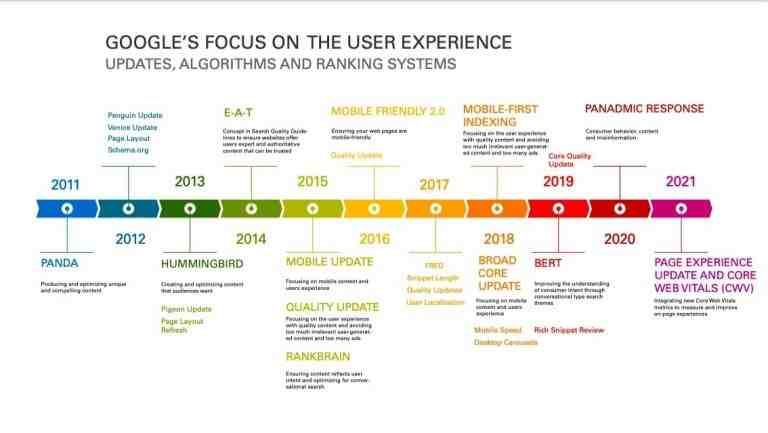
How Does SEO Work? SEO works by making certain changes to your website design and content that make your site more attractive to a search engine. You do this in the hope that the search engine will show your website as a first result on the search engine results page.
How does SEO work in simple terms? SEO works by optimizing a website’s pages, conducting keyword research, and earning inbound links. Generally, you can see the results of your SEO efforts once the web page has been crawled and indexed by a search engine. Looking deeper: There are a ton of ways to improve the SEO of your website pages, though.
How SEO works step by step?
What is an SEO strategy?
- Step #1: Create a Keyword List.
- Step #2: Analyze Google’s First Page.
- Step #3: Create something different or better.
- Step #4: Add a hook.
- Step #5: Optimize for On-Page SEO.
- Step #6: Optimize For Search Intent.
- Step #7: Focus on Content Design.
- Step #8: Build links to your page.
What is SEO and how it works?
Search engine optimization (SEO) is the art and science of getting pages to rank higher in search engines like Google. Because search is one of the main ways in which people discover content online, higher ranking in search engines can lead to an increase in traffic to a website.
What are the main benefits of SEO?
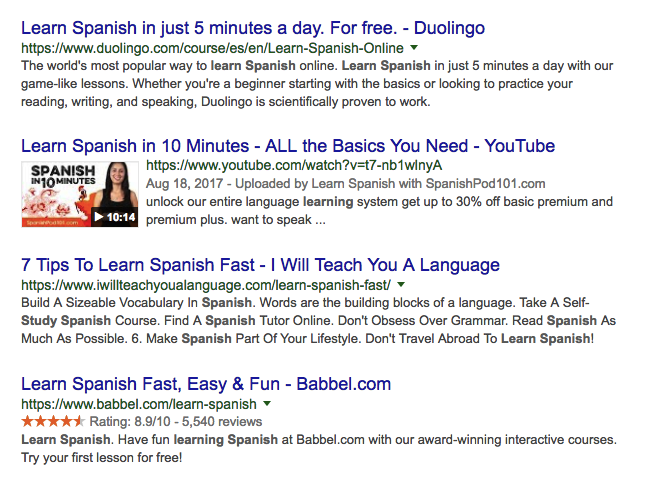
What are the Benefits of SEO?
- SEO Increases Organic Discovery and High Quality Website Traffic. …
- SEO offers an impressive ROI. …
- SEO improves credibility and trust. …
- SEO provides 24/7 promotion. …
- SEO Targets the entire marketing funnel. …
- SEO reaches your entire target audience. …
- SEO Optimizes User Experience. …
- SEO increases PPC success.
What is SEO and how can it benefit your business? SEO stands for Search Engine Optimization. In the simplest of terms, good SEO optimizes your online visibility. This means that the more people see your website, the more your online traffic increases, and the better your chances of providing your product or service to a larger number of people.
How much is SEO per month?
Average SEO costs are $100-$250 an hour for US SEO agencies. SEO costs often range from $2,500 – $10,000 per month for US agencies. The average SEO plan costs $2819 per month (per Ahrefs) Overseas SEO companies can charge $10-$50 an hour.
Should SEO be done monthly? If you don’t do monthly SEO, your competitors will outrank you in the SERPs. While it is true that your competitors may outperform you if they are doing SEO and you are not, there is no guarantee that this will happen. It all depends on the nature of your business and the competitiveness of your industry.
Is it worth it to pay for SEO?
SEO is worth it if you have the right strategy in place and work with a partner who knows how to get results. About 93% of online experiences start with a search engine, and the close rate of SEO leads is much higher than that of traditional marketing. Therefore, SEO provides an impressive return on investment (ROI).
How much should I be paying for SEO?
If you are hiring a top-tier SEO company to run a local campaign, expect to pay $500.00 per month. A national or international campaign will require a minimum budget of $2,500 to $5,000 per month. Some companies offer a “trial package” at a lower price, without a contract.
Is it necessary to pay for SEO?
Technically, SEO is free. You don’t pay money for SERP placement. Google ranks content based on a number of factors including the E-A-T trio: Expertise, Authority, and Trust. They will rank highly those who are seen as valuable resources for users.
Is it worth hiring someone for SEO?
Yes: For many businesses, it makes sense to use SEO as a long-term strategy to generate revenue, because that’s what SEO does. Hiring an SEO company helps your business earn more from SEO by providing access to advanced marketing technology, experienced SEO specialists and more.
How much does it cost for a SEO?
The average cost of SEO for small businesses is $750 to $2000 per month or $5000 to $30,000 for one-time projects. Smaller businesses that invest in SEO consulting services can expect to pay $80 to $200 per hour.
Is SEO needed monthly?
SEO is a long-term strategy, so you don’t need to do it monthly. This is true to some extent. SEO is a long-term strategy, and the benefits of SEO can compound over time. However, that doesn’t mean you can set it and forget it.
What can SEO do for your business?
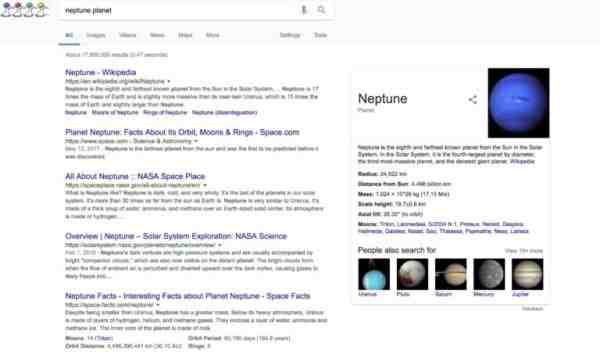
Search engine optimization (SEO) is how you help customers find your site when they search on Google, Bing and Yahoo. By building your site the right way and optimizing your keywords, you will drive more traffic to your page and generate more sales.
How can SEO help businesses? SEO has great benefits for websites and can lead to exponential growth in the long run. Brands that invest in SEO can build credibility and trust with audiences, making it a pivotal part of a digital marketing strategy.
Does SEO work for small business?
Small businesses can use SEO to their advantage by creating valuable content for their website visitors, using keywords throughout their content, and optimizing images for SEO. With a little effort, you can see the results of your SEO efforts in higher search engine rankings and more traffic to your website.
Is SEO worth it for small businesses? The short answer is that SEO is very effective – not only for generating traffic, but also leads and sales. Don’t worry. The long answer includes research and data, not just empty statements. Most SEOs are too caught up in specific search metrics like SERP (search engine results page), rankings, and organic traffic.
How much does SEO cost for small business?
How much does SEO cost for small businesses? The average cost of SEO for small businesses is $750 to $2000 per month or $5000 to $30,000 for one-time projects. Smaller businesses that invest in SEO consulting services can expect to pay $80 to $200 per hour.
How much should I spend a month on SEO?
This survey also found that the average cost per month for SEO was between $2,500 to $5,000 per month for SEO services. Thirty-one percent paid above this range, up to $50,000, and only 18% paid less than $1,000.
How much do businesses spend on SEO?
How much can you expect to spend on SEO? If you are hiring a top-tier SEO company to run a local campaign, expect to pay $500.00 per month. A national or international campaign will require a minimum budget of $2,500 to $5,000 per month. Some companies offer a “trial package” at a lower price, without a contract.
Is it worth it to pay someone for SEO?
If your content is crap, no matter how much you pay for SEO, it won’t help you. With this in mind, you would have a higher ROI if you paid someone to create high-quality blog posts, videos, or other valuable content worth reading or viewing.
How much money do you need for SEO?
If you are hiring a top-tier SEO company to run a local campaign, expect to pay $500.00 per month. A national or international campaign will require a minimum budget of $2,500 to $5,000 per month. Some companies offer a “trial package” at a lower price, without a contract.
How much should I spend a month on SEO?
This survey also found that the average cost per month for SEO was between $2,500 to $5,000 per month for SEO services. Thirty-one percent paid above this range, up to $50,000, and only 18% paid less than $1,000.
Is it worth it to pay someone for SEO?
If your content is crap, no matter how much you pay for SEO, it won’t help you. With this in mind, you would have a higher ROI if you paid someone to create high-quality blog posts, videos, or other valuable content worth reading or viewing.