
In the competitive landscape of local service marketing, businesses require innovative advertising solutions that deliver measurable results without draining marketing budgets. Local Service Ads (LSA) represent a paradigm shift in how service area businesses connect with customers actively seeking their expertise. This performance-based advertising platform, developed by Google, offers home service providers and professional service companies a cost-effective method to generate qualified leads while building trust through verified credentials and customer reviews.
Unlike traditional Google Ads that charge per click regardless of lead quality, Local Service Ads operate on a pay per lead model, ensuring businesses only invest in genuine customer inquiries. This comprehensive guide examines the intricate mechanisms of LSA, providing service business owners with actionable insights to maximize their local market presence and achieve sustainable service business growth.
TL;DR Summary
Contents
- 1 Understanding Local Service Ads and Google’s Verified Service Professional Platform
- 2 Service Categories and Local Service Ads Eligibility Requirements
- 3 Pay Per Lead Advertising Model and Local Service Ads Cost Structure
- 4 Local Service Ads Setup Process for Small Business Success
- 5 Optimizing Local Service Ads Performance and Improving Ranking Position
- 6 Lead Management and Service Call Tracking Through LSA Platform
- 7 Local Service Ads Versus Traditional Google Ads Comparison
- 8 Maximizing ROI With Local Service Ads for Service Business Growth
- 9 Industry-Specific Local Service Ads Strategies and Applications
- 10 Future Developments and Evolving Local Service Marketing Landscape
- 11 Frequently Asked Questions
- 11.1 How much do local service ads cost per lead for small businesses?
- 11.2 What are the requirements to get Google Guaranteed status for Local Service Ads?
- 11.3 Can I dispute charges for invalid leads in Local Service Ads?
- 11.4 How do Local Service Ads differ from regular Google Ads for service businesses?
- 11.5 What factors determine my ranking position in Local Service Ads results?
- 11.6 Which service categories are currently available for Local Service Ads?
Local Service Ads are Google’s pay-per-lead advertising platform designed specifically for service area businesses. They appear at the top of local search results with Google Guarantee or Google Screened badges, and businesses only pay when customers contact them directly. The platform requires background checks, license verification, and insurance verification, making it a trusted local service directory that helps qualified service leads find verified service professionals in their area.
Understanding Local Service Ads and Google’s Verified Service Professional Platform
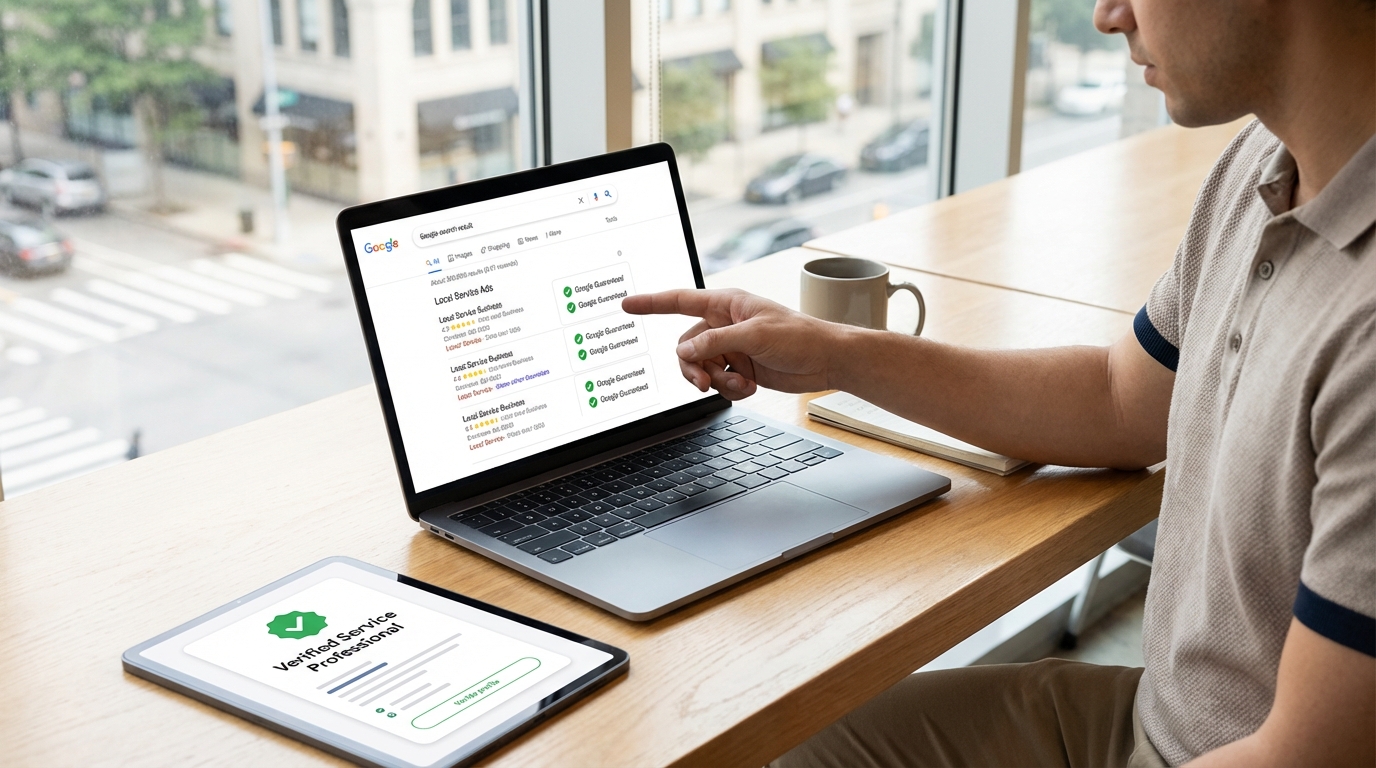
Local Service Ads represent Google’s strategic initiative to connect consumers with background checked businesses in their immediate vicinity. These local advertising solutions occupy premium placement above traditional Google Ads and organic search results, providing unparalleled service business visibility for participating companies. The platform distinguishes itself through rigorous verification requirements that establish credibility before businesses can advertise their services.
The LSA ecosystem functions as a comprehensive service provider platform where home service professionals and licensed service providers compete for prominent positioning based on proximity, review ratings, response times, and business profile completeness. This verified business platform serves dual purposes: protecting consumers through thorough vetting processes while providing service industry advertising opportunities that generate tangible business outcomes.
Google Guarantee and Google Screened Badge Programs
The distinction between Google Guarantee and Google Screened badges significantly impacts consumer perception and trust establishment. Home services businesses including HVAC, plumbing, electrical, locksmith, garage door repair, cleaning services, lawn care, tree services, pest control, appliance repair, roofing, painting, flooring, and handyman services qualify for the Google Guarantee badge. This certification provides customers with financial protection up to the lifetime cap for jobs booked through the platform, establishing these verified local businesses as trustworthy service providers.
Professional services including real estate agents, attorneys, financial planners, and tax professionals receive the Google Screened designation. While lacking the monetary guarantee component, this verification confirms comprehensive background check completion, license verification where applicable, and business credential authentication. Both badge types significantly enhance contractor advertising effectiveness by prominently displaying trust signals directly in search results.
Service Categories and Local Service Ads Eligibility Requirements
Google continuously expands the service categories eligible for LSA participation, though availability varies considerably by geographic market. The platform primarily serves home improvement marketing needs and professional services marketing requirements across numerous specializations.
| Service Category | Badge Type | Common Verification Requirements |
|---|---|---|
| HVAC, Plumbing, Electrical | Google Guarantee | License, Insurance, Background Check |
| Locksmith, Garage Door Repair | Google Guarantee | Insurance, Background Check, Business Registration |
| Cleaning, Lawn Care, Pest Control | Google Guarantee | Insurance, Background Check |
| Roofing, Painting, Flooring | Google Guarantee | License (if required), Insurance, Background Check |
| Real Estate, Legal Services | Google Screened | Professional License, Background Check |
| Financial Planning, Tax Services | Google Screened | Professional Certification, Background Check |
Background Check and Verification Process
The local service ads background check process establishes the foundation for platform credibility. Business owners and employees with customer-facing responsibilities must complete comprehensive screenings including:
- Criminal background checks examining federal, state, and county records
- Motor vehicle records for service businesses requiring driving
- Business license verification through municipal and state databases
- Insurance verification confirming adequate liability coverage
- Professional license authentication for regulated industries
- Business entity verification confirming legal registration status
This verification process for neighborhood services establishes LSA as a premium verified contractor platform, distinguishing participating businesses from unverified competitors in local search advertising results. The google local service ads verification requirements typically complete within seven to fourteen business days, though complex licensing situations may extend processing timeframes.
Pay Per Lead Advertising Model and Local Service Ads Cost Structure
The fundamental economic advantage of Local Service Ads derives from the pay per lead pricing structure, which eliminates wasteful spending on uninterested searchers. Unlike traditional pay per call advertising or cost-per-click campaigns, businesses incur charges only when prospective customers initiate contact through phone leads, message leads, or booking leads.
Local service ads cost per lead varies substantially based on multiple factors including service category, geographic market competitiveness, and seasonal demand fluctuations. High-value services such as HVAC installation, roofing projects, and major appliance repair typically command higher per-lead costs ranging from $25 to $75 per qualified contact. Conversely, routine maintenance services like lawn care or standard cleaning may generate leads at $10 to $30 per inquiry.
Budget Management and Weekly Budget Optimization
The platform provides flexible budget management through weekly budget allocations rather than daily caps. This structure allows service business owners to establish spending parameters while maintaining consistent lead flow throughout the period. The mobile app and desktop dashboard provide real-time monitoring capabilities for tracking spend velocity and lead acquisition rates.
Strategic local service ads budget recommendations typically suggest:
- Allocating 3-5 times the average lead cost to ensure sufficient lead volume
- Adjusting budgets seasonally to capitalize on peak demand periods
- Monitoring cost-per-acquisition metrics to identify optimal spending levels
- Comparing LSA performance against traditional contractor marketing platform investments
- Implementing gradual budget increases as response efficiency improves
Local Service Ads Setup Process for Small Business Success
Understanding how to set up local service ads for small business operations requires systematic attention to platform requirements and profile optimization strategies. The onboarding process, while straightforward, demands thoroughness to ensure approval and competitive positioning within the verified business listings.
Initial Registration and Business Profile Creation
The setup journey begins with Google My Business profile verification, as LSA directly integrates with existing business listings. Service providers access the Local Service Ads platform through a dedicated portal, initiating registration by selecting appropriate service categories and defining their service area parameters. Geographic targeting capabilities allow businesses to specify neighborhoods, municipalities, or radius-based coverage areas where they accept projects.
Business profile completion requires comprehensive information including:
- Business name, address, and contact information matching Google My Business data
- Detailed service offerings within the selected primary category
- Operating hours and emergency availability status
- Technician or team member profiles for background check processing
- Business photos showcasing completed work and team professionalism
- Insurance documentation meeting platform minimum requirements
License and Insurance Verification Documentation
The license verification and insurance verification components represent critical approval gates. Businesses must upload current documentation demonstrating compliance with jurisdictional requirements. For industries requiring professional licensing such as plumbing, electrical work, or HVAC installation, unexpired license credentials from appropriate regulatory bodies are mandatory. General liability insurance certificates must clearly display coverage amounts meeting or exceeding platform minimums, typically ranging from $500,000 to $1,000,000 depending on service category.
Optimizing Local Service Ads Performance and Improving Ranking Position
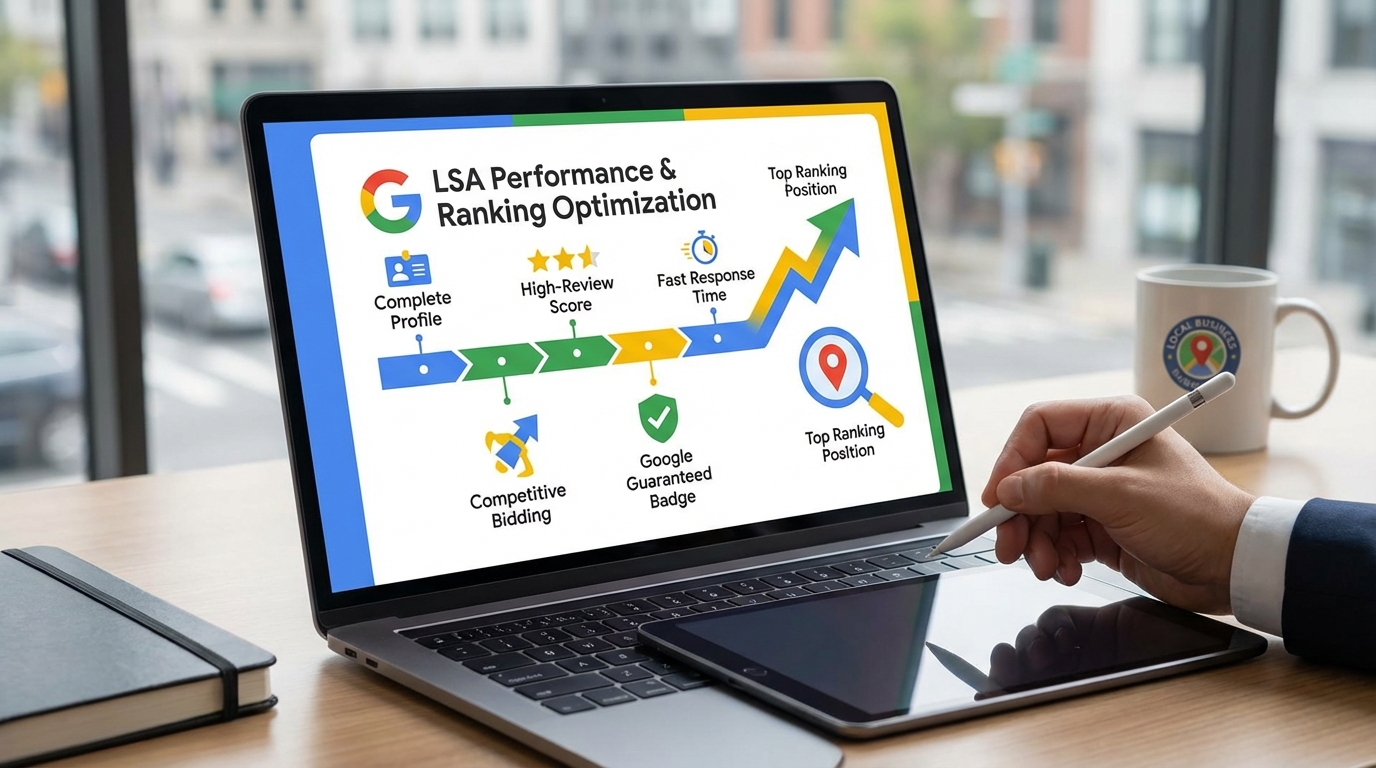
Achieving optimal results from this local lead generation platform extends beyond initial setup to encompass ongoing optimization strategies. The LSA ranking algorithm considers multiple factors when determining which verified service companies appear prominently for relevant searches.
| Ranking Factor | Impact Level | Optimization Strategy |
|---|---|---|
| Proximity to Searcher | High | Expand service area strategically; maintain accurate business location |
| Review Quality and Quantity | High | Actively request reviews; maintain 4.0+ average rating |
| Response Time | High | Answer inquiries within minutes; enable mobile notifications |
| Responsiveness Rate | Medium | Respond to all leads; minimize ignored contact attempts |
| Business Profile Completeness | Medium | Add photos, detailed services, operating hours |
| Budget Availability | Medium | Maintain adequate weekly budget to avoid ad suspension |
Local Service Ads Response Time Best Practices
Response velocity significantly influences both ranking position and conversion rates. The platform prioritizes businesses demonstrating consistent rapid response patterns, recognizing that consumers seeking immediate assistance prefer instantly available service professionals. Implementing local service ads response time best practices includes:
- Enabling push notifications on the mobile app for instant lead alerts
- Establishing response protocols ensuring sub-15-minute reply times
- Utilizing automated initial responses while preparing personalized follow-up
- Assigning dedicated team members to monitor incoming LSA inquiries
- Implementing after-hours answering services during non-business hours
Customer Reviews and Ratings Management
The importance of customer reviews within the LSA ecosystem cannot be overstated. Reviews function as primary trust indicators, directly influencing consumer selection decisions and algorithmic ranking calculations. Service businesses must implement systematic review generation strategies including post-service follow-up communications, simplified review submission processes, and consistent quality service delivery warranting positive feedback.
Managing review profiles requires proactive engagement with all feedback, including addressing negative reviews professionally. The local service ads reviews and ratings importance extends to dispute resolution capabilities, allowing businesses to contest reviews not compliant with platform policies. Maintaining an average rating above 4.0 with substantial review volume establishes competitive advantages in crowded service categories.
Lead Management and Service Call Tracking Through LSA Platform
Effective lead types management distinguishes successful LSA campaigns from underperforming initiatives. The platform generates three primary contact categories: phone leads initiated through click-to-call functionality, message leads submitted via inquiry forms, and booking leads where consumers directly schedule appointments through integrated calendar systems.
Lead Quality Assessment and Dispute Process
Not all generated contacts represent valid billable leads. Google recognizes that service call tracking must account for low-quality inquiries, providing mechanisms for challenging charges through the local service ads dispute process for invalid leads. Valid dispute categories include:
- Wrong service category inquiries outside business specialization
- Calls or messages outside defined service area boundaries
- Solicitation attempts from other businesses or salespeople
- Extremely brief contacts lacking substantive information exchange
- Duplicate inquiries from the same customer within specified timeframes
Businesses typically have fourteen days from lead generation to submit disputes through the desktop dashboard or mobile app, with resolution determinations generally provided within several business days. Maintaining appropriate service business solutions includes regular lead quality audits to identify disputable charges and optimize budget efficiency.
Local Service Ads Versus Traditional Google Ads Comparison
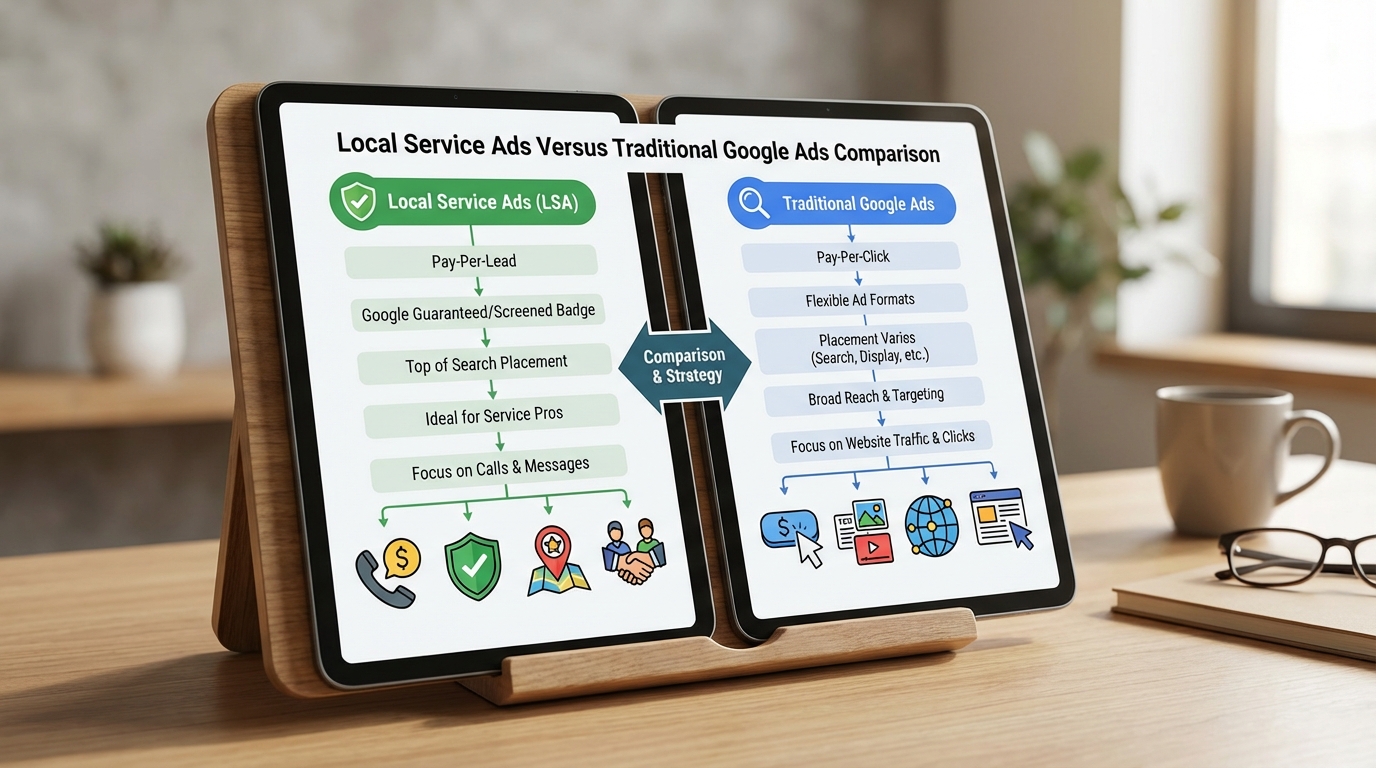
Service business owners frequently evaluate local service ads vs google ads comparison to determine optimal advertising allocation. These platforms serve complementary rather than competing functions within comprehensive local business promotion strategies.
| Feature | Local Service Ads | Traditional Google Ads |
|---|---|---|
| Pricing Model | Pay per lead (contact-based) | Pay per click (visit-based) |
| Placement | Top of search results | Above organic results, below LSA |
| Trust Signals | Google Guarantee/Screened badges | Ad designation only |
| Qualification Requirements | Background checks, licenses, insurance | Payment method only |
| Lead Quality Control | Dispute process available | Limited quality guarantees |
| Geographic Targeting | Service area based | Flexible radius or location targeting |
| Ad Customization | Limited (standardized format) | Extensive (headlines, descriptions, extensions) |
The strategic approach for many service professional marketing campaigns involves deploying both platforms synergistically. Local Service Ads capture high-intent consumers seeking immediate assistance and valuing verification credentials, while traditional Google Ads provides broader reach with customized messaging and remarketing capabilities. This multi-channel approach to local search marketing optimizes map pack placement opportunities while maintaining consistent visibility across search result pages.
Maximizing ROI With Local Service Ads for Service Business Growth
Achieving optimal return on investment from this performance based advertising platform requires systematic tracking, analysis, and refinement. Service business owners should establish clear key performance indicators including cost per acquisition, lead-to-customer conversion rates, average project values, and customer lifetime value metrics.
Conversion Optimization Strategies
Maximizing roi with local service ads extends beyond platform mechanics to encompass operational excellence in lead follow-up and customer engagement. The local service ads message leads conversion rate typically lags behind phone leads, as text-based communication allows prospects to contact multiple providers simultaneously. Implementing rapid, personalized responses with clear next-step recommendations significantly improves message lead conversion performance.
Phone leads generally convert at higher rates due to immediate personal interaction opportunities. Training team members in consultative selling techniques, active listening skills, and professional phone etiquette enhances lead monetization. Recording and reviewing calls provides valuable insights for continuous improvement while ensuring quality standards across customer interactions.
Expanding Service Area for Local Service Ads Coverage
Geographic expansion strategies represent growth opportunities for established LSA participants. The platform allows expanding service area for local service ads incrementally, testing new markets without significant upfront investment. Businesses should evaluate expansion decisions based on service capacity, competitive intensity in target markets, and travel time economics affecting profitability margins.
Maintaining service quality across broader geographic territories requires operational considerations including technician availability, inventory positioning, and response time capabilities. The benefits of local service ads for contractors increase substantially when businesses can maintain consistent service standards across their entire coverage area, supporting positive review generation and reputation building.
Industry-Specific Local Service Ads Strategies and Applications
Different service categories require tailored approaches to optimize campaign performance within the verified professional platform framework.
Best Local Service Ads for HVAC Companies and Seasonal Service Providers
HVAC contractors experience pronounced seasonal demand fluctuations requiring dynamic budget adjustments. Implementing aggressive budgets during peak cooling and heating seasons captures high-value installation and repair opportunities, while maintenance-focused positioning during shoulder seasons maintains consistent lead flow. Highlighting emergency availability and rapid response capabilities differentiates providers in competitive markets.
Google Local Service Ads for Plumbers and Emergency Service Businesses
Plumbing services benefit significantly from LSA’s immediate-need customer targeting. Emphasizing 24/7 availability, rapid response capabilities, and emergency service expertise attracts high-value urgent repair inquiries. Maintaining consistently high responsiveness rates proves particularly critical for emergency service positioning, as consumers in crisis situations rarely wait extended periods for callbacks.
Local Service Ads for Cleaning Services Business and Recurring Revenue Models
Cleaning service providers leverage LSA to acquire initial customers while focusing on conversion to recurring service agreements. The platform excels at generating first-time inquiries, making customer retention strategies essential for campaign profitability. Highlighting specialized cleaning services, green cleaning options, and satisfaction guarantees differentiates providers in saturated markets.
Future Developments and Evolving Local Service Marketing Landscape
Google continues expanding and refining the Local Service Ads platform, introducing enhanced features and additional service categories regularly. Recent developments include booking integration capabilities allowing direct appointment scheduling, enhanced messaging features supporting multimedia communication, and improved analytics providing deeper performance insights.
The trajectory of local contractor lead generation increasingly favors verified business marketing approaches emphasizing transparency, qualification, and performance accountability. Service providers embracing these trusted local services standards position themselves advantageously as consumer expectations evolve toward greater service provider accountability and verifiable credentials.
Integration between LSA and other Google properties including Google My Business and Google Maps continues deepening, creating unified local business advertising ecosystems. This convergence amplifies the importance of maintaining consistent, optimized profiles across all Google touchpoints to maximize local service visibility and market presence.
Frequently Asked Questions
How much do local service ads cost per lead for small businesses?
Local Service Ads costs vary significantly based on service category, geographic market, and competition levels. Average lead costs range from $10-$30 for routine services like lawn care and basic cleaning, while specialized services such as HVAC installation, roofing, or electrical work typically cost $25-$75 per lead. High-value professional services like legal consultation may exceed $100 per lead. Businesses set weekly budgets and only pay when customers contact them directly through phone calls, messages, or booking requests, making it a performance-based advertising model that protects against wasteful spending.
What are the requirements to get Google Guaranteed status for Local Service Ads?
Obtaining Google Guarantee status requires completing several verification steps: passing comprehensive background checks for business owners and customer-facing employees, providing proof of required business licenses for your service category and jurisdiction, submitting current general liability insurance documentation meeting minimum coverage requirements (typically $500,000-$1,000,000), verifying business registration with appropriate state and local authorities, and maintaining good standing with proper tax compliance. The verification process usually takes 7-14 business days, and businesses must maintain these qualifications continuously to retain their Google Guarantee badge.
Can I dispute charges for invalid leads in Local Service Ads?
Yes, Google provides a dispute process for invalid or low-quality leads within Local Service Ads. Valid dispute reasons include inquiries for services outside your selected categories, contacts from customers outside your defined service area, solicitation calls from other businesses rather than genuine customers, extremely brief interactions without substantive information exchange, and duplicate contacts from the same customer within a short timeframe. Businesses have fourteen days from when the lead was generated to submit disputes through the desktop dashboard or mobile app. Google typically reviews and resolves disputes within several business days, crediting accounts for approved disputes.
How do Local Service Ads differ from regular Google Ads for service businesses?
Local Service Ads differ from traditional Google Ads in several fundamental ways. LSA uses a pay-per-lead model where you only pay for actual customer contacts, while Google Ads charges per click regardless of lead quality. Local Service Ads appear at the very top of search results with Google Guarantee or Google Screened badges, above traditional ads. LSA requires background checks, license verification, and insurance documentation, creating higher barriers to entry but greater consumer trust. The ad format is standardized with limited customization, while Google Ads offers extensive creative control. LSA focuses exclusively on local, service-area based businesses, whereas Google Ads serves broader advertising needs across industries and geographies.
What factors determine my ranking position in Local Service Ads results?
Local Service Ads ranking depends on multiple factors that Google’s algorithm evaluates dynamically. Proximity to the searching customer significantly impacts placement, as the platform prioritizes nearby service providers. Review ratings and quantity strongly influence rankings, with businesses maintaining 4.0+ ratings and substantial review volumes receiving preferential positioning. Response time and responsiveness rate measure how quickly you reply to inquiries and what percentage of leads you engage with. Business profile completeness, including photos, detailed service descriptions, and operating hours, affects visibility. Finally, budget availability ensures your ads continue appearing when your weekly budget remains active. Optimizing these factors collectively improves your competitive positioning within your service category and geographic market.
Which service categories are currently available for Local Service Ads?
Local Service Ads availability varies by location, but commonly supported categories include home services such as HVAC, plumbing, electrical, locksmith services, garage door repair, cleaning services, lawn care, tree services, pest control, appliance repair, roofing, painting, flooring, and handyman services. Professional services including real estate agents, attorneys, financial planners, and tax professionals are available in many markets with Google Screened designation. The platform continuously expands into additional service categories and geographic regions. To determine if your specific service category is available in your market, visit the Local Service Ads website and enter your business information during the initial qualification process.